


Brookfield Asset Management Ltd., listed on the New York Stock Exchange and Toronto Stock Exchange under the ticker BAM, has agreed to acquire Aypa Power from funds managed by Blackstone Energy Transition Partners at an enterprise value of approximately $7 billion. The transaction assigns Aypa Power an equity value of approximately $3 billion and includes its operating, under-construction and contracted assets, development platform and roughly 200 employees. Brookfield said Aypa Power has approximately 6.5 GW of operating, construction and contracted battery storage capacity, supported by a development pipeline exceeding 20 GW across the United States and Canada. The investment will be made through Brookfield Global Transition Fund II alongside institutional partners, including Brookfield Renewable Partners L.P. The central question is whether Aypa Power’s contracted cash flows and project-development capabilities can justify the valuation once debt, construction funding, battery augmentation and pipeline execution are fully considered.
Why is Brookfield paying $7 billion for a battery storage platform rather than individual projects?
Brookfield is acquiring a development and operating platform rather than assembling a collection of isolated battery projects. That distinction gives the buyer access to Aypa Power’s workforce, transmission analytics, development processes, procurement relationships, customer contracts and future project pipeline in addition to its existing assets.
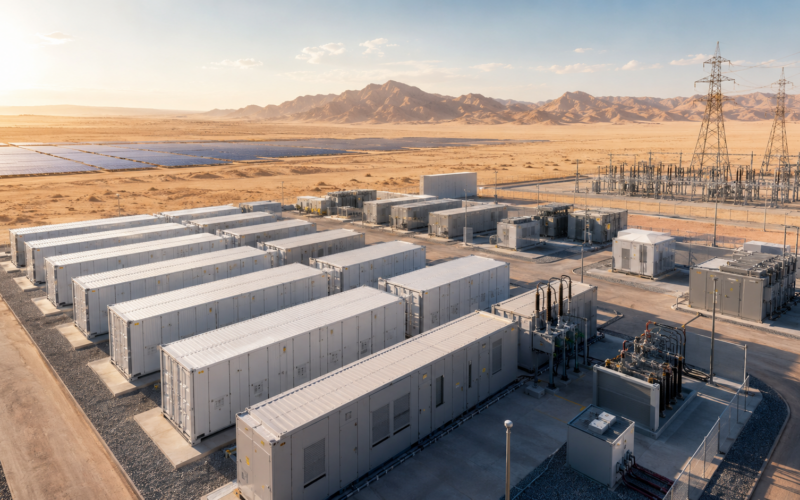
Aypa Power has 35 projects in operation or under construction and describes itself as an independent power producer focused on utility-scale battery storage and hybrid renewable energy. Its portfolio is concentrated in North American power markets where transmission congestion, capacity shortages and rising electricity demand can increase the value of fast-response storage.
The platform structure matters because the most valuable capability in battery storage is often not the physical battery equipment. Batteries can be purchased from several global manufacturers. Scarcer capabilities include locating projects at commercially useful grid nodes, securing interconnection rights, negotiating long-term contracts and advancing permitting before competitors.
Brookfield is effectively paying for a pipeline engine that can repeatedly transform sites and grid positions into contracted infrastructure. That model can produce attractive returns when projects reach operation on time and secure financing at competitive costs. It can also disappoint when projects remain trapped in interconnection queues or lose commercial viability before construction.
Aypa Power’s operating assets provide an immediate earnings foundation, while its contracted and development projects offer growth. The acquisition therefore combines infrastructure-style cash flow with private-equity-style development upside.
The risk is that those two components should not be valued identically. An operating battery project with a long-term agreement has materially lower risk than a development site awaiting interconnection, permits, equipment procurement or financing. Brookfield has not disclosed how much of the $7 billion enterprise value is assigned to operating assets, contracted construction projects or the pipeline.
How much protection do Aypa Power’s 17-year contracts provide against battery-market volatility?
Brookfield said 95% of Aypa Power’s operating and under-construction portfolio is contracted with investment-grade customers. The agreements have an average remaining life of 17 years, providing stronger revenue visibility than a portfolio dependent primarily on short-term energy-market trading.
Long-term contracts can reduce exposure to changing electricity prices and volatile ancillary-service revenues. They can also support project-level debt because lenders have greater confidence in cash flow when the customer, payment structure and contract term are known.
However, contracted revenue does not automatically guarantee stable profit. Brookfield has not disclosed whether the contracts are structured as fixed capacity payments, tolling agreements, power purchase agreements or arrangements that leave part of the market risk with Aypa Power.
The commercial treatment of battery degradation will be especially important. Battery systems gradually lose usable capacity as they cycle and age. Operators may need to install additional cells, replace modules or alter operating patterns to maintain contracted performance.
If Aypa Power is responsible for augmentation and equipment replacement under fixed-price contracts, long-duration cash flow could still carry meaningful cost risk. If customers bear part of those expenses or contract payments escalate, margins may be better protected.
Availability guarantees can create another tension. Customers frequently expect storage projects to deliver committed power during periods of grid stress, precisely when electricity prices and system requirements are highest. Equipment failures during those periods can trigger penalties or lost revenue.
Brookfield’s procurement scale may improve warranty terms and reduce equipment costs across Aypa Power’s future projects. Its negotiating power with battery manufacturers, engineering contractors and financial institutions could become one of the acquisition’s most tangible synergies.
Does the $7 billion enterprise value imply Brookfield is assuming around $4 billion of debt?
The transaction values Aypa Power at approximately $7 billion on an enterprise-value basis and $3 billion on an equity-value basis. The roughly $4 billion difference indicates that net debt and other enterprise-value adjustments are embedded in the transaction, but it should not be described as a confirmed $4 billion debt balance because Brookfield did not disclose the calculation.
Enterprise value can incorporate debt, cash, lease obligations, preferred instruments, minority interests and other transaction adjustments. Aypa Power’s project-financing structure is likely to include debt secured against individual operating and construction assets as well as corporate-level facilities.
Aypa Power increased its corporate credit facility to $1.05 billion in May 2025. That facility included a $300 million term loan, a $200 million revolving credit facility and a $550 million letter-of-credit facility used to support development and construction obligations. The total facility should not be confused with cash already borrowed because revolving and letter-of-credit capacity may remain partly undrawn.
Battery projects are commonly financed with substantial non-recourse debt once contracts, equipment and construction plans are sufficiently advanced. This can improve equity returns because project cash flows support repayment, but it also increases sensitivity to construction delays, interest costs and operating underperformance.
The valuation appears demanding when measured against the $3 billion equity consideration alone, but the acquisition is not being funded solely by Brookfield Asset Management’s corporate balance sheet. It is being pursued through the $20 billion Brookfield Global Transition Fund II alongside institutional partners and Brookfield Renewable Partners.
Brookfield Asset Management is the investment manager and is positioned to earn management fees and potentially carried interest from successful performance. Brookfield Renewable Partners will receive direct economic exposure based on its eventual capital contribution, which was not disclosed in the announcement.
Why does Aypa Power fit Brookfield’s wider strategy for data centres and integrated electricity supply?
Brookfield has been building a broad power platform spanning hydroelectric generation, solar, wind, nuclear services, battery storage and infrastructure serving large electricity consumers. Aypa Power gives the group a larger North American storage business capable of being paired with those generation assets.
Battery storage is particularly useful where electricity demand is growing faster than transmission or generation capacity. A battery can charge during periods of lower demand or excess generation and discharge when the grid is constrained, prices rise or customers need additional reliability.
This capability is increasingly relevant to data centres, which require dependable electricity and can create substantial concentrated demand. Blackstone said its original investment thesis included the expectation that battery storage would become more important for grid reliability and rising electricity use connected with artificial intelligence and other applications.
Storage cannot independently provide continuous power to a large data centre for extended periods unless it is supported by generation or the grid. Its role is more targeted. Batteries can respond rapidly to load fluctuations, bridge short interruptions, reduce peak demand and allow slower generation assets to operate more efficiently.
Brookfield’s opportunity is to combine Aypa Power with renewable generation, gas-supported infrastructure where applicable, transmission solutions and long-term corporate contracts. Instead of selling customers a single technology, Brookfield can structure integrated electricity arrangements designed around reliability, emissions objectives and delivery timelines.
Aypa Power also expands Brookfield’s ability to offer services to utilities and regional power markets. Storage can provide capacity, frequency regulation, reserve power and congestion relief, depending on local market rules.
The advantage is portfolio breadth. The execution challenge is complexity. Each power market has different interconnection procedures, revenue structures, capacity rules and permitting requirements. A strategy that works in California or Texas may not transfer directly to Ontario or another regional system.
Can Brookfield convert Aypa Power’s development pipeline into operating assets at acceptable returns?
Aypa Power’s development pipeline exceeds 20 GW, more than three times the approximately 6.5 GW included in its operating, construction and contracted portfolio. This creates significant growth potential, but development capacity should not be treated as equivalent to operating capacity.
A development pipeline may contain projects at widely different stages. Some may have secured land, interconnection positions and customer interest. Others may remain subject to lengthy studies, environmental reviews, community consultation or uncertain economics.
The quality of the pipeline will depend on how much capacity is near construction, how much already has interconnection progress and how many projects have viable customer or market routes.
Brookfield can add value through access to capital. Aypa Power has already demonstrated that it can raise substantial corporate financing, but converting more than 20 GW could require billions of dollars of additional equity, project debt and equipment commitments.
Brookfield can also use its procurement scale to negotiate battery and construction contracts across several projects. Standardisation could reduce engineering costs and shorten development schedules.
The largest uncertainty is whether project returns remain attractive as competition increases. Battery storage has attracted utilities, renewable developers, infrastructure funds, equipment manufacturers and energy traders. More capital can accelerate deployment, but it can also push down contracted returns and increase the price paid for development rights.
Brookfield must therefore avoid converting pipeline volume merely to demonstrate growth. The stronger strategy is to advance projects where transmission constraints, customer demand and contract terms provide defensible economics.
What does Blackstone’s ownership period reveal about the value created before the sale?
Blackstone acquired NRStor C&I L.P., the business that became Aypa Power, in March 2020. At that time, the company reported more than 200 MWh of operating, construction and contracted projects. Six years later, Aypa Power reports approximately 6.5 GW of operating, under-construction and contracted power capacity, 35 projects in operation or construction and a development pipeline exceeding 20 GW.
The original 200 MWh figure measured stored energy, while the current 6.5 GW figure measures power capacity, meaning the figures cannot be directly compared as a simple growth multiple. They nevertheless illustrate how materially the platform expanded under Blackstone.
Blackstone provided capital, organisational support and access to financing as battery storage moved from an emerging technology category toward a recognised infrastructure asset class.
The $3 billion equity value represents a substantial exit for Blackstone-managed funds, although the original investment amount and additional equity contributions have not been disclosed. A precise investment return therefore cannot be calculated from public information.
Brookfield is entering at a later stage. It is paying for scale, contracts and operating evidence that did not exist when Blackstone made its initial investment. That reduces technology and platform risk but also means Brookfield must generate value from a much higher starting valuation.
Future value creation will need to come from pipeline delivery, financing efficiencies, procurement savings, operating optimisation and expansion into integrated power solutions.
Does Brookfield Renewable have enough financial flexibility to participate without weakening its balance sheet?
Brookfield Renewable Partners reported first-quarter funds from operations of $375 million, or $0.55 per unit, an increase of 19% from the previous year. The company committed or deployed up to approximately $2.2 billion during the quarter, of which around $550 million was net to Brookfield Renewable, while also advancing asset sales expected to generate approximately $2.8 billion of proceeds.
That model helps explain how Brookfield Renewable can participate in large transactions without funding the full enterprise value. The group frequently combines private funds, institutional co-investors, project debt and capital recycled from mature assets.
Brookfield Renewable’s exact Aypa Power commitment has not been disclosed. It would therefore be inaccurate to assume that the listed partnership is contributing the full $3 billion equity value or taking responsibility for all acquired debt.
The acquisition follows other substantial platform investments, including Neoen and Boralex. Aypa Power strengthens storage exposure, but it also adds another capital requirement to a period of elevated acquisition and development activity.
Brookfield Renewable’s capital-recycling programme becomes increasingly important under this strategy. Selling mature assets can fund higher-growth projects and reduce the need for repeated equity issuance. It also creates execution risk if asset sales are delayed or completed at weaker valuations.
The key measure will be growth in funds from operations per unit. Portfolio expansion creates value only when the earnings contribution exceeds the impact of new units, funding costs and asset sales.
What does Brookfield Asset Management’s stock performance signal before investors react to the deal?
Brookfield Asset Management shares closed at $46.41 on July 22, down approximately 0.3% for the session, giving the company a market capitalisation of about $75.2 billion. The Aypa Power transaction was announced at 5:35 p.m. Eastern Time, after regular United States trading had ended, meaning the July 22 movement was not a market reaction to the acquisition.
The shares were approximately 3.3% below their July 15 close of $48 and about 1.9% below their June 22 close of $47.29. Brookfield Asset Management traded within a 52-week range of approximately $42.20 to $64.10, placing the July 22 price around 28% below the yearly high and approximately 10% above the low.
The first clean market reaction will occur during the July 23 session. Even then, the acquisition may not produce a large movement in Brookfield Asset Management shares because the company manages more than $1 trillion of assets and the investment is being made primarily through managed capital.
The more relevant financial benefit for Brookfield Asset Management will be additional fee-bearing capital deployment and future performance income. At March 31, the company reported $614 billion of fee-bearing capital, first-quarter fee-related earnings of $772 million and distributable earnings of $702 million. It also had $137 billion of uncalled fund commitments available across its strategies.
Investor sentiment will therefore depend less on the purchase price alone and more on whether Aypa Power supports attractive investment returns for fund clients and Brookfield Renewable.
Which milestones will determine whether Brookfield’s Aypa Power acquisition creates lasting value?
The first milestone is regulatory approval. Brookfield described the transaction as subject to customary approvals but did not provide an expected closing date. Until completion, ownership, financing and integration remain conditional.
The second is disclosure of Brookfield Renewable’s capital commitment and the final purchase-price structure. Investors need to understand how much equity each Brookfield vehicle will contribute and how existing Aypa Power debt will be refinanced or retained.
The third is conversion of contracted projects into operating assets. Construction schedules, battery deliveries, interconnection completion and customer acceptance will determine how quickly the 6.5 GW portfolio generates cash.
The fourth is pipeline progression. Brookfield must demonstrate that the development portfolio can secure contracts and financing without sacrificing returns merely to increase capacity.
Battery performance will become the longer-term test. Availability, degradation, augmentation costs, safety performance and warranty recoveries will influence whether 17-year contracts produce the expected margins.
The acquisition improves Brookfield’s North American storage position and gives Aypa Power access to deeper capital and broader commercial relationships. What remains unresolved is whether the $7 billion enterprise value leaves enough room for returns after financing and lifecycle costs.
The investment case would strengthen if Aypa Power commissions projects on schedule, maintains contracted performance and converts high-quality pipeline capacity into accretive operating assets. It would weaken if interconnection delays, battery replacement costs or aggressive competition compress project returns.
The next measurable proof point is therefore not another increase in development-pipeline size. It is the conversion of contracted battery capacity into dependable operating cash flow at returns that justify Brookfield’s $3 billion equity valuation.
What are the key takeaways from Brookfield’s $7 billion Aypa Power acquisition?
- Brookfield has agreed to acquire Aypa Power from Blackstone-managed funds at approximately $7 billion of enterprise value and $3 billion of equity value.
- The acquisition includes Aypa Power’s operating, under-construction and contracted projects, development platform and approximately 200 employees.
- Aypa Power has roughly 6.5 GW of operating, construction and contracted battery capacity and a development pipeline exceeding 20 GW.
- Approximately 95% of the operating and under-construction portfolio is contracted with investment-grade customers for an average remaining term of 17 years.
- The difference between enterprise value and equity value reflects debt and other transaction adjustments, but it is not a disclosed $4 billion debt balance.
- Brookfield will pursue the investment through Brookfield Global Transition Fund II alongside institutional partners, including Brookfield Renewable Partners.
- Brookfield Renewable’s exact equity contribution and the transaction’s detailed funding structure have not been disclosed.
- Development-pipeline capacity should not be valued like operating capacity because it remains exposed to interconnection, permitting, contract and financing risks.
- The July 22 Brookfield Asset Management closing price preceded the after-hours announcement, so the July 23 session will provide the first market reaction.
- Regulatory approval, project commissioning, battery performance and pipeline conversion are the next measurable tests.
Discover more from Business-News-Today.com
Subscribe to get the latest posts sent to your email.