



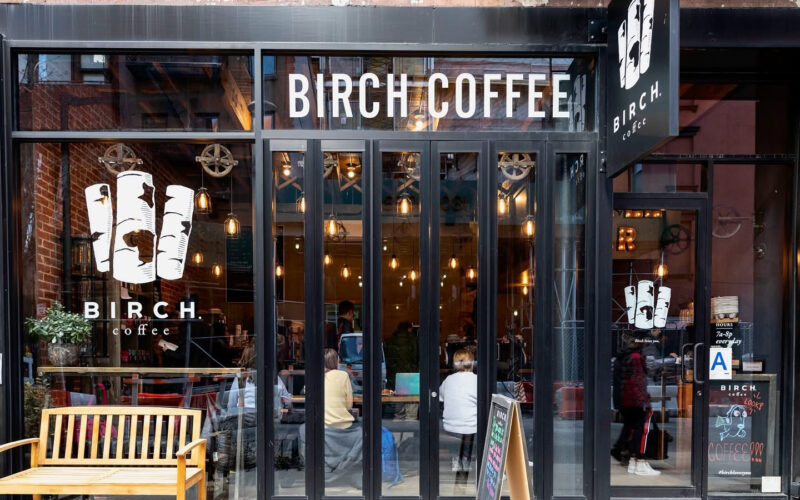
Birch Coffee’s decision to open its twelfth New York City (NYC) location on Square’s commerce stack is a small-store expansion story with a much larger strategic subtext. The April 10 announcement matters because it shows how Block, Inc. (NYSE: XYZ) is positioning Square less as a payment terminal brand and more as an operating system for multi-location hospitality businesses trying to scale without losing local identity. For Birch Coffee, the immediate relevance is operational consistency across a dense and highly competitive urban footprint. For Block, Inc., the relevance is clearer still: proof that Square can move upmarket from single-site merchants into more complex, multi-unit retail and food-service environments while keeping implementation simple enough for independent brands to adopt.
What changed here is not simply that Birch Coffee added another café. The more important shift is that a neighborhood coffee chain with enough local brand equity to expand deliberately is standardizing around Square for frontline operations, subscriptions, marketing, gift cards, workforce integrations, and back-office visibility. That matters because the restaurant and café software market has become a quiet battlefield where point-of-sale providers are fighting not just for transaction fees, but for the right to become the merchant’s central workflow layer. Birch Coffee said it grew 16% year over year in 2025 and uses Square Register, Square for Restaurants, email marketing tools, gift cards, a subscription commerce setup, a custom API, and 7shifts integration. That collection of use cases tells a more interesting story than the press release headline does: Birch Coffee is not using Square as a checkout device. It is using it as infrastructure.
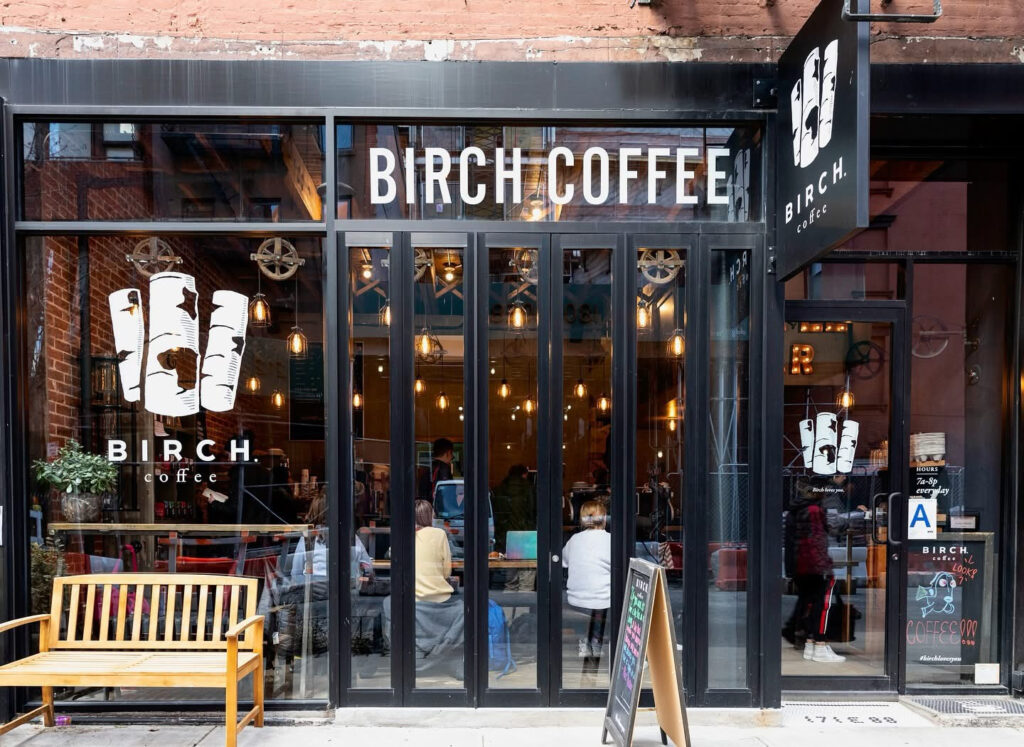
Why does Birch Coffee’s twelfth store matter for Square’s push beyond basic point-of-sale hardware?
For years, Square’s brand identity was built around simplicity. That was an advantage when small merchants wanted a fast way to take card payments, but it also created a ceiling. Investors and operators alike have long questioned whether Square could keep its ease-of-use advantage while serving merchants with more operational complexity, multiple locations, rotating staff, loyalty programs, digital ordering needs, and third-party integrations. Birch Coffee’s expansion offers one more data point that Square is trying to answer that question with a yes.
The café and quick-service segment is particularly revealing because it combines brutal throughput expectations with thin margins and high labor sensitivity. New York City intensifies all of those pressures. Rent is unforgiving, staffing is unstable, customers are impatient, and mediocre service is punished quickly because alternatives are everywhere. In that context, software does not need to be flashy. It needs to reduce friction, shorten training time, keep transactions moving, and preserve enough data visibility for owners to make staffing and inventory decisions without drowning in admin work. Birch Coffee’s founders explicitly emphasized ease of training, scale, and ecosystem flexibility, which suggests the operational pain point Square is solving is not innovation theater. It is execution discipline.
That is important for Block, Inc. because Square’s merchant strategy increasingly depends on winning businesses that have outgrown entry-level tools but do not want enterprise software complexity. The sweet spot is no longer only the solo seller or one-location boutique. It is the ambitious small chain, the regional hospitality brand, and the multi-site operator that wants control without a six-month implementation headache. Birch Coffee fits that profile neatly.
How is Block, Inc. using local merchant wins to strengthen the long-term Square growth narrative?
Public markets rarely re-rate a company because one coffee chain opened one more store. But investors do watch for pattern recognition, and that is where this announcement becomes more relevant. Block, Inc. closed April 10 at about $62.20, with its shares trading roughly 24.6% below the 52-week high of $82.50 and about 40.5% above the 52-week low of $44.27. Its next quarterly results are scheduled for May 7, 2026. Against that backdrop, Square needs evidence that merchant growth is not just surviving but maturing into a more defensible software-and-services model.
The strategic appeal of merchant wins like Birch Coffee is that they reinforce a thesis investors have wanted from Block, Inc. for years: that Square can generate deeper, stickier revenue per seller by embedding into the daily machinery of how a business runs. Payments are valuable, but payments alone are vulnerable to competition and pricing pressure. Software workflows, subscription billing, staff management integrations, customer engagement tools, and commerce analytics create more switching costs. They also create a better story for long-term gross profit durability, which is the kind of thing equity markets tend to reward more than headline merchant counts.
There is also a narrative benefit. Square’s biggest challenge has often been perception. It is widely known, but not always fully credited for the sophistication of the merchant environments it now supports. A recognizable New York operator adding locations on the platform is useful because it shows Square is not confined to hobbyist commerce or micro-merchants. It is increasingly embedded in brands that want neighborhood authenticity on the surface and systems discipline underneath.
What does Birch Coffee’s New York City expansion reveal about the economics of modern café chains?
Independent coffee chains live in a strange middle ground. They are too operationally complex to run casually, but often not large enough to afford custom enterprise stacks without compromising margins. That is why the software decision becomes strategic rather than administrative. Birch Coffee’s use of a unified commerce platform across restaurants, eCommerce subscriptions, gift cards, scheduling integrations, and customer retention tools suggests the company is trying to avoid the classic growth trap: opening more stores while multiplying operational chaos.
In a city like New York, the brand promise alone is not enough. A coffee shop can have community warmth, founder credibility, and a strong product, but if service slows during rush hour, if staff onboarding is clunky, or if loyalty behavior is hard to track across locations, growth can become self-defeating. The hidden lesson in Birch Coffee’s announcement is that independent hospitality brands increasingly need software architecture that lets them act like disciplined chains without looking or feeling like one.
That is precisely where Square wants to sit. It is selling simplification, but not in the old sense of basic payments acceptance. It is selling simplification as an antidote to fragmented systems. Birch Coffee’s custom API and 7shifts integration are especially telling because they show the platform can be standardized without being rigid. In software markets, that balance matters. Too closed, and merchants outgrow you. Too open and too complex, and you lose the usability that made you attractive in the first place. Birch Coffee appears to be using Square because it has found a workable middle ground.
Can Square win more multi-location hospitality brands without becoming too complicated to use?
This is the real question hanging over the announcement. Square’s opportunity is obvious, but so is the risk. The more it serves multi-location operators with layered needs, the more it edges toward the territory occupied by heavier restaurant-tech and commerce platforms. That can be profitable, but it can also dilute the product simplicity that made Square distinctive. Software companies often discover that moving upmarket brings larger customers and higher revenue, but also longer sales cycles, more customization, and more support intensity.
So far, Block, Inc. seems to be trying to preserve Square’s identity by framing the platform as unified rather than enterprise-heavy. Birch Coffee’s comments support that positioning. Ease of training and scale were emphasized more than customization or analytics sophistication. That is not trivial wording. In hospitality, the frontline cost of complexity is immediate. If staff cannot learn the system quickly, the technology stops being an asset and starts becoming a tax on service quality.
The broader implication is that Square’s next phase of merchant growth may depend less on adding net-new tiny sellers and more on graduating existing or similar sellers into wider product adoption. Birch Coffee’s expansion makes the best case for that model because it shows how one merchant relationship can expand across more stores, more workflows, and more revenue lines without requiring a platform change.
Why could this small retail software story matter more to Block, Inc. investors than it first appears?
Because public market storytelling is often about aggregation. One café chain does not move a stock. A repeatable pattern of sticky merchant adoption across verticals can. Investors have spent years evaluating Block, Inc. through the lens of Cash App, competition in fintech, macro sensitivity, and management execution. But Square’s merchant business still matters enormously because it shapes how the company is valued as a broader commerce platform rather than as a single consumer-finance narrative.
The market context is mixed. Block, Inc. shares remain well below their 52-week high, even after rebounding from their low, which suggests investors are not pricing in full confidence around the company’s merchant and ecosystem trajectory yet. That means announcements like Birch Coffee’s are unlikely to create immediate excitement, but they do contribute to an underlying mosaic. If more multi-location operators adopt Square as an operational foundation, the merchant segment begins to look less like a transactional utility and more like a scalable software franchise.
There is also a competitive signal here. Hospitality merchants are under constant pressure to unify in-store and digital ordering, staff scheduling, customer retention, and repeat purchase behavior. The vendors that win will be the ones that make those connections useful without requiring merchants to become accidental IT departments. Birch Coffee’s decision is a modest but credible indication that Square is still competitive in that race.
The joke, if one is allowed a small one, is that coffee may be hot, but retail infrastructure is where the real steam is. Birch Coffee is serving espresso. Square is trying to serve operating leverage.
What happens next for Birch Coffee and Square if this neighborhood-scale model keeps working?
For Birch Coffee, the upside is straightforward. If the platform continues to reduce friction across locations, the company can expand while preserving brand consistency and local feel. That is a rare trick in urban hospitality. Many chains grow by standardizing too hard and sanding off what made them distinctive. Others preserve authenticity but let operations become messy and margin-destructive. Birch Coffee appears to be trying to avoid both outcomes.
For Square, the stakes are broader. The company needs more examples of operators who begin with payments and then expand into an ecosystem relationship that covers marketing, subscriptions, operations, and workforce workflows. Those examples help Square defend itself against commoditization and create a clearer merchant monetization path. They also provide a more persuasive answer to investors asking what durable advantage Square has in an increasingly crowded commerce-tech market.
If this model succeeds, Block, Inc. gets a stronger merchant narrative heading into earnings and beyond. If it fails, the risk is not that Birch Coffee disappears from New York. The risk is that Square’s promise of unified commerce starts to look like a nice pitch that works better in press releases than in dense real-world operating environments. Right now, Birch Coffee’s expansion suggests the opposite: that practical, neighborhood-scale businesses may be the strongest proof that Square’s merchant strategy still has room to grow.
What are the most important strategic and market takeaways from Birch Coffee expanding with Square in New York City?
- Birch Coffee’s twelfth store matters less as a retail expansion headline and more as evidence that Square is being used as multi-location operating infrastructure, not just a payment tool.
- The announcement supports Block, Inc.’s effort to position Square deeper inside merchant workflows where switching costs and software revenue can be stronger.
- Birch Coffee’s 16% growth in 2025 suggests the brand is scaling from a position of momentum rather than defensive necessity.
- The New York City café market is a credible stress test for commerce software because labor, speed, consistency, and space constraints are all unusually intense.
- Square’s value proposition here is operational simplification across stores, staff, marketing, subscriptions, and integrations rather than pure transaction processing.
- The use of a custom API and 7shifts integration shows Square is trying to balance platform flexibility with usability, which is critical for growing hospitality chains.
- For Block, Inc. investors, merchant wins like this matter as cumulative signals that Square can expand wallet share among more complex sellers.
- Block, Inc. stock remains well below its 52-week high, so incremental evidence of durable merchant execution may matter more than headline announcements alone.
- If Square keeps winning neighborhood brands that are turning into regional chains, its merchant narrative becomes more software-led and potentially more defensible.
- If these deployments become harder to manage as customers scale, Square risks drifting into the classic software trap of added complexity eroding its original ease-of-use edge.
Discover more from Business-News-Today.com
Subscribe to get the latest posts sent to your email.