


Mixue Group (HKEX: 02097), one of China’s largest freshly made beverage chains by store count, has opened its first U.S. location in Los Angeles. This debut not only marks the group’s entry into the American market but signals a potentially disruptive challenge to incumbent café and beverage players, with a pricing model that radically undercuts Western norms.
With aggressive value positioning, vertically integrated supply chains, and franchise-powered scalability, Mixue is entering the United States with a playbook it has already deployed across Asia. But American consumer habits, regulatory frameworks, and urban real estate economics may test whether the $1.19 ice cream-and-lemonade formula can scale in a structurally different environment.
How does Mixue’s U.S. debut reflect its broader global expansion strategy?
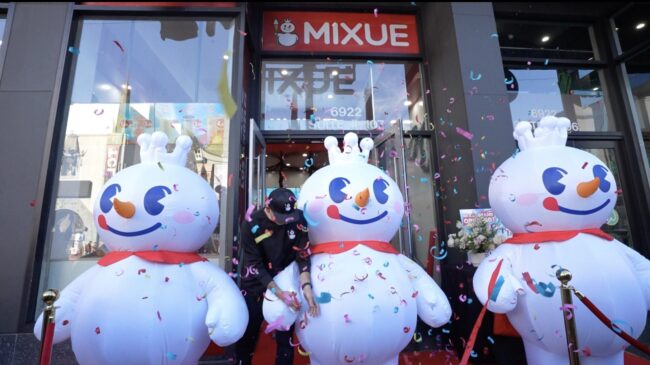
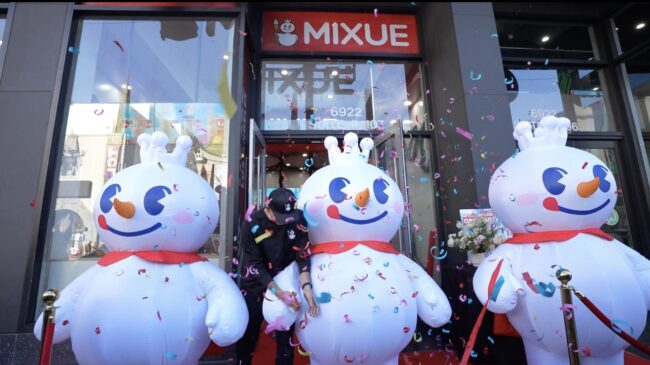
Mixue’s December 19 store opening at 6922 Hollywood Boulevard represents more than a geographic milestone. It marks the brand’s operational push into one of the most competitive and cost-sensitive food and beverage markets globally. The Los Angeles debut follows Mixue’s multi-year expansion campaign that began with a single outlet in Vietnam in 2018 and has since grown to over 4,700 international locations across 13 countries, including South Korea, Australia, and Malaysia .
The group’s global footprint now exceeds 53,000 stores, making it one of the largest foodservice networks in the world by physical outlet count. That physical dominance, combined with supply chain ownership and digital logistics, allows Mixue to sustain its hallmark price points: $1.19 for a vanilla cone, $1.99 for lemonade, $2.99 for a latte, and sub-$5 bubble tea. These prices land far below U.S. market averages for comparable items.
Mixue’s entry into the United States appears designed to validate that same cost-leadership strategy in a high-cost operating environment. Whether its “volume over margin” playbook can work under U.S. labor, lease, and regulatory conditions will likely shape the company’s next wave of global expansion.
What operational and pricing strategies is Mixue bringing to U.S. markets?
Mixue’s value-focused pricing architecture is underpinned by an industrialized approach to beverage production and end-to-end control over its ingredient sourcing, warehousing, and logistics. The company operates a vertically integrated supply chain that includes upstream procurement, centralized production facilities, and digital warehousing, enabling standardization at scale .
This model has been optimized across China and Southeast Asia, where rent structures, franchise economics, and wage expectations differ considerably from the United States. To replicate this model in U.S. cities, Mixue will need to adapt to costlier inputs, unionized labor pressures, and stricter food safety enforcement while maintaining its affordability promise.
The brand’s digital logistics system plays a critical role in cost control and quality assurance. From farm-level ingredient tracking to retail-level distribution, Mixue maintains a centralized database that supports low error rates and just-in-time inventory flows. That infrastructure may help buffer against the volatility of U.S. supplier networks and labor variability.
Could Mixue’s value-driven model pose a real threat to incumbent café chains?
Mixue’s disruptive pricing places pressure on traditional chains like Starbucks Corporation, Dunkin’ (owned by Inspire Brands), and regional players such as Dutch Bros Inc. These companies operate with higher price points, often 2–3x above Mixue’s offerings, and face tighter labor markets and real estate costs.
However, the key battleground may not be direct customer overlap but incremental traffic. By targeting cost-conscious demographics, including Gen Z consumers, students, and working-class customers in high-footfall zones, Mixue could grow share in segments underserved by premium chains.
Moreover, the Snow King mascot, photo activations, and street pop-ups used during the Los Angeles launch indicate a youth-oriented, TikTok-optimized brand experience. This event-driven marketing model may prove more adaptable to hyper-local retail environments than legacy marketing tactics used by older café incumbents.
If replicated successfully, Mixue’s formula could become a strategic case study in how Chinese consumer brands bypass digital-first expansion in favor of physical footprint supremacy.
What are the scalability and compliance risks in the U.S. market?
Despite Mixue’s track record, its U.S. ambitions come with significant challenges. Real estate economics in high-traffic areas like Los Angeles and New York differ sharply from Southeast Asia, with base rents and build-out costs that can erode franchisee returns if volume thresholds are not met.
Labor laws also present headwinds. California, in particular, imposes higher minimum wages, tip regulations, and scheduling compliance mandates that may reduce staffing flexibility. Health and safety compliance also tends to be more granular and legally enforceable in the U.S. than in many of Mixue’s existing markets.
From a brand-building perspective, customer loyalty in the American café and beverage sector often hinges on customizability, transparency, and digital ordering convenience—areas where new entrants must localize quickly. Mixue’s “fixed menu + customization” model must adapt to these expectations without diluting its operational simplicity.
There is also a broader cultural factor. While the Chinese and Southeast Asian consumer base often values high-efficiency low-cost models, U.S. consumers may associate ultra-low prices with quality concerns. Balancing affordability with trust will be crucial for sustained adoption.
How is Mixue leveraging franchise growth and digital supply chains to support U.S. expansion?
Franchise replication remains central to Mixue’s expansion. The company has used a high-volume franchise model to dominate in China and Southeast Asia, offering a turnkey infrastructure that includes ingredient sourcing, digital POS integration, and marketing templates.
For the U.S., this model may need recalibration. Franchisees in American markets typically demand more autonomy, localized marketing control, and higher-margin flexibility to offset greater upfront investments. Early store performance in Los Angeles will likely serve as a reference case for prospective franchisees assessing return profiles.
Behind the scenes, Mixue’s supply chain is already undergoing international reinforcement. The company has outlined plans to expand sourcing capabilities, increase production capacity, and optimize logistics across the Americas. Whether this results in a U.S.-based manufacturing or distribution hub remains to be seen, but such investments could reduce reliance on Asia-origin goods and shorten delivery timelines.
If supply-side scale can match franchise-side demand, Mixue could offer franchisees a rare low-cost entry point into the U.S. beverage sector—provided early sales volumes can sustain cost structures.
What does Mixue’s arrival mean for global competition in food and beverage?
The most strategic implication of Mixue’s U.S. debut is symbolic: it represents a growing class of Chinese consumer brands exporting operational models to Western markets. Unlike Western chains expanding into Asia through premiumization, Mixue is exporting standardization and volume-based economics as competitive advantages.
This signals a possible inversion of global food and beverage expansion logic. Rather than soft-power brand equity flowing from West to East, cost-engineered models from Asia are now testing the waters in Western retail environments. For institutional investors watching consumer megatrends, this suggests that affordability may be the next frontier of innovation—not just premiumization or digital personalization.
Mixue’s inclusion in Time magazine’s “100 Most Influential Companies in the World” list earlier this year reflects this new reality. As the only foodservice brand in that cohort, the company is now a high-profile case study in global consumerization.
The next test lies in New York, where additional stores are expected to open imminently. If successful, the brand could redraw expectations for what beverage chains can achieve on pricing, scale, and brand velocity across both developed and developing markets.
What are the key takeaways from Mixue’s U.S. debut and its global beverage strategy?
- Mixue Group has opened its first U.S. store in Los Angeles as part of a broader global expansion strategy targeting value-driven beverage retail.
- The brand’s pricing undercuts typical U.S. café and bubble tea offerings, raising disruption potential for established players like Starbucks Corporation and Dunkin’.
- Mixue’s vertically integrated supply chain supports its extreme price competitiveness, but adapting this to U.S. compliance, labor, and real estate standards poses risks.
- The franchise-led model will require recalibration for the U.S., where unit economics and operator expectations differ substantially from Asian markets.
- Early performance in Los Angeles will likely shape the trajectory of Mixue’s expansion across New York and other American cities.
- Institutional investors should watch how the Mixue model tests new consumer behaviors around value, loyalty, and experiential retail in the West.
- The company’s entrance may mark a strategic shift in global brand influence—from Western consumer chains to Asian cost-engineered challengers.
- Mixue’s ability to maintain affordability while ensuring operational consistency could serve as a global blueprint for future beverage entrants.
Discover more from Business-News-Today.com
Subscribe to get the latest posts sent to your email.