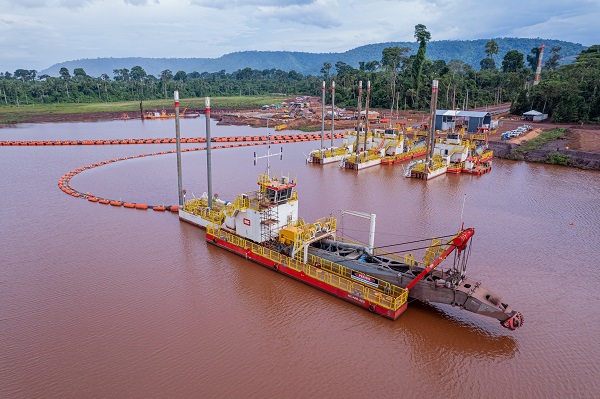
Avenira Limited (ASX: AEV), the Australian phosphate developer advancing the Wonarah Phosphate Project in the Northern Territory, has secured up to A$85 million in financing facilities from major shareholder and strategic offtake partner Hebang Biotechnology. The funding announced on 15 October 2026 comprises a A$50 million term facility for project development and a A$35 million revolving facility intended to support working capital and supply-chain expenditure. Both arrangements have eight-year terms and carry interest at the Reserve Bank of Australia cash rate target without an additional lending margin. Avenira has indicated that the package is sufficient to finance Wonarah through first shipment and the initial direct shipping ore operating phase, although actual project execution will depend on drawdowns, logistics readiness and successful commencement of mining.
How does Avenira’s A$85 million Hebang financing package change Wonarah’s funding position?
Avenira’s financing package separates project construction expenditure from working capital requirements. The A$50 million term facility is intended to support the expenditure necessary to advance Wonarah toward production, including development activities and related infrastructure. The A$35 million revolving facility provides a separate funding source for operating and supply-chain requirements. This structure recognises that a mine can require substantial cash before receiving proceeds from its first commercial shipment.
The facilities have eight-year terms, giving Avenira a longer period over which to manage financing commitments than a conventional short-term bridge arrangement. Interest is linked to the Reserve Bank of Australia cash rate target, with no additional margin disclosed. The absence of an added lending spread is commercially relevant because financing costs can materially influence the economics of a smaller mining operation. However, the total borrowing cost will still change if the benchmark rate moves.
The agreements also provide a two-year deferral of principal repayments and cash interest payments. Interest will be capitalised monthly during the deferral period, with cash interest subsequently payable quarterly. That structure reduces near-term cash servicing requirements while the project is being developed and production begins. Capitalised interest nevertheless increases the amount owed, so deferred cash payments should not be confused with interest-free financing.
The financing is being provided by a company that is already a major shareholder and commercial counterparty. Hebang Biotechnology has an existing interest in Avenira’s development strategy and a long-term offtake arrangement for Wonarah phosphate rock. The combination may support financing coordination and commercial planning. It also makes the terms of related-party arrangements and the respective obligations of Avenira and Hebang important to understanding the project’s economics.
The announcement represents a meaningful improvement from Avenira’s previous funding position. Its FY26 annual report disclosed a net loss of approximately A$3.34 million and year-end cash of approximately A$759,000, alongside material uncertainty associated with future funding. The newly secured facilities address a significant financing requirement identified as the project approached construction. However, available facility capacity should not be treated as cash already drawn or revenue already generated.
Why is Avenira developing Wonarah through direct shipping ore rather than immediately building a processing complex?
Avenira is progressing Wonarah through a staged development model, beginning with the extraction and sale of phosphate rock that can be marketed without constructing a large beneficiation complex at the outset. The direct shipping ore approach is intended to reduce initial development complexity and bring the project into production earlier. It uses a selected high-grade portion of the wider deposit rather than attempting to process the entire resource immediately. The staged strategy allows operating performance and customer demand to inform later investment decisions.
The Wonarah deposit has a reported Mineral Resource of approximately 812 million tonnes at a grade around 18% phosphorus pentoxide using the applicable resource cut-off. Within that larger inventory, approximately 66 million tonnes grading around 30% phosphorus pentoxide has been identified at a higher cut-off grade. The resource figures describe geological estimates across different grade ranges, not an equivalent quantity of material immediately available for commercial sale. Mining schedules, product qualification and economic constraints determine which material can be included in the initial operation.
The project’s location in the Georgina Basin, approximately 245 kilometres east of Tennant Creek, provides access to established regional infrastructure. Wonarah lies close to the Barkly Highway, with potential transport connections through Tennant Creek and onward to Darwin Port. This infrastructure can support a direct shipping operation by providing a route from the mine to international customers. The commercial viability of the logistics chain will depend on final transport arrangements, capacity and per-tonne costs.
Phosphate rock is an important feedstock in the production of fertilisers and other phosphorus-based products. Demand is linked to agriculture and industrial applications, although individual customers require materials meeting specific chemical and physical specifications. Wonarah’s high-grade material could serve customers seeking phosphate feedstock without requiring Avenira to establish an integrated fertiliser manufacturing operation. The ability to meet those specifications consistently will be necessary to convert the resource into repeat commercial shipments.
How much Wonarah phosphate production is covered by Avenira’s four-year Hebang offtake agreement?
Avenira signed a four-year phosphate rock offtake agreement with Hebang in September 2026, covering approximately 500,000 wet metric tonnes annually following commercial commencement. The contracted volume represents more than 80% of the project’s expected initial direct shipping ore production of approximately 600,000 tonnes per year. The agreement provides a substantial intended sales channel for the early operating phase. However, the commercial arrangements remain subject to specified conditions and product qualification requirements.
At the stated annual volume, the four-year arrangement would cover approximately two million wet metric tonnes if deliveries occur as contemplated throughout the full term. This is a contractual volume calculation rather than achieved production or a guaranteed revenue figure. The financial value will depend on actual shipments and market-referenced pricing under the agreement. Without a disclosed fixed selling price, the total revenue cannot be determined reliably.
Hebang has agreed to act as Avenira’s exclusive distributor in mainland China, using its established commercial relationships and market infrastructure. Access to an existing distribution network can reduce the burden of establishing independent customer channels in a large import market. Avenira has retained certain flexibility to pursue other market opportunities, subject to the agreement’s terms. This may allow the company to develop customers beyond the principal offtake arrangement.
The offtake agreement includes conditions involving product qualification, project requirements, Darwin Port logistics, pricing and other contractual matters. Those conditions must be satisfied or appropriately waived before the intended commercial arrangements become fully operative. Accordingly, the agreement supports the project’s development case but does not establish that the first shipment has been delivered. Progress on logistics and final customer acceptance remains important.
The relationship between the new financing and the existing offtake provides a commercial foundation for the development. The same strategic counterparty is supporting both funding and a substantial proportion of expected sales. That structure can help align construction planning with customer requirements and financing availability. However, concentration also means that the performance and continued commitment of one counterparty will be significant to Avenira’s initial operating arrangements.
What do Wonarah’s mineral resources and existing approvals reveal about its readiness for mining?
Wonarah has a large phosphate resource base, supported by resource estimation work and prior feasibility assessments. The initial direct shipping ore operation represents a much smaller development stage than the total geological inventory might suggest. This distinction is important because the project’s broader resource could support longer-term expansion without every tonne being included in the currently financed production plan. Future processing investments would require their own economic and technical justification.
The Northern Territory Government identifies Wonarah as an approved development project, with relevant mining tenure and environmental approvals supporting the proposed initial direct shipping operation. Avenira has also progressed its mining management arrangements and heritage-related requirements. These developments reduce some regulatory uncertainty compared with a project still seeking its first major approvals. Nevertheless, operational readiness involves more than holding permits.
The company must arrange mining equipment, contractors or an owner-operated fleet, personnel, site services and transport capacity. Each element influences the timing and cost of delivering phosphate rock to the point of sale. Changes in the development approach can also require updates to operational plans and procurement arrangements. Successful commissioning will depend on bringing these activities together within the agreed expenditure envelope.
Avenira has moved toward an owner-operator model for the mine. This approach gives the company more direct control over mining operations but can require greater responsibility for equipment, staffing and maintenance. It may provide flexibility over scheduling and costs when managed efficiently. The financial outcome will depend on whether the benefits of direct operating control outweigh the capital and organisational resources required.
The project has previously been assessed as a relatively low-capital direct shipping ore development. The Northern Territory Government’s project information identifies an initial capital estimate of approximately A$11.5 million from earlier development planning. That historical estimate should not be treated as the final current funding requirement, particularly given the larger financing arrangements and evolving operating model. The actual expenditure will be established through updated project budgets and implementation.
How could Wonarah’s road, rail and port logistics affect phosphate mine profitability?
Wonarah’s remote location makes transport a central component of its operating economics. Phosphate rock must be moved from the mining area to a suitable export facility before reaching customers. Avenira’s development strategy relies on road transport and rail connectivity through the Northern Territory, followed by shipping from Darwin. The cost and reliability of this logistics chain will influence the delivered price competitiveness of its product.
Bulk commodities such as phosphate rock are particularly sensitive to transport costs because the value per tonne may be considerably lower than that of precious metals or specialty concentrates. A modest increase in freight expense can therefore materially affect mine-level margins. Road haulage capacity, fuel costs, rail pricing and port charges all require commercial planning. The new working capital facility may help finance inventories and logistics expenditure, but it does not eliminate these operating costs.
Avenira must also coordinate mine production with shipment schedules. Producing more material than can be transported or exported may increase working capital tied up in stockpiles. Conversely, insufficient mine output could leave contracted logistics capacity underutilised or delay customer deliveries. The initial operating period will provide evidence of how efficiently the company can manage these relationships. Reliable shipment performance will be necessary to support repeat sales under the Hebang agreement.
Darwin Port arrangements are especially relevant because access and handling capacity form part of the intended export pathway. Final commercial terms and applicable requirements could influence both the schedule and the cost of the first shipment. Avenira has identified progress on these arrangements as part of its development work. Completion of the financing package provides greater financial flexibility, while operational commitments will determine when export revenue can begin.
Could Wonarah eventually expand beyond direct shipping phosphate rock into higher-value processing?
Avenira’s long-term development strategy includes the possibility of beneficiating lower-grade phosphate material and producing downstream phosphorus products. The wider Wonarah resource provides potential feedstock for these activities if appropriate processing technology and commercial economics can be established. Yellow phosphorus and other processed products can serve different markets from direct shipping ore. However, moving further downstream requires significantly different technical and financial capabilities.
Beneficiation could allow the company to use material that does not meet the specifications for initial direct shipping sales. Such a process would require additional plant infrastructure, energy, water and operating expenditure. The product’s value would need to justify those costs and the capital invested. A large resource base may support the investigation of such options, but it does not guarantee that every processing route will be commercially attractive.
The company has previously examined opportunities involving yellow phosphorus and related industrial supply chains. Those potential developments remain separate from the initial phosphate export project being financed under the latest arrangements. They should not be regarded as funded construction projects unless Avenira announces definitive investment decisions and financing commitments. The first priority remains establishing a dependable source of direct shipping ore revenue.
Successful initial mining could nevertheless provide useful operating data for evaluating expansion. Actual mining costs, ore quality, transport expenses and customer acceptance would improve the company’s understanding of the resource’s commercial value. Such evidence could support future feasibility studies and discussions with potential partners. The scale of any later processing operation would depend on independent economic assessment.
What must Avenira achieve before its first Wonarah phosphate shipment in 2027?
Avenira is targeting first direct shipping ore production and exports during 2027, following development activities planned for the final part of 2026. The financing arrangements provide resources intended to support that timetable, while the existing offtake agreement creates an anticipated customer channel. However, the company must still coordinate funding availability, equipment procurement, workforce mobilisation and transport agreements. The timing of first shipment remains a development target rather than an achieved milestone.
The latest financing package materially improves Avenira’s capacity to progress the project after a period of constrained funding. The eight-year structure and deferred cash servicing may also provide flexibility during the early operating phase. Nevertheless, interest will accrue, and future repayments must ultimately be supported by the project’s cash generation. The company must demonstrate that phosphate sales can cover mining and logistics expenditure while meeting financing obligations.
Wonarah’s large resource and existing approvals provide a foundation for development, but the initial operation must establish its competitiveness through actual production and shipments. The next decisive steps are confirmation of the relevant drawdowns, mobilisation of the mining fleet, commencement of operations and completion of export logistics. Successful first shipments under the Hebang offtake would provide the earliest meaningful evidence of commercial delivery. Sustained production at acceptable margins would then determine whether the project can meet its financing commitments and support future expansion.
Key takeaways from Avenira’s A$85 million financing package for the Wonarah Phosphate Project
- Avenira has secured up to A$85 million in financing facilities from Hebang Biotechnology.
- The package includes a A$50 million project development term facility.
- A separate A$35 million revolving facility is intended for working capital and supply-chain requirements.
- Both facilities have eight-year terms and interest linked to the Reserve Bank of Australia cash rate.
- Principal and cash interest payments are deferred for two years, with interest capitalised during that period.
- Wonarah has a reported Mineral Resource of approximately 812 million tonnes.
- The initial development focuses on direct shipping phosphate rock.
- Hebang has an offtake agreement covering 500,000 wet tonnes annually over four years.
- The company is targeting first phosphate shipments in 2027.
- Mine mobilisation, transport arrangements and successful commercial production will determine the project’s financial outcome.
Discover more from Business-News-Today.com
Subscribe to get the latest posts sent to your email.