


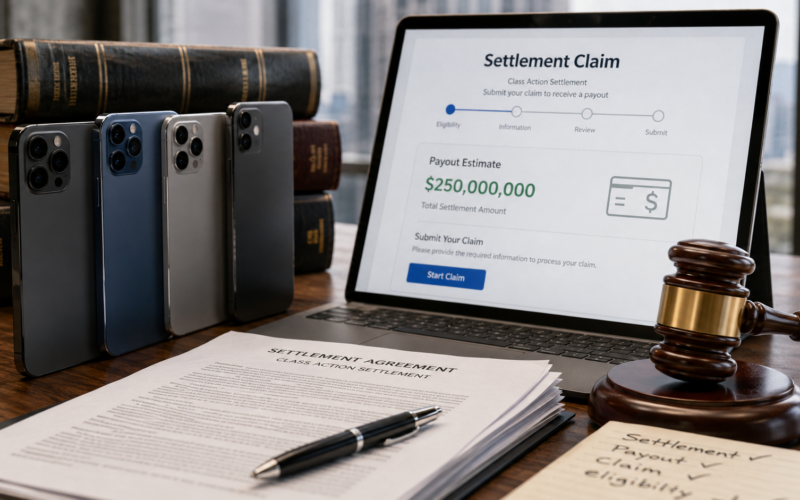
Apple Inc. (NASDAQ: AAPL) has agreed to a proposed $250 million class-action settlement that could pave the way for payouts to millions of eligible United States iPhone owners who bought certain devices marketed around Apple Intelligence and enhanced Siri capabilities. The settlement, which still requires court approval, covers purchases of iPhone 16 models, iPhone 15 Pro, and iPhone 15 Pro Max made between June 10, 2024, and March 29, 2025. Eligible claimants are expected to receive at least $25 per device, with payments potentially rising to as much as $95 depending on the number of approved claims. For Apple Inc., the financial cost is modest relative to its scale, but the strategic signal is harder to dismiss because the case lands directly on the company’s most important product, its most visible artificial intelligence promise, and an investor base still watching whether Apple can translate AI into a durable upgrade cycle.
Why does Apple’s $250 million Siri settlement matter beyond the size of the payout?
The direct financial impact of the proposed settlement is unlikely to trouble Apple Inc.’s balance sheet. With Apple Inc. trading near $287.51 and carrying a market capitalization above $4.2 trillion, a $250 million consumer settlement is financially closer to a rounding item than a capital event. The reason this case matters is not the cheque size. It is the timing, the product category, and the allegation that Apple’s marketing ran ahead of what the device experience could actually deliver.
The settlement revolves around claims that Apple Inc. overstated the availability of enhanced Siri features tied to Apple Intelligence when promoting the iPhone 16 and select iPhone 15 models. That matters because the smartphone market has become increasingly dependent on perceived upgrade justification. Faster chips, better cameras, and incremental battery gains are no longer enough to persuade every consumer to replace a premium device annually or even every two years. Artificial intelligence was supposed to provide the next emotional and functional trigger, especially for users who wanted their phone to feel meaningfully smarter rather than merely newer.
For Apple Inc., Siri has long been both an asset and a vulnerability. The voice assistant helped define early consumer expectations for mobile assistants, but rivals have used generative artificial intelligence to shift the benchmark from command response to contextual reasoning. If Apple Inc. tells consumers that a more personalized Siri is part of the new iPhone proposition, the market expects visible delivery. When delivery slips, the issue becomes more than customer disappointment. It becomes a product trust question.
How could the proposed settlement affect eligible iPhone owners in the United States?
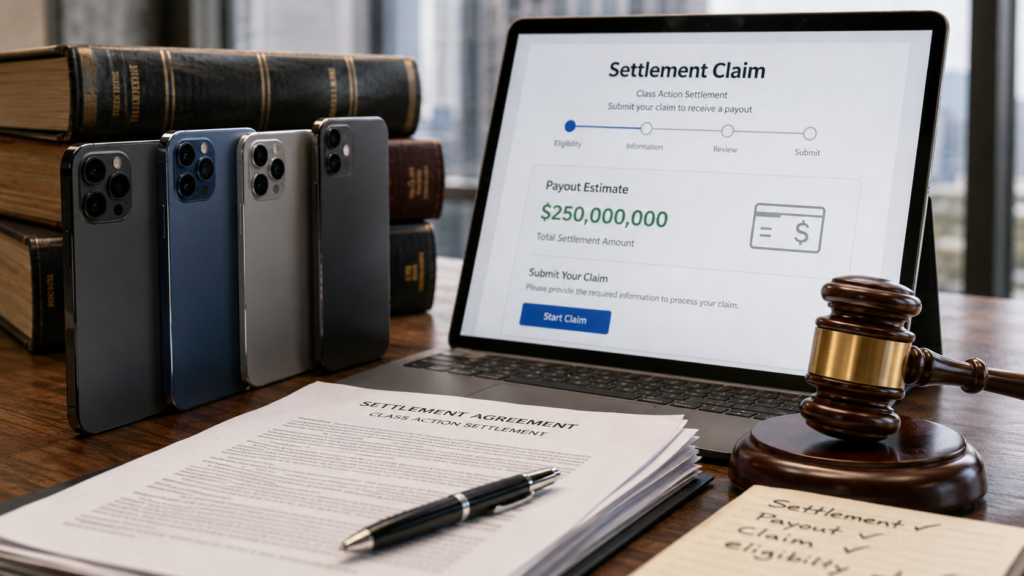
The settlement is expected to benefit United States consumers who purchased an eligible iPhone 16 model, iPhone 15 Pro, or iPhone 15 Pro Max between June 10, 2024, and March 29, 2025. The proposed payment structure gives eligible claimants a baseline payment of about $25 per device, with the final amount capped at roughly $95 depending on how many people file valid claims and how the court-approved process is administered.
That payout range is meaningful for consumers but modest compared with the cost of the devices involved. The iPhone 15 Pro, iPhone 15 Pro Max, and iPhone 16 family sit in Apple Inc.’s premium smartphone ecosystem, where buyers often justify upgrades on a mix of hardware performance, camera improvements, software longevity, and ecosystem value. The legal argument around AI features adds a sharper consumer protection dimension because software capability has become a selling point in the same way hardware specifications once were.
The settlement is not final until approved by the court. If approved, eligible customers are expected to receive notice by email or mail, with a claims website handling filings. That makes the near-term consumer impact procedural rather than immediate. However, from an industry perspective, the process itself may become a reference point for future disputes over whether companies can advertise delayed artificial intelligence capabilities as part of a current product proposition.
Why is Apple’s AI marketing now facing a higher legal and regulatory bar?
The Apple Inc. settlement fits into a broader shift in how artificial intelligence claims are being tested. In the early phase of generative artificial intelligence adoption, many technology companies used broad language around productivity, personalization, automation, and intelligence. That language helped create demand, but it also blurred the line between available features, staged rollouts, beta functionality, and future roadmap commitments.
Apple Inc.’s case is unusually visible because the company’s consumer marketing carries enormous weight. When Apple Inc. frames a capability as part of the iPhone experience, it does not merely influence a niche enterprise buyer. It influences tens of millions of consumer purchasing decisions, carrier upgrade cycles, retail promotions, and investor expectations around device demand. That raises the stakes for accuracy in feature availability claims.
The Better Business Bureau’s National Advertising Division had already recommended that Apple Inc. modify or discontinue certain availability claims linked to Apple Intelligence features. That regulatory advertising backdrop matters because it suggests the issue was not limited to private litigation. It reflected a wider concern that consumers could reasonably interpret Apple’s marketing as saying certain features were available when some were delayed or staged.
The second-order consequence is clear. Technology companies may need to become more precise in separating “available now,” “coming later,” “rolling out,” and “requires future software update.” That may sound like dull compliance language, but in an AI product cycle, it can become a competitive constraint. The more carefully companies must qualify claims, the harder it becomes to use future-facing AI roadmaps as a near-term sales catalyst.
What does the settlement reveal about Apple Inc.’s AI execution risk?
Apple Inc. has a different artificial intelligence challenge from many of its large technology peers. Microsoft Corporation can push AI through enterprise software subscriptions. Alphabet Inc. can embed AI into search, cloud, and productivity products. NVIDIA Corporation sells the infrastructure backbone of the AI boom. Apple Inc., however, must make AI feel indispensable inside personal devices while preserving privacy, reliability, battery life, and simplicity.
That is a more difficult product problem than it looks. Consumers do not reward Apple Inc. for demonstrating AI complexity. They reward Apple Inc. when technology disappears into the experience. A delayed or incomplete Siri upgrade therefore becomes more damaging than a delayed feature in a less visible software product because Siri is supposed to be the user-facing symbol of Apple’s AI transition.
The settlement also exposes the tension between Apple Inc.’s marketing discipline and its AI development cycle. Historically, Apple Inc. has often preferred to enter categories later and present a polished version rather than chase early hype. Generative AI has pressured that playbook. Investors, developers, and consumers want Apple Inc. to show urgency, but Apple Inc.’s brand depends on features that work smoothly at scale. The Siri dispute sits exactly at that intersection. Move too slowly, and Apple Inc. risks looking behind. Market too aggressively, and Apple Inc. risks legal and reputational blowback.
How should investors read Apple Inc. stock performance after the settlement news?
Apple Inc. shares were recently trading at about $287.51, up around 1.15 percent, with the stock sitting close to its 52-week high of $288.62 and far above its 52-week low near $193.25. That price action suggests investors are not treating the proposed settlement as a material earnings risk. The company’s market capitalization above $4.2 trillion also reinforces why a $250 million settlement, in isolation, is unlikely to alter valuation models.
The more useful investor question is whether the settlement changes the risk premium attached to Apple Inc.’s AI-led iPhone upgrade thesis. If Apple Intelligence and Siri improvements eventually create a stronger device replacement cycle, the settlement may fade into the background. If delivery remains uneven, the case could become part of a broader narrative that Apple Inc. is struggling to convert AI expectations into a clean consumer experience.
There is also a messaging risk for future product launches. Apple Inc. needs to persuade consumers that AI-enabled iPhones offer practical value, but it may now have less room to lean on promotional ambiguity. Investors should watch whether future Apple Inc. events distinguish more clearly between available capabilities and future software enhancements. That distinction may not sound exciting, but the market has a funny habit of caring about boring details once lawyers start charging by the hour.
Could this settlement influence how other technology companies market AI features?
The settlement could have implications well beyond Apple Inc. because nearly every major technology company is now selling products with AI attached to them. The risk is especially high where companies use AI as a purchase trigger rather than as a free incremental feature. Smartphones, laptops, enterprise software subscriptions, customer service platforms, cybersecurity tools, and productivity suites are all being marketed around intelligence, automation, and agentic functionality.
For competitors, the lesson is not that companies must stop marketing future capabilities. The lesson is that timing language matters. A company can describe a roadmap, but it must not make a roadmap sound like a shipping product. The distinction becomes more important when the product is expensive, the buyer population is broad, and the advertised capability is central to the purchase decision.
Apple Inc.’s settlement may encourage legal teams and compliance departments across the technology sector to review AI claims more aggressively before campaigns go live. That could slow down some marketing cycles, but it may also improve trust. In a market where consumers are already becoming skeptical of AI branding, clearer claims may become a competitive advantage rather than a constraint.
What happens next for Apple Inc. after the class-action settlement process?
The immediate next step is court review. If the proposed settlement receives approval, eligible iPhone owners will move into the claims process and payments will be calculated based on claim volume and settlement administration costs. Apple Inc. has not admitted wrongdoing, which is common in such settlements, but the practical outcome is still significant because the company is paying to resolve a dispute tied to one of its most strategic product narratives.
The more important next step is product delivery. Apple Inc. needs enhanced Siri capabilities to become visible, useful, and reliable enough to support the broader Apple Intelligence story. The settlement does not prevent Apple Inc. from winning in consumer AI, but it raises the cost of overpromising. From here, the company’s best defence is not legal language. It is execution.
For the smartphone industry, the case may mark a turning point in AI-era advertising. Consumers may still tolerate staged rollouts, but they are less likely to accept uncertainty when a feature is presented as a reason to upgrade. That is the bigger issue beneath the payout. Apple Inc. is not being tested only in court. It is being tested on whether it can make AI feel real enough, soon enough, to justify the next premium iPhone cycle.
Key takeaways on Apple Inc.’s Siri settlement, iPhone payouts, and AI marketing risk
- Apple Inc.’s proposed $250 million settlement is financially small for the company but strategically important because it targets the credibility of its AI-led iPhone marketing.
- Eligible United States buyers of iPhone 16 models, iPhone 15 Pro, and iPhone 15 Pro Max could receive roughly $25 to $95 per device if the court approves the settlement.
- The case highlights the growing legal risk of advertising artificial intelligence features before they are fully available to consumers.
- Apple Inc.’s stock reaction suggests investors see limited near-term financial damage, but the longer-term issue is whether AI can support a stronger iPhone upgrade cycle.
- The settlement may push Apple Inc. to use more precise language around future Siri and Apple Intelligence feature rollouts.
- Competitors across consumer technology and enterprise software are likely to face closer scrutiny over AI availability claims.
- The Better Business Bureau’s National Advertising Division review adds weight to the idea that AI marketing is becoming a formal advertising compliance issue.
- The settlement does not imply Apple Inc. cannot win in AI, but it shows that delayed execution can quickly become a brand, legal, and investor relations problem.
- The next major test for Apple Inc. is whether enhanced Siri becomes a practical consumer feature rather than a delayed promise attached to premium hardware.
Discover more from Business-News-Today.com
Subscribe to get the latest posts sent to your email.