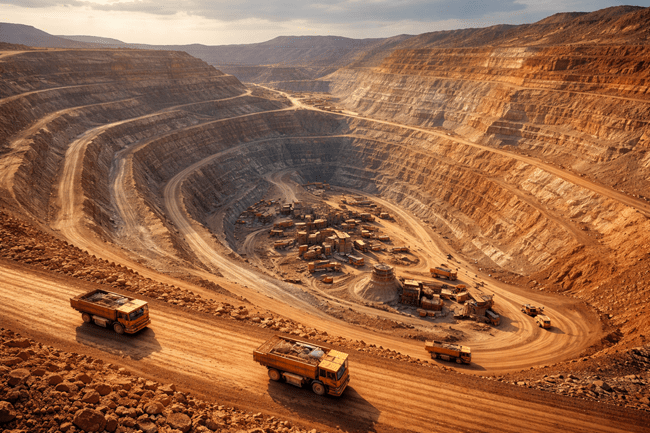


American Tungsten & Antimony Ltd (ASX:AT4) has moved back onto small-cap investor watchlists after high-grade antimony drilling at its Antimony Canyon Project in Utah added fresh momentum to its United States critical minerals story. The company is trying to build a tungsten and antimony platform across the United States and Australia, with exposure to minerals used in defence, high-tech manufacturing and strategic supply chains. The market, however, is not giving the stock a free ride. After a sharp fall from its 52-week high and a capital raise above the current share price, the next test is whether American Tungsten & Antimony Ltd can turn exploration excitement into a credible resource and development pathway.
Why is American Tungsten & Antimony Ltd back on investor watchlists after the Antimony Canyon update?
American Tungsten & Antimony Ltd is attracting renewed attention because its latest Antimony Canyon drilling results gave investors a fresh reason to revisit the company’s United States critical minerals strategy. The company is no longer just presenting a broad thematic case around tungsten and antimony. It now has more drilling evidence from Little Emma, one of the prospects inside the Antimony Canyon Project in Utah.
The appeal is easy to understand. Antimony and tungsten are both linked to defence, advanced manufacturing and supply-chain security. In a market where investors are looking for ASX-listed exposure to United States critical minerals, American Tungsten & Antimony Ltd offers a direct narrative around domestic supply, exploration upside and possible processing infrastructure.
The latest update is important because the company said Phase 1 drilling had extended high-grade mineralisation and strengthened the geological model at Antimony Canyon. Results such as 10.37 metres at 3.98% antimony, including 4.57 metres at 8.56% antimony, give investors a more concrete drilling hook than general talk about strategic minerals.
The risk is that drilling results are still early-stage evidence. American Tungsten & Antimony Ltd has to convert encouraging intercepts into a mineral resource, then into mining studies, permitting, funding and processing plans. Retail investors should treat the update as a stronger exploration signal, not as proof that the company already has a mine.
What does American Tungsten & Antimony Ltd actually own and why does its United States focus matter?
American Tungsten & Antimony Ltd is building a portfolio of antimony and tungsten assets across the United States and Australia. In the United States, the company is advancing the Antimony Canyon Project in Utah, the Tennessee Mountain Tungsten Project in Nevada, the Dutch Mountain processing mill in Utah, the Central Idaho Antimony Project and the Nightingale Tungsten Project.
The United States focus matters because Washington is trying to reduce dependence on foreign supply chains for defence-critical minerals. Antimony and tungsten are not fashionable battery metals like lithium, but they are strategically important because they are used in military, industrial and high-performance applications. That gives the company a national-security angle that can attract investor attention.
The company’s Australian asset, the Achilles Project in New South Wales, also adds depth to the portfolio. The Wild Cattle Creek deposit at Achilles hosts an undeveloped primary antimony resource, which gives American Tungsten & Antimony Ltd another option outside its United States assets.
The complexity is that the company has many moving parts. A portfolio with Utah antimony, Nevada tungsten, a processing mill, Australian antimony and a possible Nasdaq listing can look exciting, but it also creates execution risk. Investors need to know which asset is closest to value creation and which ones remain longer-dated options.
Why do the Little Emma drilling results matter for the Antimony Canyon investment case?
The Little Emma results matter because they help American Tungsten & Antimony Ltd argue that Antimony Canyon may host a broader antimony system rather than isolated high-grade showings. The company said drilling has identified multiple high-grade stibnite pods inside a wider mineralised envelope, with the system open in multiple directions.
That is important for retail investors because early exploration stories often depend on whether high-grade results are repeatable. A single strong intercept can move a stock, but continuity, width, grade consistency and geological control are what eventually support a resource estimate. Little Emma is now being watched because it may help answer whether Antimony Canyon has enough scale to justify more serious development work.
The standout results also arrived after a trading halt, which increased market attention around the update. The share price reaction since then has been mixed, which suggests investors are still trying to weigh the quality of the drilling against the early-stage nature of the project and the broader weakness from the 52-week high.
The risk is that high grade alone does not make a project economic. American Tungsten & Antimony Ltd still needs more drilling, resource modelling, metallurgy, mining studies and processing assumptions. The next drill results and any move toward a maiden resource will matter more than the headline grade alone.
How does the Tennessee Mountain Tungsten Project widen the ASX:AT4 critical minerals roadmap?
The Tennessee Mountain Tungsten Project gives American Tungsten & Antimony Ltd a second major United States mineral pathway. The company has highlighted historical high-grade tungsten intercepts, mineralisation from surface and more than five kilometres of untested strike along the mineralised contact zone.
This matters because tungsten is highly relevant to defence, aerospace, industrial tooling and advanced manufacturing. A company that can present both antimony and tungsten exposure may attract investors looking for broader United States critical minerals leverage rather than a single-commodity exploration story.
The planned maiden diamond drilling at Tennessee Mountain is therefore one of the next major catalysts. If drilling confirms strong tungsten mineralisation, the company’s investment case could broaden beyond Antimony Canyon. That would reduce dependence on one project and give investors another technical milestone to follow.
The risk is that Tennessee Mountain is still at an earlier validation point than Antimony Canyon. Historical data and surface mineralisation can guide drilling, but they do not replace modern assays, resource work and development studies. Investors should watch whether the maiden drilling program confirms the story or simply adds another early-stage exploration layer.
Why does the Dutch Mountain processing mill matter for the hub-and-spoke strategy?
The Dutch Mountain processing mill is important because American Tungsten & Antimony Ltd is not only trying to explore for critical minerals. It is also trying to build a hub-and-spoke development model, where multiple deposits could potentially feed processing infrastructure over time.
That strategy is attractive because processing capacity can be a bottleneck in critical minerals supply chains. A company that controls or refurbishes processing infrastructure may have a stronger pathway than an explorer that only owns ground and drill targets. In the United States, where domestic supply chains are a policy priority, infrastructure can matter as much as geology.
For investors, the Dutch Mountain mill gives the company a more industrial story. If the mill can be refurbished and integrated into a broader tungsten and antimony platform, American Tungsten & Antimony Ltd may have a more credible development pathway than a standalone explorer.
The risk is that processing infrastructure can be capital-intensive and technically demanding. Refurbishment costs, permits, feed quality, metallurgical performance and operating economics all need to be proven. The mill is a strategic advantage only if it can be restored, supplied and operated economically.
How does the A$10 million placement affect the funding and dilution picture for AT4 shareholders?
American Tungsten & Antimony Ltd secured firm commitments for a A$10 million placement at A$0.07 per share to support its United States tungsten and antimony hub-and-spoke strategy. The placement is intended to fund drilling, mill refurbishment, technical studies, permitting, project advancement and work linked to a proposed Nasdaq Capital Market admission.
That funding is important because exploration and development companies need capital before they can create technical proof. The placement gives American Tungsten & Antimony Ltd more room to drill Antimony Canyon, start Tennessee Mountain work and advance Dutch Mountain activities without immediately depending on another raise.
The tension is that the current share price has been trading below the placement price. That can create a complicated sentiment picture. On one hand, the placement shows capital support for the strategy. On the other hand, the market price below A$0.07 tells investors that confidence has weakened since the raise or that the market is demanding more evidence before re-rating the stock.
For retail investors, the key is how efficiently the company uses the money. A$10 million can fund useful work, but it is not unlimited capital for mine development. The next updates need to show that the cash is turning into drill results, resource progress, processing clarity and genuine development milestones.
Why does the proposed Nasdaq pathway matter for American Tungsten & Antimony Ltd?
The proposed Nasdaq pathway matters because United States capital markets are paying closer attention to critical minerals companies that can tell a defence and supply-chain security story. A United States listing could broaden the company’s investor base and place American Tungsten & Antimony Ltd closer to the market most interested in its domestic antimony and tungsten theme.
This is especially relevant because American Tungsten & Antimony Ltd’s core projects are heavily United States-focused. A Nasdaq listing could make strategic sense if management wants investors, customers, policymakers and potential partners to view the company as a United States supply-chain participant rather than only an ASX exploration stock.
The macro backdrop supports the idea. Defence-related demand for critical minerals has encouraged more mining companies to pursue United States listings, particularly where commodities are linked to military supply chains, stockpiling, advanced manufacturing or reduced dependence on China.
The risk is that a Nasdaq pathway is not a substitute for project execution. A listing can improve visibility and capital access, but it does not create a mineral resource, build a mill or secure offtake. Investors should view Nasdaq optionality as a market-access catalyst, not the core value driver.
How is the market currently pricing ASX:AT4 after the drilling update and capital raise?
Recent market data placed ASX:AT4 around A$0.046, with market value near A$71 million. The stock has traded far below its 52-week high, showing that the market remains cautious despite the critical minerals theme and the latest drilling results.
That price action tells a useful story. American Tungsten & Antimony Ltd has enough investor attention to remain active, but not enough confirmed development evidence to escape small-cap volatility. The market is still discounting exploration risk, funding risk and the long road from drilling to production.
The valuation also shows that investors are not treating the company as a fully derisked United States critical minerals developer. They are assigning value to optionality across antimony, tungsten, processing and possible United States market access, but they are also demanding more proof.
For retail investors, the setup is high interest but high risk. If drilling continues to extend mineralisation and management moves toward resource definition, the market may reassess the story. If results slow down, funding concerns return or the Nasdaq pathway becomes delayed, the stock could remain under pressure.
How does the United States critical minerals policy backdrop affect the ASX:AT4 thesis?
The United States critical minerals policy backdrop is supportive because antimony and tungsten sit inside strategic supply-chain concerns. These minerals are used across defence, industrial and high-tech applications, and the United States has been seeking more secure domestic or allied supply options.
For American Tungsten & Antimony Ltd, that backdrop creates a strong narrative. The company’s Utah and Nevada projects fit neatly into the policy theme of rebuilding Western supply chains and reducing dependence on concentrated foreign sources. That is why the company’s geography is as important as the commodities themselves.
The opportunity is that policy support, strategic capital and customer interest can sometimes accelerate projects that would otherwise struggle in ordinary commodity markets. If American Tungsten & Antimony Ltd can define quality resources and show a credible processing route, it may have a more attractive audience than a generic early-stage explorer.
The risk is that policy tailwinds do not guarantee project success. Governments may want supply security, but investors still need economic deposits, permits, metallurgy, funding and execution. Policy can open doors. It cannot drill the holes, build the mill or prove margins.
What execution risks could still challenge the American Tungsten & Antimony investment case?
The first risk is exploration risk. American Tungsten & Antimony Ltd has encouraging drill results, but it still needs enough drilling to support resource estimates and development studies. Until that happens, the investment case remains heavily dependent on geological interpretation.
The second risk is processing risk. Antimony and tungsten projects can involve complex metallurgy and specialised processing requirements. The Dutch Mountain mill may support the hub-and-spoke strategy, but refurbishment and operating performance still need to be proven.
The third risk is funding. The A$10 million placement strengthens the near-term position, but moving from exploration to development can require much larger capital. If the share price remains below the placement price, future funding could become more sensitive.
The fourth risk is expectation risk. Critical minerals stories can attract strong retail interest because the macro themes are powerful. That can lift a stock quickly, but it can also create disappointment if technical progress is slower than investors hoped. ASX:AT4 needs sustained evidence, not just strategic language.
What is the plain-English investor view on American Tungsten & Antimony after the latest update?
The bullish view is that American Tungsten & Antimony Ltd has positioned itself in the right commodities, in the right country, at the right time. Antimony and tungsten are strategically important, United States supply-chain security is a real theme, and the latest Antimony Canyon drilling gives investors something tangible to watch.
The cautious view is that the company is still early in the development curve. It does not yet have a producing mine, a completed resource at Antimony Canyon, confirmed project economics or proven processing integration across the hub-and-spoke model. The stock’s fall from its 52-week high shows that the market is not ignoring those gaps.
The next roadmap is clear. Investors should watch pending and future Antimony Canyon assays, Tennessee Mountain drilling, Dutch Mountain mill refurbishment, resource definition work, cash burn, Nasdaq progress and any signs of government, customer or strategic partner engagement.
For retail investors, American Tungsten & Antimony Ltd is worth watching because it has a sharper critical minerals setup than many small explorers. It is also worth handling carefully because the next stage is about proving scale, not merely owning assets in fashionable commodities.
What are the key takeaways for retail investors tracking American Tungsten & Antimony (ASX:AT4) now?
- American Tungsten & Antimony Ltd (ASX:AT4) is drawing renewed attention after high-grade Antimony Canyon drilling strengthened the company’s United States critical minerals story.
- The latest Little Emma results included strong antimony intercepts, but the company still needs more drilling before investors can assess resource scale and development potential.
- The Tennessee Mountain Tungsten Project adds another United States catalyst, with maiden diamond drilling expected to test a broader tungsten opportunity.
- The Dutch Mountain processing mill is central to the company’s hub-and-spoke strategy, although refurbishment, feed supply and operating economics still need to be proven.
- The A$10 million placement gives American Tungsten & Antimony Ltd more funding for drilling and development work, but the share price trading below the placement price keeps valuation pressure alive.
- A proposed Nasdaq pathway could widen investor access, but the real value driver remains technical progress across antimony, tungsten and processing assets.
- The biggest risks are early-stage exploration uncertainty, processing complexity, future funding needs, valuation volatility and the gap between critical minerals policy support and actual project economics.
Share this:
Discover more from Business-News-Today.com
Subscribe to get the latest posts sent to your email.