


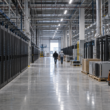



Akkuyu Nuclear JSC has received the full set of four steam generators for Unit 4 of the Akkuyu Nuclear Power Plant in Türkiye, completing delivery of key reactor hall equipment for the final unit of the country’s first nuclear power station. The project, being built by Rosatom State Corporation in Mersin province, is designed around four VVER-1200 reactors with total planned capacity of 4,800MW. The delivery matters because Akkuyu is not only a power project, but a test of Türkiye’s long-term strategy to reduce fuel import exposure, diversify baseload generation and develop nuclear operating capability. The arrival of the Unit 4 steam generators strengthens construction continuity, but the larger investor and policy question remains whether Akkuyu can move from equipment delivery to reliable commissioning after repeated schedule pressure.
Why does the Akkuyu Unit 4 steam generator delivery matter for Türkiye’s nuclear energy strategy?
The delivery of the four steam generators for Akkuyu Unit 4 matters because it shows that the project’s supply chain is still progressing across all four planned units, not only the first reactor that is closest to commissioning. Large nuclear projects are judged on physical milestones, and heavy reactor hall equipment deliveries are among the clearest signs that construction has moved beyond civil works into plant assembly readiness. For Türkiye, that is strategically important because Akkuyu is expected to become the country’s first operating nuclear power plant and a major new source of baseload electricity.
Steam generators are central components in pressurised water reactors because they transfer heat from the reactor’s primary circuit to the secondary circuit, where steam is produced to drive turbines. Their delivery does not mean Unit 4 is close to operation, but it does mean one of the project’s key long-lead equipment packages has reached the site. In a nuclear construction programme, long-lead equipment is often the difference between a schedule that can still be managed and a schedule that starts looking like a polite work of fiction.
The strategic significance goes beyond Unit 4. Akkuyu is intended to provide a large, low-carbon baseload source for Türkiye’s electricity system, which remains exposed to imported gas, coal, renewables variability and foreign exchange pressure. If completed as planned, the four-unit project could become a material anchor in Türkiye’s power mix. The latest delivery therefore strengthens the project’s physical credibility, even though commissioning, licensing, grid integration and operational readiness remain decisive.

How does the Unit 4 milestone fit into Akkuyu’s wider four-reactor construction schedule?
The Unit 4 delivery fits into a wider build-out in which multiple units are being developed in parallel rather than sequentially waiting for Unit 1 to start commercial operations. That parallel approach is common in large nuclear programmes because it allows common infrastructure, workforce mobilisation and supply chains to be used across several units. The benefit is potential schedule efficiency. The risk is that delays or financing stress can affect several units at once.
Akkuyu’s first unit has attracted most attention because it is closest to physical start-up and commissioning. However, the arrival of steam generators for Unit 4 shows that the project’s final reactor is also being stocked with major equipment. This helps Rosatom State Corporation and Akkuyu Nuclear JSC maintain momentum across the full plant build-out, even as market observers remain focused on when the first unit will actually begin electricity generation.
The schedule pressure is real. Akkuyu’s earlier target dates have shifted, and Reuters has reported that commissioning expectations have moved from the original 2023 timeline toward late 2026 for the first unit. That history matters because nuclear project confidence depends not only on whether equipment arrives, but whether installation, testing, regulatory approvals and grid synchronisation follow in disciplined sequence. The Unit 4 milestone helps, but it is not the same as resolving the broader timing challenge.
Why are VVER-1200 reactors central to Rosatom State Corporation’s overseas nuclear model?
The VVER-1200 reactor design is central to Rosatom State Corporation’s international nuclear offering because it gives the Russian state-owned nuclear group a standardised Generation III-plus reactor platform for export projects. Akkuyu is one of the most prominent examples of that model, combining Russian technology, Russian-led financing and long-term project execution in a country seeking to enter commercial nuclear generation for the first time. The model is designed to lower the entry barrier for countries that want nuclear capacity but do not yet have a mature domestic nuclear build programme.
For Türkiye, the advantage is access to proven reactor technology and an integrated delivery structure. Building a first nuclear plant requires regulatory systems, trained personnel, safety culture, emergency planning, grid planning and long-term fuel and waste arrangements. A vendor-led model can accelerate entry into nuclear power by packaging technology, construction and operational support. The trade-off is dependence on a foreign supplier for critical parts of the nuclear value chain.
For Rosatom State Corporation, Akkuyu is commercially and strategically important because overseas nuclear projects reinforce Russia’s position in the global nuclear market. However, the geopolitical environment has become more complicated since Russia’s war in Ukraine. While Rosatom State Corporation has not been sanctioned as extensively as some other Russian entities, financing, payments, technology transfer and partner confidence remain sensitive issues. Akkuyu is therefore both a nuclear energy project and a geopolitical balancing act.
How could Akkuyu change Türkiye’s dependence on imported energy fuels?
Akkuyu could change Türkiye’s energy mix by providing large-scale domestic electricity generation that does not depend on imported gas or coal during operation. Türkiye has long faced a structural energy-import burden because domestic fossil-fuel resources are limited relative to demand. Nuclear power offers a way to generate baseload electricity with fuel requirements that are small in physical volume compared with gas or coal, even though nuclear fuel supply still creates its own dependency chain.
The planned 4,800MW capacity is significant for a power system that must balance rising demand, industrial expansion, electrification and renewables integration. Nuclear generation can complement wind and solar because it provides steady output that is not weather-dependent. That is why Türkiye sees Akkuyu as part of energy security, not merely decarbonisation. The country wants lower exposure to volatile fuel markets, and nuclear offers one route, even if it comes with high upfront costs and long project timelines.
The limitation is that nuclear does not solve every energy-security issue immediately. Until Akkuyu is commissioned and operating reliably, Türkiye remains exposed to imported gas, oil and coal prices. Even after commissioning, nuclear fuel supply, maintenance, regulatory oversight and waste management will require long-term planning. Akkuyu can reduce certain dependencies, but it introduces a new strategic relationship with the nuclear vendor and fuel supply chain.
What operational and regulatory risks still face Akkuyu before full commissioning?
The biggest near-term risk is the transition from construction progress to commissioning discipline. Delivering equipment to site is essential, but nuclear value is created only when components are installed, tested, licensed and operated safely. Steam generators must be integrated with the reactor coolant system, pressure-tested, supported by auxiliary systems and connected into the broader turbine island and safety architecture. Each step requires documentation, inspection and regulatory approval.
Regulatory readiness is equally important because Türkiye is entering commercial nuclear power for the first time. The country must build and maintain the institutional capability to oversee safety, emergency preparedness, environmental protection and long-term operational compliance. Nuclear power is not like adding another gas turbine to the system. It requires a permanent safety culture that extends across operator training, regulator independence, maintenance planning and public communication.
There are also geopolitical and financing risks. Reuters has reported previous payment complications involving Akkuyu-related funds and continuing talks over possible Turkish participation in the project’s ownership structure. Such issues do not necessarily stop construction, but they can affect confidence, stakeholder alignment and long-term operating governance. For a first-of-a-kind national nuclear project, governance is not a side issue. It is part of the asset.
Why does Akkuyu matter for the wider nuclear revival debate in emerging markets?
Akkuyu matters beyond Türkiye because it reflects a broader nuclear revival debate in emerging and middle-income economies. Many countries are looking again at nuclear power because electricity demand is rising, grids need firm low-carbon generation and energy security has become more urgent after repeated fuel-market shocks. Nuclear offers reliable output, but it also requires high upfront capital, strong regulation and long project discipline.
The Turkish project demonstrates both sides of that equation. On one hand, Akkuyu shows that a country without existing commercial nuclear generation can move forward with a large plant through a vendor-backed model. On the other hand, the project’s delays and geopolitical exposure show why nuclear development is difficult. The technology can provide long-term strategic value, but the construction path is rarely quick or simple.
For other countries considering nuclear power, Akkuyu will be watched as a case study. If Türkiye brings Unit 1 online successfully and then steadily commissions the remaining units, the project could strengthen confidence in large reactor deployment in new nuclear markets. If the project faces further delays or governance concerns, it will reinforce caution among governments weighing nuclear against renewables, storage, gas, grids and small modular reactor options.
How does the project affect Rosatom State Corporation’s global nuclear supply-chain credibility?
The Unit 4 steam generator delivery supports Rosatom State Corporation’s supply-chain credibility because it shows that heavy nuclear equipment can still move to an overseas project despite geopolitical friction and complex logistics. The steam generators were manufactured at Atommash in Volgodonsk and shipped by sea to Türkiye, demonstrating continuity in Russia’s nuclear manufacturing and export chain. For Rosatom State Corporation, this matters because overseas customers want proof that major components can be delivered on time and in usable condition.
However, supply-chain credibility is broader than equipment movement. Customers also consider financing reliability, sanctions exposure, maintenance support, fuel supply, spare parts availability and political risk. Rosatom State Corporation remains a major global nuclear vendor, but its international projects now operate in a more contested geopolitical environment. Akkuyu’s progress therefore helps the company’s case, but it does not remove the questions surrounding Russian-backed energy infrastructure.
The project also highlights the strength and vulnerability of vertically integrated nuclear delivery. A vendor that controls design, equipment, fuel and construction support can move quickly when conditions align. But that same concentration can become a risk if geopolitics, financing or bilateral relations deteriorate. Akkuyu’s future performance will influence how other countries assess that trade-off.
Can Akkuyu become a reliable baseload anchor for Türkiye’s power system?
Akkuyu can become a reliable baseload anchor if the plant moves through commissioning safely, demonstrates high availability and integrates smoothly with Türkiye’s grid. Nuclear plants are built for long operating lives, and a four-unit site can provide large volumes of steady power once operating. For Türkiye, that would support energy security, reduce fuel-import exposure and provide low-carbon generation that complements renewables.
The first challenge is Unit 1. Until the first reactor reaches criticality, synchronises with the grid and begins stable operation, Akkuyu remains a construction story rather than a generation asset. Once Unit 1 operates successfully, confidence in the remaining units may improve, particularly if the project shows that lessons can be transferred across the site. The Unit 4 equipment milestone strengthens the longer-term build-out, but the credibility bridge still runs through Unit 1 commissioning.
A neutral reading suggests that Akkuyu has made another meaningful physical step forward, while the strategic test remains unfinished. Türkiye is closer to a functioning nuclear fleet than it was before, but not yet at the point where nuclear power is reshaping the electricity mix. Steam generators are on site. The harder job is turning them into decades of reliable electricity.
Key takeaways on Akkuyu Unit 4 steam generator delivery and Türkiye’s nuclear power strategy
- Akkuyu Nuclear JSC has received four steam generators for Unit 4, completing delivery of key reactor hall equipment for the project’s final planned reactor.
- The equipment delivery supports construction continuity across all four units of Türkiye’s first nuclear power plant.
- Akkuyu is designed with four VVER-1200 reactors and total planned capacity of 4,800MW.
- The project is strategically important because Türkiye wants to reduce exposure to imported fossil fuels and add firm low-carbon baseload power.
- Steam generator delivery is a major construction milestone, but it does not remove commissioning, licensing, grid integration or operational readiness risks.
- The project remains important to Rosatom State Corporation’s international nuclear model, which combines reactor technology, financing and project delivery.
- Akkuyu’s schedule history means investors and policymakers will judge progress by actual commissioning rather than equipment delivery alone.
- Türkiye’s first nuclear plant will require strong domestic regulatory capability, trained operators and long-term nuclear safety governance.
- The project could become a case study for emerging-market nuclear development if Unit 1 reaches stable operation and the remaining units progress smoothly.
- For Türkiye, Akkuyu’s real value will emerge only when construction milestones turn into dependable electricity generation.
Discover more from Business-News-Today.com
Subscribe to get the latest posts sent to your email.


