




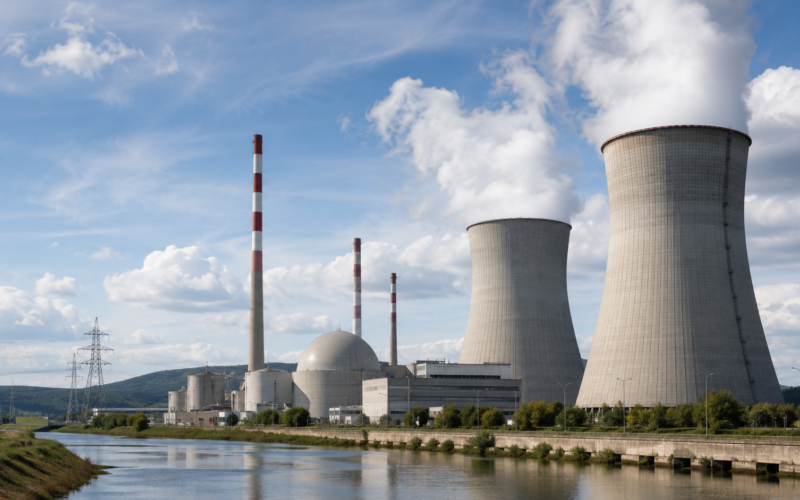
Adani Power Limited, listed on the National Stock Exchange of India as ADANIPOWER, is evaluating Bina and Nigrie in Madhya Pradesh as potential locations for nuclear power development under its proposed 10 GW nuclear capacity programme by 2035. The company’s latest management disclosures do not support reports that it plans to develop two nuclear power projects in Odisha. Instead, Adani Power has identified land availability at Bina and Nigrie as a strategic option while it waits for the Indian government to complete the rules governing private-sector participation in nuclear generation. A successful entry would diversify a business that currently depends overwhelmingly on thermal power and could make Adani Power one of India’s largest nuclear operators. The central uncertainty is whether available land and corporate ambition can be converted into regulator-approved projects that produce electricity at tariffs affordable to Indian distribution companies.
The development is still at a preliminary evaluation stage rather than a committed investment decision. Adani Power management said it was studying both domestic and overseas nuclear technologies, but technology selection, project costs and commissioning plans would remain difficult to determine until the implementation framework under India’s new nuclear legislation becomes clearer.
That distinction matters because nuclear development involves a much longer decision chain than an ordinary thermal or renewable project. Identifying land may create strategic optionality, but Adani Power would still need to resolve site suitability, ownership, reactor design, licensing, financing, fuel arrangements, power-purchase agreements and long-term waste-management obligations before construction could begin.
Why does the Odisha attribution not match Adani Power’s latest nuclear disclosures?
The Odisha reference appears to have been drawn from a separate nuclear expansion programme involving state-controlled NTPC Limited. NTPC Limited said in May 2026 that it had started site-selection studies in Andhra Pradesh, Madhya Pradesh, Gujarat and Odisha as part of a plan to develop 30 GW of nuclear generation capacity.
Adani Power’s disclosures point elsewhere. During its July 2026 earnings call, management discussed Bina and Nigrie, both located in Madhya Pradesh, as locations with substantial land that could potentially support additional thermal or nuclear capacity. Management placed particular emphasis on evaluating whether Bina could meet the specialised requirements of a nuclear site, while clearly stating that no project had yet been planned.
The difference is commercially significant. Describing an early-stage Madhya Pradesh site evaluation as two confirmed Odisha nuclear projects would overstate both the location and the maturity of Adani Power’s plans. There is presently no disclosed reactor capacity allocation for either Bina or Nigrie, no confirmed project company, no environmental application, no Atomic Energy Regulatory Board siting consent and no announced construction timetable.
The accurate formulation is therefore that Adani Power is preserving Bina and Nigrie as potential locations within a wider 10 GW nuclear ambition. Odisha remains relevant to India’s broader nuclear expansion, but current evidence connects the state to NTPC Limited’s studies rather than to two confirmed Adani Group nuclear projects.
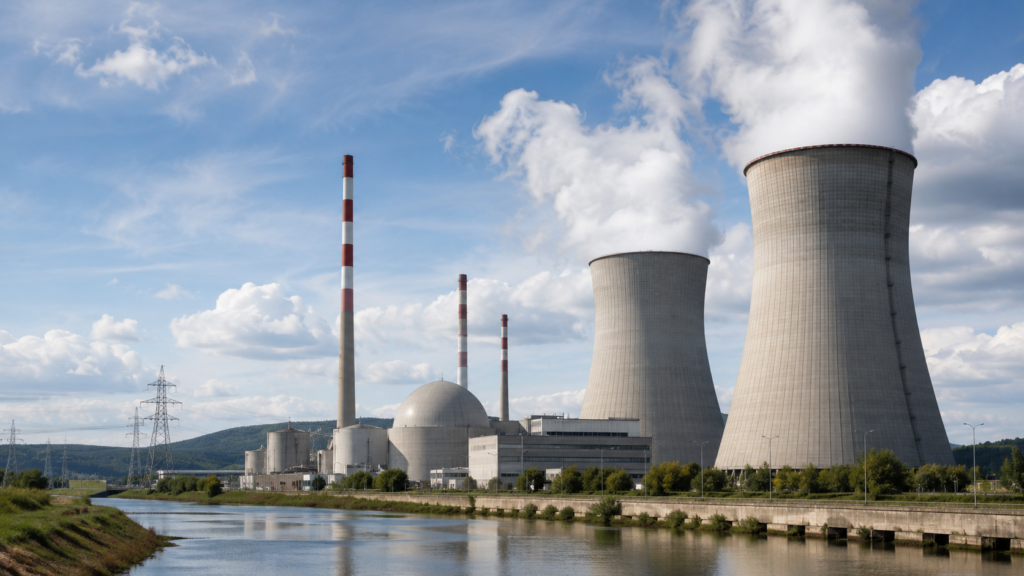
How could the Bina and Nigrie land banks create nuclear optionality for Adani Power?
Adani Power gained exposure to Bina and Nigrie through its acquisition of a 24 percent stake in Jaiprakash Power Ventures Limited. The investment is accounted for as an associate, which means Adani Power recognises its proportionate share of profit but does not consolidate the underlying balance sheet of Jaiprakash Power Ventures Limited.
That structure creates an important qualification around future development. Adani Power has strategic influence through its shareholding, but the company has not disclosed whether a nuclear project would be developed by Adani Power directly, by Jaiprakash Power Ventures Limited, through a joint venture or through a separate nuclear-generation entity. Any substantial project would require a clearly defined ownership, governance and capital-contribution framework.
Available land could nevertheless provide a valuable head start. Existing power locations may offer access to transmission infrastructure, water studies, transport links, industrial labour and relationships with state authorities. These advantages can shorten parts of the early development process and reduce the risk of starting with an entirely undeveloped greenfield location.
However, a brownfield power location is not automatically suitable for a nuclear reactor. Atomic Energy Regulatory Board requirements call for detailed assessment of natural and human-induced hazards, possible radiological effects on communities and the environment, and the feasibility of emergency-management arrangements. Geography, population distribution, meteorology, hydrology, geology, seismic conditions and the proposed reactor type must all be evaluated before siting consent can be considered.
Bina and Nigrie should therefore be viewed as candidate land banks rather than approved nuclear sites. Their strategic value will increase only after technical studies demonstrate that the locations can support the reactor capacity, cooling requirements, exclusion zones and safety systems eventually proposed by the developer.
Why would a 10 GW nuclear target materially change Adani Power’s generation portfolio?
Adani Power reported installed generation capacity of 18,330 MW in the first quarter of the 2027 financial year. A 10 GW nuclear portfolio would be equivalent to roughly 55 percent of that current installed base, although the company is separately expanding its thermal portfolio toward 45 GW.
The nuclear target is therefore not a minor diversification experiment. If delivered, it would establish a second large baseload platform alongside Adani Power’s coal-fired generation fleet and could materially alter the company’s long-term carbon profile, fuel exposure and asset life cycle.
Nuclear generation could also complement the wider Adani portfolio’s renewable-energy investments. Solar and wind capacity can provide low-cost electricity when conditions are favourable, while nuclear plants can deliver continuous low-carbon power with high capacity utilisation. That combination could become increasingly valuable as Indian electricity demand grows and the grid requires both decarbonisation and round-the-clock reliability.
The scale is also significant within national policy. India is targeting 100 GW of nuclear capacity by 2047, compared with approximately 8.8 GW currently. Adani Power’s stated 10 GW ambition would represent one-tenth of that national goal, placing the company among the most important prospective private participants if the programme is executed in full.
However, the target should not yet be treated as committed capacity. Adani Power has described nuclear development as an intention dependent on government rules. Management has not announced a first reactor order, an engineering partner, a financial commitment or a confirmed commissioning date.
What does the SHANTI Act enable, and which operating rules remain unresolved?
India’s SHANTI Act of 2025 created a policy foundation for private entities to participate in nuclear energy, including technology research and the development of an indigenous private-sector supply chain. The legislation is strategically important because nuclear generation had historically remained concentrated within government-controlled institutions.
The government is also supporting domestic small modular reactor development, including the 220 MWe Bharat Small Modular Reactor and the 55 MWe SMR-55 design. These programmes could eventually expand the range of nuclear technologies available to industrial and private-sector participants, although Adani Power has not confirmed that either design is part of its project assessment.
The remaining challenge is converting legislative permission into an investable commercial framework. Adani Power management said the rules required to implement private participation had not been finalised at the time of its July earnings call. The company consequently could not determine when capital would be committed, which reactor technology would be selected or when its first plant could be commissioned.
Investors will require clarity on the nuclear operator’s responsibilities, the licensing process, liability allocation, fuel and waste arrangements, technology transfer, project ownership and the mechanisms through which capital-intensive projects can earn predictable returns. Not every issue will necessarily be resolved through a single rulebook, but the overall framework must make long-duration private investment commercially bankable.
The timing is particularly important because management estimates that a nuclear project could require seven to eight years from planning to commissioning. A 2035 capacity target therefore leaves limited room for extended policy delays, site rejection, technology redesign or financing interruptions.
Which reactor technology could make Adani Power’s nuclear electricity commercially viable?
Adani Power is evaluating both domestic and international technologies rather than committing to a single reactor platform. Management’s stated priority is cost effectiveness, with the eventual power tariff needing to remain affordable for electricity distribution companies and consumers.
This commercial test may prove more difficult than identifying a technically suitable reactor. Nuclear projects typically require heavy upfront investment, long development periods and substantial expenditure before revenue begins. The financing cost accumulated during construction can materially affect the final electricity tariff, particularly when projects suffer delays or design changes.
Domestic technology may offer advantages in local supply-chain participation, regulatory familiarity and reduced exposure to foreign-currency costs. Overseas technology could provide access to alternative reactor sizes, operating experience and potentially faster capacity deployment, but may introduce higher equipment costs, technology-transfer negotiations and currency risk.
Smaller reactor designs could allow capacity to be added in stages, potentially reducing the amount of capital exposed to a single construction decision. Large reactors may deliver stronger economies of scale once operating, but they create greater concentration risk during construction. Adani Power has not disclosed whether it prefers large conventional reactors, small modular reactors or a combination of technologies.
The correct technology choice will ultimately depend on more than the quoted equipment cost. Management will need to compare total construction cost, financing terms, localisation, expected plant availability, fuel-cycle requirements, operating life, decommissioning provisions and the tariff structure available under long-term power contracts.
Can Adani Power finance nuclear projects while completing its 45 GW thermal expansion?
Adani Power enters the nuclear evaluation period with strong operating momentum, but it also has one of India’s largest thermal expansion programmes under execution. The company generated 28.8 billion units in the first quarter of the 2027 financial year, while installed capacity reached 18,330 MW and plant load factor increased to 77.9 percent.
Continuing revenue rose 26.6 percent to ₹17,935.96 crore, continuing EBITDA increased 21.6 percent to ₹6,982.75 crore and profit after tax advanced 47.2 percent to ₹4,866.60 crore. Reported profit included higher prior-period income recognition, making continuing operating figures a more useful measure of underlying performance.
Total debt stood at ₹58,381.32 crore at June 30, 2026, while net debt was ₹47,642.80 crore. The company is simultaneously progressing projects at Korba, Mahan, Raipur, Raigarh and Mirzapur as part of its plan to reach 45 GW of generation capacity.
Nuclear development would add another layer of capital intensity to this programme. No nuclear investment estimate has been disclosed, which means it would be premature to calculate funding requirements or assume that existing internal cash generation can cover the programme.
The strongest financing strategy may involve staged development, long-term contracted tariffs, technology partnerships and a project structure that distributes construction and operating risks across several participants. Adani Power’s balance sheet and cash flow provide credibility, but they do not remove the need for nuclear-specific financing arrangements.
Business News Today’s assessment is that nuclear expansion should currently be treated as long-duration strategic optionality rather than a component of near-term earnings forecasts. The company’s thermal projects, power-purchase agreements and operating utilisation remain the principal drivers of cash generation during the years in which nuclear regulations and feasibility studies are being completed.
What does the latest Adani Power share-price performance indicate about sentiment?
Adani Power shares were displayed at ₹214.20 at 9:26 a.m. IST on August 3, 2026, up 1.37 percent from the previous close. The stock remained within a 52-week range of ₹110.45 to ₹254.20, while market capitalisation was approximately ₹4.13 lakh crore.
Using ₹214.20 as the reference price, the stock was broadly unchanged from its July 27 close of ₹213.96 and approximately 3.4 percent below its July 3 close of ₹221.79. The recent performance suggests that investors have not yet assigned a decisive near-term valuation premium to the nuclear strategy.
Institutional sentiment after the first-quarter results was generally constructive. Business Today reported post-results price targets of ₹275 from Morgan Stanley, ₹266 from Cantor Fitzgerald and ₹220 from Bernstein, while the nine-analyst consensus cited by the publication stood at ₹247.67. These estimates primarily reflect Adani Power’s existing operations, thermal expansion and contracted generation economics rather than independently valued nuclear projects.
That distinction is important. Nuclear ambition can support a longer-term strategic narrative, but an immediate rerating would require investors to make assumptions about regulations, capital costs and project returns that management itself has not yet finalised.
Sentiment is therefore positive toward Adani Power’s operating scale and growth pipeline, but more neutral toward nuclear execution. The nuclear programme could eventually create significant value if projects receive approval and secure viable tariffs, but the current evidence supports option value rather than a bankable earnings contribution.
Which milestones would turn Adani Power’s nuclear ambition into an investable project?
The first meaningful catalyst would be publication of the detailed government rules governing private nuclear participation. Those rules would allow Adani Power to define which legal entity could own and operate a project, how technology partnerships could be structured and what regulatory responsibilities would remain with public institutions.
The second catalyst would be formal selection of a preferred site. A public announcement that Bina, Nigrie or another location had entered an Atomic Energy Regulatory Board siting process would represent a substantial advance beyond management’s current land-bank assessment.
Technology selection would provide the next test. Investors would need to know the reactor design, proposed capacity per unit, technology provider, localisation level and expected construction period. Those decisions would influence both the capital requirement and the electricity tariff needed to make the project commercially viable.
A disclosed ownership and financing structure would be equally important because Adani Power currently holds only a 24 percent associate stake in Jaiprakash Power Ventures Limited. Any use of Bina or Nigrie would require clarity regarding land rights, project control, funding obligations and the distribution of future earnings.
The final early-stage proof point would be a contracted route to revenue. Long-term power-purchase agreements, sovereign support mechanisms or another predictable tariff framework would materially reduce project-financing risk. Until those milestones are visible, the 10 GW target remains strategically credible but financially unquantified.
What are the key takeaways from Adani Power’s corrected nuclear expansion strategy?
- Adani Power is evaluating Bina and Nigrie in Madhya Pradesh, not two confirmed nuclear projects in Odisha.
- Odisha is included in a separate nuclear site-selection programme disclosed by NTPC Limited.
- Adani Power is targeting up to 10 GW of nuclear capacity by 2035, subject to government rules and project approvals.
- Bina and Nigrie provide substantial land availability, but neither location has been confirmed as an approved nuclear site.
- Adani Power owns a 24 percent associate stake in Jaiprakash Power Ventures Limited, making the future ownership structure important.
- The company is considering domestic and overseas reactor technologies, with affordability and project cost guiding its decision.
- Atomic Energy Regulatory Board siting consent would require extensive technical, environmental and safety assessments.
- Strong first-quarter earnings support Adani Power’s expansion capacity, but its 45 GW thermal programme already requires substantial capital.
- The share price has remained broadly flat over five sessions and lower over one month, indicating that nuclear plans are not yet a dominant valuation driver.
- The next measurable proof points are government rules, formal site selection, reactor choice, project ownership and a disclosed financing model.
Discover more from Business-News-Today.com
Subscribe to get the latest posts sent to your email.