




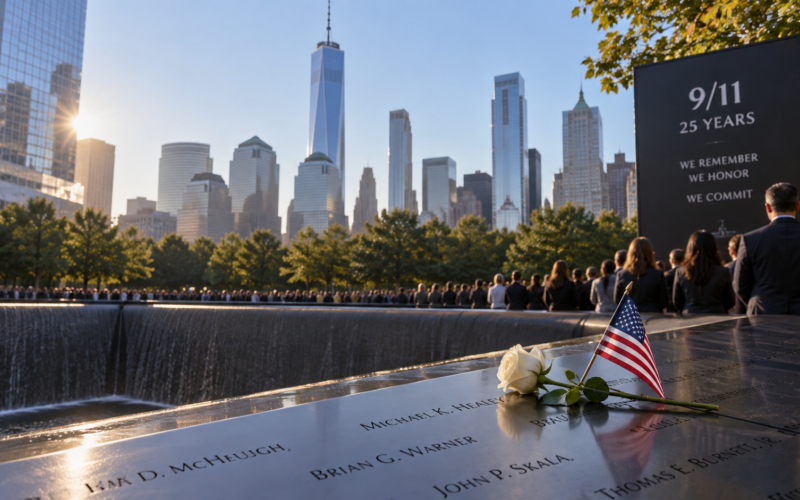
Americans gathered at Ground Zero, the Pentagon and Shanksville on September 11, 2026 to mark exactly 25 years since al-Qaeda hijackers carried out the deadliest terrorist attack on United States soil, killing 2,977 people and reshaping American security and foreign policy for a generation. Victims’ relatives once again read names aloud in New York while ceremonies were held at all three locations struck on September 11, 2001.
President Donald Trump attended the remembrance ceremony at the Pentagon, where 184 people were killed, while Vice President JD Vance joined commemorations in New York. Former presidents and victims’ families were also among those marking the milestone anniversary as the country reflected on an event that continues to influence national security, politics and American society.
Why does the 25th anniversary of September 11 carry a different significance?
A quarter century creates a generational divide. Millions of American adults were either children or had not yet been born in 2001, meaning September 11 increasingly exists for them through history, family memory and public commemoration rather than direct experience.
For relatives of those killed, however, the anniversary remains intensely personal. Children who lost parents have themselves become parents, while families continue to return to memorial sites where the names of victims are read aloud each year.
The milestone therefore carries a dual responsibility: remembering the individuals killed while explaining to a younger generation why a single morning altered American politics and global affairs so profoundly.
Why is the September 11 death toll still growing decades after the attacks?
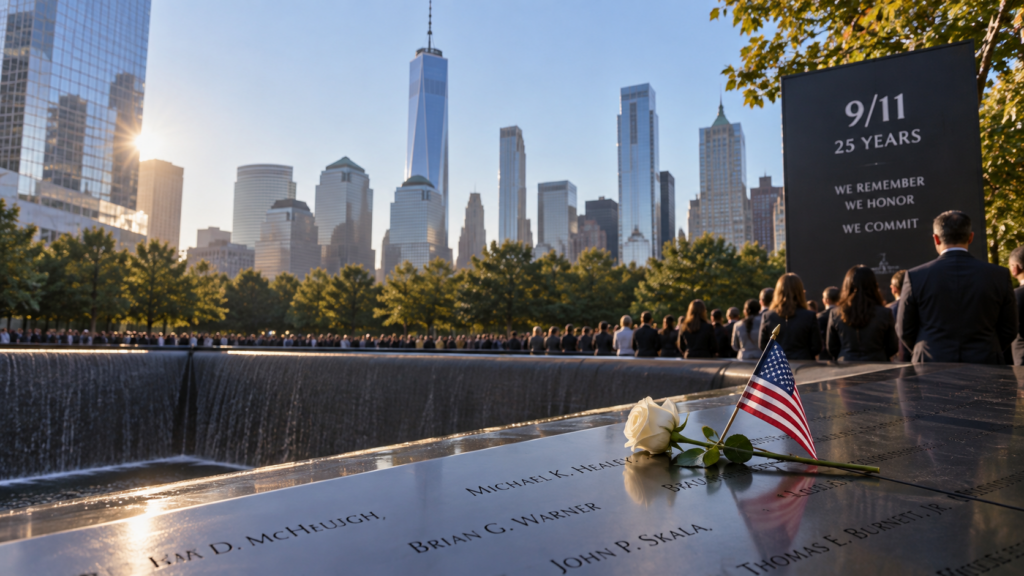
The immediate death toll of 2,977 does not capture the entire human impact. Thousands of first responders, construction workers, residents and others exposed to toxic dust and debris around the World Trade Center later developed cancers, respiratory illnesses and other serious conditions.
Reuters reported that more than 600 firefighters have now died from illnesses linked to their service after the attacks, illustrating how the health consequences have extended far beyond September 2001. This year’s New York commemoration added another moment of silence to recognise people who died from 9/11-related illnesses.
That long-term health burden has transformed the definition of who counts as a victim of September 11. The disaster continues to generate medical, compensation and public-policy obligations even as the physical reconstruction of Lower Manhattan has long been completed.
How did 9/11 reshape US foreign policy and national security for a generation?
The attacks triggered the United States-led war in Afghanistan and became part of the political context surrounding the later invasion of Iraq. They also transformed airport security, intelligence sharing, surveillance legislation and the structure of American homeland-security institutions.
Those decisions carried enormous financial and strategic consequences. Military deployments continued for decades, while debates over counterterrorism, civil liberties, interrogation, surveillance and intervention became defining issues in American politics.
The 25th anniversary arrives while the United States is again engaged in major conflict in the Middle East. Trump used his Pentagon remarks to connect remembrance with contemporary national-security challenges, including Iran, although the circumstances of today’s confrontation are fundamentally different from the al-Qaeda attacks of 2001.
What does “never forget” mean when half a lifetime has passed since 9/11?
Commemoration inevitably changes as eyewitness generations age. Schools, museums and memorial institutions increasingly carry responsibility for explaining the attacks to people who have no personal memory of watching them unfold.
That creates an opportunity for a more complete historical understanding. Remembering September 11 can encompass the victims and extraordinary rescue efforts while also examining the wars, security policies and social consequences that followed.
Twenty-five years later, the enduring lesson may be that September 11 never became a closed chapter. Its effects remain visible in American institutions, foreign policy, public health and families who continue to live with losses that began on a clear Tuesday morning in 2001.
Discover more from Business-News-Today.com
Subscribe to get the latest posts sent to your email.



