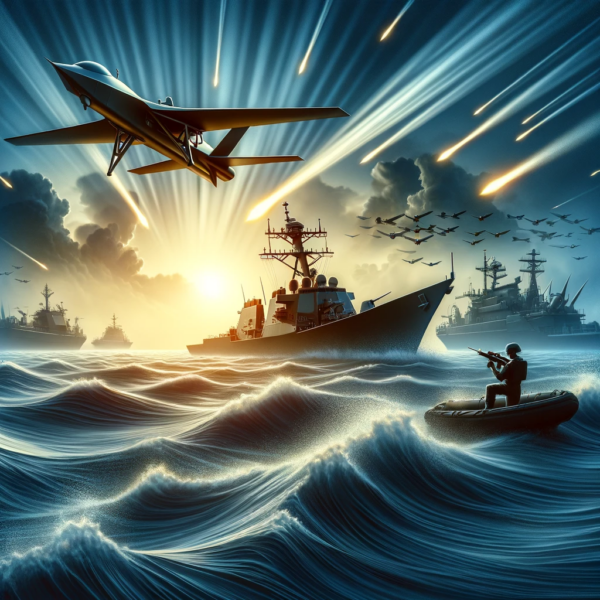






Fourteen countries and the European Union have jointly reaffirmed a landmark international ruling that rejected China’s sweeping claims across the South China Sea, creating one of the clearest coordinated diplomatic challenges to Beijing’s maritime position in recent years.
The declaration was released on Sunday, July 12, 2026, exactly 10 years after an arbitral tribunal ruled that China had no legal basis to claim historic rights over most of the strategically important waterway.
The participating governments said the 2016 decision remained final and legally binding and rejected destabilising actions that threaten peace and regional stability.
China responded by again declaring the award illegal, invalid and without binding force. Beijing said it would not accept claims or actions based on the ruling and accused outside governments of interfering in disputes that should be resolved through direct negotiations.
The renewed confrontation is not merely an anniversary disagreement. It comes as Chinese and Philippine vessels continue dangerous encounters around disputed reefs and fishing grounds, while the United States has repeatedly warned that its defence treaty with the Philippines could apply if Philippine forces, ships or aircraft come under armed attack.
Which countries joined the July 12 statement challenging China’s maritime claims?
The joint declaration was supported by the Philippines, United States, United Kingdom, Japan, Australia, New Zealand, Canada, Germany, Italy, Estonia, Latvia, Lithuania, Romania and Slovenia.
The European Union issued a separate statement on behalf of its 27 member states, describing the 2016 award as a landmark contribution to the peaceful settlement of international disputes.
The coalition is notable because it extends well beyond the countries directly bordering the South China Sea.
Japan, Australia and New Zealand have strong security and commercial interests in preserving open Indo-Pacific sea lanes. The United States maintains a defence alliance with the Philippines and conducts regular military operations in the region.
The United Kingdom and Canada have also increased their Indo-Pacific security engagement, while the participation of Germany, Italy, the Baltic states, Romania and Slovenia gives the declaration a broader European dimension.
The group said there was no legal foundation for China’s expansive maritime claims, including assertions based on historic rights exceeding the maritime zones recognised under the United Nations Convention on the Law of the Sea.
The statement also opposed coercive or destabilising conduct that threatens safety, freedom of navigation and regional stability.
This language directly challenges the methods China has used to enforce its claims, including coast guard patrols, water cannons, blocking manoeuvres, maritime militia vessels and restrictions imposed on fishermen and resupply missions.
What did the 2016 tribunal actually decide about China’s nine-dash-line claim?
The Philippines initiated arbitration in 2013 after years of escalating maritime disputes, including the 2012 confrontation that left China in effective control of Scarborough Shoal.
The tribunal was established under the United Nations Convention on the Law of the Sea. The Permanent Court of Arbitration acted as the registry administering the proceedings, but the case was decided by an independent panel of arbitrators.
China refused to participate, arguing that the tribunal lacked jurisdiction and that maritime disputes should be settled through negotiation.
The tribunal nevertheless proceeded under provisions allowing a case to continue when one party refuses to appear.
Its July 12, 2016 award largely supported the Philippines.
The tribunal found that China had no legal basis to claim historic rights to resources across the vast maritime area enclosed by its nine-dash line when those claims exceeded the zones allowed under the convention.
It also examined reefs, rocks and low-tide elevations across the Spratly Islands. The tribunal concluded that none of the features it assessed could generate a 200-nautical-mile exclusive economic zone of its own.
That finding substantially reduced the maritime areas China could claim around those features under the convention.
The tribunal further determined that China had interfered with Philippine fishing and petroleum exploration, constructed artificial islands and failed to prevent Chinese fishermen from operating in areas where the Philippines held sovereign rights.
It also concluded that large-scale island building and harvesting activities had caused severe environmental damage to coral reef systems.
The ruling did not determine which country possessed sovereignty over individual islands or rocks. It also did not draw a maritime boundary between China and the Philippines.
That distinction remains important. The tribunal rejected the legal foundation for sweeping maritime entitlements but did not settle every territorial dispute in the South China Sea.
Why does China continue to reject a ruling described as final and legally binding?
China argues that the tribunal had no authority to decide the case because Beijing did not consent to the arbitration and because the dispute involved territorial sovereignty and maritime delimitation.
Its Ministry of Foreign Affairs says the process violated basic principles of international law, including state consent, and improperly interpreted the United Nations Convention on the Law of the Sea.
Beijing also argues that the Philippines breached earlier commitments to negotiate disputes directly and that outside governments are using the ruling to contain China.
China’s position is that sovereignty over South China Sea islands and related maritime rights developed through history long before modern maritime conventions entered force.
The tribunal took a different view. It concluded that participation by both parties was not required under the relevant arbitration provisions and that it could rule on maritime entitlements without deciding sovereignty over land territory.
This disagreement creates a fundamental divide between legal interpretation and physical control.
The Philippines and supporting governments treat the award as an authoritative interpretation of international maritime law.
China possesses the region’s largest coast guard, navy and maritime militia and continues exercising operational control around several contested locations.
As a result, the ruling remains legally significant but lacks an independent enforcement mechanism capable of compelling Beijing to withdraw vessels or abandon its claims.
Why are Scarborough Shoal and Second Thomas Shoal central to the confrontation?
Scarborough Shoal lies within the Philippines’ exclusive economic zone but has remained under effective Chinese control since a 2012 standoff.
The tribunal found that fishermen from several countries had traditionally used the shoal and that China had unlawfully prevented Filipino fishermen from accessing it.
Ten years after the ruling, fishermen from the Philippine town of Masinloc continue reporting that Chinese vessels drive them away, damage equipment or prevent them from approaching productive fishing grounds.
Some fishermen say the legal victory has produced little practical improvement because China still controls access on the water.
Second Thomas Shoal has become another major flashpoint.
The Philippines maintains a small military outpost aboard the BRP Sierra Madre, a deteriorating naval vessel deliberately grounded on the shoal in 1999.
Philippine boats must regularly deliver food, water and personnel to the troops stationed aboard it.
Chinese coast guard and support vessels have attempted to block those missions through water cannons, collisions, lasers and close manoeuvres.
China says the Philippines is transporting construction materials to establish a permanent military position. Manila says it is lawfully maintaining personnel inside its exclusive economic zone.
The danger is that an encounter causing deaths, the sinking of a government vessel or a direct attack on Philippine forces could move the dispute beyond coast guard confrontation and into the territory of the United States-Philippines Mutual Defense Treaty.
Why did Vietnam, Malaysia and Brunei not join the 14-country declaration?
Vietnam, Malaysia and Brunei have their own maritime claims that overlap with China’s position, but they were not listed among the governments signing the joint statement.
Their absence does not necessarily indicate support for Beijing’s legal interpretation.
Each country maintains a different diplomatic and economic relationship with China and has developed its own approach to managing maritime disputes.
Vietnam has repeatedly opposed Chinese activities in waters it considers part of its maritime jurisdiction and has experienced confrontations involving fishing boats, coast guard vessels and energy exploration.
Malaysia has also protested Chinese ships operating near offshore energy projects and areas claimed by Kuala Lumpur.
Brunei has generally pursued a quieter diplomatic policy while retaining claims in the southern South China Sea.
These governments may support principles contained in the tribunal decision while avoiding participation in a statement perceived by Beijing as led by the United States.
The absence highlights the limits of the July 12 coalition. It is diplomatically broad, but it does not represent a unified position among all Southeast Asian claimant states.
The Association of Southeast Asian Nations has struggled for years to establish a common response because its members possess different security interests and levels of economic dependence on China.
Negotiations over a proposed South China Sea code of conduct have continued without producing a fully enforceable agreement.
Why is the South China Sea so important to global trade and energy security?
The South China Sea connects the Pacific and Indian oceans and lies along shipping routes linking East Asia with the Middle East, Europe and Africa.
Large volumes of manufactured goods, raw materials, crude oil and liquefied natural gas pass through the region.
Ports in China, Japan, South Korea, Vietnam, Singapore and other Asian economies depend on predictable access to these routes.
A serious military confrontation could raise insurance costs, delay cargoes and force some vessels to consider longer or more expensive routes.
The region also contains fisheries supporting millions of people and potentially valuable oil and gas resources.
Competition over these resources increases the importance of exclusive economic zones because coastal states possess rights to explore, fish and develop energy projects within those zones.
China’s expansive claim overlaps with maritime areas asserted by the Philippines, Vietnam, Malaysia, Brunei and Taiwan.
This creates a situation in which fishing, exploration or coast guard activity conducted by one country can be treated as an intrusion by another.
The legal argument therefore has direct economic consequences. It determines who can issue drilling licences, regulate fishing, protect marine resources and operate enforcement vessels.
Does the joint declaration make a military confrontation more or less likely?
The statement is intended to deter coercion by demonstrating that the Philippines is not diplomatically isolated.
A larger coalition can raise the political cost of aggressive action and encourage governments to coordinate maritime patrols, military exercises and capacity-building assistance.
Japan, Australia and the United States have increased security cooperation with the Philippines, including joint exercises and greater access to Philippine military facilities.
The Philippines has also expanded defence relationships with European and Indo-Pacific partners.
However, stronger external support can produce the opposite reaction from Beijing.
China may see the coalition as evidence that the United States is internationalising a regional dispute and building a containment structure around Chinese maritime power.
Beijing could respond with additional patrols, military exercises or pressure against Philippine vessels.
The central risk lies in miscalculation rather than a planned declaration of war.
Coast guard ships operate at close distances, crews use water cannons and vessels sometimes collide while attempting to block one another.
An encounter can escalate quickly if sailors are killed, weapons are used or a government ship sinks.
Diplomatic declarations help clarify legal positions, but they cannot control every decision made by vessels operating in crowded and contested waters.
Can an international ruling matter when China refuses to comply with it?
The award cannot enforce itself, but that does not make it irrelevant.
It provides the Philippines with a legal foundation for diplomatic protests, international partnerships and future negotiations.
It also narrows the legitimacy of China’s claims among governments that accept the United Nations Convention on the Law of the Sea as the central framework governing maritime entitlements.
Energy companies, insurers, navies and international organisations can use the ruling when assessing jurisdiction and operational risk.
The award has also encouraged Manila to document maritime incidents more aggressively and release photographs, videos and vessel-tracking information to international audiences.
This transparency strategy attempts to convert each confrontation into diplomatic pressure on Beijing.
China, however, retains the ability to maintain vessels in disputed areas and prevent rivals from exercising the rights recognised by the tribunal.
The result is a continuing gap between legal entitlement and practical access.
The July 12 declaration cannot close that gap immediately. Its significance lies in demonstrating that, 10 years later, an expanding group of governments continues treating the ruling as the legal benchmark for South China Sea disputes.
What happens next after China’s forceful rejection of the anniversary statement?
China is likely to continue rejecting the award while maintaining coast guard, naval and maritime militia operations around contested features.
The Philippines will continue using the decision to support patrols, fishing rights and resupply operations.
Future confrontations around Scarborough Shoal and Second Thomas Shoal will test whether the diplomatic coalition is prepared to provide practical support rather than statements alone.
The United States and its allies may increase joint patrols, surveillance assistance, coast guard training and defence exercises.
China could respond by expanding patrols or placing additional restrictions around reefs and shoals it controls.
Negotiations between China and Southeast Asian states over a maritime code of conduct will remain important, but major disagreements persist over geographic coverage, enforcement and the involvement of outside powers.
The most immediate priority is preventing dangerous coast guard encounters from becoming military incidents.
The legal positions are now firmly established. The unresolved question is whether they can be translated into behaviour that reduces coercion and allows fishermen, commercial vessels and government ships to operate safely.
What are the key takeaways from the renewed South China Sea diplomatic confrontation?
- Fourteen countries, including the Philippines, United States, United Kingdom, Japan and Australia, issued a joint July 12 statement reaffirming the 2016 South China Sea arbitral award as final and legally binding.
- The European Union released a separate declaration supporting the ruling and describing it as an important contribution to the peaceful settlement of disputes under the United Nations Convention on the Law of the Sea.
- The 2016 tribunal found no legal basis for China’s historic-rights claims across most of the area enclosed by its nine-dash line when those claims exceeded maritime entitlements recognised under international law.
- China rejected the anniversary statements and again declared the award illegal, null and void, arguing that the tribunal lacked jurisdiction and violated the principle that states must consent to dispute settlement.
- The tribunal did not decide sovereignty over disputed islands or draw maritime boundaries, but it found that China had interfered with Philippine rights and caused severe environmental damage through artificial-island construction.
- Dangerous confrontations continue around Scarborough Shoal and Second Thomas Shoal, where Chinese and Philippine vessels have used water cannons, blocking manoeuvres and close approaches during fishing and resupply operations.
- Vietnam, Malaysia and Brunei did not sign the joint statement despite maintaining overlapping maritime disputes with China, illustrating continuing divisions among Southeast Asian governments over how directly to confront Beijing.
- The declaration increases diplomatic pressure on China but cannot itself enforce the ruling, leaving a continuing divide between the Philippines’ internationally recognised legal position and China’s physical control at sea.
Share this:
Discover more from Business-News-Today.com
Subscribe to get the latest posts sent to your email.