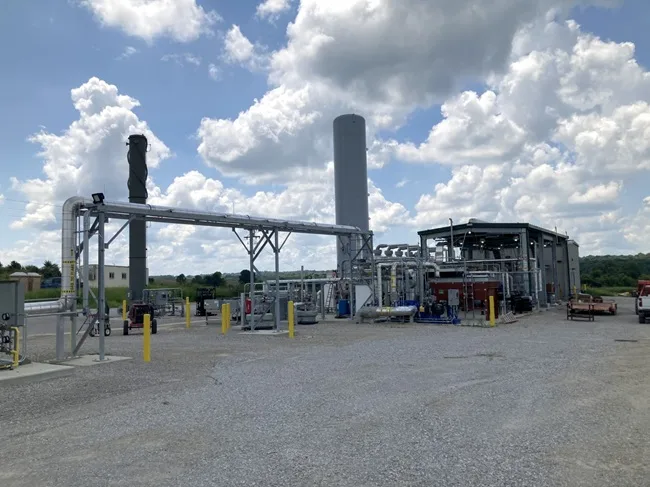
Hindustan Oil Exploration Company Limited (NSE: HINDOILEXP, BSE: 500186) has put investors back in assessment mode after its latest investor presentation followed a recent operational update on the B-80 offshore field. The company had informed the exchanges that gas sales from B-80 were stopped for asset-integrity-related maintenance, while oil sales continued at lower rates. The update matters because B-80 is an important production asset for Hindustan Oil Exploration Company Limited and because asset reliability sits at the centre of how investors value upstream oil and gas producers. #HINDOILEXP closed at ₹167.70 on June 11, 2026, down 6.03%, with the stock still well above its 52-week low but below its recent 52-week high of ₹188.65. The immediate strategic question is whether the market sees the B-80 pause as routine offshore maintenance or as a reminder that small exploration and production companies carry operational risk that can quickly overshadow a strong chart.
Why does Hindustan Oil Exploration Company Limited’s B-80 maintenance update matter for investors?
The B-80 update matters because production continuity is one of the most important valuation drivers for an upstream oil and gas company. Hindustan Oil Exploration Company Limited is not a refiner, fuel retailer or integrated energy major with broad downstream earnings buffers. It is an exploration and production company, which means revenue visibility depends heavily on field performance, realised prices, evacuation arrangements, asset uptime and the ability to keep output flowing safely. When gas sales from a field stop, even for maintenance, investors naturally examine the duration, technical reason, financial impact and restart confidence.
The company’s disclosure described the B-80 action as asset-integrity-related maintenance, with preventive and corrective measures being undertaken for safe, reliable and efficient operation. That framing is important. In offshore production, pausing operations for integrity work can be a sign of discipline rather than weakness if it prevents a larger safety or production failure later. However, investors rarely enjoy uncertainty, especially when the timing of resumption is not yet visible. The market is very patient with growth stories, until the production switch flickers. Then everyone suddenly becomes an engineer.
The oil sales continuation at lower rates partly reduces the severity of the update, but it does not eliminate the issue. The more important question is whether gas sales resume quickly and whether the field’s medium-term output profile remains intact. If the maintenance is short and contained, the impact may be largely temporary. If the outage extends, investors may revisit near-term earnings expectations, cash generation and the company’s ability to fund field-development commitments without balance-sheet stress.
How does the B-80 field fit into Hindustan Oil Exploration’s wider asset portfolio?
Hindustan Oil Exploration Company Limited’s portfolio includes oil and gas blocks with discovered resources and an exploratory asset footprint across multiple Indian producing basins. That diversification is useful, but upstream portfolios are never equal-weight in practical terms. Certain fields carry more near-term production relevance, more cash-flow importance, or greater investor attention because they are tied to recent development milestones. B-80 falls into that category because market participants have been closely tracking its production ramp-up, crude sales route and gas commercialisation.
The strategic issue is that smaller exploration and production companies do not have the same margin for operational slippage as larger national oil companies or diversified energy groups. If one important asset faces maintenance or offtake disruption, the impact can be more visible in quarterly numbers. That is why the B-80 update deserves more attention than a generic operational notice. It touches asset reliability, production mix, investor trust and management’s ability to keep field execution aligned with market expectations.
There is also a second-order implication for how investors read future presentations. An investor presentation can show reserves, resources, field plans, basin exposure, production potential and long-term optionality. However, the market will now read those slides through the lens of B-80 execution. The central question will be whether Hindustan Oil Exploration Company Limited can convert its asset base into stable output and cash flow, rather than only presenting resource potential. In oil and gas, geology creates the opportunity. Execution writes the cheque.
Why did #HINDOILEXP weaken despite still trading far above its yearly low?
#HINDOILEXP closed at ₹167.70 on June 11, 2026, down 6.03%, after trading within a 52-week range of ₹117.50 to ₹188.65. That price position is telling. The stock remains substantially above its yearly low, showing that investors have rewarded the company over a broader period. However, the decline after the B-80 update indicates that market confidence is sensitive to operational disruptions, especially when the stock has already moved close to its recent high.
The one-week fall of 3.98% suggests that investors are not treating the maintenance update as irrelevant. This does not mean the market has concluded that B-80 faces a serious long-term problem. It means the market is pricing uncertainty. For a stock trading near the upper end of its 52-week range, even a temporary operational issue can become a trigger for profit-taking. When valuation sentiment is warm, the bar for execution gets colder.
The valuation context also matters. Hindustan Oil Exploration Company Limited’s market capitalisation is around ₹2,200 crore, and public-market data places the stock at a relatively elevated earnings multiple compared with the cyclical nature of upstream production. That creates a sharper investor test. If field operations normalise quickly, the pullback may look like a risk reset. If the maintenance period extends or production economics disappoint, the market may question whether the stock had moved too far ahead of operating certainty.
What does the investor presentation need to clarify after the B-80 gas sales pause?
The investor presentation needs to do more than repeat the asset portfolio. It must help investors understand the operational path from maintenance to normalisation. The first area of focus is the expected timeline for resumption of gas sales from B-80. Even if management avoids giving a precise date before technical work is complete, investors will look for confidence that the issue is contained, standard for offshore assets and not indicative of wider facility weakness.
The second area is production mix. If gas sales are paused and oil sales are continuing at lower rates, investors need to understand what that means for revenue, operating costs and cash-flow timing. Upstream economics can shift quickly when volumes, prices or evacuation arrangements change. A small reduction in output can have a disproportionate impact if fixed costs remain high or if the affected stream carries better margins.
The third area is capital discipline. Hindustan Oil Exploration Company Limited’s asset portfolio offers long-term optionality, but upstream growth requires continuous spending on development, maintenance, testing, safety, compliance and reservoir management. Investors will want to know whether B-80 maintenance changes near-term capital expenditure plans or whether the company can absorb the work within normal operating budgets. A good investor update should reduce uncertainty, not ask shareholders to bring their own torchlight into the offshore fog.
How does Hindustan Oil Exploration’s risk profile compare with larger Indian oil and gas companies?
Hindustan Oil Exploration Company Limited offers a different investment profile from larger Indian oil and gas names such as Oil and Natural Gas Corporation Limited, Oil India Limited or Hindustan Petroleum Corporation Limited. Larger companies have broader portfolios, stronger balance sheets, policy-linked roles, deeper technical benches and wider revenue pools. Hindustan Oil Exploration Company Limited gives investors more focused upstream exposure, but that focus also increases sensitivity to individual asset performance.
This concentration is not necessarily negative. Smaller exploration and production companies can create outsized value if they improve production, monetise resources efficiently and control costs. They can also be more nimble than larger state-controlled companies. However, the same structure can amplify downside when a key asset faces operational disruption, pricing friction or regulatory delays. That is the trade-off investors must recognise.
The B-80 pause reinforces this difference. In a larger company, one field maintenance update may barely move the earnings needle. In a smaller upstream company, the same update can dominate investor conversation. That is why management communication becomes more important. The company needs to show that asset integrity work is part of disciplined operations, not an early warning of weaker production reliability. Trust in small-cap exploration and production is built field by field, not slogan by slogan.
What broader industry signals does the B-80 update send about India’s upstream sector?
The update also has wider relevance for India’s upstream sector. India wants more domestic oil and gas production to reduce import dependence, improve energy security and encourage private participation in exploration and production. Private-sector upstream companies such as Hindustan Oil Exploration Company Limited play a role in that policy direction, especially in marginal, discovered or technically complex assets where focused operators can unlock value.
However, the B-80 maintenance event is a reminder that upstream growth is operationally demanding. Domestic production is not only about awarding blocks, announcing resources or targeting output. It requires offshore safety discipline, stable offtake arrangements, timely clearances, robust maintenance systems, skilled technical teams and access to capital. If any of these links weaken, production targets become harder to defend.
For policymakers and industry watchers, the message is balanced. Private participation remains important, but the ecosystem must support predictable development, pricing visibility, infrastructure access and faster resolution of commercial disputes. For companies, the message is sharper. Execution credibility will decide whether investors treat India’s upstream independents as serious cash-flow platforms or as cyclical asset stories that look promising until the next operational snag appears.
What should investors watch after Hindustan Oil Exploration’s latest update?
Investors should first watch for the formal resumption update on B-80 gas sales. That will be the cleanest near-term signal. A quick restart would reduce concern and shift attention back to production growth, oil sales and the broader portfolio. A prolonged pause would invite deeper questions about asset integrity, output reliability and financial impact.
The second area to track is quarterly production and revenue performance. Stock sentiment will depend less on presentation language and more on whether actual volumes, sales and cash flow confirm stability. Hindustan Oil Exploration Company Limited’s current market profile already reflects a degree of investor optimism. To sustain that, management needs to show that the B-80 issue does not materially disrupt the operating trajectory.
The third area is balance-sheet and capital allocation discipline. Market data indicates that the company has reduced debt and remains relatively well placed on leverage compared with many asset-heavy businesses. That is a strength, but it should not make investors complacent. Upstream projects can absorb capital quickly, and operational interruptions can reduce internal cash generation at inconvenient moments. The next few updates will show whether Hindustan Oil Exploration Company Limited can protect both production confidence and financial flexibility.
Key takeaways on Hindustan Oil Exploration’s B-80 update and #HINDOILEXP stock outlook
- Hindustan Oil Exploration Company Limited’s latest investor update comes shortly after the company stopped gas sales from the B-80 field for asset-integrity-related maintenance, making operational reliability the central investor question.
- Oil sales from B-80 are continuing at lower rates, which partly limits the severity of the update, but the timing of gas sales resumption remains the most important near-term trigger.
- #HINDOILEXP closed at ₹167.70 on June 11, 2026, down 6.03%, showing that investors are treating the B-80 maintenance update as a real sentiment event.
- The stock remains well above its 52-week low of ₹117.50 but below its recent high of ₹188.65, creating a valuation test as investors weigh operational uncertainty against long-term asset potential.
- Hindustan Oil Exploration Company Limited’s portfolio across Indian producing basins gives it strategic optionality, but smaller upstream companies remain highly sensitive to key-field performance.
- The B-80 update is not automatically a structural negative, because preventive maintenance can protect offshore safety and asset life, but the market will want faster clarity on duration and financial impact.
- The investor presentation needs to clarify production outlook, maintenance status, capital discipline and field-level priorities rather than relying only on resource potential or broad portfolio language.
- Compared with larger Indian oil and gas companies, Hindustan Oil Exploration Company Limited offers more focused upstream exposure, which can amplify both upside and downside for shareholders.
- The broader industry implication is that India’s private upstream growth story depends heavily on operational execution, offtake stability, safety discipline and predictable regulatory conditions.
- The next market trigger for #HINDOILEXP will be whether B-80 gas sales resume without meaningful disruption to quarterly revenue, cash generation and investor confidence.
Discover more from Business-News-Today.com
Subscribe to get the latest posts sent to your email.