
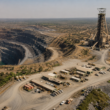




Toubani Resources Limited (ASX:TRE) has secured the funding pathway required to advance the Kobada Gold Project in southern Mali into production. The announcement moves the company beyond one of the largest uncertainties facing any pre-revenue miner, namely whether sufficient capital can be assembled to construct a US$216 million gold operation without repeatedly returning to shareholders. The strategic focus now shifts from financing negotiations to construction management, contractor mobilisation, drawdown conditions and delivery of first gold targeted for the third quarter of 2027. TRE was trading around A$0.35 following the announcement, leaving the company approximately 47 per cent below its 52-week high despite the apparent removal of a major development risk.
Why does secured funding fundamentally change the risk profile of Toubani Resources and Kobada?
Funding is the dividing line between a feasibility-stage mining project and an asset with a credible route into production. Before capital is secured, even an attractive definitive feasibility study remains largely theoretical because contractors, equipment suppliers and lenders cannot rely on economic modelling alone. Toubani Resources can now move forward with greater confidence that engineering, procurement, site works and mining mobilisation can be coordinated around an executable capital plan.
This does not mean Kobada has become low risk. It means the dominant risk has changed. Financing uncertainty is being replaced by construction risk, cost-control risk, schedule risk and the operational challenge of commissioning a new mine in West Africa. Investors should therefore expect future announcements to be assessed less on the size of the funding headline and more on whether physical construction remains on budget and on schedule.
The transition also changes management accountability. During the financing stage, Toubani Resources could create value by improving project economics, negotiating with lenders and reducing the amount of expensive capital required. During construction, value depends on procurement discipline, contractor performance, logistics, workforce readiness and rapid resolution of technical problems. Concrete poured, equipment installed and milestones completed will matter more than another polished presentation.
The funding milestone should also improve Toubani Resources’ commercial standing with suppliers. A funded developer can place orders, negotiate longer-term contracts and reserve manufacturing capacity with greater credibility than a company still dependent on an uncertain capital raise. That advantage can be important when mining equipment, power infrastructure and processing components have long procurement periods.
How do Coris Bank debt and the Eagle Eye gold stream reshape Kobada’s economics?
Toubani Resources’ disclosed financing architecture combines cash, senior debt, mezzanine finance and a gold stream. This diversified structure reduces reliance on any single source of capital and limits the amount of immediate equity dilution that might otherwise have been required to fund the entire Kobada construction bill. It also distributes risk among shareholders, lenders and the streaming counterparty.
The Coris Bank senior debt facility was previously outlined at US$73.3 million, carrying an interest rate of 10 per cent a year and a repayment period of 60 months from first drawdown. The mezzanine component was outlined at US$10.2 million, with a 14 per cent annual interest rate and an additional variable payment equivalent to 0.55 per cent of gold production. Those terms provide project capital, but they also create fixed and production-linked obligations that will compete with reinvestment and shareholder returns after the mine begins generating cash.
The Eagle Eye Asset Holdings stream was reduced from an earlier proposed 11.1 per cent structure to a disclosed US$80 million facility representing 5.55 per cent of gold production over the life of Kobada. The reduced stream preserves more future gold exposure for Toubani Resources shareholders than the original structure, although it still transfers a portion of lifetime production economics to the financier.
This is the essential trade-off in mine development finance. Issuing more shares protects future operating cash flow but dilutes existing ownership. Borrowing preserves ownership but introduces interest, repayment and covenant pressure. Streaming delivers non-traditional project capital without conventional amortisation, but it permanently gives away a portion of production value.
Toubani Resources has chosen a blended solution. That is rational for a developer of its size, but the cost of capital remains meaningful. Kobada will need to ramp up reliably because debt service and streaming commitments do not disappear merely because commissioning takes longer than expected.
Is the US$216 million Kobada construction budget genuinely covered through first gold?
Toubani Resources’ March funding presentation indicated approximately A$369.2 million, or US$262.3 million, of total liquidity when cash and available facilities were combined. Against estimated initial development capital of US$216 million, the headline figures suggest the company has a funding buffer rather than merely matching the feasibility-study capital estimate dollar for dollar.
That buffer is important because mine construction budgets rarely operate in a vacuum. Toubani Resources must fund corporate costs, financing expenses, exploration, owner-operated infrastructure, commissioning inventories, working capital and contingencies alongside the processing plant and mining development. Exchange-rate movements can also increase or reduce the Australian-dollar value of United States-dollar capital obligations.
The decisive question is therefore not whether total liquidity exceeds initial capital expenditure on paper. It is whether the funding schedule aligns with actual construction payments and whether every facility can be drawn when required. Conditions precedent, government approvals, security arrangements, equity contributions and technical tests can all affect when lenders release capital.
Cost inflation remains another variable. The US$216 million estimate comes from Kobada’s feasibility work, while procurement and construction extend across a later period. Long-lead orders and early capital commitments can protect the budget from some escalation, but fuel, labour, freight, steel, equipment and contractor expenses may still move against the company.
A funded status is consequently a major achievement, not a guarantee that shareholders will never face another capital requirement. A construction overrun, delayed commissioning or slower-than-expected ramp-up could still require additional liquidity. The strongest evidence of full funding will emerge gradually as Toubani Resources reports capital committed, capital spent, remaining contingencies and forecast cash at first production.
What construction risks remain as Toubani Resources moves Kobada toward first gold?
Kobada has several technical characteristics that could simplify development. The project is designed around near-surface, predominantly oxide material that is comparatively soft and can be mined with limited drilling and blasting during the early years. The proposed processing route is conventional, and life-of-mine recovery was estimated at approximately 96 per cent.
Those advantages reduce technical complexity, but they do not eliminate construction risk. Toubani Resources remains responsible for coordinating non-process infrastructure while Ausenco Services manages engineering, procurement and construction management for the processing facilities. Interfaces between contractors are often where schedule gaps, scope disputes and cost overruns appear.
Corica Mining Services has been selected as the mining contractor under an initial five-year arrangement. Equipment mobilisation is scheduled for the fourth quarter of 2026, with first ore expected to reach the run-of-mine stockpile during the second quarter of 2027. The schedule provides a relatively narrow window between mining mobilisation, ore availability, plant commissioning and targeted first gold in the third quarter.
Any delay in road access, power infrastructure, water systems, accommodation, communications or equipment delivery could place pressure on that sequence. Kobada’s remote operating environment means replacement parts and specialist expertise may take longer to reach site than they would at an established Australian mining district. Maintaining adequate inventories and logistics redundancy will therefore matter.
Commissioning is another underappreciated risk. A processing plant can be mechanically complete yet still require months of optimisation before reaching design throughput, recovery and cost performance. Toubani Resources’ valuation should not be based solely on the date of the first gold pour. Sustained production rates and cash generation will be the more important measures.
Why is ASX:TRE still trading far below its 52-week high after Kobada’s de-risking?
TRE shares were trading at approximately A$0.35 following the funding announcement, compared with a 52-week high of A$0.66 reached in April 2026. The stock was also approximately 10 per cent below the A$0.39 level recorded when the Corica Mining Services contract was announced on July 1. This suggests the market is not treating project funding as the end of the investment debate.
Part of the discount reflects the normal valuation gap between a developer and a producing miner. Kobada may have a post-tax net present value of US$500 million at a US$2,200-per-ounce gold assumption, but that figure depends on the mine being built, commissioned and operated broadly in line with the feasibility model. Equity markets apply substantial discounts when construction and country risks remain unresolved.
Financing complexity is another factor. Debt interest, mezzanine costs, streaming commitments and any new securities issuance affect how much of Kobada’s theoretical value ultimately belongs to existing ordinary shareholders. The project may generate attractive operating cash flow while shareholder returns remain more moderate if the funding stack absorbs a significant portion of early cash generation.
Mali risk also influences the valuation. Toubani Resources has secured a project-specific framework with the state and advanced the required approvals, but investors remain aware of fiscal changes, government participation, security conditions and disputes involving other mining companies in the country. A strong agreement reduces uncertainty, although it cannot remove broader sovereign risk.
The muted market response could therefore be interpreted as a demand for physical proof. Investors appear to want confirmation that debt can be drawn, equipment can be delivered, construction can stay within budget and the mine can achieve production without another major dilution event. Funding has answered one question, but it has opened several more expensive ones.
Could Kobada’s operating profile generate enough cash to absorb the financing costs?
Kobada’s feasibility study outlined average annual gold production of approximately 162,000 ounces over an initial mine life of 9.2 years. Life-of-mine gold production was estimated at about 1.49 million ounces, supported by a 6 million-tonne-per-year oxide processing rate and average recovery of 96 per cent.
At a US$2,200-per-ounce gold assumption, the study estimated an all-in sustaining cost of US$1,175 per ounce, average annual operating cash flow of US$134 million and a post-tax payback period of 1.75 years from first production. At a US$3,000 gold price, the model indicated higher costs of US$1,317 per ounce but substantially stronger annual cash flow and a shorter payback period.
Those numbers suggest Kobada could support the financing structure if the operation reaches design performance. The project’s soft oxide material, low initial strip ratio and conventional processing flowsheet are central to that conclusion. The first seven years of oxide-dominant mining are expected to provide the strongest operating foundation.
However, financing costs will be most sensitive during the ramp-up period, when production is still building and construction payments may continue. A delay of several months could increase interest expense while postponing gold revenue. Lower recoveries, reduced throughput or higher mining costs would have a similar effect.
Gold prices provide potential upside, but Toubani Resources cannot control them. Management must therefore protect the variables it can influence, including capital expenditure, mine sequencing, grade control, recovery, contractor productivity and working capital. A gold bull market can forgive a few mistakes. It should not become the operating plan.
Can drilling and satellite oxide discoveries create a larger Kobada production platform?
The Kobada Gold Project contains an estimated mineral resource of 2.2 million ounces and an ore reserve of approximately 1.56 million ounces. The existing mine plan uses only part of the broader geological opportunity, leaving scope for new oxide material, deeper mineralisation and satellite deposits to extend mine life or improve production scheduling.
Toubani Resources has planned an extensive drilling campaign alongside construction. This parallel strategy could add value by identifying shallow oxide ounces that might be processed using infrastructure already being built. Additional material close to the proposed plant would be particularly valuable because it could be developed without replicating the full capital cost of a standalone mine.
Recent drilling has continued to identify mineralisation around Kobada and nearby prospects. The strategic objective should be to prioritise ounces that improve the production profile rather than simply expanding the headline resource. Near-surface oxide material with favourable metallurgy and low haulage requirements can be more valuable than higher-grade ounces located deep underground or far from infrastructure.
Exploration during construction must nevertheless remain disciplined. Every dollar allocated to drilling competes with construction contingency and working capital. Toubani Resources has to balance the opportunity to grow Kobada against the more immediate obligation to deliver the funded mine safely and on schedule.
A successful development could eventually transform Kobada from a single-mine project into a regional processing hub. That outcome would increase the strategic value of surrounding tenure and potential satellite resources. For now, however, the market is likely to reward construction execution more heavily than exploration ambition.
What milestones must Toubani Resources deliver before targeted first gold in Q3 2027?
The first near-term milestone is completion of all financing documentation and satisfaction of the conditions needed to draw each facility. The phrase “funding secured” carries the greatest practical value when cash can be accessed according to the construction schedule without unexpected restrictions or renegotiation.
The second milestone is continued procurement and completion of critical-path infrastructure. Investors should watch engineering progress, earthworks, power installation, civil construction and delivery of the ball mill and other long-lead components. Slippage in these areas would provide an early indication that the Q3 2027 target is under pressure.
Corica Mining Services’ mobilisation during the fourth quarter of 2026 will be another important test. By the second quarter of 2027, Toubani Resources expects first ore to be delivered to the run-of-mine stockpile. Achieving that milestone would establish an ore inventory ahead of plant commissioning and reduce the risk of an idle processing facility.
The first gold pour will be a major symbolic achievement, but commercial production will matter more. The market will want to see throughput, recovery and production approach feasibility-study expectations without excessive additional capital. Debt repayment capacity and free cash flow will only become visible after stable operations are established.
Toubani Resources has now moved beyond the stage where Kobada’s value can be assessed mainly through studies and financing plans. The next 12 to 15 months will test whether the company can convert capital into a functioning mine. That is less glamorous than securing funding, but it is where mining companies are actually made.
Key takeaways on what Kobada funding means for Toubani Resources and West African gold
- Secured funding removes one of Kobada’s largest development uncertainties and allows Toubani Resources to focus on physical construction.
- Kobada’s principal risk has shifted from capital availability to cost control, scheduling, commissioning and operational ramp-up.
- The disclosed funding mix reduces dependence on equity but introduces senior debt, mezzanine interest and lifetime streaming obligations.
- Total previously disclosed liquidity exceeded the US$216 million initial capital estimate, although working capital and contingencies remain important.
- Kobada’s oxide-dominant orebody, conventional processing and 96 per cent expected recovery reduce technical complexity relative to many gold developments.
- Corica Mining Services’ Q4 2026 mobilisation and the planned delivery of first ore in Q2 2027 are critical schedule tests.
- TRE’s A$0.35 share price and 47 per cent discount to its 52-week high show that investors continue to price in Mali, financing and construction risk.
- The feasibility model indicates strong cash-generation potential, but those economics depend on meeting throughput, recovery and cost assumptions.
- Additional near-surface oxide discoveries could extend mine life and improve returns from Kobada’s processing infrastructure.
- First gold targeted for Q3 2027 will be important, but stable commercial production and debt-servicing capacity will determine the lasting rerating case.
Share this:
Discover more from Business-News-Today.com
Subscribe to get the latest posts sent to your email.