





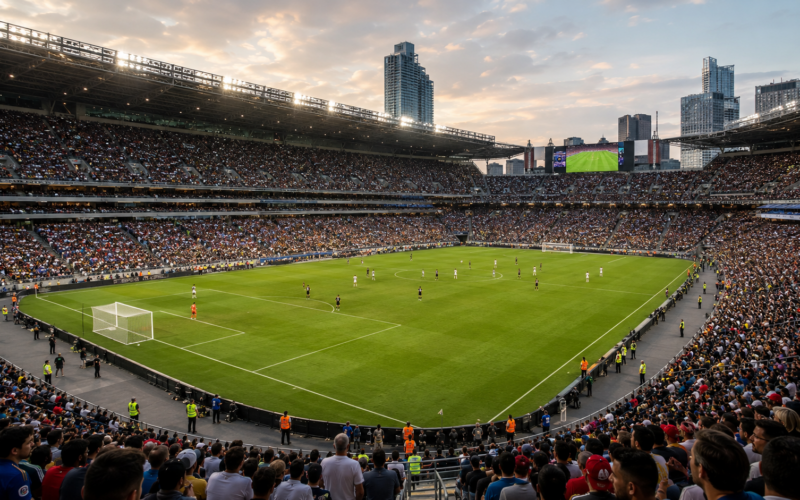
France moved into the FIFA World Cup 2026 semi-finals with a 2-0 win over Morocco at Boston Stadium in Foxborough, Massachusetts, on Thursday, July 9, 2026. Kylian Mbappé scored in the 60th minute and Ousmane Dembélé doubled the lead six minutes later as Didier Deschamps’ side became the first confirmed semi-finalist of the tournament.
The quarter-final was goalless at half-time, but the scoreline did not reflect France’s control of the chances. Mbappé won a first-half penalty after being brought down by Noussair Mazraoui, only for Yassine Bounou to save his low effort after a lengthy delay, while Lucas Digne later struck the crossbar from distance.
France eventually turned pressure into punishment when Mbappé curled in the opener on the hour mark after France found space around Morocco’s compact defensive block. Dembélé then finished from Mbappé’s layoff in the 66th minute, giving France the breathing room they needed after Morocco had spent much of the match defending deep.
The result sends France into a semi-final against the winner of Spain vs Belgium, with the next fixture scheduled for Tuesday, July 14, at Dallas Stadium. Morocco are eliminated at the quarter-final stage after another deep World Cup campaign, but this defeat underlined the attacking gap they still need to close against elite tournament opponents.
FIFA World Cup 2026 France 2-0 Morocco full match scorecard and key incidents
How did France control the first half even before Mbappé’s missed penalty changed the mood?
France’s control began before the penalty drama because their front line kept forcing Morocco into uncomfortable defensive choices. Mbappé tested Bounou early, Upamecano threatened from a header, and France repeatedly worked the ball into positions where Morocco had to defend inside the box rather than build from midfield.
The first major flashpoint came when Mazraoui brought down Mbappé on the left side of the area. The delay before the penalty appeared to disrupt the rhythm of the moment, and Bounou read the low attempt correctly to give Morocco a lifeline. It was a huge save, but it did not really alter the tactical direction of the match.
Morocco had more of the ball across the game, yet much of that possession was safe rather than dangerous. France’s structure encouraged Morocco to circulate away from goal, while Deschamps’ side looked more capable of turning one recovery, one forward pass or one individual action into a real chance.
The half-time score was 0-0, but the warning signs were severe for Morocco. Digne’s swerving long-range effort against the bar in stoppage time captured the pattern: France were not always fluid, but they were constantly closer to the breakthrough.
Why did Mbappé’s 60th-minute goal change the quarter-final after his penalty miss?
Mbappé’s opening goal mattered because it turned an eventful individual performance into a decisive one. After missing from the spot, he could have become trapped in the psychology of the moment, but his 60th-minute finish restored France’s authority and forced Morocco out of their survival rhythm.
The goal came from the kind of narrow attacking window that separates elite forwards from merely dangerous ones. Mbappé received around the edge of the area, shaped his body quickly, and curled his finish beyond Bounou before Morocco’s defensive block could close the angle properly.
That strike also changed Morocco’s options. Until then, they could defend deep, slow the game and hope that Bounou’s saves would keep dragging the tie toward extra time or penalties. Once France led, Morocco had to consider pushing higher, and that immediately created more space for France’s faster attackers.
For France, the goal was a reminder that tournament dominance does not always look pretty. They had missed chances, wasted a penalty and struggled to convert pressure, but one elite action from Mbappé transformed the match into a controllable knockout win.
How did Dembélé’s second goal turn France pressure into a settled semi-final passage?
Dembélé’s goal six minutes later was the moment that stripped Morocco of realistic comeback momentum. Mbappé drew defensive attention and laid the ball into Dembélé’s path, allowing the winger to drive into shooting range and finish low despite Bounou getting a hand to the effort.
The timing was brutal for Morocco. After spending an hour resisting, they conceded twice in six minutes, and the second goal made their defensive plan feel exhausted rather than unlucky. France had not needed a wave of goals, only a short burst of attacking quality.
Dembélé’s finish also showed why France are harder to stop than a team built around one superstar. Mbappé remains the headline act, but Dembélé’s fifth goal of the tournament means opponents cannot simply overcommit to blocking France’s left-sided threat.
That balance gives Deschamps tactical comfort before the semi-finals. France can attack through Mbappé, use Dembélé as a direct central or wide runner, and still rely on Michael Olise and Désiré Doué to create pressure between the lines.
Why did Morocco’s possession fail to produce enough danger against France?
Morocco’s 52% possession looked respectable on the surface, but it did not translate into enough penalty-box threat. Their first shot on target came late, and their five total attempts told a clearer story than the possession figure.
The absence of Ismael Saibari reduced Morocco’s ability to connect midfield work with forward threat. Brahim Díaz carried much of the attacking burden, but he was often isolated, and Morocco’s wide attacks lacked the final cutback or central run needed to disturb France’s centre-backs.
France defended the middle of the pitch with composure. They did not need to dominate the ball for every spell because their spacing prevented Morocco from turning possession into clean entries. When Morocco moved the ball wide, France were usually in position to defend crosses or force recycled passes.
The problem for Morocco was not effort. It was penetration. Against France, possession without vertical speed became a holding pattern, and once Mbappé scored, that pattern offered too little urgency to rescue the match.
What role did Bounou play in keeping Morocco alive before France finally broke through?
Bounou was the biggest reason Morocco reached the hour mark level. His penalty save from Mbappé was the headline moment, but his earlier stops and command of the area helped delay a France breakthrough that had seemed likely from the opening stages.
The Moroccan goalkeeper’s penalty reputation made the save feel less surprising, but the context made it huge. Mbappé had won the kick himself, France had control, and a 1-0 lead before half-time might have forced Morocco into a much more open game. Bounou kept the tie alive, at least temporarily.
Yet even a strong goalkeeping performance has limits when the pressure keeps returning. France continued to create, continued to recover loose balls, and continued to force Morocco into emergency defending. Bounou could stop the penalty and several efforts, but he could not solve the structural problem in front of him.
His night therefore becomes part of Morocco’s mixed story. The goalkeeper did enough to give them a chance, but the outfield attack did not produce the matching threat needed to turn that chance into an upset.
What does France 2-0 Morocco mean for the FIFA World Cup 2026 semi-final route?
France are now one win from a third consecutive FIFA World Cup final appearance. That is the biggest tournament implication from this result, especially because Deschamps’ side have reached the final four without looking emotionally stretched by the knockout stage.
The semi-final opponent will be the winner of Spain vs Belgium, a match that could present a very different tactical problem. Spain would test France’s ability to defend long possession phases and control midfield rhythm, while Belgium would present a more direct transition and finishing challenge.
Morocco exit at the quarter-final stage, but their campaign should not be dismissed as a failure. They again showed that they belong deep in World Cup knockout football, although this defeat revealed that defensive structure alone is not enough when facing a side with France’s attacking variety.
The result also keeps France’s clean-sheet pattern in the knockout rounds intact. That matters because knockout winners often need defensive stability as much as attacking brilliance, and France now have both heading into Dallas.
FIFA World Cup 2026 France and Morocco knockout progression table after the quarter-final
What must France improve before facing Spain or Belgium in the semi-final?
France’s biggest concern is not performance level, but conversion. Creating 22 shots and eight on target in a World Cup quarter-final is impressive, yet missing six big chances and a penalty leaves room for a more ruthless opponent to survive longer than Morocco did.
Mbappé’s penalty miss did not damage France in the end, but it remains a detail worth monitoring. Knockout football often turns on one set piece, one penalty or one transition, and France will not want wastefulness to become a semi-final storyline.
The positive side is that France controlled danger extremely well. Morocco’s first on-target effort arrived late, and Mike Maignan was not exposed repeatedly despite Morocco having more possession. That defensive platform gives France a strong base even when the attack is not fully efficient.
Against Spain or Belgium, however, France may need longer periods of proactive midfield control. Morocco could be contained through pressing and compact defending, but a semi-final opponent with greater final-third quality may punish slow starts or missed chances more severely.
What must Morocco change after another knockout defeat to France?
Morocco’s latest defeat to France will feel familiar because the scoreline again showed the gap between deep tournament resilience and elite attacking efficiency. They defended with commitment, relied on Bounou’s brilliance and stayed alive for an hour, but they did not produce enough at the other end.
The next step for Morocco is attacking variety. They need more vertical passing, more support around the centre-forward zone, and more runners arriving into the box when wide players receive possession. Too often, their attacks ended before France had to make a difficult defensive decision.
Saibari’s absence was a major blow, but elite knockout teams must find alternate routes when a key attacking player is unavailable. Morocco’s possession lacked the speed and unpredictability needed to unsettle France, and Díaz could not carry the entire creative responsibility alone.
With Morocco set to co-host the 2030 World Cup alongside Spain and Portugal, the long-term ambition will remain high. This tournament still reinforces their status as a serious global side, but beating France-level opponents will require more than structure, bravery and a world-class goalkeeper.
Key takeaways from France vs Morocco at FIFA World Cup 2026
- France beat Morocco 2-0 at Boston Stadium on Thursday, July 9, 2026, to become the first confirmed FIFA World Cup 2026 semi-finalist.
- Kylian Mbappé missed a first-half penalty but recovered strongly to score in the 60th minute and set up Ousmane Dembélé’s goal six minutes later.
- Yassine Bounou kept Morocco level for an hour with a penalty save and several important interventions before France’s pressure finally told.
- France created 22 shots, eight shots on target and six missed big chances, showing both their dominance and their need for sharper finishing.
- Morocco had 52% possession but only five shots and one on target, which underlined their lack of final-third penetration.
- Dembélé’s fifth goal of the tournament showed that France’s attack is not only dependent on Mbappé.
- Morocco questioned a possible handball in the build-up to France’s opener, but no decisive VAR overturn was made and the goal stood.
- Mbappé was later substituted after an apparent ankle concern, though the change came with France already in control at 2-0.
- France will face the winner of Spain vs Belgium in the semi-final at Dallas Stadium on Tuesday, July 14, 2026.
- Morocco exit at the quarter-final stage after another strong World Cup run, but their lack of attacking edge proved costly against France.
Share this:
Discover more from Business-News-Today.com
Subscribe to get the latest posts sent to your email.