

Tower Resources plc (LSE:TRP) has cleared the last governmental condition for its PEL96 farm-out in Namibia, but the company’s near-term investment case still depends on Presidential assent in Cameroon. That approval would extend the Thali licence, complete the 42.5% farm-out to Prime Global Energies Limited and release a US$15 million contribution toward the work programme that includes the NJOM-3 appraisal well. NJOM-3 is intended to test the Njonji oil discovery and could be suspended for later production if the results support development. Tower Resources shares traded around 0.017 pence on July 10, giving the company a market capitalisation of approximately £7.3 million after successive equity issues expanded its issued share capital to 42.8 billion shares. A fourth-quarter 2026 spud remains possible, but only if approvals, completion cash, rig selection and service mobilisation align quickly.
What changed after Namibia approved Tower Resources’ PEL96 farm-out to Prime Global Energies?
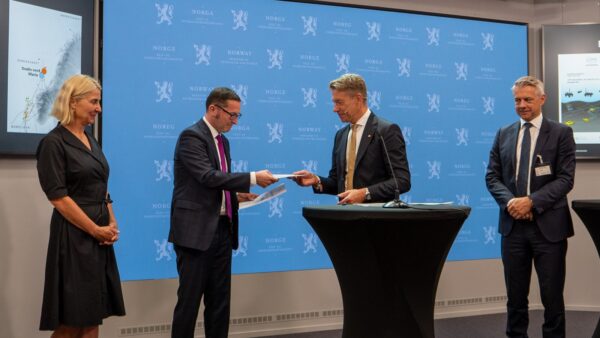
Formal approval from Namibia’s Ministry of Industries, Mines and Energy removed the final governmental condition attached to the transfer of a 25% non-operated interest in PEL96 to Prime Global Energies Limited. Completion documentation, including the assignment and novation arrangements, can now be progressed with the ministry and the licence partners.
The transaction changes the current PEL96 ownership structure to a 55% operated interest for Tower Resources, 25% for Prime Global Energies, 10% for the National Petroleum Corporation of Namibia and 10% for ZM Fourteen Investment. Tower Resources continues to control the technical direction of the licence while bringing in a partner with financial and operational capacity.
That is strategically useful because PEL96 covers 23,297 square kilometres across blocks 1910A, 1911 and 1912B in the northern Walvis Basin and Dolphin Graben. It is an unusually large licence for a company with a market capitalisation of approximately £7 million, so sharing future seismic and exploration expenditure is more important than maximising the percentage ownership held before the acreage has been de-risked.
The approval also adds credibility to Tower Resources’ asset-level financing strategy. Prime Global Energies has agreed to acquire interests in both Namibia and Cameroon, creating a partnership that could extend beyond a single well or seismic programme if the initial transactions perform as intended.
However, the Namibia approval should not be confused with a near-term drilling decision. The next work involves reprocessing existing seismic data or acquiring limited new 2D seismic before determining where a future 3D survey should be placed. PEL96 remains an early-stage exploration asset rather than a cash-generating project.
The proposed acquisition of another 5% interest from ZM Fourteen Investment also remains unresolved. Regulatory delays mean the parties are no longer automatically obliged to complete that transaction, although discussions are continuing. Investors should therefore value Tower Resources’ confirmed 55% post-farm-out position and treat any additional interest as optional upside.
Why does Cameroon’s Presidential approval now determine the near-term value of Tower Resources?
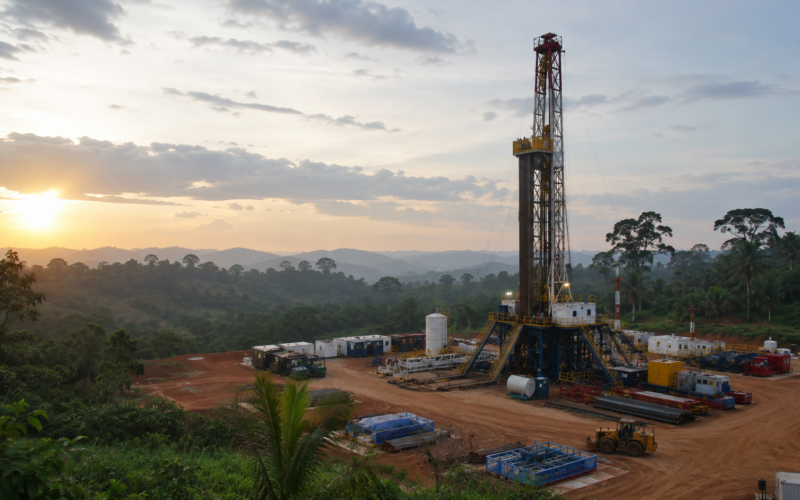
Cameroon is the operating centre of Tower Resources’ strategy because it contains an existing oil discovery that may be capable of progressing from appraisal to production more quickly than the company’s frontier exploration acreage. The Thali Production Sharing Contract covers 119.2 square kilometres in shallow water within the Rio del Rey Basin, where three discovery wells have already established the presence of hydrocarbons.
The outstanding governmental process combines two commercially connected decisions. Tower Resources needs an extension of the first exploration period, which is expected to run to March 2027, and approval for the transfer of a 42.5% non-operated interest to Prime Global Energies Limited. The file has advanced to the Office of the Presidency, but Presidential assent is still required before the transaction can complete.
Prime Global Energies has committed US$15 million toward the Thali work programme, including the drilling of NJOM-3. Tower Resources would retain a 57.5% operated interest, preserving control and majority economic exposure while transferring a substantial portion of the drilling cost and geological risk to the new partner.
This is a potentially favourable structure for a small-cap explorer. Tower Resources avoids funding the appraisal well entirely through new shares, while Prime Global Energies gains access to an existing discovery and a possible route toward early production. The alignment looks sensible on paper, but its value remains conditional until the regulatory process is finished and the funds become available for the work programme.
Timing is becoming as important as approval itself. Tower Resources has identified possible rig availability from the fourth quarter of 2026, but offshore drilling requires service contracts, mobilisation plans, updated pricing, insurance, logistics and regulatory documentation to be finalised in sequence. Approval arriving late in the quarter may technically preserve the licence while still making a 2026 spud impractical.
A further delay would have consequences beyond postponing one well. Tower Resources would need more working capital to retain staff, maintain the Douala base, preserve equipment and keep contractors engaged. Another corporate fundraising could then become necessary even though the well itself has an asset-level funding commitment.
What must the NJOM-3 appraisal well prove before Thali can become a producing asset?
NJOM-3 is not a conventional high-risk wildcat targeting an entirely unknown structure. It is designed to appraise reservoirs associated with the Njonji-1 and Njonji-2 discoveries, confirm the distribution of oil within the fault blocks and establish whether the reservoirs can flow at commercially useful rates.
Previous wells provided geological and formation information but did not deliver the surface flow test required to establish producibility. NJOM-3 is therefore intended to drill through the target intervals, collect logs, conduct formation testing and complete a drill stem test that measures flow rate, pressure behaviour and reservoir quality.
The Njonji fault blocks carry a risked mean recoverable resource estimate of 35.4 million barrels, based on updated interpretation of reprocessed 3D seismic data. That estimate includes 12.9 million barrels in Fault Block 1, 4.9 million barrels in Fault Block 2 and 17.6 million barrels in the southern fault block. An updated independent competent person’s report remains necessary before the market can treat those internal estimates as externally validated reserves.
The well location has been adjusted to encounter thicker reservoir sections while reducing exposure to possible gas caps. A mud-line suspension system and other long-lead items are already stored at the company’s Douala base, while service contracts have been negotiated but will require final confirmation once a firm rig window is selected.
A successful test could allow part of the contingent resource base to be reclassified as reserves and enable NJOM-3 to be suspended for conversion into a future producer. Further production wells, a platform and a mobile offshore production unit could then form the basis of an early development concept.
Success would not eliminate development risk. Tower Resources would still need an approved production plan, additional capital, facilities contracts, export arrangements and a funding structure for the next wells. The commercial value of the discovery will depend on sustainable production rates and development costs, not simply the presence of oil.
A disappointing result would have an asymmetrical effect because Cameroon accounts for most of Tower Resources’ reported exploration asset value. Poor flow rates, unexpected reservoir compartmentalisation or a smaller effective oil column could reduce the economic case and weaken access to future project financing.
How do the Prime Global Energies farm-outs reshape Tower Resources’ capital structure and project risk?
The two Prime Global Energies transactions are designed to move funding pressure away from the listed parent company and toward the individual assets. This matters because exploration companies without production normally finance corporate costs and drilling through repeated equity issuance, often at progressively lower prices.
The combined arrangements have already delivered approximately US$938,000 to Tower Resources. Completion of the Cameroon and Namibia farm-outs and associated agreements is expected to generate a further US$3.4 million in corporate cash, while the separate US$15 million commitment is directed toward the Thali work programme.
This distinction is important. The US$15 million is not unrestricted cash that can be valued as though it were being deposited into Tower Resources’ general bank account. It is project funding intended to cover defined Cameroon expenditure, primarily NJOM-3 and related work.
The additional completion payments can strengthen corporate liquidity, cover transaction expenses and reduce the need for near-term equity. Some proceeds and production-linked economics are also connected with arrangements involving Pegasus Petroleum Limited, meaning the gross headline value does not flow entirely and immediately to ordinary shareholders.
The farm-outs reduce Tower Resources’ ownership percentages, but they could increase the probability of the projects advancing. A smaller interest in a funded appraisal programme may create more value than retaining 100% of an asset that the company cannot finance independently.
Partner execution is now part of the risk profile. Prime Global Energies must fund its commitments, participate in operating decisions and maintain alignment through appraisal and any subsequent development. Tower Resources also needs clear governance processes because it will remain operator while relying on a partner for a substantial portion of the capital.
Why is Tower Resources still issuing billions of shares despite securing project funding?
Tower Resources raised approximately £1.5 million in March 2026 through the issue of about 6.32 billion shares at 0.02375 pence. The proceeds were used substantially to repay a bridge facility and accrued financing costs, removing an expensive short-term liability but significantly increasing the number of shares in circulation.
A further £400,000 subscription was completed in June at 0.016 pence per share, requiring another 2.5 billion shares. The issue price was approximately 6% below the preceding closing bid and was intended to provide working capital while the company waited for the farm-out proceeds.
These transactions reflect the difference between project capital and corporate liquidity. Even when a partner agrees to finance a well, Tower Resources must pay salaries, advisers, licence costs, technical contractors, insurance and administrative expenses before completion. Regulatory delays therefore translate directly into additional funding pressure.
The 2025 accounts showed group cash of only US$35,779 at year-end, compared with US$284,118 one year earlier. Borrowings and trade-related liabilities were substantially higher than available cash, and the auditors identified a material uncertainty relating to going concern because further financing or farm-out completion was required.
Post-year-end subscriptions and the repayment of the bridge loan improved the immediate position, but the underlying funding model has not yet changed. Tower Resources remains dependent on equity markets until farm-out cash arrives and, eventually, until a producing asset generates operating cash flow.
The issued share count now stands at approximately 42.8 billion. The large denominator matters because even a major increase in project value must be divided across far more shares than existed when many long-term investors first entered the stock.
A low nominal share price can make the equity look inexpensive, but the relevant measures are market capitalisation and future value per share. An operational breakthrough may increase the company’s total value substantially while still producing a smaller per-share outcome than older project valuations suggest.
How should investors value PEL96 and Algoa-Gamtoos beside the core Cameroon catalyst?
PEL96 gives Tower Resources exposure to a petroleum system in the northern Walvis Basin and Dolphin Graben, where historical wells have established oil-prone source rocks and reservoir intervals. The licence contains large structural and stratigraphic leads, including targets that could justify major exploration expenditure if further seismic work improves definition.
Namibia’s broader offshore success has attracted international capital, but PEL96 should not be valued as a direct extension of the discoveries made in the Orange Basin. The acreage lies in a different geological setting, has a different data maturity and requires additional seismic work before a drillable prospect can be selected.
Prime Global Energies’ decision to acquire 25% provides external commercial validation, but it does not prove recoverable resources. The next meaningful value step will be a funded programme that improves imaging, ranks the leads and identifies the most attractive area for 3D seismic acquisition.
Tower Resources’ South African interest is less advanced. The Algoa-Gamtoos licence is held through a 50% joint venture with New Age Energy Algoa, but environmental uncertainty, litigation risk and the absence of an agreed seismic timetable have limited progress.
The South African asset was fully impaired in the 2025 accounts. That accounting treatment does not establish that the licence has no geological potential, but it indicates that the current financial statements assign no recoverable carrying value to the investment.
A farm-out process could eventually bring in a partner to finance 3D seismic, creating option value without requiring Tower Resources to commit substantial capital. Until that happens, Algoa-Gamtoos should be treated as speculative portfolio upside rather than a component supporting the present market valuation.
Cameroon therefore remains the core asset, Namibia represents longer-duration exploration optionality, and South Africa sits further out on the risk curve. Blending all three into one headline resource narrative can obscure the very different timelines, capital requirements and probabilities attached to each licence.
Does Tower Resources’ current valuation reflect geological upside or financing fatigue?
Tower Resources traded around 0.017 pence on July 10, placing its equity value near £7.3 million. The shares had fallen approximately 10.5% over seven days and about 15% over one month, while remaining only slightly above the 52-week low of approximately 0.016 pence.
That performance suggests the market is assigning limited value to Namibia’s approval because the decisive Cameroon transaction is still incomplete. Investors appear reluctant to capitalise future drilling upside until the Presidential assent, licence extension and farm-out completion are formally secured.
At first glance, a market capitalisation below £10 million appears small beside a US$15 million partner commitment and a 57.5% retained interest in the Thali project. The comparison is tempting but incomplete because the funding is restricted to the work programme, the resource remains unappraised by NJOM-3 and commercial production would require further investment.
The market is also discounting the effect of dilution. A company can create asset value while existing shareholders receive less of that value per share if the issued capital continues expanding. Tower Resources must break the cycle in which administrative survival requires new shares before each operational milestone is reached.
Public broker coverage is sparse, leaving the stock without a broad institutional earnings consensus or widely tested valuation range. Trading is consequently driven heavily by regulatory announcements, financing terms, drilling expectations and retail interpretation of the project timeline.
Retail discussion remains sharply divided. The bullish case centres on the Namibia approval, the Cameroon financing commitment and the possibility that NJOM-3 could unlock a discovered oil accumulation. The bearish case centres on repeated timetable slippage, discounted subscriptions, a very large share count and the possibility that another delay triggers another placing.
Both sides are responding to real features of the company. Tower Resources controls assets with material geological potential, but investors have been asked to wait through several proposed drilling windows. The market now requires execution rather than another statement of intent.
What happens next if Tower Resources receives approval in time for a fourth-quarter 2026 NJOM-3 spud?
The first step would be formal Presidential assent covering the Thali licence extension and the Prime Global Energies farm-out. Completion documents would then need to be executed, ownership interests registered and the associated cash payments released.
Tower Resources would next confirm a rig window and update the pricing and availability of drilling services. Existing negotiated contracts provide a head start, but offshore service markets move continuously and previous commercial terms cannot be assumed to remain open indefinitely.
Mobilisation would involve moving the rig, crews, equipment and consumables into Cameroon, securing the remaining operating approvals and coordinating logistics through Douala. The timing between formal completion and actual spud will therefore be measured in operational lead time, not merely the number of days required to sign a contract.
A successful NJOM-3 result would shift the company from regulatory and financing risk toward reservoir and development execution. Attention would move to flow rates, reserve conversion, the number of additional wells, facilities selection, development capital and the possible timing of first production.
A marginal result could create a more complicated outcome. Oil may be present without supporting an economic standalone development, requiring revised well placement, additional appraisal or lower-cost facilities. That scenario could extend the timetable and create another funding requirement before commerciality is established.
Failure to secure approval quickly would make a fourth-quarter spud increasingly unlikely. Tower Resources could preserve the project for a later rig window, but it would incur more corporate cost while the market applies a larger discount to management timelines.
The next investable milestones are therefore specific and observable: Cameroon Presidential assent, completion of both Prime Global Energies transactions, receipt of completion cash, confirmation of the selected rig, execution of service contracts and announcement of mobilisation. Until those events occur, NJOM-3 remains a funded intention rather than an active drilling operation.
What are the key takeaways for executives and investors tracking Tower Resources and NJOM-3?
- Namibia’s approval materially improves Tower Resources’ portfolio position, but it does not replace Cameroon as the company’s principal near-term valuation catalyst.
- Presidential assent in Cameroon would unlock the Thali licence extension, the 42.5% farm-out and Prime Global Energies’ US$15 million work-programme commitment.
- A fourth-quarter 2026 NJOM-3 spud remains possible, although the available mobilisation window narrows as regulatory completion is delayed.
- NJOM-3 must establish commercial flow rates and reservoir quality before the Njonji discovery can progress toward reserve conversion and development.
- Tower Resources would retain a 57.5% operated interest in Thali, preserving substantial upside while sharing appraisal expenditure and geological risk.
- The company’s approximately £7.3 million market capitalisation reflects both geological optionality and deep investor fatigue over delays, liquidity and dilution.
- Corporate funding remains distinct from project funding, which explains why Tower Resources continued issuing shares despite securing a US$15 million drilling contribution.
- The 42.8 billion shares now in issue make value per share, rather than the nominal share price, the critical measure for existing investors.
- PEL96 offers longer-term exploration potential in Namibia, while Algoa-Gamtoos should currently be treated as higher-risk optionality rather than a core valuation asset.
- The equity thesis will change only when regulatory progress becomes operational activity, with rig confirmation and mobilisation carrying more weight than another indicative drilling timetable.
Share this:
Discover more from Business-News-Today.com
Subscribe to get the latest posts sent to your email.