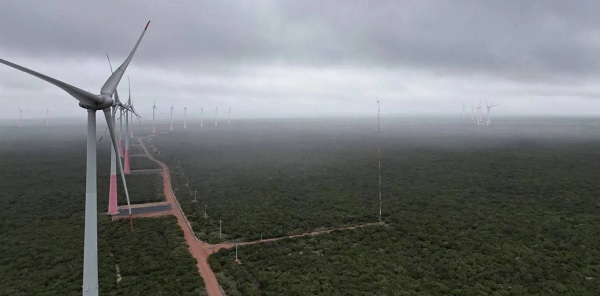





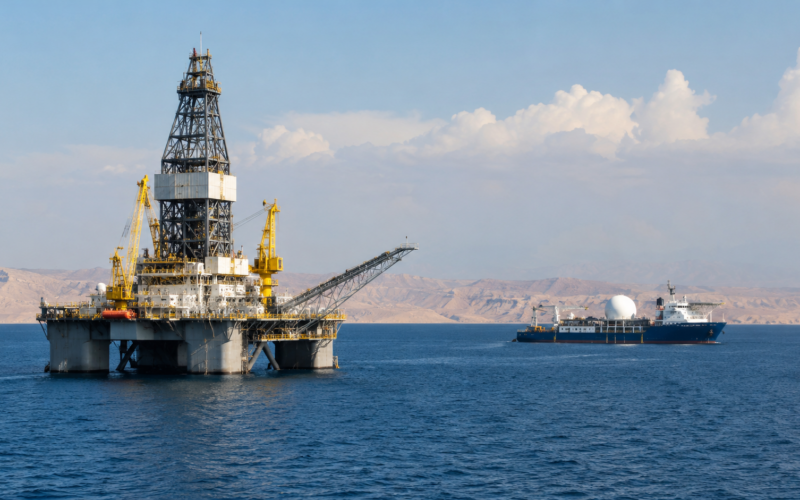
Equinor ASA (OSE: EQNR; NYSE: EQNR) has agreed to acquire BP p.l.c.’s (LSE: BP.; NYSE: BP) 37.2% interest in the proposed Bay du Nord offshore oil project in Newfoundland and Labrador, which would leave Equinor ASA with 100% ownership. Financial terms were not disclosed, preventing investors from determining whether BP p.l.c. received a premium for exiting or whether Equinor ASA secured the stake at a discounted valuation. Bay du Nord is currently in front-end engineering and design, with an early-2027 final investment decision targeted subject to market conditions, regulatory approvals and internal approvals. The initial development is expected to require approximately C$14 billion, recover more than 400 million barrels of oil and target first production in 2031. The transaction increases Equinor ASA’s control over project design and partner selection, but it also temporarily concentrates the capital, construction and commodity-price risks of Canada’s first proposed deepwater oil development on one company.
Why is Equinor acquiring full ownership of Bay du Nord before seeking another partner?
Equinor ASA’s decision appears counterintuitive at first glance. The company is buying BP p.l.c.’s interest and moving toward 100% ownership while simultaneously indicating that it will evaluate opportunities to introduce new partners during the project’s further development. The logic is that temporary full ownership can provide greater control over the development concept, commercial structure and identity of any future investor.
Under the previous ownership structure, Equinor ASA and BP p.l.c. needed to align their capital priorities before making major project decisions. BP p.l.c.’s portfolio simplification programme created uncertainty over whether the British group would remain willing to fund its share of a large project whose first production is still approximately five years away. Removing that mismatch may allow Equinor ASA to continue engineering and regulatory work without negotiating every material decision with a partner preparing to exit.
Full ownership also gives Equinor ASA more flexibility when marketing an interest to potential partners. The company can determine how much equity to offer, whether to introduce one or several investors and which commercial capabilities it wants those investors to contribute. A state-backed energy company, infrastructure investor or international oil producer could each bring a different combination of capital, market access and risk appetite.
Equinor ASA is unlikely to prefer funding the entire C$14 billion project indefinitely. A 100% interest would leave it responsible for all development equity, cost overruns and schedule exposure. The acquisition therefore appears less like a permanent rejection of partnership and more like an attempt to reset the ownership structure before the final investment decision.
The critical question will be whether Equinor ASA can attract partners on terms that preserve project value. A successful farm-down could reimburse part of the company’s development spending and reduce capital exposure. Difficulty finding investors would suggest that other companies remain unconvinced about Bay du Nord’s economics, regulatory risk or timing.
What does BP’s Bay du Nord exit reveal about its oil and gas portfolio strategy?
BP p.l.c. has presented the sale as part of its continuing portfolio simplification and effort to focus capital on higher-return oil and gas opportunities. Bay du Nord is a large resource, but it remains pre-sanction, capital intensive and several years away from producing cash. Those characteristics make it an obvious candidate for review when a company is trying to reduce debt and concentrate spending on assets with nearer-term returns.
The transaction allows BP p.l.c. to avoid funding its 37.2% share of future development expenditure. Applying that percentage mechanically to the estimated C$14 billion project cost produces an illustrative exposure of about C$5.2 billion. That is not a forecast of the exact capital BP p.l.c. would have contributed because project spending, ownership structures, financing and cost allocation can change before sanction. It nevertheless demonstrates the scale of the future commitment being removed from BP p.l.c.’s portfolio.
The sale does not represent a complete withdrawal from offshore Newfoundland and Labrador. BP p.l.c. will retain full ownership of two exploration licences in the province, preserving exposure to future discoveries without committing to the Bay du Nord construction programme. This creates a more option-oriented Canadian position in which BP p.l.c. can continue exploring while avoiding the immediate burden of a multibillion-dollar development.
The weakness in the disclosure is the absence of a transaction value. Investors cannot assess whether BP p.l.c. recovered its accumulated development spending, accepted a loss or retained any contingent consideration linked to a future investment decision. A high sale price would strengthen the balance-sheet argument, while a nominal consideration would suggest the primary benefit is avoided capital expenditure.
BP p.l.c.’s decision also creates an unavoidable comparison between Bay du Nord and competing upstream opportunities. Capital can instead be directed toward projects with existing infrastructure, shorter development cycles or more attractive fiscal terms. Bay du Nord may still be economically robust for Equinor ASA, but it apparently did not rank highly enough within BP p.l.c.’s increasingly selective capital framework.
How advanced is Bay du Nord and what still needs to happen before construction begins?
Bay du Nord is more advanced than an early exploration concept, but it has not reached final sanction. Equinor ASA submitted a development plan application to the Canada-Newfoundland and Labrador Offshore Energy Regulator in May 2026. The package includes the proposed development plan, socio-economic impact statement, concept safety analysis and benefits plan.
The regulator must determine whether the application is sufficiently complete before conducting its detailed assessment. Public review, technical analysis and recommendations will inform the decision on whether the development is in the public interest and what conditions should apply. Approval of the development plan will also require decisions involving federal and provincial ministers under the Atlantic Accord framework.
Equinor ASA is simultaneously completing front-end engineering and design. This stage should refine the floating production, storage and offloading vessel, subsea architecture, well programme, installation strategy, cost estimate and schedule. It is also where the company must demonstrate that the project can withstand inflation, harsh offshore conditions and different long-term oil-price assumptions.
The targeted early-2027 final investment decision therefore depends on several workstreams converging. Equinor ASA needs regulatory visibility, a sufficiently mature engineering design, commercially acceptable supplier bids, confidence in resource performance and a funding structure capable of supporting construction.
A partner transaction may also need to be completed or substantially advanced before sanction. Equinor ASA could technically approve the project with 100% ownership and sell equity later, but that would leave the company carrying the initial capital burden and weaken its negotiating position if markets know a farm-down is financially necessary.
The acquisition of BP p.l.c.’s stake should be regarded as progress toward a cleaner ownership structure, not confirmation that Bay du Nord will be built. The final investment decision remains the point at which corporate confidence becomes committed capital.
Why is the phased FPSO and subsea tieback concept central to Bay du Nord economics?
Bay du Nord is expected to use a floating production, storage and offloading vessel connected to subsea wells in the Flemish Pass Basin. The initial phase includes the Bay du Nord and Cambriol discoveries, with Cappahayden, Harpoon and Baccalieu identified as potential future tiebacks.
This phased structure allows Equinor ASA to limit the initial development footprint while preserving access to a broader resource base. Rather than building separate production facilities for every discovery, future fields could potentially be connected to the original FPSO through subsea pipelines, umbilicals and control systems.
The strategy can improve capital efficiency because the first phase establishes the central processing, storage and export infrastructure. Later tiebacks may require wells and subsea equipment without repeating the full cost of a new floating production system. Additional resources could also extend the production plateau and spread fixed operating costs across more barrels.
The design introduces capacity and sequencing questions. Equinor ASA must ensure that the FPSO is large enough to handle future tiebacks without paying for excessive unused capacity during the early years. A smaller vessel could reduce initial capital but limit expansion, while a larger vessel increases upfront spending and requires confidence that later discoveries will be commercialised.
Subsea distance is another economic variable. Bay du Nord lies approximately 500 kilometres east of St. John’s in water depths ranging from around 600 to 1,170 metres. Long distances between reservoirs and the host facility can increase flow-assurance, installation and maintenance complexity.
The phased concept is therefore both a cost-control strategy and a bet on future basin development. If the satellite discoveries perform well, the FPSO could become the centre of a larger offshore hub. If later resources disappoint, Equinor ASA may have built infrastructure around an initial development with a more limited economic life.
Can Equinor keep the C$14 billion Bay du Nord budget competitive in a tightening offshore market?
The estimated C$14 billion development cost places Bay du Nord among the largest planned Canadian energy investments. That figure will remain subject to refinement as engineering progresses and supplier bids are received. The project must compete for capital against Equinor ASA developments in Norway, Brazil, the United States and other international markets.
The offshore supply chain is already managing strong demand for floating production systems, subsea equipment, specialised vessels and engineering capacity. Major projects in Brazil, Guyana, the Gulf of Mexico, Angola and other basins are competing for similar resources. A crowded market can lengthen equipment lead times and reduce the negotiating leverage of project developers.
Local-content commitments add another dimension. Newfoundland and Labrador has secured requirements covering provincial fabrication, professional work, drilling activity and long-term operations. These commitments can create valuable industrial capacity and political support, but they must be integrated into the execution strategy without producing cost or schedule penalties.
Equinor ASA has spent the past several years attempting to improve Bay du Nord’s business case and reduce key risks. The project was paused in 2023, giving the company time to reconsider development sequencing, engineering and commercial assumptions. The current phased concept appears intended to reduce the initial capital burden compared with a more expansive first-stage development.
Cost competitiveness will ultimately depend on supplier contracting, project management and production performance. A development can look attractive based on recoverable barrels yet produce weak returns if construction expenditure rises sharply or commissioning is delayed.
The transaction with BP p.l.c. may help decision-making because Equinor ASA can move more quickly during engineering. It may also increase pressure on Equinor ASA to prove that its confidence is supported by a disciplined cost estimate rather than simply a willingness to own a larger percentage of the risk.
What does the ownership change mean for Newfoundland and Labrador’s benefits agreement?
Newfoundland and Labrador reached agreements with Equinor ASA and BP p.l.c. in March 2026 covering life-of-field benefits, royalties and an option for provincial equity participation. The arrangements are intended to provide up to C$6.4 billion in direct provincial revenue during the initial phase and more than 31 million person-hours of work over 25 years.
The benefits framework includes commitments to complete at least 95% of subsea fabrication within Newfoundland and Labrador, provide local professional and drilling work and establish an integrated operations centre. The province also secured an option to acquire an interest of up to 10% in the project.
BP p.l.c.’s exit does not automatically remove these obligations. Equinor ASA remains the operator and is acquiring BP p.l.c.’s project interest, leaving the development itself and its relationship with the province intact. However, the transaction may require formal assignment, consent or amendments to reflect the ownership change.
The provincial equity option could become more strategically important if Equinor ASA seeks partners. A provincial investment would align government revenue with project performance and provide Newfoundland and Labrador with direct participation in major commercial decisions. It would also expose public capital to construction, oil-price and operating risk.
The employment and fabrication commitments could support the local case for project sanction, particularly after a long period without a new standalone offshore development. However, local benefits cannot compensate for weak project economics. Equinor ASA must still demonstrate that the development generates acceptable returns after incorporating Canadian taxes, royalties and industrial obligations.
For the province, the ownership change produces mixed signals. BP p.l.c.’s departure removes one international major from the consortium, but Equinor ASA’s willingness to acquire the stake demonstrates continued confidence. The search for replacement partners will reveal whether that confidence is shared across the wider investment market.
Why did Equinor and BP shares show little reaction to the Bay du Nord transaction?
Equinor ASA’s New York-listed shares closed at approximately $32.06 on July 6. The stock was about 2.8% higher than its June 29 close but approximately 13.2% below its June 5 level. It remained within a 52-week range of roughly $22.26 to $43.46.
BP p.l.c. American depositary receipts closed at approximately $37.39 on July 6. The shares were almost unchanged across five trading sessions and approximately 13% below their June 5 close. The stock remained within a 52-week range of about $29.99 to $48.27.
Neither company experienced a material announcement-day move. The muted response is understandable because the transaction value was not disclosed and Bay du Nord is not expected to produce oil before 2031. Investors cannot yet calculate the acquisition’s effect on Equinor ASA’s net asset value or BP p.l.c.’s debt.
For Equinor ASA, the agreement increases exposure to a potentially valuable resource but also raises near-term capital risk. The company’s shares remain more sensitive to oil and gas prices, Norwegian production, international project execution and shareholder distributions than to an unsanctioned Canadian development.
For BP p.l.c., the sale is consistent with an already established simplification and deleveraging strategy. One undisclosed asset transaction will not materially change investor sentiment unless it contributes meaningfully to the company’s broader disposal and debt-reduction objectives.
The one-month weakness in both stocks reflects wider pressure on integrated energy equities and oil-price expectations rather than a direct verdict on Bay du Nord. The market appears to be reserving judgment until Equinor ASA discloses the sale consideration, updated project economics and the structure of any new partnership.
What operational and environmental risks could still prevent Bay du Nord from reaching first oil?
Bay du Nord would become Canada’s first deepwater oil development, placing it in a more technically demanding category than Newfoundland and Labrador’s existing offshore fields. The distance from shore, water depth and North Atlantic weather create challenges for drilling, installation, maintenance and emergency response.
The FPSO must be designed for harsh waves, wind, cold temperatures and potential ice-related conditions. Subsea equipment must remain reliable for long periods when intervention is expensive and weather-dependent. A failure involving wells, flowlines or control systems could interrupt production and require specialist vessels mobilised from distant markets.
Schedule risk will remain elevated because first oil is not expected until 2031. Inflation, supply-chain congestion and contractor performance can change substantially over a five-year construction period. Financing costs and oil-market assumptions may also differ from those used when the investment decision is made.
Environmental scrutiny will be significant because the project would open a new deepwater production basin. Regulators and stakeholders will examine spill prevention, emergency response, marine impacts, greenhouse-gas emissions and cumulative effects associated with future tiebacks.
Commodity prices are the largest commercial uncertainty. Bay du Nord may operate for decades, but the investment decision must be supported by a price outlook capable of covering development costs, operating expenditure, taxes and shareholder return requirements. A project of this scale cannot depend on a brief period of unusually high crude prices.
Partner risk is also important. Equinor ASA needs investors willing to fund development through construction and early operations. A partner seeking to exit after sanction could create another ownership disruption during the most capital-intensive period.
What milestones should investors watch before Equinor makes the Bay du Nord decision?
The first milestone will be completion of the BP p.l.c. transaction and disclosure of any financial consideration. Even partial information would help investors understand whether Equinor ASA paid materially for the additional interest or primarily assumed future obligations.
The second milestone will be progress in the regulatory review. The Canada-Newfoundland and Labrador Offshore Energy Regulator must assess the development plan, benefits plan, safety case and public-interest considerations before the project can proceed.
The third milestone will be front-end engineering and supplier engagement. Investors should watch for FPSO contracting, subsea procurement and updated capital estimates. These disclosures will indicate whether the C$14 billion budget remains credible.
The fourth milestone will be partner selection. The identity, percentage ownership and entry price of a new investor would provide an independent market test of Bay du Nord’s commercial quality.
The fifth milestone will be Equinor ASA’s early-2027 final investment decision. A positive sanction would convert years of engineering and negotiation into a firm capital commitment. A further delay would suggest that cost, market or regulatory issues remain unresolved.
The sixth milestone will be the province’s decision on its equity option. Government participation could strengthen alignment while introducing a new source of project capital and oversight.
The final milestones will be FPSO fabrication, subsea installation, development drilling and commissioning ahead of the targeted 2031 first oil. Bay du Nord will create shareholder value only if Equinor ASA controls capital costs and delivers reliable production, not merely by becoming the sole owner of a large resource on an offshore map.
Key takeaways on what BP’s Bay du Nord exit means for Equinor and Canadian offshore oil
- Equinor ASA has agreed to acquire BP p.l.c.’s 37.2% Bay du Nord interest, potentially increasing its ownership to 100%.
- The transaction value was not disclosed, limiting assessment of the immediate financial benefit to either company.
- Bay du Nord remains unsanctioned, with a final investment decision targeted for early 2027 subject to several approvals and market conditions.
- The initial phase targets more than 400 million barrels of recoverable oil and approximately C$14 billion of investment.
- Equinor ASA is expected to seek new partners, suggesting that 100% ownership may be a temporary restructuring step rather than the intended construction structure.
- BP p.l.c.’s exit removes a potentially large future capital commitment while preserving its ownership of two Canadian exploration licences.
- The phased FPSO and subsea tieback design could support future development of Cappahayden, Harpoon and Baccalieu.
- Newfoundland and Labrador’s benefits framework could generate substantial revenue and employment, but the ownership change may require administrative adjustments.
- Equinor ASA and BP p.l.c. shares showed little immediate reaction because the project remains several years from cash flow and the deal value is unknown.
- Regulatory review, updated project costs, partner selection and the early-2027 investment decision are the most important next catalysts.
Share this:
Discover more from Business-News-Today.com
Subscribe to get the latest posts sent to your email.