






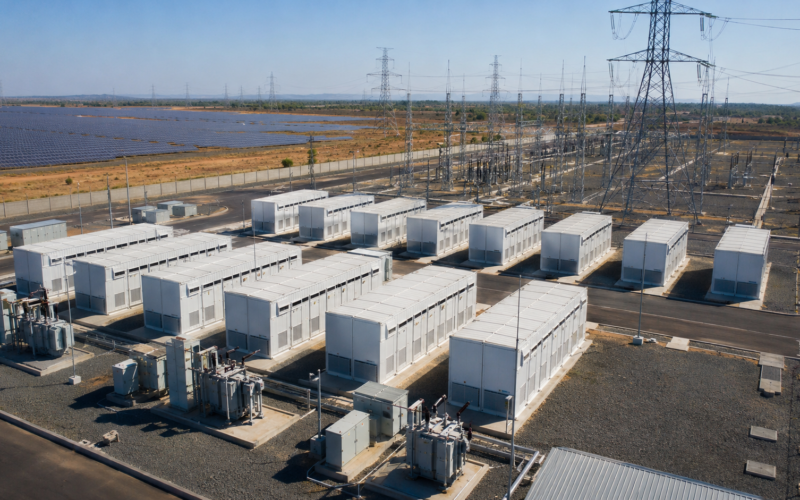
ENGIE SA (Euronext Paris: ENGI) and IGNIS have signed a ten-year flexibility purchase agreement covering battery energy storage projects with a combined capacity of 625 MWh across Spain. The batteries are expected to begin operating in 2028, giving ENGIE SA access to their flexibility in the day-ahead electricity market while IGNIS retains responsibility for operating the facilities and optimising participation in balancing services. The agreement could provide IGNIS with greater revenue visibility while allowing ENGIE SA to expand its Spanish energy-management platform without necessarily acquiring or constructing every covered asset itself. The companies have not disclosed the contract value, individual project locations, power capacity or precise commercial formula, limiting the ability to estimate earnings or capital exposure. Strategically, the arrangement demonstrates how long-term flexibility contracts are emerging as a financing bridge between Spain’s large renewable fleet and the battery capacity needed to manage volatile electricity production.
Why does the ENGIE and IGNIS agreement matter beyond its headline 625 MWh capacity?
The agreement matters because it separates battery ownership and operation from the commercial management of flexibility. IGNIS will remain responsible for operating the projects and participating in balancing services, while ENGIE SA gains access to the batteries’ ability to shift electricity between different periods in the day-ahead market. This division allows each company to concentrate on the part of the value chain where it believes it has the strongest capabilities.
For IGNIS, the ten-year agreement could reduce exposure to an entirely merchant revenue model. Battery projects are difficult to finance when lenders must rely on uncertain electricity-price spreads and balancing-service income across several years. A long-term agreement with a large utility can provide a more credible revenue foundation, even though the companies have not disclosed whether ENGIE SA is providing a fixed payment, a minimum revenue floor, a tolling fee or another form of commercial protection.
For ENGIE SA, the structure offers control over commercially useful flexibility without necessarily requiring full ownership of the underlying batteries. That can support capital efficiency because ENGIE SA may optimise the batteries alongside its renewable generation, energy-supply contracts and trading portfolio while IGNIS carries asset-level construction and operating responsibilities.
The agreement also reflects a shift in how electricity companies think about storage. Battery capacity is no longer valuable only as physical infrastructure. Its commercial value increasingly depends on forecasting, dispatch software, market access and the ability to combine several revenue streams without prematurely degrading the cells.
The unresolved issue is how risk has been divided. Without the contract value and payment structure, investors cannot determine whether ENGIE SA has secured attractive flexibility at a competitive cost or whether IGNIS has transferred too much market upside in exchange for stability. The strategic logic is visible, but the financial winner will only become clear after the batteries begin operating.
How could the ten-year flexibility purchase structure make IGNIS projects easier to finance?
Utility-scale batteries require substantial upfront capital for cells, inverters, transformers, grid connections, civil works and control systems. Their revenue, however, can fluctuate with wholesale-market volatility, renewable generation, competing battery capacity and regulatory changes. This mismatch between fixed construction costs and variable income can make conventional project finance difficult.
A ten-year commercial relationship with ENGIE SA could reduce that uncertainty. Banks and infrastructure investors are generally more comfortable when a recognised counterparty supports a predictable portion of project revenue. The agreement may therefore help IGNIS obtain longer-duration debt, reduce financing costs or lower the equity contribution required from project sponsors.
The bankability benefit will depend on contract design. A fixed annual availability payment would provide stronger downside protection than a pure revenue-sharing agreement. A minimum floor could improve debt capacity while preserving some upside for IGNIS. A tolling arrangement could transfer most market exposure to ENGIE SA in exchange for more stable payments to the asset owner.
None of those structures has been confirmed. The companies have described the agreement as a flexibility purchase arrangement under which ENGIE SA accesses day-ahead market flexibility and IGNIS secures revenue from the assets. Investors should therefore avoid assuming that the contract guarantees a fixed return or eliminates merchant exposure.
Construction and performance risks may also remain with IGNIS. If a project enters operation late, delivers less capacity than expected or suffers availability problems, contractual payments could be reduced. Long-term commercial support improves revenue visibility, but it does not protect developers from every form of execution risk.
The financing significance will become clearer when IGNIS announces project debt, investors, equipment suppliers or financial close. Until then, the agreement should be viewed as a meaningful commercial foundation rather than proof that every battery in the 625 MWh portfolio is fully financed.
Why is Spain becoming an increasingly important European battery storage market?
Spain has rapidly expanded solar and wind generation, creating periods when renewable electricity is abundant and wholesale prices fall sharply. During other periods, particularly after sunset or when wind generation declines, the power system requires flexible generation, imports, demand response or stored electricity.
This creates a natural role for batteries. The assets can charge when electricity is relatively inexpensive and discharge when supply becomes tighter. They can also provide reserve, frequency and balancing services that help system operators maintain stability as conventional generation contributes a smaller share of electricity production.
Spain’s updated energy plan targets 22.5 GW of storage capacity by 2030, including batteries, pumped hydro and other technologies. Achieving that objective will require a substantial increase from current levels and cannot depend entirely on government-supported projects. Commercial agreements such as the ENGIE SA and IGNIS contract could become an important second route to market.
The country’s strong solar profile creates both opportunity and risk. Repeated periods of low or negative daytime prices can increase the value of storing electricity for later sale. However, rapid battery deployment could narrow those price spreads as more assets compete to charge and discharge during the same windows.
Revenue stacking will therefore be essential. A battery relying only on day-ahead arbitrage may struggle as competition rises. Projects that can combine wholesale optimisation, balancing services, capacity mechanisms and bilateral flexibility agreements should have a stronger chance of earning acceptable returns.
Grid connections remain a constraint. Spain may have an attractive storage target, but projects still need suitable locations, permits and connection capacity. A battery with excellent commercial software is not especially useful while waiting beside an overloaded substation for permission to connect.
How does the IGNIS deal fit with ENGIE’s wider battery strategy across Spain and Europe?
ENGIE SA has been expanding battery storage through several different commercial models. In Spain, the group is acquiring two standalone projects in Andalusia with combined capacity of 278 MW and 1.1 GWh. The Álora project will provide 78 MW and 312 MWh, while the Tarifa development will provide 200 MW and 800 MWh.
Those projects are scheduled to begin construction in 2027 and enter operation progressively during 2028. They will also include synchronous condensers, allowing the assets to support grid inertia and reactive-power management in addition to storing electricity.
The IGNIS agreement adds another layer. ENGIE SA will gain commercial access to 625 MWh of third-party battery flexibility without the announcement of an acquisition. This suggests the company is building a portfolio that combines owned storage, contracted flexibility and energy-management services.
The distinction is strategically useful. Owning assets provides direct exposure to long-term operating cash flow and potential valuation upside. Contracting flexibility can expand commercial scale with less capital while allowing ENGIE SA to optimise a larger virtual portfolio across electricity markets.
ENGIE SA had more than 1 GW of battery capacity operating or under construction across Europe after announcing its Spanish and French projects in April. The group is targeting 95 GW of renewable and storage capacity by 2030, compared with 57.2 GW installed at the end of 2025.
The IGNIS agreement is too small to transform that group-wide target. Its importance lies in demonstrating how ENGIE SA could scale flexibility faster than physical ownership alone would permit. If the model performs well, similar contracts could be signed with independent storage developers in other European markets.
Could ENGIE combine the IGNIS batteries with renewable generation and customer supply contracts?
ENGIE SA operates across renewable generation, wholesale markets, electricity supply and energy management. This broad platform gives the company more potential uses for battery flexibility than a developer focused on a single project.
The batteries could be charged during periods when Spanish solar or wind production is high and market prices are weak. ENGIE SA could then use the stored electricity during more valuable periods, reduce the cost of balancing customer demand or support supply products designed to provide renewable electricity across a larger portion of the day.
This portfolio effect can create value beyond simple buy-low and sell-high trading. ENGIE SA can compare the battery’s expected earnings across the day-ahead market, intraday trading, balancing services and customer obligations before deciding how to dispatch the available capacity.
The company can also aggregate several batteries into a larger market-facing portfolio. Aggregation may improve forecasting, reduce exposure to a problem at one site and allow ENGIE SA to offer more dependable flexibility to customers or system operators.
IGNIS will still operate the facilities and optimise their participation in balancing markets, creating a potentially complex division of responsibilities. The two companies will need clear rules governing dispatch rights, market priorities, battery degradation, unavailable capacity and revenue allocation.
Poor coordination could destroy value. A battery cannot simultaneously pursue every market opportunity, and frequent cycling may accelerate degradation. The agreement will work only if the commercial incentives of ENGIE SA and IGNIS remain aligned throughout the ten-year term.
What does the contract mean for IGNIS as an independent Spanish energy platform?
IGNIS owns more than 1 GW of operational and under-construction generation assets and manages approximately 10 GW of its own and third-party capacity across renewable, hydroelectric, thermal and storage technologies. The ENGIE SA agreement strengthens its transition from renewable developer toward a broader energy-management and flexibility platform.
Securing a ten-year counterparty can improve the value of IGNIS projects before construction is completed. Infrastructure investors often value contracted batteries more highly than purely merchant assets because future revenue can be modelled with greater confidence.
IGNIS also retains the operational and balancing-services role, allowing the company to continue building market expertise rather than becoming a passive owner receiving fixed payments. This could generate additional revenue and operating data that support future projects.
The relationship with ENGIE SA may also create a commercial reference for further battery development. Developers seeking capital, grid access or customer agreements can point to the 625 MWh portfolio as evidence that large utilities are willing to sign long-term Spanish storage contracts.
The risk is dependence on a dominant counterparty. Ten years is a long commercial period, and unfavourable contract terms could limit IGNIS’s ability to benefit from future market changes. If battery revenues rise significantly, the company may discover that stability was purchased by surrendering valuable upside.
The agreement therefore represents both de-risking and commitment. IGNIS gains stronger revenue visibility, but it also binds a substantial storage portfolio to one commercial structure through much of the projects’ early operating lives.
Why is the contract unlikely to materially change ENGIE earnings in the near term?
ENGIE SA reported first-quarter 2026 EBIT excluding nuclear of €3.4 billion and operating cash flow of €3 billion. The company confirmed full-year net recurring income guidance of €4.6 billion to €5.2 billion and had 6.6 GW of renewable and battery projects under construction.
Against that scale, a 625 MWh flexibility agreement is unlikely to have a visible effect on near-term group earnings. The batteries are not expected to operate until 2028, and ENGIE SA has not disclosed the contract value or expected annual margin.
The agreement may also be structured primarily through ENGIE SA’s energy-management business rather than its asset-owning renewable division. Earnings could therefore arise through optimisation margins, customer-supply benefits or trading performance rather than conventional project revenue.
That revenue quality could be attractive because optimisation platforms require less construction capital than owned infrastructure. However, earnings may also be more variable and difficult for investors to forecast.
ENGIE SA’s first-quarter energy-management performance had already normalised from unusually strong prior market conditions. The battery agreement could strengthen future flexibility capabilities, but it will not independently reverse group-level changes in gas sales, power prices or market volatility.
The most appropriate investor interpretation is that the contract strengthens strategic positioning in a growth market. It is not a near-term earnings catalyst and should not be valued as though ENGIE SA had acquired 625 MWh of fully operating assets.
Why has ENGIE stock remained resilient despite limited earnings impact from the battery deal?
ENGIE SA shares closed near €27.30 on July 6, 2026, roughly 0.4% below their June 29 level and approximately 1.8% lower over four weeks. The stock remained within a 52-week range of €17.20 to €29.89 and was trading less than 9% below its annual high.
The longer-term performance indicates broadly constructive investor sentiment. ENGIE SA shares had risen approximately 38% over 12 months as investors responded to stronger regulated infrastructure exposure, cash generation and the group’s acquisition of UK Power Networks.
The Spanish battery agreement is unlikely to have influenced daily trading materially. It does not change 2026 guidance, requires no disclosed major capital commitment and will not contribute operational flexibility until 2028.
Investors are placing greater weight on UK Power Networks integration, economic net debt, dividend capacity, power prices and the performance of ENGIE SA’s renewable and flexible-generation portfolio. The group’s economic net debt-to-EBITDA ratio had declined to 2.9 times in the first quarter, supported partly by its capital increase.
The contract still reinforces an element of the investment case. ENGIE SA is attempting to combine regulated networks, renewable generation, batteries and customer supply into a more balanced utility model. Battery flexibility could become increasingly valuable as electrification and renewable penetration increase.
The market appears to recognise that strategic direction without assigning a large immediate premium to individual agreements. That is probably sensible. A utility of ENGIE SA’s size needs dozens of contracts, projects and operating improvements to shift group valuation, not one very enthusiastic battery press release.
What commercial and execution risks remain before the batteries begin operating in 2028?
The first risk is lack of project transparency. ENGIE SA and IGNIS have not disclosed the locations, number of projects, power ratings or ownership structure. Without those details, investors cannot assess grid conditions, development maturity or concentration risk.
The second risk is construction. Battery projects require permits, financing, equipment procurement and grid connection before commercial contracts can generate value. Delays could reduce contract duration, defer revenue or require amendments between ENGIE SA and IGNIS.
The third risk is market design. Spain’s balancing and capacity frameworks are evolving as the country attempts to increase storage deployment. Regulatory changes could alter the revenue available from different services or affect how batteries participate in wholesale markets.
The fourth risk is degradation. Battery cells lose capacity through time and cycling. ENGIE SA and IGNIS must agree how degradation, augmentation and operational limits are reflected in available flexibility and commercial payments.
The fifth risk is optimisation conflict. IGNIS will operate the assets and manage balancing-market participation, while ENGIE SA gains access to day-ahead flexibility. Contract rules must determine which market takes priority when opportunities overlap.
Cybersecurity and software reliability are additional considerations. Modern batteries depend on digital controls, forecasting tools and remote market interfaces. A software failure or cyber incident could prevent dispatch even when the physical battery remains functional.
The final risk is merchant compression. Spain needs storage, but a successful construction wave could narrow arbitrage spreads and balancing prices. Long-term contracts protect against some volatility, but the value created for both parties will still depend on market conditions after 2028.
What milestones should investors watch before the ENGIE and IGNIS strategy can be judged?
The first milestone will be disclosure of the underlying projects. Locations, power ratings and development stages would allow the market to distinguish advanced assets from earlier-stage pipeline capacity.
The second milestone will be financing. Evidence of debt commitments or financial close would confirm whether the ENGIE SA agreement provides enough revenue certainty to support construction.
The third milestone will be equipment and engineering contracts. Battery supplier, inverter technology, warranty terms and augmentation arrangements will influence long-term performance and operating costs.
The fourth milestone will be grid connection progress. Spain’s storage targets will create limited value if connection queues and permitting delays prevent projects from entering operation.
The fifth milestone will be confirmation of the commercial structure. Even partial disclosure of floor payments, availability requirements or revenue sharing would improve understanding of risk allocation.
The sixth milestone will be commissioning in 2028. Investors should monitor whether all 625 MWh enters operation together or through a phased portfolio schedule.
The final milestone will be actual optimisation results. The agreement will be validated only if IGNIS earns dependable project revenue and ENGIE SA captures enough flexibility value to justify its contractual payments.
Key takeaways on what the ENGIE and IGNIS battery agreement means for Spain’s power market
- ENGIE SA and IGNIS have signed a ten-year agreement covering 625 MWh of Spanish battery storage capacity.
- The projects are expected to begin operating in 2028, but their locations, power ratings and construction status have not been disclosed.
- ENGIE SA will access day-ahead market flexibility while IGNIS will operate the assets and optimise balancing-market participation.
- The agreement could improve project bankability by giving IGNIS a long-duration commercial relationship with a large utility.
- The exact payment structure remains undisclosed, so investors should not assume fixed revenue, a guaranteed floor or a conventional tolling agreement.
- ENGIE SA is combining owned batteries with contracted third-party flexibility to expand its market platform without relying exclusively on acquisitions.
- Spain’s 22.5 GW storage target creates substantial opportunity, but grid connections, permitting and merchant-revenue compression remain important risks.
- The contract is unlikely to materially affect ENGIE SA’s near-term earnings because operation is not expected until 2028.
- ENGIE SA shares remain near the upper end of their 52-week range, reflecting broader confidence in networks, cash flow and utility diversification.
- Project disclosure, financing, grid access and commissioning will determine whether the agreement becomes a replicable model for European battery development.
Share this:
Discover more from Business-News-Today.com
Subscribe to get the latest posts sent to your email.

