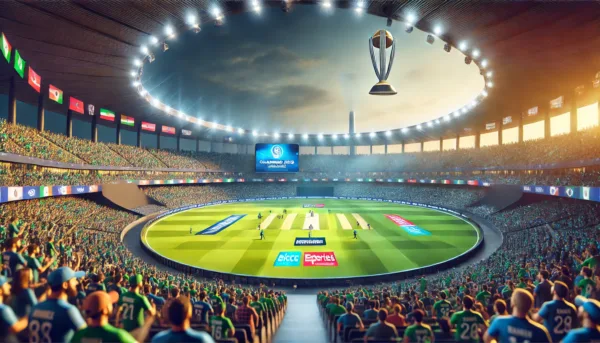


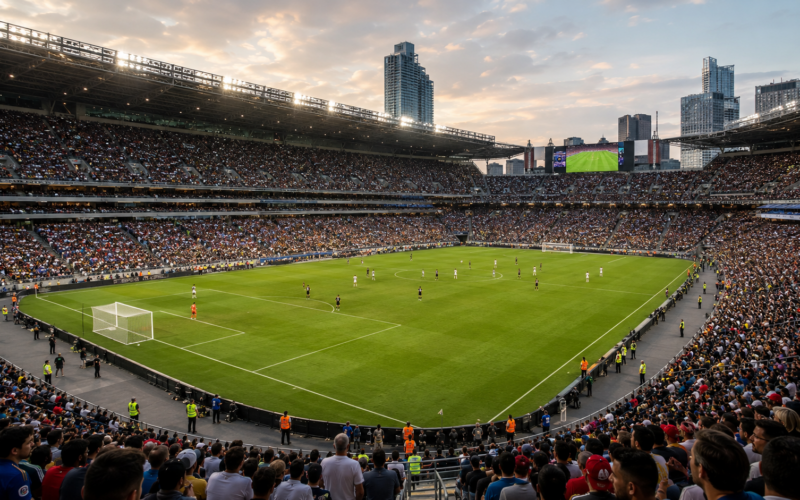
Mexico defeated Ecuador 2-0 in their FIFA World Cup 2026 Round of 32 match on Tuesday, June 30, at Mexico City Stadium, also known as Estadio Azteca. Julián Quiñones opened the scoring in the 22nd minute before assisting Raúl Jiménez for Mexico’s second goal nine minutes later.
The match began an hour later than scheduled after thunderstorms and a lightning risk forced organisers to delay kick-off. Mexico emerged from the disruption with greater intensity, producing six attempts during the opening 15 minutes and repeatedly forcing Ecuador’s defensive line to retreat towards its own penalty area.
Ecuador’s John Yeboah struck the outside of the post before Mexico took the lead, while Raúl Rangel later made a strong first-half save to prevent Yeboah from reducing the deficit. Ecuador finished with more possession and more corners, but Mexico controlled the areas that mattered, generated the better chances and protected its two-goal advantage without conceding a second-half shot on target.
The result sent Mexico into the Round of 16 and eliminated Ecuador from FIFA World Cup 2026. Piero Hincapié was shown a straight red card following a late VAR review, while Mexico’s confirmed next opponent is England, who beat DR Congo 2-1 and will return to Mexico City Stadium for the July 5 knockout fixture.
How did Mexico’s aggressive first-half approach prevent Ecuador from controlling midfield?
Mexico’s first-half advantage did not come from dominating possession. Javier Aguirre’s side instead controlled where Ecuador were permitted to circulate the ball, using Jiménez to screen central passes while Quiñones and Alvarado pressed the outside centre-backs and full-back zones.
Erik Lira protected the space in front of Mexico’s defence, allowing Luis Romo and Mora to move higher when Ecuador attempted to build through Caicedo and Vite. That arrangement helped Mexico attack second balls and quickly convert recoveries into forward runs before Ecuador could reorganise.
Ecuador occasionally bypassed the press, particularly when Yeboah carried the ball inside from the right. His effort against the outside of the post demonstrated that Mexico’s aggressive positioning carried some risk, but it remained Ecuador’s only major opening before Quiñones changed the match.
Why did Julián Quiñones’ opening goal expose Ecuador’s high defensive structure?
The opening goal came from Mexico recognising the space behind Ecuador’s first line of pressure. Alvarado received enough time to release a precisely weighted forward pass as Quiñones accelerated between Hincapié and Pacho.
Quiñones used his strength to resist the defender’s recovery challenge before striking powerfully beyond Galíndez. The finish was exceptional, but the move was also a structural victory because Mexico turned Ecuador’s attempt to squeeze the pitch into an exposed one-on-one situation.
Ecuador’s defenders had little protection once the initial press was beaten. Quiñones’ direct running ensured Mexico did not need a long sequence of possession to exploit the opening.
How did Raúl Jiménez and Mexico punish Ecuador’s error for the decisive second goal?
Mexico’s second goal exposed Ecuador’s difficulty playing securely near the edge of its own penalty area. Jiménez participated in the recovery, combined with Quiñones and continued his run rather than remaining in a conventional centre-forward position.
Quiñones returned the ball into Jiménez’s path, and the striker produced a first-time finish into the upper corner. The goal was Jiménez’s 47th for Mexico and gave Aguirre’s team the cushion required to change its risk profile.
Mexico could subsequently defend in a more compact block, leaving Ecuador to hold possession in areas that posed little immediate danger. The match was not over after 31 minutes, but the tactical conditions had shifted heavily in Mexico’s favour.
Why did Ecuador’s possession and eight corners produce only one shot on target?
Ecuador finished with 57% possession and eight corners, yet much of that control occurred in front of Mexico’s defensive structure. Caicedo and Vite were allowed to receive the ball in deeper midfield positions, but forward passing lanes into Valencia, Plata and Yeboah were repeatedly closed.
Mexico’s centre-backs defended crosses aggressively, while Lira and Romo protected the central area outside the penalty box. Ecuador therefore relied increasingly on hopeful deliveries, long-range attempts and individual carries rather than combinations through Mexico’s defensive lines.
The corner count also exaggerated Ecuador’s threat. Several deliveries were cleared at the first contact, and Mexico’s 54 clearances illustrated how willing Aguirre’s side were to defend the penalty area rather than chase unnecessary possession.
Which saves, misses and substitutions prevented Ecuador from changing the match?
Rangel’s most important intervention came before half-time when Yeboah cut inside and drove a rising attempt towards goal. The Mexico goalkeeper reacted quickly and pushed the shot away, protecting the two-goal advantage at a moment when an Ecuador response could have transformed the second half.
Galíndez later denied Montes from a set piece, while the Mexico defender placed another header narrowly wide. Kevin Rodríguez also had a late opportunity after competing with Rangel for a long delivery, but his toe-poked attempt rolled outside the post.
Sebastián Beccacece altered Ecuador’s defensive shape at the interval by introducing Preciado and Medina before adding Rodríguez, Páez and Jordy Caicedo. The changes increased Ecuador’s width and attacking numbers, but they did not resolve the absence of controlled possession between Mexico’s midfield and defensive lines.
Aguirre’s substitutions were focused more on preserving structure and energy. Gutiérrez replaced the tiring Mora, while Vargas, Santiago Giménez, Pineda and Reyes helped Mexico maintain pressure around second balls and defend the closing stages with fresh legs.
What did the late VAR red card reveal about Ecuador’s loss of discipline?
Ecuador’s frustration became increasingly visible as the match entered stoppage time. Páez and Caicedo were booked for late challenges before Hincapié became involved in a confrontation with Santiago Giménez.
The incident was reviewed, and Hincapié was dismissed after covering his mouth while speaking during the exchange. The red card did not alter the outcome, but it provided an unfortunate ending for an Ecuador team that had already lost control of the match tactically.
It also reinforced the contrast between the teams during the closing period. Mexico managed the scoreline calmly, whereas Ecuador’s attempts to recover became hurried, fragmented and increasingly emotional.
Why did Mexico win and what must Ecuador improve after their elimination?
Mexico won because its attacking efficiency was supported by a disciplined defensive plan. The hosts scored twice from three shots on target, but they also generated 15 attempts and consistently produced the cleaner opportunities despite having less of the ball.
Quiñones was the decisive individual, contributing a goal and an assist while giving Mexico an outlet capable of attacking space behind Ecuador’s defence. Jiménez linked midfield and attack intelligently, Mora played with composure beyond his age, and Rangel delivered when Ecuador briefly threatened.
Ecuador must improve the relationship between its midfield possession and penalty-area occupation. Caicedo could circulate the ball, but Valencia frequently became isolated, Plata struggled to receive in dangerous central areas and the supporting runners arrived too slowly after Mexico’s defensive block had been established.
The defeated side must also become less dependent on crosses and individual carries when chasing a match. Eight corners and 32 attempted crosses created little because Mexico consistently had enough defenders positioned around the first and second contacts.
What must Mexico change before facing England in the FIFA World Cup 2026 Round of 16?
Mexico enter the England match with four victories and four clean sheets, but the next contest will present a different physical and tactical examination. England possess greater aerial strength, more depth between midfield and attack and a striker in Harry Kane who can both finish chances and create space for runners.
Aguirre’s team cannot allow England the same prolonged second-half possession that Ecuador enjoyed. Mexico protected its penalty area effectively in this match, but defending too deeply against Kane, Jude Bellingham and England’s wide attackers could invite a heavier volume of high-quality chances.
Mexico’s best route remains the combination of compact defending and rapid attacks through Quiñones, Alvarado and the advanced midfielders. The hosts must also retain their set-piece concentration because England’s delivery and aerial presence will be considerably more dangerous than Ecuador’s.
The return to Mexico City Stadium gives Mexico continuity in venue, altitude and crowd support. England, however, advanced through a difficult comeback against DR Congo, meaning the Round of 16 meeting brings together Mexico’s defensive consistency and England’s ability to recover from an adverse scoreline.
What does Mexico’s victory mean for the FIFA World Cup 2026 knockout bracket?
Mexico advanced to the Round of 16 after winning a World Cup knockout match for the first time since defeating Bulgaria in 1986. The victory ended a run of eight consecutive eliminations in Mexico’s opening knockout fixture.
Ecuador were eliminated after reaching the Round of 32 as one of the strongest third-placed qualifiers. Their tournament included a notable group-stage victory over Germany, but they were unable to reproduce that level of counterattacking efficiency against the co-hosts.
Mexico will now face England at Mexico City Stadium on Sunday, July 5. The winner will advance to the quarter-finals and enter the bracket section containing the winner of Brazil’s Round of 16 fixture against Norway, without any further opponent being confirmed at this stage.
Key takeaways from Mexico vs Ecuador at FIFA World Cup 2026
- Mexico defeated Ecuador 2-0 and recorded its fourth consecutive victory and clean sheet at FIFA World Cup 2026.
- Julián Quiñones scored the opening goal in the 22nd minute before supplying the assist for Raúl Jiménez nine minutes later.
- Mexico ended a 40-year wait for a World Cup knockout victory, having last won an elimination match against Bulgaria in 1986.
- Ecuador held 57% possession and won eight corners but produced only eight attempts and one shot on target.
- John Yeboah created Ecuador’s best opportunities by striking the outside of the post and forcing Raúl Rangel into a first-half save.
- Mexico’s 4-1-2-3 structure protected the centre while creating direct counterattacking opportunities behind Ecuador’s defensive line.
- Gilberto Mora impressed during Mexico’s dominant opening period before Brian Gutiérrez replaced him in the 58th minute.
- Piero Hincapié received a straight red card following a VAR-reviewed stoppage-time confrontation with Santiago Giménez.
- Ecuador were eliminated after failing to convert midfield possession and wide deliveries into meaningful penalty-area pressure.
- Mexico will face England in the Round of 16 at Mexico City Stadium on July 5 at 8:00 p.m. local time.
Share this:
Discover more from Business-News-Today.com
Subscribe to get the latest posts sent to your email.