


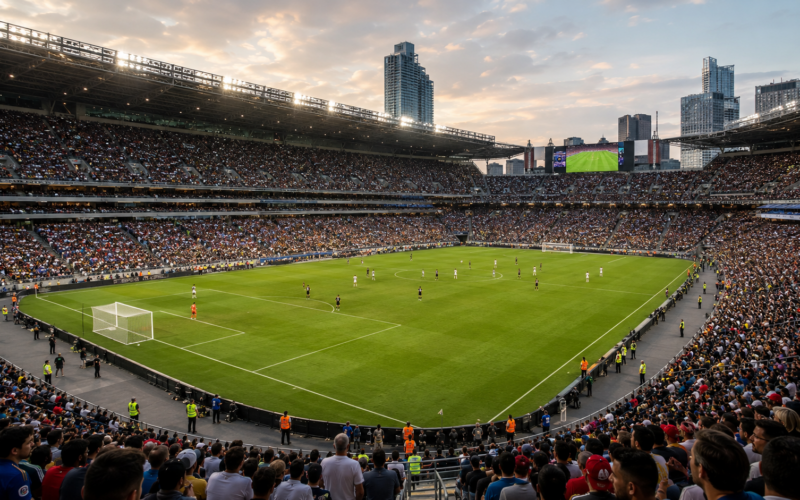
Morocco eliminated the Netherlands 3-2 on penalties after a 1-1 draw following extra time in their FIFA World Cup 2026 Round of 32 match at Monterrey Stadium in Mexico on Monday, June 29, 2026. Yassine Bounou saved the Netherlands’ fifth penalty from Crysencio Summerville before Ismael Saibari converted the decisive spot kick in front of a sellout crowd of 51,243.
Cody Gakpo had placed the Netherlands ahead in the 72nd minute after Summerville launched a rapid counterattack and supplied the final pass. Morocco had controlled most of the possession and created the better opportunities, but Bart Verbruggen’s saves appeared to have placed Ronald Koeman’s side within reach of the Round of 16.
Issa Diop changed the match in the first minute of stoppage time. The centre-back attacked Chemsdine Talbi’s cross and powered a header into the upper corner, scoring his first international goal and forcing an additional 30 minutes.
Verbruggen made an extraordinary point-blank save from Soufiane Rahimi during extra time, but the Netherlands could not survive the shootout. Morocco advanced to face co-hosts Canada in Houston on July 4, while the Dutch were eliminated despite winning Group F and scoring ten goals during the group stage.
FIFA World Cup 2026 Netherlands 1-1 Morocco full scorecard and penalty result
How did the Netherlands vs Morocco penalty shootout unfold kick by kick?
Why did Ronald Koeman abandon the attacking structure that had worked in the group stage?
The Netherlands entered the knockout phase after scoring ten goals and winning Group F, but Koeman changed to a back five against Morocco. Nathan Aké, Virgil van Dijk and Jan Paul van Hecke began centrally, with Micky van de Ven and Denzel Dumfries operating as wing-backs.
The intention was to protect the spaces used by Hakimi, Brahim Díaz and Saibari. Instead, the shape left Brian Brobbey isolated and reduced the support available when Gakpo or Summerville received possession.
Frenkie de Jong and Ryan Gravenberch were regularly outnumbered by Morocco’s midfield. The Netherlands therefore found it difficult to retain possession long enough to bring the wing-backs into advanced areas.
Morocco completed 801 accurate passes and controlled approximately 69% of the ball across the 120 minutes. The Netherlands recorded only six attempts, a sharp decline from the attacking production that had carried them through the group stage.
Koeman argued that the formation reduced Morocco’s opportunities. The wider problem was that it also removed much of the Netherlands’ own attacking identity.
How did Morocco’s midfield control prevent the Netherlands from building sustained attacks?
Ayyoub Bouaddi, Neil El Aynaoui and Azzedine Ounahi established control through positioning rather than constant pressing. They remained available behind the first Dutch pressure and repeatedly moved the ball away from Gravenberch and De Jong.
Saibari and Díaz drifted between midfield and attack, forcing the Dutch central defenders to decide whether to leave the defensive line. Hakimi provided width and became one of Morocco’s main progression routes.
The Netherlands often retreated into a line of five with Gakpo and Summerville positioned close to midfield. Brobbey was left several metres from the nearest teammate whenever possession was recovered.
Morocco did not convert its dominance into an early goal, but it controlled where the match was played. Verbruggen was required to make five saves, while Bounou faced only two shots on target.
The tactical advantage became even clearer during extra time. Morocco continued seeking a winner, while the Netherlands increasingly appeared prepared to reach penalties.
Why was Bart Verbruggen crucial during Morocco’s strongest attacking periods?
Morocco created the first major opportunity from a corner after approximately 20 minutes. Hakimi’s delivery reached El Aynaoui, whose header forced Verbruggen to react and push the ball over the crossbar.
Hakimi later moved into space after Ounahi’s pass and struck the crossbar. Van de Ven also produced an important recovery challenge when the Morocco captain threatened to shoot from another advanced position.
El Khannouss tested the goalkeeper with a deflected attempt that Verbruggen gathered securely. The Netherlands reached half-time level largely because their goalkeeper managed Morocco’s strongest spell.
His best intervention arrived six minutes into extra time. Rahimi escaped into the penalty area and appeared certain to score from point-blank range.
Verbruggen spread his body and diverted the shot away. The save preserved the Netherlands’ position and ranked among the most difficult goalkeeping interventions of the tournament.
How did Crysencio Summerville create the opening goal against the run of play?
Koeman introduced Wout Weghorst and Teun Koopmeiners in the 71st minute, replacing Brobbey and Aké. The changes moved the Netherlands away from the original defensive structure and provided another target for direct attacks.
One minute later, Summerville collected possession and accelerated through the space created by Morocco’s advanced players. His run transformed a defensive recovery into the Netherlands’ most dangerous attack.
Summerville released Gakpo into the left-central channel. The forward controlled the pass and placed a composed finish beyond Bounou.
The goal came from one of the Netherlands’ few successful transitions. It did not reflect the wider balance of possession or chances, but knockout matches are often decided by isolated moments rather than territorial control.
Gakpo’s finish also appeared to justify Koeman’s cautious strategy. The Netherlands were 18 minutes from advancing despite producing little sustained attacking football.
Why did Chemsdine Talbi’s introduction become decisive for Morocco?
Ouahbi reacted to the goal by trusting his substitutes rather than abandoning Morocco’s passing structure. Anass Salah-Eddine, Gessime Yassine and Samir El Mourabet entered before Rahimi and Talbi were introduced in the 86th minute.
Talbi replaced El Khannouss and moved directly into an advanced wide role. His willingness to deliver early crosses gave Morocco a different attacking option against the Netherlands’ deep defensive line.
In the first minute of stoppage time, Talbi received possession on the right and sent the ball into the penalty area. Diop had remained forward and attacked the delivery with greater determination than the surrounding defenders.
The centre-back’s header travelled into the upper corner beyond Verbruggen. Morocco had finally converted its territorial advantage and avoided elimination with only minutes remaining.
Talbi later converted his penalty during the shootout. His contribution demonstrated the value of Ouahbi’s decision to trust younger players during the most pressured phase of the match.
Why could neither team score during 30 minutes of physically demanding extra time?
Morocco began extra time with greater energy and immediately created the Rahimi chance saved by Verbruggen. The Atlas Lions continued circulating possession while the Netherlands protected the central area and waited for counterattacks.
Fatigue gradually reduced the quality of the final pass. Players from both teams required treatment following several heavy challenges, while Saibari and Van Hecke finished with visible cuts.
De Jong experienced discomfort and was replaced by Marten de Roon in the 110th minute. Gakpo was withdrawn for Kluivert three minutes later, partly preparing the Netherlands for a possible shootout.
The Dutch approach became increasingly conservative. They recycled possession when possible but rarely committed enough players forward to threaten Bounou.
Morocco remained the more ambitious side but could not create another opportunity as clear as Rahimi’s. The match therefore moved to penalties despite the Atlas Lions finishing with the stronger statistical performance.
How did the shootout change after both teams missed their early opportunities?
Koopmeiners converted the first penalty and appeared to give the Netherlands an immediate advantage when El Aynaoui struck the crossbar.
Kluivert could have doubled the lead but hit the post. Rahimi then produced one of the shootout’s most unusual moments.
Verbruggen reached the Moroccan forward’s kick and appeared to have saved it. The ball escaped his control, struck him again and rolled across the line.
Weghorst and Talbi converted before Timber dragged the Netherlands’ fourth attempt wide. Hakimi was then given an opportunity to place Morocco one kick from victory but struck the post.
The Netherlands remained alive until Bounou moved left and saved Summerville’s attempt. Saibari then converted calmly to complete Morocco’s 3-2 victory.
Why did Yassine Bounou’s shootout experience give Morocco an important advantage?
Bounou had already played a central role in Morocco’s penalty victory over Spain during the 2022 FIFA World Cup. His presence therefore carried both technical and psychological significance.
The goalkeeper did not dominate the entire shootout because Kluivert and Timber missed the target without requiring saves. He nevertheless remained patient rather than committing too early.
Summerville attempted to place the Netherlands’ fifth penalty away from the goalkeeper. Bounou anticipated the direction and reached the ball with his left hand.
The save allowed Saibari to win the match immediately. It also confirmed Morocco’s reputation as a team capable of handling the pressure of knockout shootouts.
Verbruggen had made the more spectacular saves during open play, but Bounou produced the intervention that directly determined qualification.
What does the defeat mean for Ronald Koeman and the Netherlands’ tactical direction?
The Netherlands had entered the match as one of the competition’s strongest attacking teams. They defeated Sweden 5-1, scored three against Tunisia and completed the group stage unbeaten.
The decision to abandon that approach against Morocco will dominate the review of their elimination. Koeman selected a structure designed to prevent defeat rather than build on the team’s attacking momentum.
Gakpo’s goal nearly protected the decision from criticism. Diop’s equaliser and Morocco’s continued superiority during extra time exposed the risks of defending such a narrow advantage.
Koeman defended the tactical plan and said it had been agreed with the players. He nevertheless acknowledged that discussions about his future would follow.
The Netherlands must determine whether their next cycle should continue prioritising situational pragmatism or return to a more assertive style built around De Jong, Gakpo, Summerville and their attacking depth.
Why will Morocco’s Round of 16 meeting with Canada present a different challenge?
Canada reached the Round of 16 after Stephen Eustáquio’s stoppage-time goal eliminated South Africa. Jesse Marsch’s team offer greater speed and pressing intensity than the Netherlands displayed in Monterrey.
Morocco may not control 69% possession against the co-hosts. Canada will attempt to pressure Bouaddi, Ounahi and El Aynaoui before they can release Hakimi or Saibari.
The Atlas Lions should still possess an advantage in tournament experience. Bounou, Hakimi and several defenders were part of the side that reached the semi-finals in 2022.
Canada’s Alphonso Davies, Jonathan David and Tajon Buchanan can attack quickly when Morocco’s full-backs advance. Ouahbi must therefore balance the ambitious possession game used against the Netherlands with stronger protection against transitions.
The winner will advance to a quarter-final against France or Paraguay. Morocco have already eliminated one European contender, but facing a motivated co-host in Houston will create a different form of pressure.
How does Morocco’s victory reshape the FIFA World Cup 2026 knockout bracket?
Morocco reached the Round of 16 for the third time and remained on course to follow their historic 2022 semi-final run with another deep campaign.
The Netherlands became the second major European team eliminated on penalties on June 29 after Paraguay defeated Germany earlier in the day.
Morocco’s victory also completed the first confirmed Round of 16 pairing. Canada and Morocco will meet in Houston, with the winner advancing to the July 9 quarter-final.
Key takeaways from Netherlands vs Morocco at FIFA World Cup 2026
- Morocco eliminated the Netherlands 3-2 on penalties after a 1-1 draw following extra time.
- Morocco controlled 69% possession and registered five shots on target compared with two from the Netherlands.
- Bart Verbruggen denied Neil El Aynaoui and Bilal El Khannouss during Morocco’s first-half pressure.
- Achraf Hakimi struck the crossbar as the Atlas Lions created the clearer opportunities.
- Crysencio Summerville assisted Cody Gakpo’s 72nd-minute goal following a rapid counterattack.
- Chemsdine Talbi assisted Issa Diop’s stoppage-time equaliser.
- Verbruggen produced an outstanding extra-time save from Soufiane Rahimi.
- The Netherlands missed three penalties through Justin Kluivert, Quinten Timber and Summerville.
- Yassine Bounou saved Summerville’s fifth kick before Ismael Saibari converted the winner.
- Morocco will face Canada in the Round of 16, while the Netherlands were eliminated.
Share this:
Discover more from Business-News-Today.com
Subscribe to get the latest posts sent to your email.