




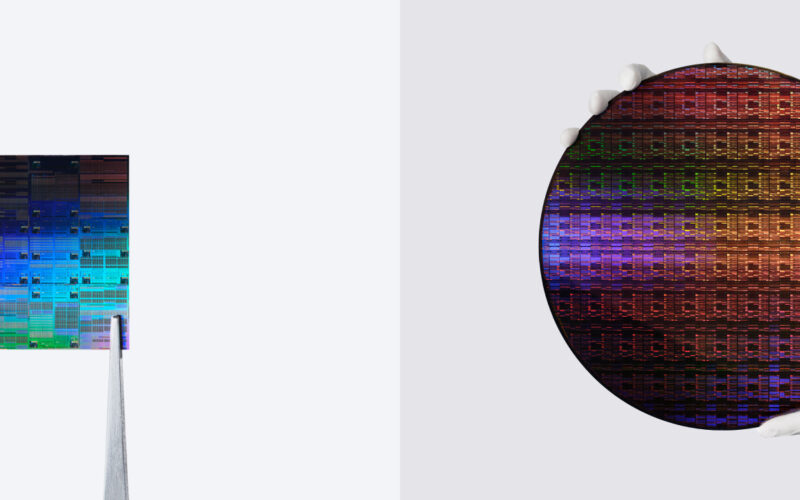
IBM (NYSE: IBM) has unveiled what it describes as the world’s first sub-1 nanometer chip technology, built around a new transistor architecture at the 0.7 nm node, equivalent to 7 angstroms. The technology packs close to 100 billion transistors onto a chip roughly the size of a fingernail, nearly double the density of the 2 nm node IBM first demonstrated in 2021. IBM projects the design delivers up to 50 percent more performance or 70 percent greater energy efficiency than its 2 nm chips, a step change aimed squarely at generative AI, cloud infrastructure, and next-generation devices. The announcement landed on June 25 and sent IBM shares up roughly 5 to 6 percent in premarket trading, even as the stock has spent the past month retreating from an early-June all-time high. For a company that has spent a decade repositioning around software, AI, and quantum, the breakthrough is a reminder that IBM’s research engine still sits at the leading edge of silicon physics.
What does IBM’s sub-1 nanometer chip breakthrough actually mean for the global semiconductor scaling race?
The headline claim is straightforward, but the strategic weight sits underneath it. For years, the semiconductor industry has wrestled with the prospect that traditional scaling was nearing a hard physical wall as transistor features shrink toward the size of individual atoms. IBM’s demonstration matters because it offers a credible technical path below the 1 nm threshold, a boundary that many in the industry treated as the practical end of the line for conventional approaches.
The first observation is that node labels no longer map to literal physical dimensions. A 0.7 nm or 7 angstrom node now describes a generation of manufacturing technology rather than a measurable gate length, and IBM is explicit about that distinction. The competitive signal, then, is not about a single number but about whether a manufacturer can keep extracting density and efficiency gains generation over generation. IBM is claiming it can do so for at least another decade.
The second observation is that IBM is a research and licensing player rather than a high-volume commercial foundry. It does not fabricate leading-edge chips at scale the way Taiwan Semiconductor Manufacturing Company or Samsung Electronics do. IBM’s role is to invent the architecture and process innovations that those manufacturers and their equipment partners eventually adopt. The 2 nm nanosheet design IBM pioneered is now flowing into commercial roadmaps across the industry, which is the template for how this sub-1 nm work is likely to propagate.
The third observation is timing. IBM frames a path to production within roughly the next five years, which places this technology in the same window where AI compute demand and energy constraints are expected to be most acute. A 70 percent efficiency improvement is not an abstract spec when data center power availability has become a binding constraint on AI buildout. That alignment between the technology and the market need is what gives the announcement its strategic edge.
How does IBM’s nanostack 3D transistor architecture change the underlying economics of advanced chip design?
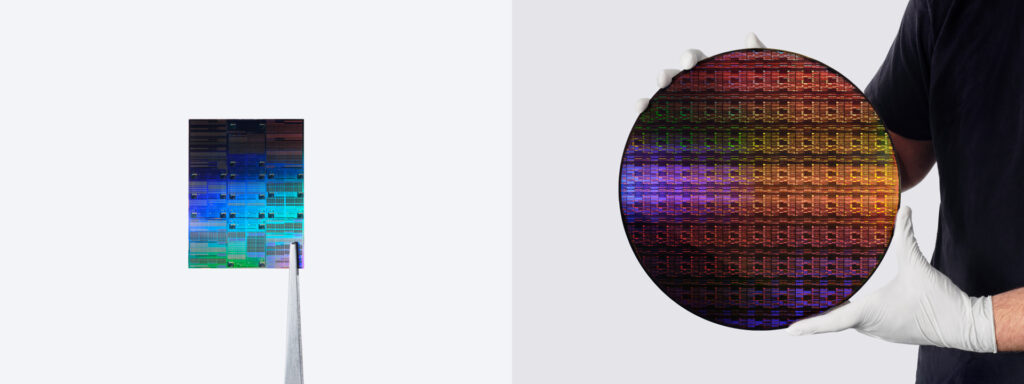
The technical core of the announcement is an architecture IBM calls nanostack, which it describes as the industry’s first three-dimensional, nanosheet-based transistor design. Rather than continuing to shrink transistors laterally, nanostack vertically stacks and staggers them, using 3D sequential integration to fit more devices into the same footprint. This is an architectural answer to a problem that pure shrinkage can no longer solve on its own.
The most consequential design feature is that nanostack allows different material combinations within each stacked layer, letting engineers tune the performance and power profile of each transistor independently. That flexibility is a meaningful departure from conventional approaches, because it decouples optimization decisions that previously had to be made across the whole device. For chip designers, it widens the space of trade-offs available between raw speed and energy draw.
A second implication sits in IBM’s reported 40 percent SRAM scaling result, presented at VLSI 2026. SRAM density has been one of the most stubborn bottlenecks in recent process generations, with memory scaling lagging logic scaling and inflating the cost and power of cache-heavy designs. If nanostack genuinely restores SRAM scaling momentum, it addresses a pain point that directly constrains the high-bandwidth data movement AI accelerators depend on. That is arguably as important commercially as the logic density headline.
The third point concerns manufacturability rather than theory. IBM says the architecture was experimentally validated through ultra-thin dielectric bonding in CMOS integration, dual-channel engineering, and a functioning CMOS inverter with expected switching behavior. A working inverter is a modest-sounding milestone, but it is the difference between a simulation and a structure that can actually be built and compute. The gap between a validated test structure and a yielding high-volume process remains enormous, and that gap is where most of the execution risk lives.
Why does the Albany research hub and ASML High NA EUV tooling matter for IBM’s path to commercial production?
The architecture is only half the story. Printing features at angstrom scale requires lithography that does not yet exist in mature commercial form, and this is where IBM’s ecosystem positioning becomes central to the analysis. The work is anchored at IBM’s semiconductor research facility in Albany, New York, which is slated to host a High Numerical Aperture Extreme Ultraviolet lithography tool from ASML Holding.
The first analytical takeaway is dependency. IBM’s sub-1 nm roadmap is tied to ASML’s High NA EUV systems, the same scarce and extraordinarily expensive tools that every leading-edge manufacturer is competing to deploy. ASML’s effective monopoly on this class of equipment means that the pace of angstrom-era scaling across the entire industry is gated by a single supplier. IBM’s early access through the Albany hub is a genuine advantage, but it is an advantage shared with whichever manufacturers ASML prioritizes.
The second takeaway is the partner network. IBM names Lam Research Corporation (NASDAQ: LRCX), Tokyo Electron, and SCREEN Semiconductor Solutions as collaborators developing the process tools and steps required to make High NA EUV productive, and the group has already produced working devices. This consortium model is how pre-competitive semiconductor research now gets done, because no single firm can absorb the cost and risk of advancing the entire process stack alone. The presence of established equipment vendors lends the roadmap credibility that a standalone IBM claim would lack.
The third takeaway is geographic and political. Concentrating this work in Albany aligns IBM with the broader push to rebuild advanced semiconductor research and manufacturing capacity inside the United States. That positioning carries weight at a moment when chip supply chains and computational leadership have become explicit instruments of national policy, and it gives IBM a seat at the table in conversations about where the next decade of foundational chip technology gets developed.
What does IBM’s angstrom-era roadmap signal about its competition with TSMC, Samsung, and Intel foundry ambitions?
IBM is not going to print these chips in volume, so the competitive read has to account for how the technology reaches the market. The likely route is the same one IBM’s prior nanosheet work traveled, through licensing, joint development, and process transfer to manufacturers and their tool suppliers.
The first competitive observation is that IBM’s research leadership functions as an option on relevance rather than direct market share. By staying ahead on architecture, IBM keeps itself indispensable to the firms that do manufacture at scale, and it retains intellectual property leverage over the industry’s direction. The value accrues through partnerships, patents, and influence rather than wafer revenue.
The second observation is that this raises the bar for the commercial foundries. Taiwan Semiconductor Manufacturing Company, Samsung Electronics, and Intel are each pursuing their own angstrom-class roadmaps, and a validated 3D stacking approach with restored SRAM scaling sharpens the benchmark they are measured against. Whether IBM’s specific nanostack approach or a competing architecture wins out commercially is unresolved, but the demonstration pressures every leading-edge roadmap to show a credible answer below 1 nm.
The third observation connects the chip work to IBM’s adjacent quantum strategy. IBM recently outlined plans for Anderon, described as the world’s first pure-play quantum foundry and structured as a standalone IBM company intended to anchor quantum wafer manufacturing in the United States. Read together, the classical sub-1 nm breakthrough and the quantum foundry ambition position IBM as a foundational technology supplier across both computing paradigms, which is a more durable strategic identity than chasing any single product market.
How are IBM shares reacting to the chip news, and does the market move match the strategic stakes?
IBM stock responded positively to the announcement, with shares popping roughly 5 to 6 percent in premarket trading on June 25 before settling. As of June 26, IBM was trading near $258, against a previous close around $263 and an intraday range that touched the high $260s. The stock’s 52-week range runs from about $212.34 to $332.46, and the all-time closing high near $329 was set only in early June, which means the recent tape has been a pullback from a euphoric peak rather than a slump from weakness.
The first market observation is that the chip news interrupted a corrective move. IBM had rallied hard into June, with one-week and one-month gains earlier in the month that left even constructive analysts flagging the stock as fully valued near $329. The subsequent retreat toward the $258 to $264 zone brought shares back toward levels that value-oriented frameworks consider a more reasonable entry, near the 200-day average. The breakthrough provided a fundamental catalyst at a point where sentiment had already cooled.
The second observation is that the move looks proportionate rather than speculative. A 5 to 6 percent reaction to a research milestone with a five-year production horizon is enthusiasm tempered by realism. The market is pricing optionality, not near-term earnings, and the muted follow-through after the initial pop suggests investors understand that the revenue impact is distant and indirect. That is a healthier reaction than a runaway spike would have been.
The third observation is the fundamental backdrop. IBM reported Q1 2026 EPS of $1.91 against a $1.81 consensus, on revenue near $15.92 billion, with free cash flow described as the strongest in a decade and full-year 2025 free cash flow above $14 billion. Management has guided to roughly $1 billion of incremental free cash flow in 2026 on 5 percent-plus revenue growth, supported by a dividend yield around 2.26 percent. The chip breakthrough does not move those numbers this year, but it reinforces the narrative of a research-rich franchise with software-led cash generation and long-dated technology optionality, which is the thesis underpinning recent analyst upgrades. Currency headwinds on consulting margins and the long road from test structure to yielding production remain the obvious risks to temper that story.
What execution and commercialization risks could still undermine IBM’s sub-1 nanometer production timeline?
A validated architecture is not a manufacturable product, and the distance between the two is where most semiconductor roadmaps slip. The first risk is yield. Demonstrating a working CMOS inverter is a proof of principle, not evidence that the process can produce billions of defect-free transistors at commercial volumes and acceptable cost. History is full of node transitions that arrived years late and over budget.
The second risk is the lithography bottleneck. The roadmap depends on High NA EUV tools that are scarce, costly, and still maturing, and any delay in ASML’s tool availability or in developing productive process steps with Lam Research, Tokyo Electron, and SCREEN would push the timeline. The five-year production target assumes that the entire ecosystem advances roughly on schedule, which is an optimistic baseline given the complexity involved.
The third risk is commercial adoption and competition. Even a technically superior architecture has to win design commitments from the manufacturers and customers who will actually build with it, and rival approaches from the major foundries could capture that mindshare first. IBM’s influence depends on the industry choosing to standardize around its innovations, as it largely did with nanosheets, but that outcome is a probability rather than a certainty. The breakthrough strengthens IBM’s hand without guaranteeing the win.
Key takeaways on what IBM’s sub-1 nanometer breakthrough means for the company, its competitors, and the semiconductor industry
- IBM has demonstrated a credible technical path below the 1 nm node, easing fears that conventional scaling had reached a hard physical limit and extending its roadmap by at least a decade.
- The nanostack 3D architecture shifts the scaling game from lateral shrinkage to vertical stacking, with independent per-layer material tuning that widens the performance and power trade-off space for designers.
- The reported 40 percent SRAM scaling result may matter as much as the logic density headline, because memory scaling has been a key bottleneck for AI accelerators and cache-heavy designs.
- IBM monetizes this as a research and licensing leader, not a volume foundry, so value accrues through IP, partnerships, and influence over TSMC, Samsung, and Intel roadmaps rather than wafer revenue.
- The roadmap is gated by ASML High NA EUV tooling, making IBM’s progress dependent on a single scarce equipment supplier shared across the entire leading-edge industry.
- The Albany research hub and partners Lam Research, Tokyo Electron, and SCREEN position the work within the US push to rebuild domestic advanced-chip capacity, adding policy tailwinds.
- Combined with the planned Anderon quantum foundry, the breakthrough frames IBM as a foundational supplier across both classical and quantum computing, a more durable identity than any single product market.
- The roughly 5 to 6 percent share reaction looks proportionate, pricing distant optionality rather than near-term earnings, and arrived as the stock corrected from its early-June all-time high near $329.
- Strong fundamentals underpin the story, with a Q1 2026 earnings beat, decade-high free cash flow, and guidance for roughly $1 billion of incremental FCF on 5 percent-plus revenue growth.
- The principal risks are yield at volume, lithography tool timing, and competitive adoption, any of which could stretch the five-year production target that IBM has set.
Discover more from Business-News-Today.com
Subscribe to get the latest posts sent to your email.