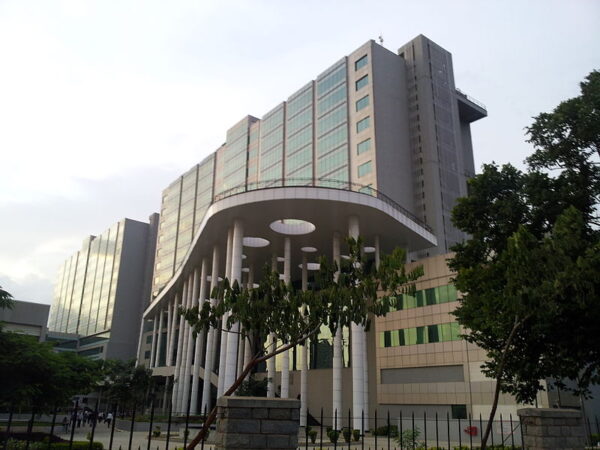
STT Global Data Centres India and minority shareholder Tata Communications Limited (NSE: TATACOMM, BSE: 500483) are facing intensifying scrutiny after a June 5 fire caused extensive damage at a New Delhi data centre and disrupted customer systems. The physical impact was initially assessed as being limited to one data hall and its supporting infrastructure, but recovery difficulties have persisted for several weeks. Matrix Cellular fears it may have lost access to more than 20 years of operational data, while R2 Net has estimated financial damage of around $2 million and Google Cloud has linked continuing network constraints in India to the incident. The disruption matters because STT Global Data Centres India operates a national platform of 30 facilities supporting cloud providers, telecom companies, enterprises and government-linked digital activity. The strategic test is now whether the operators can restore affected customers, explain why redundancy mechanisms did not prevent prolonged disruption and rebuild confidence in India’s rapidly expanding data centre infrastructure.
Why has the June 5 Delhi data centre fire become a much larger technology story now?
The initial announcement presented the incident as a contained fire for which business continuity measures had been activated. The fuller picture that emerged on June 24 is more serious because some customers remain unable to recover systems and data almost three weeks after the event. That gap between the early operational message and the subsequent customer experience will attract attention from enterprise technology buyers, insurers, regulators and investors.
STT Global Data Centres India maintains that the preliminary impact was confined to a single data hall and associated infrastructure, while the rest of the facility continued operating. That may be technically accurate, but it does not fully address the commercial consequences. A limited physical failure can still become a broad business crisis when the affected hall contains critical systems, network equipment, customer servers or storage that has not been replicated elsewhere.
The incident also moved beyond a conventional colocation outage when Google Cloud network services were affected. Emergency power shutdowns isolated a local point of presence in Delhi and reduced available network capacity, contributing to elevated latency and intermittent disruption for traffic from Delhi, Mumbai, Chennai and nearby regions. The fact that a hyperscale cloud provider experienced continuing effects demonstrates how physical infrastructure dependencies can travel through multiple layers of the digital economy.
This is therefore not simply a story about a damaged building. It is a test of infrastructure design, backup contracts, customer architecture, operational communication and the extent to which supposedly distributed cloud services still depend on individual facilities.
How could damage to one data hall create weeks of customer and cloud disruption?
Modern data centres are designed around redundancy, but redundancy exists at several different levels and is not automatically identical for every customer. A facility may have redundant electricity, cooling and network routes while a customer’s own servers remain concentrated inside one hall. Similarly, a cloud provider may have multiple regions while a specific network point of presence depends on equipment at a single location.
The Delhi fire appears to have affected both computing infrastructure and electrical or networking systems. Images from inside the facility showed severely damaged server racks, electrical equipment, collapsed ceiling sections and debris. Even when storage media are not completely destroyed, smoke, heat, water, suppression chemicals and electrical damage can make recovery difficult and potentially unsafe.
The prolonged disruption suggests that some systems could not be restarted through simple failover procedures. This may reflect physical destruction, incomplete replication, delayed access to the affected area, damaged connectivity or customer arrangements that did not include geographically separate recovery services. The independent investigation will need to distinguish between these possibilities because each carries different implications for responsibility and remediation.
The wider lesson is that a data hall can be physically isolated without being commercially isolated. If a critical customer workload, internet gateway or network route depends on that hall, the consequences can spread far beyond the floor where the fire occurred. Redundancy diagrams look reassuring in sales presentations, but incidents reveal whether the underlying architecture was genuinely independent.
What does the Delhi data centre incident reveal about backup responsibility and customer contracts?
Tata Communications has indicated that services were restored for customers who had subscribed to recovery and backup offerings. That distinction is commercially important because it suggests that backup protection may have depended on the service package purchased by each customer rather than being an inherent feature of basic colocation.
In a traditional colocation model, the provider supplies secured space, power, cooling and network access, while customers may remain responsible for their own servers, storage, replication and recovery plans. Customers sometimes assume that placing equipment inside a professionally managed data centre provides broader data protection than the contract actually promises. The fire shows why the difference between facility resilience and data resilience must be understood before an incident, not debated afterwards.
Matrix Cellular has said that customer information, usage records, support history, billing data and vendor information became inaccessible. R2 Net has cited potential customer losses and disruption to tracking information used by law-enforcement agencies. These examples demonstrate that the commercial cost extends beyond replacing hardware because lost historical records can affect billing, compliance, customer service, dispute resolution and future revenue.
Contract language concerning force majeure, service-level commitments, data ownership, backup responsibilities and liability limits will now become central. A force majeure classification may protect providers from certain contractual claims, but it does not automatically resolve questions about design standards, maintenance, fire suppression performance or whether recovery representations were sufficiently clear. Litigation is not inevitable, although customers facing material losses are likely to examine every contractual avenue available.
Why does the Google Cloud disruption expose concentration risk in India’s digital infrastructure?
Google Cloud’s exposure elevates the incident from a dispute between a colocation provider and individual customers into a broader infrastructure concern. Cloud services are often marketed around geographic distribution and resilient architecture, yet the underlying network still depends on physical points of presence, fibre routes, power systems and third-party facilities.
The emergency shutdown reduced network capacity in the Delhi metropolitan area and affected traffic from several Indian cities. Google Cloud rerouted traffic and explored additional mitigation measures, but its June 23 status update still warned of possible latency until the affected infrastructure was fully restored. That duration is unusually important because it shows that alternative capacity can reduce disruption without completely replacing the performance of a damaged site.
Cloud customers may respond by reviewing how their workloads connect to provider networks rather than focusing only on where applications are hosted. An application can run across multiple availability zones and still experience performance problems if network access is concentrated through a vulnerable point. Enterprises may consequently demand more information about physical routing, internet exchanges, edge locations and third-party data centre dependencies.
The incident could also benefit competing data centre operators and cloud providers if customers begin diversifying infrastructure relationships. However, shifting workloads is neither cheap nor immediate. The more likely near-term response is increased spending on multi-region deployment, secondary connectivity, offline backups and disaster-recovery testing.
India wants to become a major cloud and AI infrastructure market, but growth in megawatts must be matched by growth in resilience. A country can build hundreds of new data halls and still face systemic weakness if power, network and recovery arrangements remain concentrated.
What financial and reputational exposure does Tata Communications face from the fire?
ST Telemedia Global Data Centres owns 74% of STT Global Data Centres India, while Tata Communications retains a 26% associate holding. Tata Communications therefore does not carry the same direct operating exposure as a wholly owned data centre subsidiary, but its name, customer relationships and digital infrastructure strategy remain closely associated with the platform.
The immediate financial impact on Tata Communications is not yet quantifiable. Potential costs could include customer support, equipment replacement, insurance deductibles, remediation, legal expenses and possible compensation. The operator may also need to accelerate capital expenditure on fire suppression, battery systems, physical separation and backup capacity across other facilities.
Reputational exposure may be more significant than the direct accounting impact. Tata Communications positions itself as a global digital infrastructure provider connecting enterprises, cloud platforms and hundreds of large multinational customers. A prolonged recovery problem at an associated data centre can influence enterprise procurement decisions even if the underlying failure sits inside a joint venture.
The timing is particularly sensitive because data centre valuations are being driven by artificial intelligence and cloud demand. ST Telemedia Global Data Centres is itself in the process of changing ownership through a multibillion-dollar transaction involving KKR and Singapore Telecommunications. The Delhi incident is unlikely on its own to derail that broader deal, but it could increase scrutiny around insurance, operational controls, incident history and future remediation expenditure.
The independent technical investigation is therefore more than an engineering exercise. It will affect customer confidence, board-level risk assessments and the credibility of future expansion claims.
Has the Tata Communications share price reflected the emerging Delhi data centre risk?
Tata Communications shares closed at ₹2,028.50 on June 24, leaving the stock around 3.9% below its 52-week high of ₹2,110 and well above its 52-week low of ₹1,322.50. The shares gained approximately 6.8% over the five trading sessions from June 17 and around 4.8% from the May 25 closing price.
That positive trajectory suggests that investors had been focusing on broader growth expectations, digital infrastructure demand and improving momentum rather than the data centre incident. The early June disclosure did not produce a sustained negative reaction, partly because the company had initially emphasised containment and business continuity actions.
However, the detailed report describing extensive damage and prolonged customer recovery problems emerged after the Indian equity market closed on June 24. The June 24 share price therefore cannot be treated as the market’s verdict on the newly revealed scale of the disruption. Trading on June 25 will provide the first clearer indication of whether investors view the event as a manageable associate-company issue or a wider reputational and financial risk.
The stock’s position near its annual high increases the sensitivity of that assessment. Investors may tolerate an isolated incident if the investigation is transparent, customer services are restored and financial exposure remains contained. Confidence could weaken if additional customers report losses, the root cause points to preventable control failures or remediation costs spread across the wider data centre network.
The market should avoid overstating the incident’s earnings impact before evidence is available. Equally, dismissing it because Tata Communications owns only 26% of the platform would ignore the company’s strategic reliance on trust, network reliability and enterprise relationships.
Could lithium battery systems and fire suppression become regulatory priorities for Indian data centres?
Delhi fire authorities have indicated that the fire began in lithium battery units, although the final cause remains under investigation. Battery systems are essential to data centres because they provide immediate backup power during grid interruptions and bridge the gap before generators or alternative supplies become available. They also introduce thermal, electrical and fire-management risks that require careful design, monitoring and physical separation.
The investigation will need to establish whether the issue involved battery chemistry, installation, charging equipment, electrical protection, maintenance or another source entirely. It must also determine why the installed detection and suppression systems were unable to prevent extensive damage inside the affected area. A severe outcome does not automatically prove that standards were breached, but it creates a strong case for independent verification.
Indian regulators and enterprise customers may demand more detailed disclosure around battery placement, compartmentalisation, suppression technology, emergency shutdown procedures and recovery-site separation. Insurance providers could also raise premiums or require additional engineering assessments across older facilities.
These changes would increase operating and capital costs, particularly for sites developed before current AI and high-density computing requirements. Yet the alternative is riskier. Data centres are no longer ordinary commercial buildings because they support banking, government services, communications, healthcare, artificial intelligence and law-enforcement activity.
The industry’s rapid expansion has focused heavily on land, electricity and commissioned capacity. The Delhi fire is a reminder that the quality of each megawatt matters as much as the number announced.
What must STT Global Data Centres India and Tata Communications do next?
The first priority is restoring affected customer systems and providing realistic recovery assessments. Customers need clarity on what data remains recoverable, which services can be moved to alternative capacity and what evidence supports each timeline. Repeatedly extending uncertain restoration periods would deepen commercial damage.
The second priority is completing the independent root-cause analysis without allowing the investigation to become a communications shield. STT Global Data Centres India has indicated that the process could take five to seven weeks. Technical investigations require care, but interim findings concerning immediate safety risks should be shared with customers and applied across comparable facilities.
The third priority is reviewing every layer of resilience across the national portfolio. That examination should include battery architecture, fire compartmentation, network concentration, backup subscriptions, customer failover testing and the physical separation of primary and recovery environments.
The fourth priority is clarifying where provider responsibility ends and customer responsibility begins. Contracts may legally define that boundary, but enterprise buyers also need plain operational explanations. A customer should know whether its service includes data backup, replicated infrastructure, recovery testing and guaranteed restoration objectives.
The fifth priority is demonstrating that lessons have been implemented. A polished incident report will not restore confidence by itself. Customers and investors will look for measurable changes in infrastructure, operating procedures, insurance coverage and governance.
India’s data centre expansion remains structurally attractive because cloud adoption, data localisation and AI computing demand continue to grow. The Delhi incident does not reverse that investment case. It does, however, expose the difference between building digital capacity and building digital resilience.
Key takeaways on what the Delhi data centre fire means for Tata Communications and India’s cloud market
- The June 5 fire became a more significant corporate story after extensive physical damage and prolonged recovery problems emerged on June 24.
- STT Global Data Centres India says the impact was limited to one data hall, but the commercial disruption reached customers and Google Cloud traffic across several Indian cities.
- Possible loss of more than 20 years of business data demonstrates that professional colocation does not automatically include geographically separate backups.
- Tata Communications owns 26% of STT Global Data Centres India, limiting direct control but not eliminating financial and reputational exposure.
- Customers who purchased recovery and backup services were restored, placing greater focus on contractual responsibilities and service design.
- Google Cloud’s continuing latency risk shows that distributed cloud services can retain concentrated physical network dependencies.
- The independent investigation must explain both the fire’s origin and why existing suppression and recovery mechanisms did not prevent extensive damage.
- Tata Communications shares were near their 52-week high before the detailed damage report emerged, making June 25 trading an important sentiment test.
- Data centre customers are likely to increase spending on multi-site replication, network diversity, offline backups and disaster-recovery testing.
- India’s AI and cloud infrastructure opportunity remains strong, but future investment decisions will place greater weight on resilience rather than announced capacity alone.
Share this:
Discover more from Business-News-Today.com
Subscribe to get the latest posts sent to your email.