






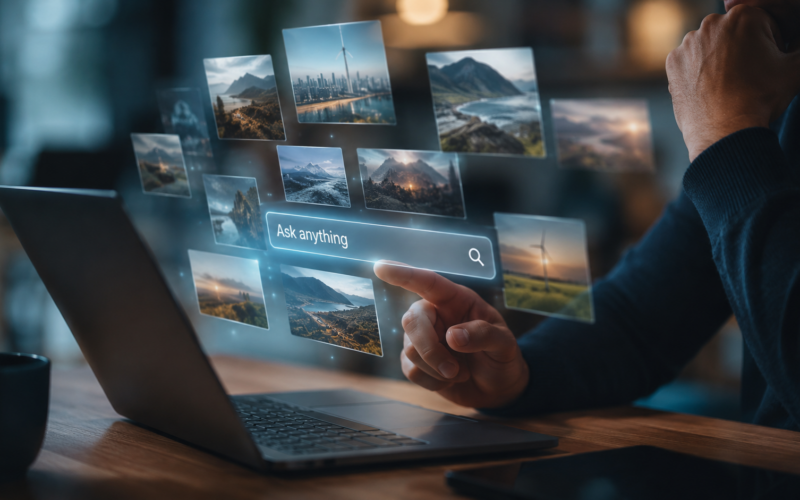
Getty Images Holdings, Inc. (NYSE: GETY) has entered a multi-year display partnership with OpenAI to bring licensed Getty Images visual content into search and discovery experiences inside ChatGPT. The agreement gives OpenAI access to licensed image libraries for display within ChatGPT responses, strengthening the role of rights-cleared content in consumer-facing artificial intelligence search. For Getty Images Holdings, Inc., the deal adds another strategic artificial intelligence distribution channel at a time when investors are testing whether visual-content licensing companies can defend relevance against synthetic media. GETY shares recently traded near $0.61, close to the lower end of their 52-week range of about $0.58 to $3.21, making the announcement strategically meaningful but not yet enough to erase market skepticism.
Why does the Getty Images and OpenAI partnership matter for licensed visual content in ChatGPT search?
The Getty Images and OpenAI partnership matters because it shifts the artificial intelligence content debate from defensive litigation and abstract copyright arguments toward commercial access, product integration, and recurring platform usage. For years, visual-content owners have faced a brutal question: if generative artificial intelligence can produce cheap images instantly, what happens to the value of curated, rights-managed and editorially verified libraries? This agreement offers one answer. High-quality licensed visuals still matter when users need trust, context, credibility and real-world imagery rather than purely synthetic output.
The immediate strategic point is not just that Getty Images content may appear inside ChatGPT search and discovery responses. The bigger issue is that OpenAI is treating licensed visual content as a product input for search-like experiences, not merely as historical training material. That distinction could become important for publishers, media companies, photographers, agencies and enterprise customers who want clearer separation between model training, content display, attribution, user experience and commercial rights.
For Getty Images Holdings, Inc., the agreement supports a broader positioning strategy. The company has been trying to frame its archives, creator network, editorial coverage and commercial licensing infrastructure as assets that become more valuable, not less valuable, in an artificial intelligence economy. That is a difficult argument to sell when the stock is trading near a 52-week low, but the OpenAI deal gives management a cleaner narrative: licensed content can be embedded into artificial intelligence search flows where users increasingly begin their discovery journey.
How could the OpenAI agreement change Getty Images’ competitive position against synthetic image platforms?
Getty Images Holdings, Inc. is not only competing with traditional stock-image rivals. It is now competing with generative artificial intelligence platforms, creator marketplaces, in-house brand studios, social media content libraries and low-cost image generation tools that have dramatically reduced the marginal cost of visual production. The OpenAI agreement does not remove that pressure, but it may help Getty Images Holdings, Inc. defend a premium lane where trust, provenance, editorial relevance and commercial safety matter.
The competitive implication is especially important for corporate, legal, media and advertising customers. Many businesses can generate decorative visuals cheaply, but they still need licensed editorial photography, real event imagery, celebrity coverage, sports photos, news visuals and commercially cleared creative assets. ChatGPT search integration could introduce Getty Images content to users at the moment they are searching, summarizing, researching or building context, which is closer to the top of the decision funnel than a traditional stock-photo search page.
There is also a platform-distribution angle. If artificial intelligence assistants become discovery gateways, visual libraries that are absent from those assistants risk becoming invisible at the exact point where users form intent. Getty Images Holdings, Inc. appears to be avoiding that risk by placing licensed content inside a high-usage artificial intelligence environment. The hard part is whether visibility inside ChatGPT translates into revenue, retention, pricing power or measurable customer acquisition. Nice screenshots do not pay the rent, unless the licensing model behind them is strong.
What does GETY stock performance suggest about investor confidence in the OpenAI deal?
GETY’s current market setup shows a company with strategic relevance but weak investor confidence. Getty Images Holdings, Inc. recently traded around $0.61, with the stock near its 52-week low of roughly $0.58 and far below its 52-week high of about $3.21. Recent performance has also remained soft, with the stock down about 5% over five days and slightly lower over one month. That price action suggests investors are not yet treating the OpenAI partnership as a near-term earnings inflection point.
The muted sentiment is understandable. Display agreements can be strategically important without immediately changing revenue growth, margin structure or free cash flow. Investors will want to know whether the OpenAI partnership includes meaningful economics, usage-based payments, attribution mechanics, renewal protections or broader commercial opportunities. Without those details, the market may see the deal as validation rather than valuation.
Still, the stock’s depressed level changes the interpretation. When a company trades near its 52-week low, even modest evidence of platform relevance can matter if it supports a credible turnaround narrative. The OpenAI deal may not be a cure-all, but it gives Getty Images Holdings, Inc. another data point in its argument that licensed visual content remains strategically necessary for artificial intelligence products that want to be useful, trusted and legally safer.
Could licensed content partnerships become the new operating model for artificial intelligence search?
The Getty Images and OpenAI partnership points toward a more structured operating model for artificial intelligence search, where premium content owners license their assets for display, discovery and user-facing experiences. This model is different from the early artificial intelligence scramble, where many rights holders feared their work would be absorbed into systems without direct commercial recognition. If more deals follow this pattern, the market could move toward a hybrid system where artificial intelligence platforms combine generated answers, licensed media, search results and attributed source experiences.
That shift would have second-order effects across media, photography, entertainment, sports, journalism and brand marketing. Content owners would gain leverage if artificial intelligence platforms decide that legally cleaner, higher-quality content improves user trust and reduces regulatory or reputational risk. Artificial intelligence companies would gain richer responses and fewer disputes, but they would also face rising content costs. Users would likely benefit from more credible visual context, though the experience will depend on how clearly platforms distinguish licensed imagery from generated or user-uploaded visuals.
The risk is that only the largest content owners benefit. Getty Images Holdings, Inc. has scale, archives, creator relationships and licensing infrastructure that smaller agencies may struggle to match. If platform deals increasingly concentrate around a few large rights holders, the artificial intelligence search economy could reinforce existing content-market power rather than broaden opportunity for independent creators.
What are the biggest execution risks for Getty Images after the OpenAI partnership?
The first execution risk is monetization opacity. Getty Images Holdings, Inc. can win strategic partnerships, but investors need evidence that those partnerships support revenue growth, customer retention or margin stability. If artificial intelligence display deals become low-margin brand-validation arrangements, they may not materially change the company’s financial profile. The market will likely look for clues in future earnings commentary, subscription revenue trends, licensing revenue and customer demand from artificial intelligence or platform channels.

The second risk is creator economics. Getty Images Holdings, Inc. depends on photographers, videographers and content partners whose work underpins the value of its libraries. Artificial intelligence licensing can strengthen the company’s market position only if contributors believe the model protects their rights and offers fair commercial participation. If creators feel that platform deals dilute value or reduce transparency, Getty Images Holdings, Inc. could face reputational friction even as it gains distribution.
The third risk is competitive imitation. Shutterstock, Adobe Inc., visual artificial intelligence startups, media archives and specialist editorial libraries all have reasons to pursue artificial intelligence licensing channels. OpenAI’s partnership with Getty Images Holdings, Inc. may validate the category, but validation invites competition. Getty Images Holdings, Inc. will need to show that its archive depth, editorial coverage, brand relationships and rights-management capabilities create a defensible advantage rather than a one-off licensing headline.
What should investors and competitors watch next after Getty Images brings licensed visuals into ChatGPT?
Investors should watch whether Getty Images Holdings, Inc. provides more detail on the partnership’s commercial structure in future financial updates. The most important signals will be whether artificial intelligence-related licensing becomes a recurring revenue contributor, whether annual subscription revenue retention improves, and whether platform partnerships help offset pressure from lower-cost synthetic imagery. A partnership with OpenAI is strategically powerful, but the financial test will be boring in the best way: revenue, margins, cash flow and renewal behavior.
Competitors should watch user behavior inside ChatGPT search and discovery experiences. If licensed visuals improve engagement, trust or completion rates, other artificial intelligence platforms may need similar content agreements. That could create a broader licensing market for premium image libraries and editorial archives. If users barely notice the difference, the strategic value may remain more symbolic than transformational.
For the wider artificial intelligence sector, the deal is another sign that the content stack is becoming more formalized. Artificial intelligence companies increasingly need structured relationships with rights holders, not just engineering breakthroughs. Getty Images Holdings, Inc. is trying to turn that need into commercial leverage. Whether GETY shareholders benefit depends on whether licensing discipline can travel from the contract page to the income statement.
Key takeaways on what the Getty Images and OpenAI partnership means for GETY, competitors and artificial intelligence search
- Getty Images Holdings, Inc. has secured a strategically important artificial intelligence distribution channel by bringing licensed visual content into ChatGPT search and discovery experiences.
- The OpenAI partnership strengthens the argument that rights-cleared visual libraries still matter in an artificial intelligence market increasingly shaped by trust, provenance and commercial safety.
- GETY’s weak stock performance shows investors are not yet pricing the deal as a major financial inflection point, despite its strategic relevance.
- The agreement may help Getty Images Holdings, Inc. defend premium licensing value against synthetic image tools, especially in editorial, corporate and legally sensitive use cases.
- The biggest unknown is monetization, since the announcement does not by itself reveal whether the deal will materially improve revenue growth or margins.
- Competitors in stock imagery, creator marketplaces and artificial intelligence visual tools are likely to treat the deal as a signal that platform licensing is becoming more important.
- Creator economics will be critical, because Getty Images Holdings, Inc. must keep photographers and content partners aligned as artificial intelligence distribution expands.
- The deal could accelerate a broader shift toward licensed content layers inside artificial intelligence search products.
- Investors should watch future earnings commentary for signs that artificial intelligence partnerships are becoming recurring commercial drivers rather than reputation-building agreements.
- The partnership gives Getty Images Holdings, Inc. a stronger artificial intelligence narrative, but execution and financial proof will decide whether that narrative can support a stock recovery.
Share this:
Discover more from Business-News-Today.com
Subscribe to get the latest posts sent to your email.
