






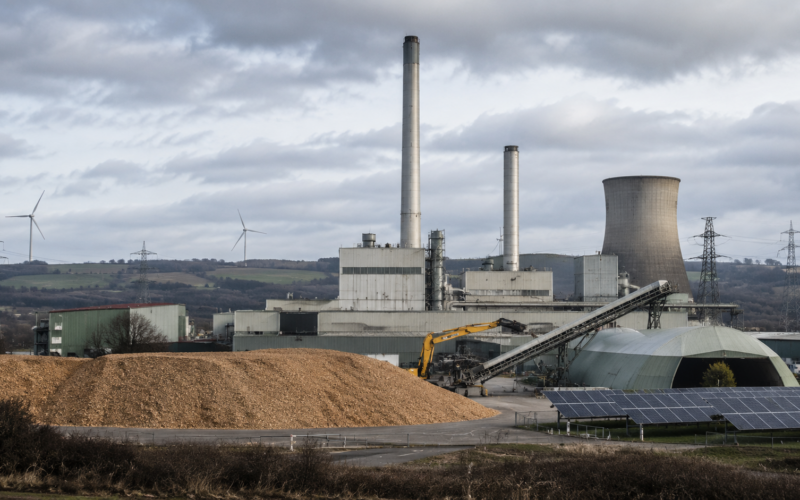
Drax Group plc (LSE: DRX) has confirmed that the Financial Conduct Authority has closed its investigation into the company’s historical biomass-sourcing disclosures without taking enforcement action. The regulator examined whether Drax Group plc’s annual reports and accounts for 2021 to 2023 contained misleading statements or omitted material information that investors needed when assessing the sustainability of its biomass supply chain. The decision removes a significant legal and reputational uncertainty that had remained over the FTSE 250 power producer since the investigation began in August 2025. DRX shares nevertheless closed lower on 18 June 2026, indicating that investors now see the group’s post-2027 subsidy framework, biomass credibility, acquisition leverage and portfolio transition as more important than the closed regulatory case.
Why does the FCA’s decision remove an important risk from the Drax investment case?
The FCA investigation created uncertainty because it concerned the accuracy and completeness of information provided directly to shareholders. The regulator’s focus was not simply whether Drax had complied with technical forestry standards, but whether investors received a fair account of biomass sourcing and sustainability risks in published financial reports. An enforcement action could have resulted in financial penalties, governance scrutiny, reputational damage and further questions about whether public support arrangements were based on sufficiently reliable disclosures.
Closing the investigation without action removes the possibility of an immediate FCA sanction connected with the reviewed reporting periods. It also supports Drax’s argument that, while its data and control systems have previously required improvement, there was not enough evidence to justify a market disclosure enforcement case. This distinction matters because the investment debate has sometimes blurred operational reporting failures, contested environmental claims and allegations of deliberate investor deception into one combined risk.
The decision should make it easier for management to engage with lenders, regulators, policymakers and institutional shareholders without an active market-conduct investigation hanging over the company. It may also reduce the risk premium attached specifically to enforcement uncertainty. However, the closure does not provide a general regulatory endorsement of every biomass sourcing decision or settle the wider scientific and political argument over whether large-scale wood-burning should qualify as renewable energy.
Why did DRX shares fall even after the FCA removed the enforcement threat?
Drax shares initially received some support from the FCA announcement, but the stock ended the session around 1.9% lower at approximately 739.5p. The decline suggests the investigation had already become only one part of a much larger investment calculation. Investors are now primarily focused on future earnings after the existing renewable support mechanism changes, the balance-sheet impact of acquisitions and whether Drax can successfully diversify beyond biomass.
The wider market backdrop also provided little support, with UK equities under pressure following hawkish central-bank signals and weakness across several energy and commodity-related stocks. Drax had already fallen during the preceding sessions, leaving the shares approximately 5% lower over five trading days and around 8% below their level one month earlier. The muted reaction therefore does not necessarily mean investors considered the FCA outcome unimportant, but it does show that the decision was insufficient to reverse broader concerns.
The stock’s valuation is increasingly linked to what Drax will look like after April 2027 rather than what regulators conclude about reports published several years ago. The group must demonstrate that lower biomass volumes under the new support structure can still produce dependable earnings, while new solar, wind, batteries, gas peakers, hydro and optimisation assets compensate for the gradual reduction in legacy support.
What did the earlier Ofgem case reveal about Drax’s biomass reporting controls?
Drax had already faced regulatory scrutiny from Ofgem regarding historical reporting under the Renewables Obligation scheme. The company agreed to contribute £25 million to a consumer redress fund after Ofgem found that it had not maintained adequate data governance and controls when reporting certain categories of wood sourced from Canada. The regulator did not find evidence that the breach was deliberate or that Drax had used unsustainable biomass and improperly claimed renewable subsidies.
That outcome remains relevant because it shows where the company’s most identifiable weakness lay. The problem was not proven fraud or a formal finding that the fuel failed sustainability requirements, but the quality of information systems, supporting evidence and internal controls used to demonstrate compliance. For a business whose licence to operate depends heavily on sustainability certification and government support, weak reporting systems can still be a serious strategic problem even when there is no intentional misconduct.
Drax has since strengthened governance, assurance and supply-chain controls, but investors will expect continuous improvement rather than treating the closed cases as permission to reduce scrutiny. Future contracts require stricter sustainability conditions, meaning the company’s commercial earnings and its reporting systems are becoming even more closely connected. A failure to produce reliable evidence in the next support period could affect revenue directly rather than only creating a retrospective regulatory dispute.
Does the FCA closure resolve the environmental controversy surrounding biomass power?
The FCA decision does not determine whether burning imported wood pellets is the most environmentally effective method of generating renewable electricity. The regulator examined the accuracy of market disclosures within its remit, not the full lifecycle carbon impact of biomass, forest regeneration timelines or whether public subsidies should prioritise other low-carbon technologies. Environmental groups and some scientists continue to argue that biomass can increase emissions over relevant policy timescales, particularly when whole trees or ecologically valuable forests are involved.
Drax maintains that it sources biomass from sustainably managed forests and uses residues, low-grade material and fibre that does not displace higher-value timber markets. It also argues that biomass provides reliable renewable power when wind and solar generation are unavailable, helping reduce dependence on gas-fired power and imports. This dispatchable characteristic has remained central to the UK government’s decision to retain a more limited support arrangement after the existing scheme expires.
The controversy will therefore continue even without an FCA investigation. Investors should distinguish between legal clearance regarding historical reports and the ongoing political risk that sustainability standards become stricter, fuel sources are restricted or public support is reduced further. Drax can win a regulatory case while still facing a difficult long-term policy debate.
How does the new post-2027 support model change Drax Power Station’s economics?
The UK government has agreed a new support framework covering Drax Power Station from April 2027 to March 2031. The arrangement is designed to use the biomass units more selectively, with generation limited to periods when dispatchable renewable power provides the greatest value to the electricity system. The structure includes an annual generation collar of approximately 6TWh and a strike price set under a contract-for-difference-style mechanism.
This represents a significant change from the existing model because Drax Power Station will run less frequently and receive support for a smaller portion of potential output. The government has indicated that annual subsidies should be materially lower, while sustainability requirements will become more demanding. Biomass used under the arrangement must meet a 100% sustainability standard supported by independent verification.
For Drax, lower generation volumes should reduce fuel requirements and operating exposure, but they will also lower the absolute earnings available from the power station. Management believes the new contract can still provide an attractive and predictable contribution because generation will be concentrated in periods when the system needs flexible power. The group is targeting recurring post-2027 adjusted EBITDA of £600 million to £700 million annually across the wider portfolio, giving investors a benchmark for judging whether the transition is commercially successful.
The key risk is that this target depends on several parts of the strategy working together. Biomass earnings must remain stable within the new rules, flexible generation assets must capture attractive returns, and acquisitions must contribute without excessive financing costs. The future investment case is therefore more diversified than before, but it is also operationally more complex.
Why is the Bluefield Solar acquisition central to Drax’s diversification strategy?
Drax’s recommended acquisition of Bluefield Solar Income Fund is its largest transaction and a clear attempt to reduce dependence on the biomass debate. The deal values Bluefield at approximately £561 million including the permitted dividend and would add a sizeable portfolio of operational solar and wind assets to Drax’s UK generation base. Bluefield also brings a development pipeline containing additional solar projects and substantial battery storage capacity.
The strategic fit goes beyond simply owning more renewable megawatts. Drax has acquired Flexitricity, an optimisation platform that can manage flexible energy assets, and has invested in battery projects and open-cycle gas turbines. Combining Bluefield’s generation portfolio with trading, optimisation, storage and flexible generation could allow Drax to earn revenue from power production, balancing services, price arbitrage and asset management across a larger system.
The acquisition also changes the narrative surrounding Drax. If completed successfully, the company will have a broader renewable and flexible generation portfolio whose combined capacity exceeds the 2.6GW capacity of the four biomass units at Drax Power Station. That does not eliminate biomass exposure, but it reduces the extent to which the entire company is viewed as one controversial power station supported by government contracts.
The risk is that diversification is being financed with debt at a time when future biomass earnings are changing. The Bluefield transaction includes the target’s existing debt and requires substantial bridge financing, which could push Drax’s net debt significantly higher during 2026. Management must demonstrate that the acquired assets generate enough contracted and market-based cash flow to justify the higher leverage.
How strong is Drax’s financial position before completing the Bluefield transaction?
Drax reported adjusted EBITDA of £947 million for 2025, down from £1.06 billion in 2024 but still representing substantial cash-generating capacity. Net debt declined to £784 million, equivalent to less than one times adjusted EBITDA, while adjusted basic earnings per share increased to 137.7p. The total dividend rose to 29p per share, continuing a multi-year pattern of progressive distributions.
The statutory results were less flattering, with operating profit falling sharply to £241 million and total basic earnings per share dropping to 20.7p. The difference reflects items including derivatives, remeasurements and other adjustments that can create substantial volatility in energy-company accounts. Investors therefore tend to focus on adjusted EBITDA and cash generation, but the size of the gap between adjusted and statutory performance remains relevant when assessing earnings quality.
Drax entered the acquisition period with low leverage relative to recent earnings, providing capacity to fund Bluefield and other growth projects. However, credit analysts expect debt to rise materially after consolidating the acquired portfolio and financing the cash consideration. The company’s ability to restore leverage will depend on operating performance, asset disposals if any, capital spending discipline and the pace at which Bluefield earnings are integrated.
The FCA closure is helpful in this context because an unresolved enforcement case could have complicated financing discussions and lender risk assessments. The greater financial question is now whether Drax can deploy its balance-sheet capacity at returns that exceed the cost of debt and compensate shareholders for pausing part of the buyback programme.
What does the investigation outcome mean for Drax’s capital return programme?
Drax announced a £450 million multi-year share-buyback programme after completing an earlier £300 million repurchase. The first £75 million tranche of the new programme was completed in April 2026, and the company had planned a second tranche. The Bluefield transaction has altered the timing because management paused further repurchases while it prioritises acquisition funding and the enlarged group’s capital structure.
This shift illustrates the trade-off facing shareholders. Buying back stock at a depressed valuation can increase earnings per share and return excess capital efficiently, but acquiring renewable infrastructure may create a larger and more durable earnings platform. The superior choice depends on the price paid for Bluefield, the reliability of its cash flows and the synergies Drax can extract through optimisation and trading.
The FCA decision removes one reason for preserving financial flexibility, but it does not automatically bring the buyback forward. Debt reduction and integration are likely to take priority after completion. Investors who initially supported Drax because of its cash-return profile will want clear guidance on when repurchases can restart and whether the acquisition reduces the group’s long-term dividend capacity.
Management must therefore show that the Bluefield deal is not simply using capital that could have been returned to shareholders. It needs to demonstrate that the acquired assets can produce higher risk-adjusted value than continuing the buyback at current DRX prices.
How should investors assess Drax’s valuation after the investigation was closed?
Drax closed near 739.5p on 18 June, giving the company a market capitalisation of approximately £2.47 billion. The shares remain well below the 52-week high of 937.5p but above the low of 613.9p reached around the period when the FCA investigation began. This suggests the market has partially recovered from the original enforcement shock but continues to apply a discount for policy, sustainability and execution risk.
Using adjusted basic earnings per share of 137.7p, the shares appear inexpensive on a historical adjusted earnings multiple. That measure must be interpreted cautiously because recent profits benefited from an energy and subsidy framework that changes materially after 2027. The statutory price-to-earnings ratio is much higher because statutory earnings were substantially lower, reinforcing the importance of understanding which earnings base is sustainable.
The dividend yield is close to 4%, while the group retains valuable hydro, pumped-storage, biomass, solar, wind and flexible-generation assets. Analyst targets remain widely dispersed, reflecting disagreement over the appropriate valuation of post-2027 biomass earnings and the returns available from the expanded renewables platform.
The FCA closure strengthens the bull case by removing a potentially expensive regulatory outcome. The bearish case remains centred on reduced subsidies, higher debt, political scrutiny and the possibility that diversification investments fail to earn sufficiently high returns. DRX is therefore no longer primarily an enforcement-risk stock, but it remains a policy-sensitive energy-transition stock.
What should DRX investors watch after the FCA closes the biomass disclosure case?
The first priority is completion and financing of the Bluefield Solar transaction. Investors need final clarity on the acquired debt, integration timetable, earnings contribution and the path back toward Drax’s preferred leverage range. Any increase in acquisition cost or delay in realising synergies could put additional pressure on the share price.
The second priority is the detailed implementation of the post-2027 biomass contract. Drax must confirm operational plans, fuel requirements, sustainability assurance and expected financial contribution under the 6TWh annual generation framework. Investors will also monitor whether political pressure leads to additional restrictions before the new arrangement begins.
The third priority is evidence that portfolio diversification can generate measurable value. Battery projects, open-cycle gas turbines, hydro, Flexitricity and Bluefield must contribute to cash flow rather than remaining a collection of promising assets. The company’s post-2027 EBITDA target will become increasingly important as the market builds forecasts for the new business mix.
The final priority is capital allocation. Drax must balance debt reduction, dividends, growth investment and the eventual resumption of buybacks. The FCA decision closes an uncomfortable historical chapter, but the next share-price re-rating will depend on how effectively management builds the business that replaces it.
Key takeaways on what the FCA decision means for Drax, DRX shares and UK biomass policy
- The Financial Conduct Authority has closed its investigation into Drax Group plc without taking enforcement action.
- The investigation examined whether Drax’s 2021 to 2023 annual reports contained misleading statements or omitted important information regarding biomass sourcing.
- The decision removes a meaningful legal and reputational overhang but does not settle the broader environmental debate surrounding biomass power.
- DRX shares still fell on 18 June because investors remain focused on subsidy reform, acquisition leverage and the group’s post-2027 earnings profile.
- Drax generated adjusted EBITDA of £947 million in 2025, with net debt of £784 million and adjusted basic earnings per share of 137.7p.
- The new biomass support arrangement from 2027 to 2031 will involve lower generation volumes and stricter sustainability requirements.
- Drax is targeting recurring post-2027 adjusted EBITDA of approximately £600 million to £700 million across its broader portfolio.
- The £561 million Bluefield Solar acquisition is designed to expand solar, wind and battery exposure while reducing dependence on biomass.
- Bluefield will increase leverage, making integration, debt reduction and cash conversion central to the investment case.
- The next DRX re-rating will depend on Bluefield completion, post-2027 contract economics, diversification performance and the timing of renewed share buybacks.
Share this:
Discover more from Business-News-Today.com
Subscribe to get the latest posts sent to your email.

