



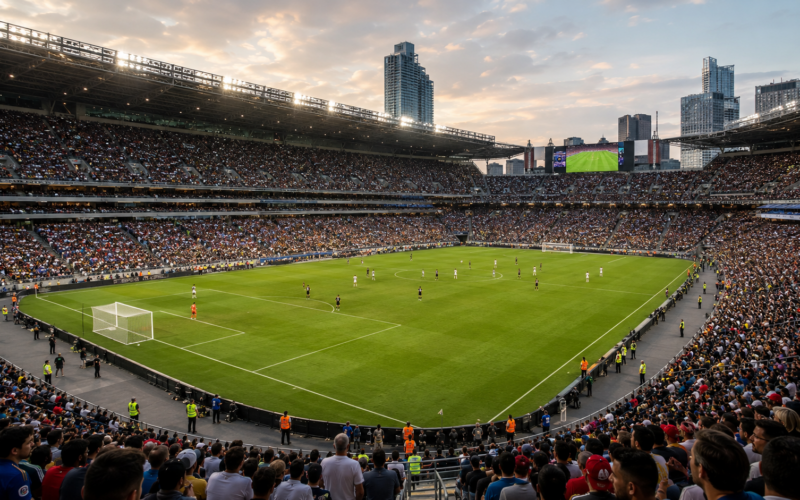
Spain were held to a 0-0 draw by Cape Verde at Atlanta Stadium on June 15, 2026, as 40-year-old goalkeeper Vozinha delivered a heroic performance to give the World Cup debutants a historic first point in their FIFA World Cup 2026 Group H opener. Spain dominated possession, created 27 attempts and introduced Lamine Yamal and Nico Williams from the bench, but Luis de la Fuente’s European champions could not break down Bubista’s disciplined side.
The result is one of the biggest early surprises of FIFA World Cup 2026. Cape Verde, also officially referred to as Cabo Verde by FIFA, entered the tournament as a debutant nation with a population of around 600,000 and left Atlanta with a point against one of the pre-tournament favourites. Spain, meanwhile, must now sharpen their attack before facing Saudi Arabia, while Cape Verde move toward their next match against Uruguay with belief that Group H may be more open than expected.
How did Cape Verde frustrate Spain in one of the biggest FIFA World Cup 2026 shocks?
Cape Verde frustrated Spain by defending with discipline, patience and remarkable composure under pressure. Spain had most of the ball, completed long passing sequences and repeatedly pushed Cape Verde into their own defensive third, but the debutants refused to lose their shape. Bubista’s side stayed compact, narrowed central spaces and forced Spain into shots that were either blocked, saved or rushed.
The first half set the tone. Spain controlled possession but often lacked penetration. Pedri, Gavi and Rodri tried to dictate the tempo, while Ferran Torres and Mikel Oyarzabal looked for movement around the box. Cape Verde’s back line, led by Pico Lopes, Sidny Lopes Cabral, Steven Moreira and Diney Borges, absorbed the pressure and made Spain work for every yard.
When Spain did find a route through, Vozinha was waiting. The veteran goalkeeper produced several key saves, including sharp interventions to deny Spain’s midfield runners and attackers. His positioning, calm handling and command of the penalty area gave Cape Verde the belief that the impossible result was becoming possible.
What made the result even more striking was Cape Verde’s discipline. Reuters reported that they conceded only one foul, a World Cup record low since 1966. That detail matters because it shows the draw was not built on chaos or desperation alone. Cape Verde defended cleanly, stayed organised and avoided giving Spain easy set-piece routes into the match.
Why did Vozinha become the defining player of Spain vs Cape Verde at FIFA World Cup 2026?
Vozinha became the defining player because his saves turned Cape Verde’s defensive plan into a historic result. At 40, the goalkeeper played with the authority of someone who understood the moment but was not overwhelmed by it. Spain’s attackers kept searching for a breakthrough, but every time the match seemed ready to tilt toward the European champions, Vozinha intervened.
His performance was not just about reflexes. It was about timing. He slowed the game when Cape Verde needed breath, claimed balls when Spain tried to build pressure, and gave his defenders confidence to keep holding the line. Against a team with Spain’s possession strength, a goalkeeper can quickly become isolated. Vozinha instead became the centre of Cape Verde’s resistance.
The emotional value of the performance is enormous. Cape Verde were playing their first World Cup match. Many debutant teams can be overwhelmed by the scale of the tournament, especially against elite opposition. Vozinha’s calmness gave the entire team a reference point. If he looked composed, the rest of the side could believe.
That is why this match will likely be remembered through his name. Spain had the ball, the reputation and the attacking volume. Cape Verde had Vozinha, collective discipline and the courage to survive the storm.
Why did Spain fail to turn dominance into a winning FIFA World Cup 2026 start?
Spain failed to win because dominance never became precision. De la Fuente’s side had 75% possession and 27 attempts, but too many attacks lacked the final pass, the clean finish or the sudden change of speed needed to break Cape Verde’s block. Spain had control, but not enough cutting edge.
The decision to start Lamine Yamal and Nico Williams on the bench became one of the major talking points. Both players were introduced later as Spain searched for more invention, but Cape Verde had already grown into the match by then. Their late defensive confidence made it difficult for Spain’s substitutes to transform the rhythm completely.
Spain’s problem was not a lack of effort. They kept probing. Rodri and Pedri tried to move the ball quickly. Oyarzabal looked for penalty-box chances. Ferran Torres attacked spaces across the front line. But the movement often became predictable, and Cape Verde defended crosses, cutbacks and central passes with impressive clarity.
De la Fuente later indicated that Spain had no reason to doubt themselves despite the frustration, while acknowledging that the team needed greater freshness and finesse in the final third. That is the correct balance. A draw in the opener is not a disaster, but for a team expected to compete for the title, failing to beat a debutant immediately creates pressure.
What did Cape Verde offer going forward after spending so long under pressure?
Cape Verde’s result was not purely a defensive miracle. The debutants also created late chances that could have produced an even bigger shock. The Guardian reported that Diney Borges, Ryan Mendes and Kevin Pina all had opportunities in the closing stages, showing that Cape Verde were not simply waiting for the whistle.
Those moments mattered because they changed the emotional ending of the match. Spain were not the only side wondering how they had failed to score. Cape Verde could also leave Atlanta thinking they might have won. That is a major statement for a team making its first appearance at the tournament.
Ryan Mendes gave the team leadership and attacking reference. Kevin Pina brought midfield energy and late threat. Diney Borges showed the courage to get forward from deeper positions even after spending much of the match defending. Those attacking flashes will be important before the Uruguay match because Cape Verde cannot rely only on survival football across three group games.
Still, the defensive base remains their identity. If Cape Verde can combine that structure with sharper transition moments, they may become one of the most uncomfortable opponents in Group H. Spain discovered that possession alone is not enough when the other team refuses to crack.
What does the 0-0 draw mean for the FIFA World Cup 2026 Group H table?
The draw initially placed Spain and Cape Verde on one point each, and the later 1-1 draw between Saudi Arabia and Uruguay left every Group H team level after the opening round. That makes the group unusually balanced and raises the stakes for the second round of fixtures.
| Team | Played | Points | Goal difference |
|---|---|---|---|
| Saudi Arabia | 1 | 1 | 0 |
| Uruguay | 1 | 1 | 0 |
| Spain | 1 | 1 | 0 |
| Cape Verde | 1 | 1 | 0 |
Spain next face Saudi Arabia, and that fixture now carries more pressure than expected. A win would restore order. Another draw would make the final group match against Uruguay far more uncomfortable. Spain still have the squad quality to recover, but their margin for a calm group-stage campaign has narrowed.
Cape Verde next face Uruguay, and the draw with Spain changes how that match will be viewed. They will no longer be treated as a ceremonial debutant. Uruguay will know they are facing a side capable of defending cleanly, staying patient and turning a low-possession match into a result.
The broader Group H message is simple: reputation did not create separation in the opening round. Spain, Uruguay, Saudi Arabia and Cape Verde all have one point. That makes the second round decisive for momentum and likely qualification shape.
Why does this FIFA World Cup 2026 result matter beyond one goalless draw?
This result matters because it is a classic World Cup story: a tournament favourite controlled the ball, but a debutant controlled the emotional script. Cape Verde did not need to dominate Spain to make history. They needed discipline, courage and one outstanding goalkeeper. They had all three.
For Spain, the draw is a warning that technical superiority must still be turned into goals. Their system can create territory and pressure, but FIFA World Cup 2026 will punish any lack of directness or finishing precision. Against deeper blocks, Spain need faster circulation, better movement inside the box and sharper decision-making from wide areas.
For Cape Verde, the point is transformative. It gives them a platform, belief and global recognition in their first match at the finals. It also strengthens the case for the expanded World Cup when new nations can produce meaningful results rather than simply participate.
The editorial view is that Spain should not panic, but they should be concerned. The performance was not empty, but it lacked ruthlessness. Cape Verde, meanwhile, deserve full credit. This was not luck dressed up as history. It was organisation, concentration and one of the best goalkeeper performances of FIFA World Cup 2026 so far.
Key takeaways from Spain vs Cape Verde at FIFA World Cup 2026
- Spain were held to a 0-0 draw by Cape Verde at Atlanta Stadium on June 15, 2026, in one of the biggest early surprises of FIFA World Cup 2026. The European champions dominated possession and attempts but could not find a breakthrough.
- Cape Verde earned their first-ever World Cup point in their tournament debut. The result was built on defensive discipline, clean tackling and a standout performance from 40-year-old goalkeeper Vozinha.
- Vozinha was the decisive player of the match, making several important saves and giving Cape Verde the calmness needed to survive Spain’s sustained pressure. His performance became one of the defining individual stories of the tournament so far.
- Spain introduced Lamine Yamal and Nico Williams from the bench, but the late attacking changes were not enough. Luis de la Fuente’s side now face increased pressure before their next Group H match against Saudi Arabia.
- Group H is wide open after the first round, with Spain, Cape Verde, Saudi Arabia and Uruguay all on one point. Cape Verde next face Uruguay, while Spain must respond against Saudi Arabia.
Discover more from Business-News-Today.com
Subscribe to get the latest posts sent to your email.



