



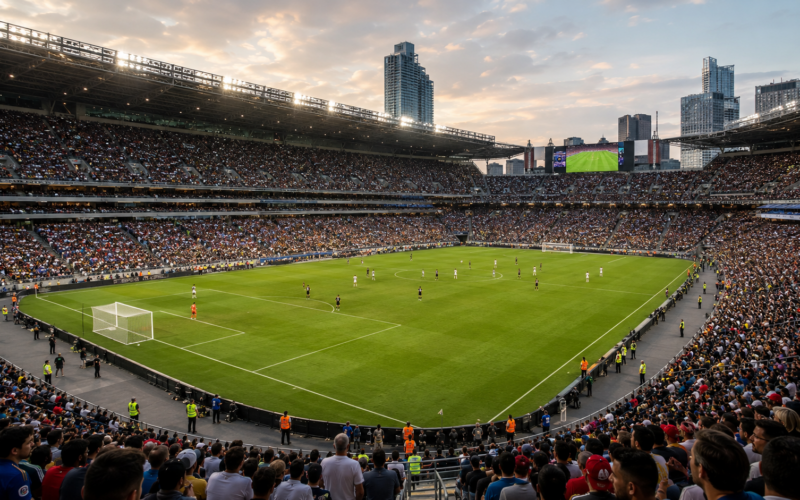
Netherlands drew 2-2 with Japan at Dallas Stadium in Arlington, Texas on June 14, 2026, as Daichi Kamada scored a dramatic late equaliser to deny Ronald Koeman’s side victory in a tense FIFA World Cup 2026 Group F opener. Virgil van Dijk put the Netherlands ahead in the 51st minute, Keito Nakamura levelled for Japan in the 57th minute, Crysencio Summerville restored the Dutch lead in the 64th minute, and Kamada struck in the 88th minute to leave both teams on one point after a breathless second half.
The result became more significant after Sweden later beat Tunisia 5-1 in the other Group F match, leaving Sweden top of the group while the Netherlands and Japan sit level on one point. For the Dutch, this was a missed opportunity after leading twice. For Japan, it was a valuable point earned through resilience, tactical patience and late pressure against one of the tournament’s more fancied European teams.
How did Japan twice fight back against the Netherlands in FIFA World Cup 2026 Group F?
Japan’s 2-2 draw with the Netherlands was built on patience, discipline and refusal to panic after falling behind twice. The first half was goalless but not passive, with Japan defending compactly and looking for moments to break through Takefusa Kubo, Keito Nakamura and their forward runners. The Netherlands had more control, but Zion Suzuki’s early saves helped Japan reach half-time level.
The match exploded after the break. Van Dijk opened the scoring in the 51st minute with a captain’s header, giving the Netherlands the kind of set-piece breakthrough that usually allows them to settle into tournament control. Japan responded quickly. Nakamura equalised in the 57th minute, finishing a move that showed how quickly Hajime Moriyasu’s side could turn defensive survival into direct attacking threat.
Summerville restored the Dutch lead seven minutes later with a curling left-footed finish after Ryan Gravenberch again played a decisive creative role. At 2-1, the Netherlands looked positioned to take early control of Group F, especially after Koeman moved to protect the advantage with defensive changes.
Japan kept pushing, and the equaliser arrived in the 88th minute. Kamada’s late intervention from a corner turned the match again, with the ball deflecting in to leave Bart Verbruggen beaten and the Japanese bench racing forward in celebration. The goal was fortunate in its final contact, but it was earned through pressure, persistence and belief.
Why did Ronald Koeman’s Netherlands fail to protect two leads in Dallas?
The Netherlands will be frustrated because they had the match in their hands twice. Van Dijk’s opener gave them a platform, and Summerville’s second goal should have provided the control needed to manage the final stages. Instead, Japan’s late pressure exposed the fragility of a side that still has questions around game management.
Koeman later defended his tactical decisions, including the late shift to a more defensive structure and the use of Nathan Aké as an extra centre-back. The criticism focused on whether the Netherlands became too passive after taking the lead for the second time. Once Summerville and other direct attacking outlets were withdrawn, Japan found more space and momentum.
That does not mean the Dutch collapse was purely tactical. The Netherlands also failed to defend key moments well enough. They allowed Japan to stay alive after the first equaliser, and they did not clear the late corner sequence that led to Kamada’s goal. In tournament football, such lapses can turn three points into one very quickly.
The Dutch still showed quality. Gravenberch assisted both goals, Van Dijk brought set-piece authority, and Summerville produced one of the match’s cleanest finishes. But the result will feel like two points dropped because the Netherlands led twice and still ended up chasing explanations.
How important were Daichi Kamada, Keito Nakamura and Zion Suzuki for Japan’s result?
Japan’s point was a collective achievement, but Kamada, Nakamura and Suzuki gave it its defining moments. Nakamura scored the first equaliser at a moment when the Netherlands were threatening to take control. His finish shifted the tone of the second half and confirmed that Japan were not content to simply limit damage.
Kamada’s late equaliser became the headline moment because of timing. An 88th-minute goal in a World Cup group opener changes the entire emotional weight of the result. Japan had been close to a narrow defeat despite competing well. Kamada’s intervention turned that into a platform result and kept the group open.
Suzuki’s performance also mattered because Japan needed him before the drama arrived. The goalkeeper made important early saves and helped Japan survive periods when the Netherlands were finding space. Without that foundation, the late fightback might never have been possible.
Moriyasu praised Japan’s resilience after the match but also made clear that the team had wanted more than a draw. That reaction is important. Japan did not treat one point against the Netherlands as a miracle. They treated it as useful but incomplete, which says plenty about the ambition of this squad at FIFA World Cup 2026.
What did the second-half goal rush reveal about both teams’ attacking strengths and defensive risks?
The match’s four goals all came after half-time, and that pattern revealed the central contradiction of both teams. The Netherlands have enough set-piece quality, midfield passing and wide attacking threat to hurt strong opponents. Japan have enough movement, speed and technical confidence to respond even when the match turns against them.
But both teams also showed risk. The Netherlands looked strong when attacking through Gravenberch and wide combinations, yet vulnerable when asked to defend momentum swings. Japan were organised for long spells, but they still allowed Van Dijk to score from a set-piece and Summerville to find space for a high-quality finish.
The tempo after the first goal changed everything. Once Van Dijk scored, the match opened up. Japan had to take more risk, and the Netherlands found more space. That suited both attacks but exposed both defensive structures. The result was one of the most entertaining matches of the tournament so far, but neither coach will see it as a perfect performance.
For neutral observers, it was a strong advert for Group F. For Koeman and Moriyasu, it was a reminder that this group may be decided by small details rather than reputation.
What does the result mean for the FIFA World Cup 2026 Group F table?
Sweden’s 5-1 win over Tunisia later in the matchday reshaped the Group F table. The Netherlands and Japan both avoided defeat, but neither gained the early control that Sweden now hold after their emphatic opening victory.
| Team | Played | Points | Goal difference |
|---|---|---|---|
| Sweden | 1 | 3 | +4 |
| Netherlands | 1 | 1 | 0 |
| Japan | 1 | 1 | 0 |
| Tunisia | 1 | 0 | -4 |
The Netherlands next face Sweden, which now becomes a high-pressure fixture. A Dutch defeat would leave them stuck on one point after two matches and potentially fighting through the final group game against Tunisia. A win would restore order and put them back in control of their qualification route.
Japan next face Tunisia, and that match now looks like a major opportunity. A win would move Japan to four points and put them close to the knockout rounds. Moriyasu’s side will also know that Sweden’s goal difference makes every point and every goal important.
For Tunisia, the group is already difficult after the heavy defeat to Sweden. That increases the stakes for Japan, who cannot afford to waste the platform created by Kamada’s late equaliser.
Why does this FIFA World Cup 2026 draw matter beyond one Group F point?
This draw matters because it reinforces Japan’s status as a serious tournament team. Japan have built a reputation for upsetting established powers, but this was not simply a shock result. It was a controlled fightback against a Dutch side with elite defenders, strong midfielders and long-standing World Cup pedigree.
For the Netherlands, the draw is a warning rather than a disaster. Koeman’s side have enough quality to progress, but the match showed that game management remains a concern. Leading twice and failing to win is not the pattern of a team ready to control deep tournament matches.
The result also gives FIFA World Cup 2026 another early drama point. The expanded tournament has already produced big scorelines, historic goals and late equalisers. Netherlands vs Japan added tactical tension and comeback emotion, making Group F one of the more watchable early sections.
The editorial view is that Japan will leave Dallas more encouraged than the Netherlands. The Dutch had more reason to expect victory and more reason to regret the draw. Japan, even while disappointed not to win, proved they can absorb pressure, adjust during chaos and punish hesitation late. In a difficult group, that quality may matter as much as any individual star.
Key takeaways from Netherlands vs Japan at FIFA World Cup 2026
- Netherlands and Japan drew 2-2 at Dallas Stadium on June 14, 2026, after a dramatic FIFA World Cup 2026 Group F opener in which all four goals came after half-time. The Netherlands led twice, but Japan fought back twice to secure a valuable point.
- Virgil van Dijk opened the scoring for the Netherlands in the 51st minute, only for Keito Nakamura to equalise six minutes later. Crysencio Summerville then restored the Dutch lead in the 64th minute before Daichi Kamada struck late for Japan.
- Ryan Gravenberch was one of the Netherlands’ most influential players, assisting both Dutch goals. However, the team’s inability to protect the lead left Ronald Koeman facing questions over defensive substitutions and late-game control.
- Japan’s resilience was the biggest story of the match. Zion Suzuki kept them alive early, Nakamura delivered the first response, and Kamada’s late equaliser gave Hajime Moriyasu’s side a platform before facing Tunisia.
- Sweden’s later 5-1 win over Tunisia means the Netherlands and Japan are now chasing the Group F leaders. The Netherlands face Sweden next, while Japan meet Tunisia in a match that could strongly shape their knockout chances.
Discover more from Business-News-Today.com
Subscribe to get the latest posts sent to your email.