





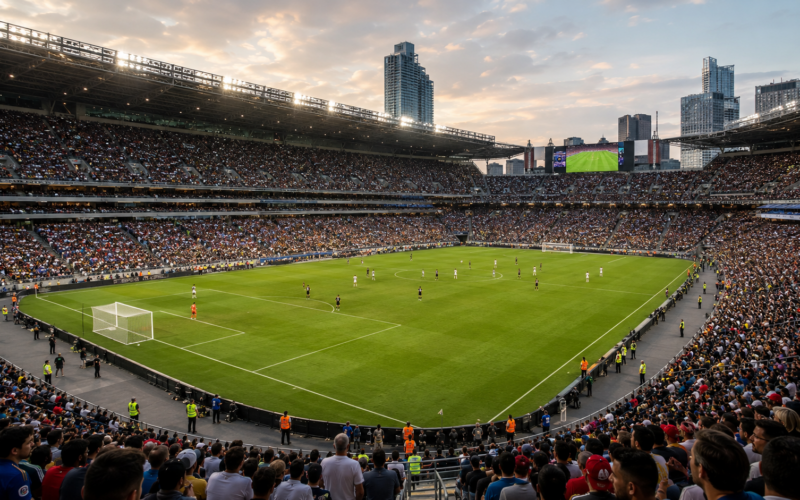
Mexico beat South Africa 2-0 at Mexico City Stadium on June 11, 2026, opening FIFA World Cup 2026 with a commanding Group A win as Julián Quiñones and Raúl Jiménez scored for the co-hosts and ended Mexico’s long wait for victory in a World Cup opening match.
Quiñones scored the first goal of the tournament in the ninth minute, punishing a South African defensive error to give Mexico an early lead in front of a roaring home crowd. Jiménez added the second goal in the 67th minute with a header, turning the opener into an emotional personal milestone and giving Mexico the control they needed after a tense and physical contest.
The match also produced three red cards, an extraordinary disciplinary start to the expanded 48-team tournament. South Africa’s Sphephelo Sithole was sent off in the 50th minute, Themba Zwane followed in the 84th minute, and Mexico centre-back César Montes was dismissed in stoppage time. South Africa finished with nine players, while Mexico ended the match with 10.
The result gives Mexico three points before their next Group A fixture against Korea Republic. South Africa now face immediate pressure before playing Czechia, with goal difference and discipline already important because the expanded FIFA World Cup 2026 format allows the top two teams in each group and the eight best third-placed teams to advance to the round of 32.
How did Mexico beat South Africa in the FIFA World Cup 2026 opening match?
Mexico beat South Africa by taking control early, scoring first through Julián Quiñones and then using the home crowd, midfield pressure and South Africa’s disciplinary collapse to protect and extend the lead.
The opening goal arrived in the ninth minute after South Africa failed to manage pressure near their defensive area. Quiñones reacted decisively and finished powerfully, giving Mexico the perfect start and lifting the emotional weight around the home side’s first match of the tournament.
South Africa struggled to recover rhythm after the early setback. Ronwen Williams had to stay alert as Mexico continued to carry the greater threat, while the South African midfield found it difficult to establish controlled possession. Mexico’s Carlos Gutiérrez and Álvaro Fidalgo helped give the hosts structure before later substitutions shifted the balance.
The second goal came in the 67th minute when Raúl Jiménez headed in to double Mexico’s advantage. The goal mattered not only for the match result but also for Jiménez personally, as it gave him a major World Cup moment after years of carrying expectation around the national team.
Why was Julián Quiñones’ ninth-minute goal so important for Mexico?
Julián Quiñones’ ninth-minute goal was important because it immediately changed the emotional and tactical shape of the opener. A host nation can become nervous if the first match remains level for too long, especially in front of a crowd expecting control. Quiñones removed that pressure early.
The goal also allowed Mexico to dictate the pace of the match. With South Africa forced to respond, Mexico could press with more confidence and avoid the risk of chasing the game in a high-pressure environment. That mattered because the opener carried extra symbolic weight for Mexico as co-hosts.
Quiñones’ finish also gave Mexico the first goal of FIFA World Cup 2026, making it one of the defining images of the tournament’s opening day. In a 104-match competition, the first goal has special recall value because it marks the beginning of the expanded 48-team era.
For South Africa, the early concession was costly because it removed the possibility of slowly settling into the match. Hugo Broos’ team needed defensive organisation and composure, but the ninth-minute goal immediately placed them in a more difficult tactical position.
Why did Raúl Jiménez’s goal become one of the emotional moments of the opener?
Raúl Jiménez’s 67th-minute goal became one of the emotional moments of the opener because it gave Mexico breathing room and gave the striker a significant personal World Cup moment. Jiménez has been one of Mexico’s most recognisable forwards for years, and scoring in a home World Cup opener carried special resonance.
The goal came from a headed finish, giving Mexico a second goal at a stage when South Africa were already under severe pressure. It confirmed Mexico’s control and reduced the risk of a late South African recovery.
Jiménez’s goal also mattered because Mexico needed attacking validation. A single-goal lead can be fragile, especially in a World Cup opener filled with nerves and physical challenges. The second goal gave Javier Aguirre’s side the scoreboard security required to manage the final phase.
For Mexico’s supporters, the goal deepened the sense of release. After previous struggles in World Cup opening matches, the co-hosts finally had a decisive opening-day performance, and Jiménez’s contribution strengthened the narrative of experience and emotional leadership.
How did three red cards change the tone of Mexico vs South Africa?
The three red cards changed the tone of Mexico vs South Africa from a controlled home win into one of the most dramatic World Cup openers in recent memory. South Africa’s Sphephelo Sithole was dismissed in the 50th minute, reducing Hugo Broos’ side to 10 players early in the second half.
The first red card damaged South Africa’s ability to chase the game. At 1-0 down, South Africa needed structure, patience and attacking transitions. Playing with 10 men made that task much harder, especially against a Mexico side already lifted by the home crowd.
The second South African red card came in the 84th minute when Themba Zwane was dismissed, leaving South Africa with nine players. That effectively ended any realistic chance of a late comeback and turned the closing minutes into damage limitation.
Mexico’s César Montes was then sent off in stoppage time, adding a sour note to an otherwise strong Mexican performance. His dismissal matters because suspension consequences could affect Mexico’s next Group A match against Korea Republic. For a team trying to build momentum, losing a centre-back after the match was already under control is an avoidable problem.
What does the result mean for Mexico in Group A?
The result gives Mexico the ideal start in Group A. Three points, a clean sheet and a 2-0 goal difference place the co-hosts in a strong early position before facing Korea Republic.
The win is also psychologically important because Mexico had failed to win in seven previous World Cup opening matches. Ending that run in front of a home crowd gives Javier Aguirre’s team a powerful platform and reduces the immediate pressure around the second fixture.
However, the victory was not perfect. César Montes’ red card creates a defensive issue for the Korea Republic match, while Mexico may also reflect on whether they should have created a wider margin against a South Africa side that finished with nine players.
Still, the main outcome is clear. Mexico have placed themselves in control of their qualification path. With the expanded format sending the top two teams from each group and the eight best third-placed teams into the round of 32, Mexico now have early breathing room.
What does the result mean for South Africa after the FIFA World Cup 2026 opener?
The result leaves South Africa under immediate pressure. A 2-0 defeat is damaging, but the two red cards are even more concerning because they point to discipline problems and could lead to selection issues for the next match against Czechia.
South Africa entered the tournament hoping to show that their return to the World Cup stage could produce a competitive Group A campaign. The early goal against them and the second-half dismissals prevented the team from building a sustained attacking rhythm.
The next match against Czechia now becomes critical. South Africa may still have a route to the round of 32 because of the expanded format, but they will need points quickly and must protect goal difference. A second defeat would leave their campaign in serious difficulty.
Hugo Broos will also need to reset the squad emotionally. Losing the opener is one challenge. Losing it with two red cards is another. The recovery process before Czechia will need to focus on discipline, defensive structure and restoring belief.
Why does Mexico’s opening win matter beyond the Group A table?
Mexico’s opening win matters beyond the Group A table because it gave the tournament a loud, emotional and eventful start in one of world football’s most historic venues. A host-nation win in the first match helps create early momentum, especially in a tournament spread across three countries.
The result also gave Mexico City a successful opening-night football moment. The atmosphere, the early goal, the second-half drama and the final score all contributed to a spectacle that immediately placed the 2026 tournament into global discussion.
For FIFA World Cup 2026, the opener also introduced the expanded tournament with intensity. The first match produced goals, cards, historical milestones and group implications. It was not a slow curtain-raiser. It was a dramatic start to a tournament that will require fans to follow 48 teams and 104 matches.
For Mexico, the win gives the co-hosts credibility. They did not merely host the opening ceremony. They delivered the first result of the tournament and placed themselves in a strong position to reach the knockout rounds.
What are the key takeaways from Mexico vs South Africa at FIFA World Cup 2026?
- Mexico beat South Africa 2-0 in the opening match of FIFA World Cup 2026, giving the co-hosts three points and a clean sheet in Group A at Mexico City Stadium.
- Julián Quiñones scored the first goal of FIFA World Cup 2026 in the ninth minute, giving Mexico an early lead and shifting the pressure immediately onto South Africa.
- Raúl Jiménez doubled Mexico’s advantage in the 67th minute with a headed goal, turning the opener into a more comfortable result for Javier Aguirre’s side.
- South Africa finished the match with nine players after Sphephelo Sithole was sent off in the 50th minute and Themba Zwane was dismissed in the 84th minute.
- Mexico also ended the match with 10 players after César Montes received a red card in stoppage time, creating a suspension concern before the next Group A fixture.
- Mexico’s win ended their long wait for victory in a World Cup opening match and gave the co-hosts early control before facing Korea Republic.
- South Africa now face pressure before their next match against Czechia, with discipline, goal difference and attacking rhythm already major concerns after the opener.
- The match gave FIFA World Cup 2026 a dramatic start, with two goals, three red cards and immediate Group A consequences in the expanded 48-team format.
Share this:
Discover more from Business-News-Today.com
Subscribe to get the latest posts sent to your email.