



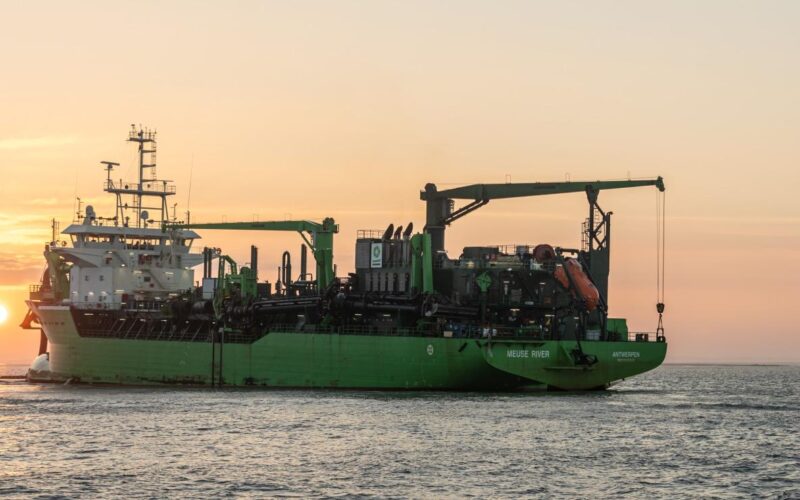
DEME Group NV (EBR: DEME) has secured a dredging contract from the Office de la Marine Marchande et des Ports to improve access, safety and operating standards at three strategic port locations in Tunisia. The work covers Sousse, Menzel-Bourguiba/Bizerte and Radès/La Goulette, placing the Belgian marine infrastructure specialist inside a multi-site upgrade programme tied to Tunisia’s maritime trade capacity. For DEME Group NV, the announcement adds another international dredging and infrastructure reference at a time when investors are watching whether strong offshore energy momentum can be matched by disciplined growth across marine civil works. DEME Group NV shares traded at €182.40 on Euronext Brussels on June 8, 2026, leaving the stock below its recent 52-week high but still materially above its 52-week low, which makes the contract more of a strategic backlog signal than a short-term valuation reset.
Why does DEME Group NV’s Tunisian dredging contract matter for North African port competitiveness?
DEME Group NV’s Tunisian contract matters because dredging is not just maintenance work in a port economy. It determines which vessels can enter, how safely they can navigate, how reliably cargo can move, and whether ports can remain relevant as shipping networks become more scale-driven. Tunisia’s location on the Mediterranean gives the country a natural geographic advantage, but geography alone does not move containers, bulk cargo or industrial inputs. Port depth, basin maintenance, access channels, vessel turnaround and landside coordination decide whether that advantage is converted into competitive logistics performance.
The contract also points to a broader challenge facing several North African and Mediterranean port systems: older port assets must be upgraded without interrupting commercial flows. Sousse, Menzel-Bourguiba/Bizerte and Radès/La Goulette are not a single concentrated worksite. They represent a spread of maritime infrastructure nodes with different operating requirements, local constraints and cargo relevance. For DEME Group NV, that raises the value of coordination, marine equipment allocation and project sequencing. For Tunisia, it raises a policy question that goes beyond dredging: can physical access improvements be matched by operational reforms that reduce bottlenecks?
The immediate strategic relevance is therefore twofold. Tunisia gets a technical contractor with large-scale dredging capability, while DEME Group NV gets a project that reinforces its position in maritime infrastructure outside its heavily watched offshore energy narrative. The contract value has not been disclosed, so it would be premature to treat the win as financially transformative. However, undisclosed does not mean irrelevant. In dredging and infrastructure services, multi-location public-sector work can strengthen regional credibility, improve equipment utilisation and position contractors for follow-on tenders if the programme is executed cleanly.
What does the contract reveal about Tunisia’s push to reduce maritime access and logistics bottlenecks?
The contract suggests Tunisia is prioritising port accessibility and compliance with international standards rather than treating dredging as a narrow technical issue. That distinction matters because port competitiveness is increasingly measured by reliability, predictability and safety, not only by headline capacity. If larger vessels face access constraints, if sedimentation affects navigation, or if port basins require recurring intervention, trade costs can rise quietly through delays, diversions and lower efficiency. For an economy seeking stronger industrial and trade integration across the Mediterranean, those quiet costs can become a loud competitiveness problem.
Radès/La Goulette carries particular strategic weight because the Tunis metropolitan area is central to national trade flows, while Sousse and Menzel-Bourguiba/Bizerte broaden the programme beyond a single capital-linked corridor. That geographic spread gives the project a national infrastructure character rather than a one-port maintenance label. It also creates a more complicated execution environment. DEME Group NV must coordinate work across ports located far apart, manage limited on-site storage conditions, and sequence activities in a way that supports the client’s operational requirements without turning the upgrade programme into a disruption programme.
For Tunisia, the deeper implication is that dredging may help unlock efficiency only if it is connected to wider port modernisation. Marine access improvements can reduce one constraint, but they cannot by themselves fix customs processes, yard capacity, equipment availability or hinterland logistics. This is where the project becomes strategically interesting. If the dredging work improves navigational reliability while Tunisia also advances operational reforms, the country can improve its case as a Mediterranean logistics node. If physical works are completed but systemic bottlenecks remain, the country risks buying better access to the same old congestion.
How could the Sousse, Menzel-Bourguiba/Bizerte and Radès/La Goulette works affect execution risk?
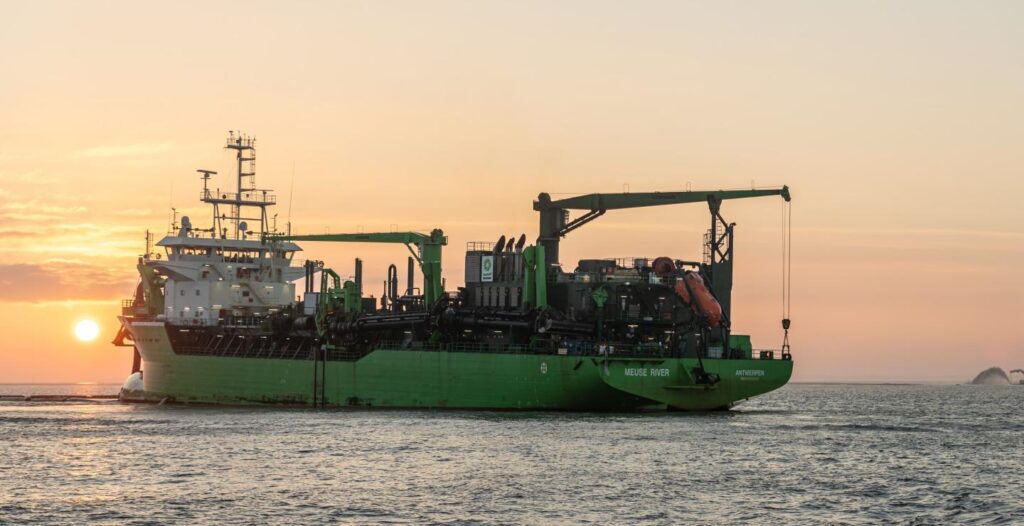
The execution profile is more complex than a single dredging campaign because DEME Group NV is dealing with three port locations and different material-handling requirements. The programme includes initial containment dike construction at Menzel-Bourguiba and Sousse, followed by extensive dredging works across all three locations. DEME Group NV is expected to deploy a trailing suction hopper dredger, a workhorse asset for dredging campaigns where material must be removed efficiently and handled under defined environmental and operational conditions. That equipment choice signals a project designed around volume, mobility and marine execution discipline.
The risk is not that DEME Group NV lacks dredging expertise. The more relevant risk is that multi-site port work is vulnerable to coordination slippage. Vessel availability, site readiness, weather, permitting, sediment handling, port traffic management and stakeholder coordination all matter. The ports are not next door to one another, so mobilisation planning becomes more than a scheduling footnote. In infrastructure, the boring details often decide the glamorous margin story. A dredger waiting on a constraint is still an expensive asset, even if the project rationale is perfectly sound.
There is also a public-sector delivery layer. The Office de la Marine Marchande et des Ports is not only a contracting counterparty. It sits at the centre of Tunisia’s maritime administration and port operating environment. That means successful delivery will depend on how well technical execution aligns with port authority priorities, operational windows and national infrastructure planning. For DEME Group NV, a smooth project can strengthen confidence in its ability to manage complex international dredging work in markets where port infrastructure demand is rising. A messy project would not necessarily damage the company’s broader investment case, but it would reduce the strategic shine of what is otherwise a useful Mediterranean reference.
Why is the DEME stock reaction more muted than the strategic value of the contract suggests?
The DEME Group NV stock context is important because the market is likely to view this contract as strategically positive but not large enough, on available information, to alter the near-term earnings model. DEME Group NV shares closed at €182.40 on June 8, 2026, compared with a 52-week range of €121.20 to €206.25. The stock has remained well above its 52-week low and has delivered a strong one-year gain, but it has also cooled from its recent high. That combination tells a familiar story: investors recognise DEME Group NV’s operational momentum, yet they are not willing to reprice every contract win unless size, margin profile or backlog impact is clear.
The five-day share movement has been modestly negative, which suggests the Tunisian announcement did not create an immediate trading catalyst. That is not surprising. Dredging contracts often matter through equipment utilisation, project mix and follow-on positioning rather than through dramatic one-day equity moves. The market tends to reserve sharper reactions for major offshore wind awards, earnings upgrades, large acquisitions, balance-sheet surprises or guidance changes. A Tunisian port dredging contract can still matter, but it sits in the category of cumulative strategic progress rather than instant stock-market fireworks. Sensible markets sometimes decline to throw confetti, which is annoying for headlines but healthy for valuation discipline.
The broader sentiment around DEME Group NV remains anchored in whether the company can balance offshore energy exposure with resilient dredging, infrastructure and environmental activities. Offshore wind has carried both opportunity and volatility across the contractor ecosystem. Dredging and port infrastructure can provide a different kind of earnings support, particularly where public-sector port authorities are investing in access, safety and compliance. The Tunisian contract therefore adds useful portfolio texture. It does not remove execution risk, and it does not eliminate offshore energy cyclicality, but it reinforces the idea that DEME Group NV is not a one-theme infrastructure stock.
What happens next for DEME Group NV if Tunisia’s port upgrade programme scales?
The next phase to watch is whether the Tunisian work becomes a platform for broader port modernisation opportunities rather than a standalone dredging assignment. If DEME Group NV delivers efficiently across Sousse, Menzel-Bourguiba/Bizerte and Radès/La Goulette, it could strengthen the company’s credibility with regional port authorities that face similar access, sedimentation and capacity challenges. North Africa and the wider Mediterranean remain highly exposed to maritime trade, industrial logistics and energy-related infrastructure needs. Contractors that can combine technical dredging capability with multi-site execution discipline will remain relevant in that environment.
For competitors, the contract is a reminder that port dredging remains a strategic niche where experience, fleet availability and local execution partnerships matter. It is not an easy market for lightly capitalised challengers because dredging equipment, mobilisation costs and technical risk create barriers to entry. At the same time, established contractors cannot treat such work as automatic. Public-sector clients increasingly expect international standards, environmental management and visible delivery discipline. Price is important, but credibility has real value when ports cannot afford operational disruption.
For Tunisia, the success metric will not be the signing of the contract. It will be whether the dredging work improves navigational safety, supports better vessel access and feeds into a more reliable port system. A completed project that improves marine access but leaves operational bottlenecks untouched would deliver only partial value. A completed project that supports broader port efficiency could contribute to trade resilience, industrial supply chains and regional competitiveness. For DEME Group NV, that is the upside. The company is not merely moving sediment; it is participating in the infrastructure plumbing that determines whether trade corridors actually function. Not glamorous, perhaps, but ports rarely care about glamour. They care about depth, timing and whether ships can move.
Key takeaways on what DEME Group NV’s Tunisian port dredging win means for investors and infrastructure rivals
- DEME Group NV’s Tunisian dredging contract strengthens its international marine infrastructure profile and adds a North African public-sector reference across Sousse, Menzel-Bourguiba/Bizerte and Radès/La Goulette.
- The undisclosed contract value limits the immediate financial read-through, making the announcement more important as a strategic backlog and execution signal than as a short-term earnings catalyst.
- Tunisia’s decision to upgrade access at multiple port locations reflects a wider need to improve maritime reliability, safety and compliance as Mediterranean logistics competition intensifies.
- The project’s geographic spread increases operational complexity because DEME Group NV must coordinate equipment, containment works, dredging phases and material handling across separated port sites.
- The use of containment dike construction and trailing suction hopper dredging suggests the programme has meaningful technical and logistical requirements rather than being a simple maintenance exercise.
- DEME Group NV’s share price remains below its 52-week high but materially above its 52-week low, indicating that investors still recognise the broader story while refusing to overpay for every incremental contract win.
- The stock’s muted near-term reaction is reasonable because no contract value, margin detail or guidance change has been disclosed, leaving the market to treat the win as cumulative rather than transformational.
- For competitors, the award reinforces the advantage held by marine contractors with specialised dredging fleets, mobilisation capability and experience working with port authorities in operationally sensitive environments.
- For Tunisia, the real economic value will depend on whether improved marine access is paired with wider port efficiency measures, including operational reforms, equipment readiness and stronger hinterland logistics.
- If executed well, the project could improve DEME Group NV’s position for future Mediterranean and North African port infrastructure work, especially where ageing maritime assets require technically credible upgrades.
Discover more from Business-News-Today.com
Subscribe to get the latest posts sent to your email.