

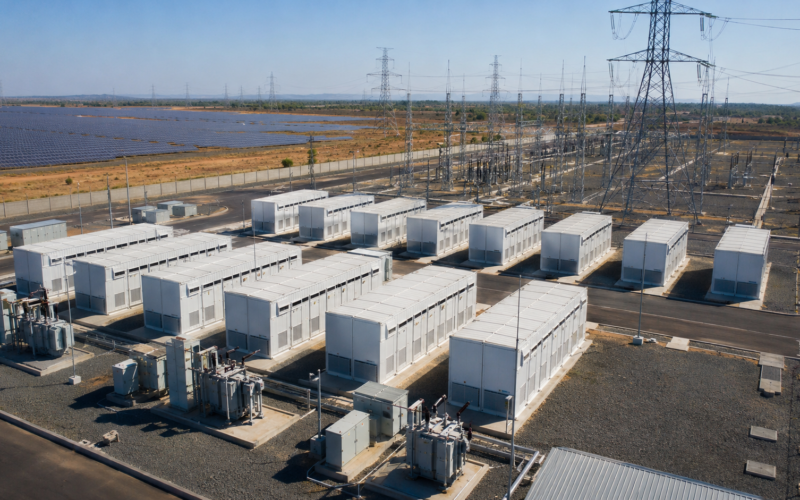
Ganesh Green Bharat Limited (NSE SME: GGBL) has secured a 1,000 MWh battery energy storage system EPC order from NTPC Renewable Energy Limited, giving the Gujarat-based solar and infrastructure company a larger role in India’s fast-expanding grid storage market. The order moves Ganesh Green Bharat Limited beyond conventional solar module supply and EPC work into a segment that is becoming essential for renewable energy integration, peak demand management and grid reliability. The company has reported FY26 revenue of ₹1,064.26 crore, profit after tax of ₹75.18 crore and an order book of around ₹2,212 crore, giving the BESS contract added relevance for investors tracking execution visibility. The announcement also comes while Ganesh Green Bharat Limited’s SME-listed shares remain under pressure over a one-year horizon, making delivery quality more important than the headline order value.
Why does Ganesh Green Bharat’s NTPC Renewable Energy BESS order matter for India’s storage market?
Ganesh Green Bharat Limited’s 1,000 MWh battery energy storage order matters because India’s renewable energy buildout is moving from generation-led growth to grid-integration-led growth. Solar and wind capacity additions are useful only if the electricity system can absorb, store and dispatch power when demand requires it. Battery energy storage systems sit at the centre of that challenge because they help manage intermittency, shift renewable power into evening demand windows and reduce the need for more expensive grid-balancing interventions.
The order from NTPC Renewable Energy Limited is also strategically important because NTPC’s renewable arm is part of India’s broader public-sector push to scale clean energy infrastructure with bankable counterparties. For a smaller listed company such as Ganesh Green Bharat Limited, winning work from a public-sector renewable energy platform can strengthen market perception around technical eligibility, project credibility and future bidding potential. That does not guarantee execution success, but it gives the company a stronger reference point in a sector where customer confidence matters.
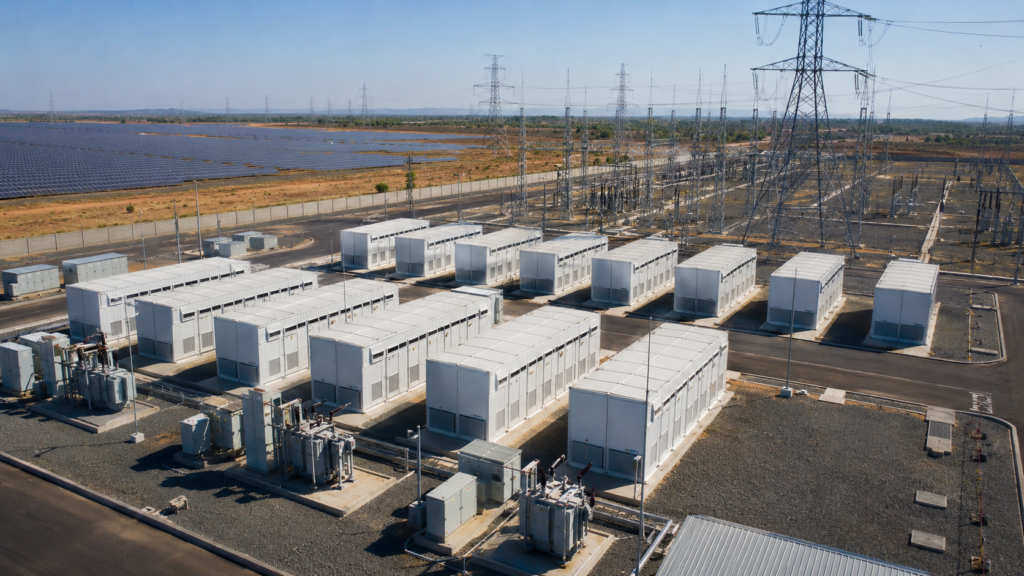
The larger industry signal is that battery storage is becoming a mainstream infrastructure category rather than an experimental clean-energy add-on. India’s renewable energy targets require storage capacity, flexible transmission planning and new procurement models. Ganesh Green Bharat Limited’s order therefore sits inside a much bigger shift in which EPC contractors, solar manufacturers, utilities and technology providers are all trying to capture value from the same grid transition. Storage is no longer the side dish. It is increasingly part of the main course, whether the grid chef is ready or not.
How could the 1,000 MWh BESS contract change Ganesh Green Bharat’s growth profile?
The BESS order could change Ganesh Green Bharat Limited’s growth profile by expanding its addressable market beyond solar modules, solar EPC, street lighting, pumping systems and allied infrastructure work. Battery storage adds a more technically demanding layer to the company’s project portfolio because it involves system integration, power electronics, battery management, safety compliance, commissioning reliability and lifecycle performance. If Ganesh Green Bharat Limited executes this order well, the company could improve its standing in future renewable-plus-storage tenders.
The contract may also improve revenue visibility because battery storage projects are likely to become more frequent as renewable energy penetration rises. Developers, utilities and public-sector buyers increasingly need storage solutions that can support grid stability, reduce curtailment and improve dispatchability. Ganesh Green Bharat Limited’s existing solar and EPC capabilities may provide a natural adjacency, but BESS execution requires stronger technical and supply-chain discipline than standard solar deployment.
The opportunity, however, comes with a sharper risk profile. BESS projects depend on imported cells, battery chemistry pricing, containerised system integration, fire safety standards, warranties and degradation assumptions. If procurement costs shift or if technical performance falls short, EPC margins can come under pressure. Ganesh Green Bharat Limited can use the order to reposition itself as an energy infrastructure player, but the market will want proof that the company can handle the engineering complexity behind that repositioning.
Why is NTPC Renewable Energy’s role important in validating India’s BESS procurement cycle?
NTPC Renewable Energy Limited’s role matters because public-sector renewable buyers can help accelerate market formation in new infrastructure categories. In India, emerging segments often move faster when government-linked entities provide demand visibility, standardise procurement expectations and create early reference projects. Battery energy storage is still developing as a bankable asset class, so orders from NTPC Renewable Energy Limited carry broader signalling value for EPC companies, financiers and technology providers.
For Ganesh Green Bharat Limited, the customer profile is important because NTPC Renewable Energy Limited is not a small private developer testing a niche pilot. It is part of a state-backed renewable energy expansion strategy that can support repeat procurement if projects meet cost, performance and reliability expectations. That makes the order commercially useful and reputationally valuable. A successful delivery could put Ganesh Green Bharat Limited into conversations for future grid-storage, renewable integration and hybrid energy projects.
The counterpoint is that public-sector projects can involve strict performance requirements, documentation obligations and milestone discipline. Winning a public-sector-linked order can boost credibility, but it also leaves limited room for casual execution. Ganesh Green Bharat Limited will need to manage project timelines, technical compliance and cost control carefully. In storage, a weak installation is not merely a delayed project. It can become a safety, reliability and warranty problem.
What does the order book say about Ganesh Green Bharat’s execution runway?
Ganesh Green Bharat Limited’s reported order book of around ₹2,212 crore gives the company a meaningful execution runway relative to its current scale. For an SME-listed company, that number can attract investor attention because it suggests future revenue visibility and expanding participation in government and institutional energy infrastructure opportunities. The combination of FY26 revenue of ₹1,064.26 crore and profit after tax of ₹75.18 crore indicates that the company has already moved beyond a micro-scale operating base.
However, order-book size is only one part of the investment case. Investors will need to examine the quality of orders, margin assumptions, working capital requirements and execution timelines. EPC companies can grow quickly on paper when orders accumulate, but cash conversion can lag if receivables stretch, procurement costs rise or projects face delays. Ganesh Green Bharat Limited’s challenge is not simply to win more work. It is to turn that work into predictable earnings without putting excessive pressure on the balance sheet.
The BESS order adds another layer to this execution question. Battery storage systems may carry different vendor dependencies and warranty structures than solar EPC projects. Ganesh Green Bharat Limited may need deeper technical partnerships, stronger procurement controls and more robust after-sales performance monitoring. The company’s order book gives it a growth platform, but the market will watch whether growth improves earnings quality or simply increases complexity.
How should investors read Ganesh Green Bharat’s stock sentiment after the NTPC order?
Ganesh Green Bharat Limited’s market sentiment remains mixed despite the strategic appeal of the NTPC Renewable Energy Limited order. NSE data indicates that the stock has declined over the one-year period in the latest available snapshot, even as the company has been adding orders and expanding its business profile. That suggests investors are not yet treating order wins as sufficient evidence of a durable rerating.
This caution is understandable for three reasons. First, Ganesh Green Bharat Limited trades on the NSE SME platform, where liquidity, institutional participation and valuation discovery can differ from mainboard-listed companies. Second, renewable EPC and manufacturing businesses can face margin volatility because of module pricing, tender competition, working capital cycles and policy-linked demand. Third, battery storage is attractive, but execution risk is higher because the industry is still maturing in India.
The stock could benefit if the NTPC Renewable Energy Limited order improves confidence in Ganesh Green Bharat Limited’s ability to win technically relevant contracts from major public-sector counterparties. However, the stronger rerating trigger would be evidence of clean execution, stable margins and timely cash collection. For now, the order improves the story. The next few quarters need to improve the proof.
Why is battery energy storage becoming essential for India’s renewable energy transition?
Battery energy storage is becoming essential because India’s renewable energy system increasingly needs flexibility, not just capacity. Solar power generation peaks during the day, while electricity demand often rises into the evening. Wind generation can vary by season and geography. Without storage, grid operators face curtailment, volatility and a greater need for backup generation. BESS projects help shift power across time, reduce grid stress and support better utilisation of renewable assets.
The growth of electric vehicles, data centres, industrial electrification and urban cooling demand will further increase the need for flexible grid infrastructure. India cannot build a renewable-heavy electricity system purely by adding megawatts of generation. It needs dispatchable clean capacity, better forecasting, stronger transmission and storage assets that can respond quickly to grid needs. Battery storage fits that requirement better than many legacy balancing tools because it can respond rapidly and be deployed modularly.
This is why companies such as Ganesh Green Bharat Limited are moving into BESS at a strategically relevant moment. The market is still early, which means execution standards, technology choices and procurement economics are evolving. Early movers can gain valuable references, but they also absorb early-stage industry risks. In short, storage is a growth market with adult supervision required.
What risks could limit the upside from Ganesh Green Bharat’s BESS expansion?
The first risk is technology and supply-chain dependence. Battery energy storage systems rely on cells, battery management systems, inverters, thermal management and safety controls, many of which may depend on external suppliers. If global battery prices fluctuate or supply availability tightens, project economics can shift. Ganesh Green Bharat Limited will need procurement discipline to protect margins and delivery schedules.
The second risk is operational performance. BESS projects are judged not only at commissioning but across their lifecycle. Battery degradation, safety standards, system uptime and performance guarantees can all affect long-term profitability. If warranty obligations are not priced correctly, an attractive EPC contract can become less attractive later. Investors should therefore monitor whether Ganesh Green Bharat Limited builds deeper technical capability rather than relying only on assembly and project execution.
The third risk is competitive pressure. India’s storage market will attract large renewable developers, power equipment companies, global battery integrators and domestic EPC players. As tenders scale, pricing may become aggressive. Ganesh Green Bharat Limited must decide whether to pursue volume, margin or selective reference projects. Chasing every storage order may look exciting in announcements, but disciplined bidding is usually what keeps shareholders from developing high blood pressure.
How could Ganesh Green Bharat build a stronger long-term energy infrastructure position?
Ganesh Green Bharat Limited can build a stronger long-term position by using the NTPC Renewable Energy Limited order as a platform for capability expansion rather than only a revenue event. The company already participates in solar modules, solar EPC and allied infrastructure. Adding battery storage gives it a more complete renewable infrastructure offering, especially as customers increasingly prefer integrated generation-plus-storage solutions.
The company could also benefit from India’s policy push around domestic manufacturing, energy security and grid modernisation. If Ganesh Green Bharat Limited can gradually deepen its role across solar equipment, EPC execution and storage integration, it may become more relevant to utilities, public-sector buyers and commercial energy users. The strategic direction is credible, but credibility must be earned through delivery.
For investors, the central question is whether Ganesh Green Bharat Limited can scale without stretching itself. Small and mid-sized infrastructure companies often face a delicate balance between winning transformational orders and managing the working capital required to execute them. The NTPC Renewable Energy Limited BESS order gives Ganesh Green Bharat Limited a strong clean-energy narrative. The company now has to make sure the narrative does not run faster than the cash flows.
Key takeaways on what Ganesh Green Bharat’s NTPC BESS order means for India’s energy storage market
- Ganesh Green Bharat Limited’s 1,000 MWh BESS order from NTPC Renewable Energy Limited strengthens its position in India’s emerging grid storage market.
- The contract marks a strategic move beyond solar modules and EPC services into battery energy storage, a segment critical to renewable energy integration.
- NTPC Renewable Energy Limited’s role gives the order stronger credibility because public-sector renewable procurement can shape early market standards.
- Ganesh Green Bharat Limited’s reported order book of around ₹2,212 crore provides execution visibility, but cash conversion and margin discipline remain central investor concerns.
- The company’s FY26 revenue and profit figures suggest a growing operating base, but BESS execution will test its technical and supply-chain capabilities.
- India’s renewable energy transition increasingly requires storage capacity to manage intermittency, reduce curtailment and support peak demand.
- Ganesh Green Bharat Limited’s SME-listed stock remains under pressure over the one-year period, showing that investors still want proof beyond order announcements.
- The biggest risks include battery procurement volatility, technical performance obligations, warranty exposure and competitive pricing pressure in future tenders.
- Successful execution could help Ganesh Green Bharat Limited compete for larger renewable-plus-storage projects and improve its long-term positioning.
- The NTPC Renewable Energy Limited order improves the company’s strategic story, but sustained market confidence will depend on delivery quality, profitability and working capital control.
Discover more from Business-News-Today.com
Subscribe to get the latest posts sent to your email.