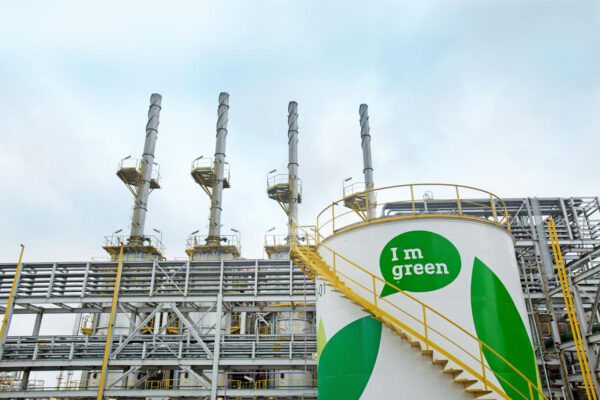



Balrampur Chini Mills Limited (NSE: BALRAMCHIN), Praj Industries Limited (NSE: PRAJIND) and Triveni Engineering and Industries Limited (NSE: TRIVENI) moved into focus after India removed excise duties on higher ethanol-blended petrol variants up to E30. The government’s decision gives legal and tax clarity to E22, E25, E27 and E30 petrol blends, widening the policy runway beyond the existing E20 fuel standard. The immediate market reaction was positive because the move strengthens visibility for ethanol producers, sugar companies and biofuel technology suppliers. Strategically, the decision links India’s energy security agenda with domestic agricultural feedstock, fuel retailing infrastructure and listed equity sentiment in the ethanol value chain.
Why does India’s E30 excise duty move matter for ethanol producers and fuel retailers?
India’s decision to exempt higher ethanol-blended petrol from multiple excise levies is not just a tax adjustment. It is a policy signal that the government wants the fuel market to prepare for blends beyond E20 without allowing tax complexity to become the first bottleneck. By giving E22, E25, E27 and E30 a clearer fiscal identity, the Centre has reduced uncertainty for oil marketing companies, ethanol suppliers and equipment providers that need longer planning cycles before committing capital.
For ethanol producers, the important change is not that demand automatically doubles tomorrow. The real significance is that India is creating a policy bridge between current blending levels and future fuel formats. Sugar companies with distillery capacity now have a stronger argument for medium-term capacity utilisation, while engineering companies that supply ethanol plants and bio-refinery systems can point to a larger addressable market if oil marketing companies gradually scale procurement.

For fuel retailers, the move is more complicated. Higher ethanol blends need supply-chain discipline, quality standards, tank compatibility, vehicle compatibility and retail pump readiness. That means the next stage of the ethanol story will not be won only by producers. It will also depend on how quickly oil marketing companies can manage logistics without consumer confusion, fuel quality concerns or uneven regional availability. India can announce E30 with a flourish, but petrol pumps still have to do the boring work. As usual, the boring work is where the money gets made or lost.
How could higher ethanol blending reshape demand for Balrampur Chini Mills, Praj Industries and Triveni Engineering?
Balrampur Chini Mills Limited benefits from investor interest because of its integrated sugar and distillery platform. The company operates large sugar and ethanol-linked capacity, which gives it exposure to any policy direction that increases demand for ethanol supply to oil marketing companies. The stock opened higher after the duty exemption news, reflecting the market’s view that ethanol policy support can improve medium-term revenue visibility even if near-term sugar cycle volatility remains a constraint.
Praj Industries Limited sits at a different point in the value chain. It is less a commodity producer and more an engineering and technology supplier to the ethanol and bioenergy ecosystem. That makes Praj Industries Limited sensitive to capacity expansion decisions by ethanol producers. If higher blends become commercially viable, the company could benefit from orders for plant engineering, process systems and bio-refinery solutions. However, this is not a risk-free upgrade to the earnings story, because project ordering depends on financing availability, feedstock economics and confidence that higher-blend fuel demand will scale beyond announcements.
Triveni Engineering and Industries Limited offers another route into the theme through sugar, distillery and ethanol-linked operations. Its relevance comes from operating leverage to ethanol offtake and the possibility that a deeper blending programme could improve the strategic value of contracted supply to oil marketing companies. The stock reaction suggests investors are willing to price in policy optionality, but they will still watch margins, cane costs, working capital and the balance between sugar realisations and ethanol pricing.
What does the policy signal about India’s fuel security strategy as crude markets stay volatile?
The E30 duty waiver fits into India’s broader attempt to reduce crude import dependence by expanding domestically produced fuel substitutes. Ethanol blending does not remove India’s exposure to global oil prices, but it can reduce the amount of imported crude needed for each litre of blended petrol. That matters more when crude markets are volatile, shipping routes are exposed to geopolitical risk and the rupee’s movement can amplify energy import costs.
The policy also creates a stronger link between farm output and fuel security. Ethanol can be produced from sugarcane-based feedstock, grain-based feedstock and other eligible sources, which gives India a domestic lever that imported crude cannot provide. The upside is a more diversified fuel basket. The risk is that policy must balance fuel goals with food prices, water use, cane arrears and feedstock allocation. Energy independence sounds simple in a headline; in execution, it has a habit of sending agriculture, inflation and industry policy to the same crowded dinner table.
For oil marketing companies, higher ethanol blending could eventually help reduce the crude component in petrol supply. However, it can also introduce operational complexity. Storage, blending, transport and quality control become more demanding as blend ratios rise. The government has removed one tax barrier, but the industry still needs proof that higher blends can scale without creating consumer resistance or uneven economics across states.
Why is the stock market reaction positive but still not a clean earnings upgrade?
The rally in ethanol-linked shares reflects a policy signal rather than an immediate earnings event. Balrampur Chini Mills Limited, Praj Industries Limited and Triveni Engineering and Industries Limited gained because investors usually reward regulatory clarity when it expands the future market size for an industry. In this case, the nil-duty treatment for E22 to E30 blends suggests that the government is preparing the ground for higher ethanol penetration rather than treating E20 as the final destination.
Market sentiment is still selective. Balrampur Chini Mills Limited has recently traded below its 52-week high but above its 52-week low, showing that investors are weighing ethanol potential against sugar-cycle risk. Praj Industries Limited remains materially below its 52-week high, which signals that the market still wants stronger proof of order momentum and margin recovery. Triveni Engineering and Industries Limited is also trading below its 52-week peak, leaving room for sentiment improvement but also reminding investors that policy excitement does not erase execution risk.
That is why this development should be treated as a sector catalyst, not a guaranteed re-rating. The most likely near-term effect is improved narrative strength for ethanol-linked companies. The earnings impact will depend on procurement volumes, ethanol pricing, plant utilisation, order conversion and capital expenditure discipline. In short, the market has clapped. Now the companies need to sing in tune.
What execution risks could slow India’s shift from E20 petrol to E30 fuel blends?
Vehicle compatibility is the first major execution risk. While policy clarity on higher blends is important, consumer adoption depends on whether existing and future vehicles can use higher ethanol petrol without performance or maintenance concerns. Automakers, fuel retailers and regulators will need to ensure that blend standards are clear, warranties are not confusing and consumer messaging avoids the usual policy alphabet soup problem.
Feedstock economics are the second risk. Ethanol demand growth can support sugar mills and distilleries, but input availability, cane prices, grain prices and seasonal supply swings can affect margins. If ethanol procurement prices do not adequately reflect production costs, producers may struggle to justify new investment. If prices are too generous, the fiscal or consumer burden may become politically sensitive. The challenge is not just producing more ethanol, but producing it at a price that works for farmers, mills, oil companies and motorists.
The third risk is infrastructure readiness. Higher blends require reliable blending systems, certified fuel quality and a distribution chain that can maintain consistency across regions. India’s large fuel retail network gives the programme scale, but scale can also magnify errors. A poorly managed rollout could slow adoption even if the tax framework is supportive. The policy direction is clear, but the credibility of the next phase will depend on disciplined execution rather than headline enthusiasm.
Key takeaways on India’s E30 ethanol fuel policy and listed ethanol stocks
- India’s exemption of E22, E25, E27 and E30 petrol blends from excise duties gives higher ethanol fuel variants a clearer fiscal pathway and signals that the government is preparing for blending beyond E20.
- Balrampur Chini Mills Limited is in focus because its sugar and distillery platform gives it direct exposure to ethanol demand from oil marketing companies, although sugar-cycle volatility remains a key earnings risk.
- Praj Industries Limited could benefit if higher ethanol blends lead to new plant orders and bio-refinery investments, but investors will need evidence of order conversion and margin recovery.
- Triveni Engineering and Industries Limited offers ethanol-linked operating leverage through its sugar and distillery operations, but stock sentiment will still depend on feedstock costs and contracted supply economics.
- The policy supports India’s energy security strategy by reducing dependence on imported crude at the margin, especially during periods of global oil price volatility and geopolitical supply risk.
- Oil marketing companies may benefit from a more diversified fuel basket, but they also face operational challenges around blending infrastructure, storage, quality control and consumer communication.
- The positive stock reaction reflects policy optionality rather than an immediate earnings upgrade, making this a catalyst story that still needs volume, pricing and execution confirmation.
- Vehicle compatibility, fuel standards and retail pump readiness will determine whether higher ethanol blends become a scalable market or remain a policy-ready but commercially gradual transition.
- The ethanol theme now has stronger medium-term visibility, but investors should separate companies with direct production exposure from engineering suppliers and small speculative ethanol-linked names.
- The broader industry signal is clear: India is turning ethanol blending from a compliance target into a deeper energy-transition and agricultural-industrial policy platform.
Discover more from Business-News-Today.com
Subscribe to get the latest posts sent to your email.