




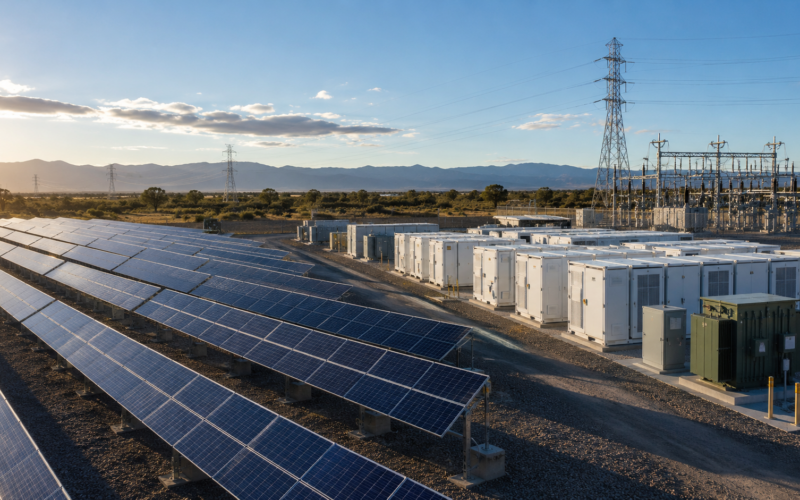
Nextpower Inc. (NASDAQ: NXT) has strengthened its push beyond solar tracking systems after agreeing to acquire Prevalon Energy in a transaction valued at up to $365 million. The deal moves Nextpower Inc. directly into battery energy storage systems, intelligent controls, and power infrastructure applications for utility grids, industrial users, and AI data centers. BNP Paribas Exane has framed the acquisition as a positive step that strengthens Nextpower Inc.’s position in the solar-plus-storage market, while the company also raised its fiscal 2027 outlook following the announcement. NXT stock last traded around $156.40, near the top of its 52-week range of $51.69 to $163.13, reflecting strong investor enthusiasm around the company’s broader power infrastructure strategy.
Why does the Prevalon Energy acquisition matter for Nextpower’s solar-plus-storage strategy?
The Prevalon Energy acquisition matters because it shifts Nextpower Inc. from a company primarily associated with solar tracking technology into a broader energy infrastructure platform. Solar trackers remain central to utility-scale solar economics, but solar-plus-storage is becoming the more important commercial package as grids deal with intermittency, curtailment, peak demand, and faster load swings from electrification. By adding Prevalon Energy’s battery energy storage systems and software capabilities, Nextpower Inc. is moving closer to the part of the market where renewable generation, grid stability, and dispatchable power increasingly overlap.
The strategic logic is straightforward. Solar hardware companies that remain tied only to project-level solar deployment can face cyclical risk from permitting delays, interest rates, trade policy, and utility procurement patterns. Storage adds a second growth channel and gives Nextpower Inc. a way to participate in projects where customers want integrated generation, conversion, storage, controls, and long-term service rather than separate components stitched together by multiple vendors. That does not make execution simple, but it does make the addressable market more resilient if customers increasingly buy energy systems rather than isolated pieces of equipment.
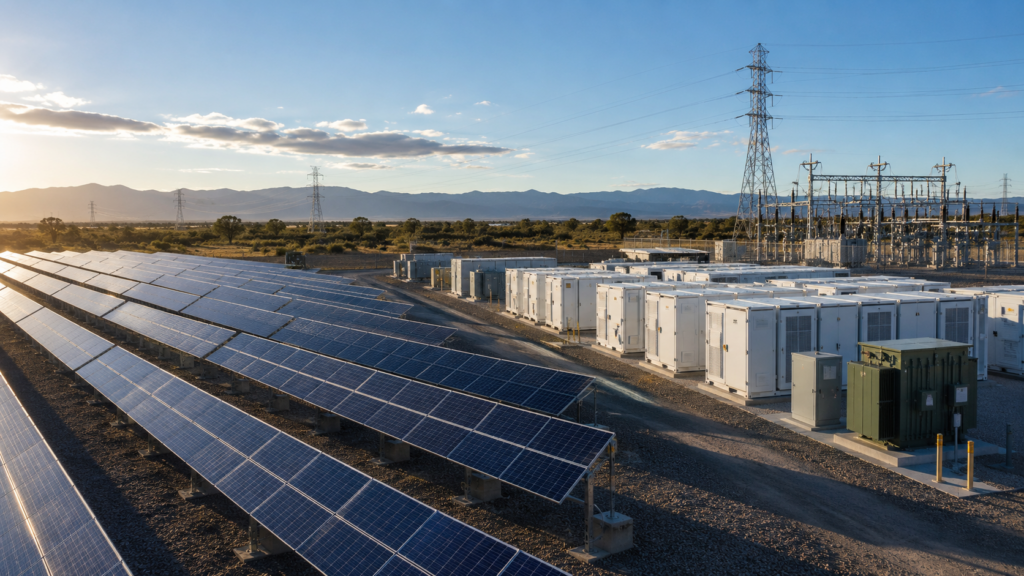
Prevalon Energy also brings scale that matters in a credibility-sensitive market. Nextpower Inc. said Prevalon Energy has more than 6 GWh of battery energy storage systems deployed globally and 1.3 GW of firm supply contracts linked to AI and hyperscaler data center infrastructure deployments. In battery storage, reference projects, field reliability, control software, and service capability are not decorative extras. They are often the difference between being seen as a component supplier and being trusted as an infrastructure partner.
How could battery energy storage change Nextpower’s exposure to AI data centers?
The AI data center angle gives this deal its market heat, but the more durable story is broader than artificial intelligence alone. Nextpower Inc. is entering a market where AI data centers, private grids, utility-scale storage, and industrial power systems all require fast response, stability support, and reliable energy dispatch. Prevalon Energy’s systems are positioned for use cases such as grid stabilization, contingency management, and rapid load smoothing, all of which are becoming more important as large power users place heavier stress on grid infrastructure.
For Nextpower Inc., the AI data center opportunity adds a premium growth narrative to an otherwise infrastructure-heavy business. Hyperscale operators need power reliability, speed to deployment, and flexible load management, especially in regions where transmission queues and grid constraints are becoming bottlenecks. If Prevalon Energy helps Nextpower Inc. serve this customer base, the company could gain exposure to a faster-growing demand pool than conventional solar project cycles alone.
However, investors should avoid treating every battery storage deal as an automatic AI winner. Seeking Alpha’s summary of the BNP Paribas view noted that while the data center opportunity is growing, the behind-the-meter storage market for data centers may be smaller than some investors assume, with front-of-meter grid-connected applications potentially representing a larger opportunity. That distinction matters because it keeps the investment case grounded. The deal is not only about AI power headlines. It is about whether Nextpower Inc. can build a repeatable solar-plus-storage platform across grid, industrial, and data center use cases.
Why did Nextpower raise its fiscal 2027 outlook after announcing the Prevalon transaction?
Nextpower Inc. raised its fiscal 2027 revenue outlook to approximately $4.0 billion to $4.4 billion from its previous range of $3.8 billion to $4.1 billion. The company also lifted adjusted EBITDA guidance to approximately $845 million to $930 million from $825 million to $900 million, while adjusted diluted earnings per share guidance increased to $4.30 to $4.73 from $4.21 to $4.59. The updated outlook assumes successful closing of the Prevalon Energy transaction and includes planned incremental costs of roughly $50 million related to accelerated entry into the power conversion market.
The guidance raise is important because it suggests Nextpower Inc. is not presenting the Prevalon Energy deal as a distant strategic option with no near-term financial contribution. The company is already embedding the transaction into its fiscal 2027 planning, which gives investors a clearer financial bridge from acquisition announcement to operating impact. That matters in a market where clean energy companies often face skepticism when they promise long-dated growth without visible earnings support.
The margin question is still central. Battery storage systems can carry different margin dynamics from solar tracker products, especially when hardware, integration, warranty, supply chain, and service obligations are involved. BNP Paribas Exane’s positive framing appears to lean on strategic diversification and market expansion rather than near-term margin purity. That is a reasonable interpretation, but investors will still watch whether storage revenue improves Nextpower Inc.’s quality of earnings or merely increases scale with lower profitability.
What does BNP Paribas Exane’s positive view signal for NXT stock sentiment?
BNP Paribas Exane raised its price target on Nextpower Inc. from $177 to $182 while maintaining an outperform rating, implying roughly 20% upside from the price referenced in that report. The call sits alongside a broader analyst shift in which MarketBeat data showed a Moderate Buy consensus, with 20 analysts rating the stock Buy and five rating it Hold. Several other firms have also lifted targets recently, although the average target price of $146.39 sat below the latest market price, showing that NXT stock has moved faster than parts of the analyst pack.
That creates an interesting sentiment setup. On one hand, the Prevalon Energy deal gives bulls a cleaner narrative: Nextpower Inc. is no longer just a solar tracker supplier, but a platform company positioned across utility-scale solar, storage, power conversion, and AI-related power demand. On the other hand, the stock’s sharp rally means the market has already rewarded the company for execution that still needs to be delivered.
NXT stock’s latest price context reinforces that tension. The shares were recently around $156.40, with a market capitalization of about $24.07 billion, and touched an intraday high above $162 after the deal news. Public market data also showed the stock trading close to its 52-week high of $163.13, far above its 52-week low of $51.69. That is not a quiet re-rating. It is a full-blown market vote that Nextpower Inc. can become a larger clean energy infrastructure compounder.
What are the main execution risks as Nextpower moves beyond solar trackers?
The biggest risk is integration. Nextpower Inc. is buying not just assets, but a different operating capability. Battery energy storage involves project design, safety management, battery supply chains, power electronics, software controls, warranties, degradation assumptions, and long-term service obligations. A strong tracker business does not automatically translate into storage execution, even if the customer overlap is attractive.
The second risk is capital discipline. At up to $365 million, the Prevalon Energy acquisition is meaningful, but not balance-sheet breaking for a company with a market value above $20 billion. The larger question is whether this deal becomes the beginning of a disciplined platform expansion or a signal that Nextpower Inc. will keep adding capabilities through acquisitions faster than it can integrate them. Clean energy history is full of companies that found out the hard way that becoming a one-stop shop can also mean becoming a one-stop complexity shop.
The third risk is market timing. Battery storage demand is strong, but the sector remains exposed to battery pricing, grid interconnection bottlenecks, regulatory design, domestic content rules, and customer procurement cycles. If AI data center demand remains strong and utilities accelerate storage procurement, Nextpower Inc. could look early and smart. If projects slow or margins compress, the market may reassess whether the deal deserves a platform premium.
Could Nextpower’s Prevalon deal reshape competition in solar-plus-storage markets?
The competitive implication is that Nextpower Inc. is trying to move up the value chain before customers fully standardize how they buy solar-plus-storage systems. Solar developers, independent power producers, utilities, industrial users, and hyperscale customers increasingly want integrated answers to power reliability, intermittency, and grid constraints. Companies that can package hardware, storage, power conversion, controls, and service into a credible offering may gain an advantage over narrower suppliers.
This could pressure peers that remain concentrated in single product categories. Tracker suppliers may face questions about whether they have enough exposure to storage and power electronics. Battery storage companies may face pressure from larger infrastructure platforms with stronger customer relationships and balance sheets. Solar developers may also prefer vendors that reduce coordination risk across multiple technical layers.
Still, the deal does not eliminate competition. Nextpower Inc. will face established battery storage integrators, inverter and power electronics specialists, grid technology firms, and renewable energy platform companies. The prize is large, but nobody gets a free pass. The companies that win solar-plus-storage will likely be those that can prove reliability, reduce project complexity, protect margins, and satisfy customers who care less about the clean energy slogan and more about whether the lights stay on.
Key takeaways on what Nextpower’s Prevalon acquisition means for investors and the energy storage market
- Nextpower Inc. is using the Prevalon Energy acquisition to reposition itself from a solar tracker specialist into a broader solar-plus-storage and power infrastructure platform.
- The deal gives Nextpower Inc. direct exposure to battery energy storage systems, intelligent controls, and energy management software, which are becoming central to grid reliability and renewable energy integration.
- Prevalon Energy’s more than 6 GWh of deployed systems gives Nextpower Inc. a credibility base in a storage market where operating history matters.
- The AI data center opportunity adds a strong growth narrative, but grid-connected storage may remain the larger and more durable addressable market.
- Nextpower Inc.’s higher fiscal 2027 outlook gives the deal immediate financial relevance rather than leaving it as a purely strategic announcement.
- BNP Paribas Exane’s higher price target and outperform rating reinforce bullish institutional sentiment around NXT stock.
- NXT stock already trades near its 52-week high, meaning investors are pricing in meaningful execution success.
- The biggest risks are integration complexity, storage margin dilution, battery supply chain exposure, and the challenge of managing a broader platform without losing operating focus.
- The transaction could pressure narrower solar hardware peers by making integrated solar-plus-storage capability a more important competitive benchmark.
- For the clean energy sector, the deal signals that the next phase of competition may be less about solar generation alone and more about firm, flexible, software-enabled power systems.
Discover more from Business-News-Today.com
Subscribe to get the latest posts sent to your email.