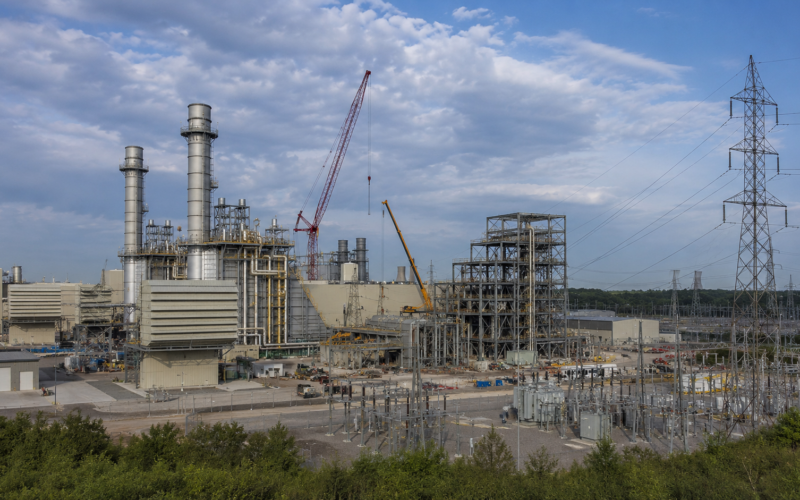
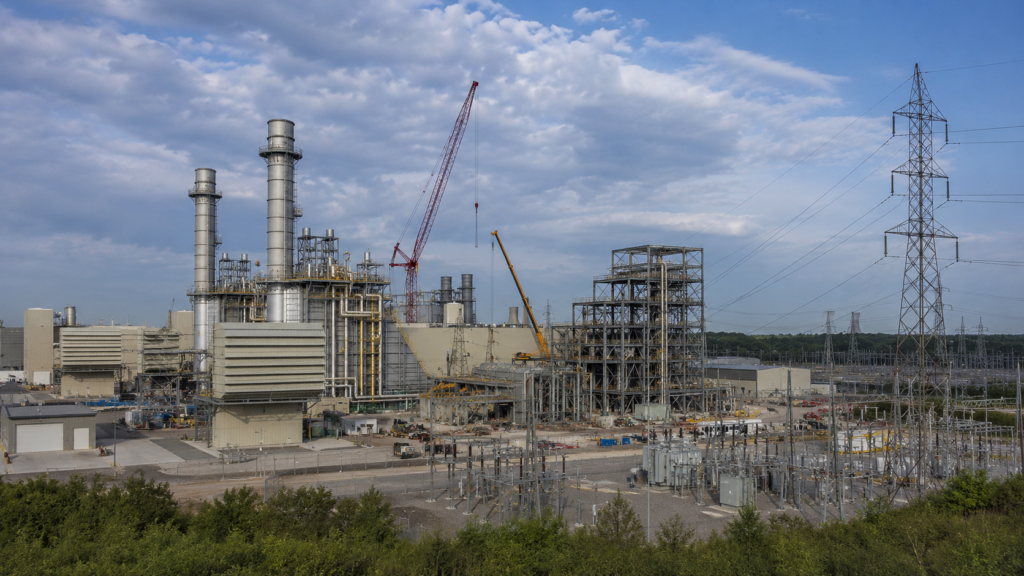
Alpha Generation, LLC (AlphaGen) has submitted approximately 2,700 megawatts (2.7GW) of generation uprate and expansion projects to PJM Interconnection in response to the grid operator’s Reliability Backstop Procurement process, placing the privately held power producer directly inside one of the most urgent electricity-market debates in the United States. The proposed projects span existing Alpha Generation facilities in Maryland, New Jersey, and Ohio and include both uprates to combined-cycle assets and new dispatchable generation expansions at established sites. The move matters because PJM, which oversees wholesale power markets across much of the Mid-Atlantic and Midwest, is facing rising reliability concerns as electricity demand from data centers, electrification, industrial load, and weather-sensitive consumption accelerates. For Alpha Generation, the submission is not just a development pipeline update, but a bid to convert existing infrastructure, site control, and operating experience into a faster route to capacity in a market where speed is becoming as valuable as scale.
Why is Alpha Generation’s 2,700 MW PJM submission important for U.S. grid reliability?
Alpha Generation’s submission lands at a moment when PJM is under pressure to demonstrate that its market design can still attract enough firm generation to keep pace with demand growth. PJM’s proposed Reliability Backstop Procurement has been framed as a one-time mechanism to secure nearly 15 gigawatts of new power supply capable of coming online by June 2031, with the process expected to include bilateral contracting and a central procurement phase. That timing is critical because the reliability problem is no longer theoretical. Power-market participants are increasingly treating late-decade capacity as a strategic commodity, not a routine procurement item.
The significance of Alpha Generation’s proposal lies in the type of capacity being offered. Uprates and expansions at existing facilities can often move faster than greenfield power projects because developers may already have land control, grid familiarity, operating staff, environmental history, and community relationships. That does not eliminate permitting, interconnection, financing, fuel, or transmission risks, but it can reduce some of the early-stage uncertainty that slows new generation development. In a market where every project competes for equipment, contractors, interconnection review, and regulatory attention, the ability to start from an existing site may become a decisive advantage.
The 2,700 megawatts also need to be viewed against PJM’s broader reliability math. PJM has been dealing with rising load forecasts at the same time that older fossil-fuel plants face retirement pressure and new resources encounter interconnection and deliverability constraints. Renewable energy additions help energy supply and emissions goals, but PJM’s current concern is also about accredited capacity, dispatchability, and resource availability during stress periods. Alpha Generation’s focus on dispatchable capacity therefore speaks directly to the system operator’s near- and medium-term reliability challenge.
How does Alpha Generation’s strategy fit into PJM’s reliability backstop procurement process?
Alpha Generation is positioning its pipeline around the market mechanisms PJM is now considering, including the Reliability Backstop Auction, PJM-facilitated contracting processes, and bilateral agreements with counterparties. That flexibility matters because PJM’s reliability-backstop design is still part of a broader market reform debate. The grid operator is considering ways to rely more heavily on long-term contracts and less exclusively on short-term capacity-market signals, after capacity prices surged and political scrutiny intensified.
For a company such as Alpha Generation, the commercial prize is not merely selling power into a tight market. The more attractive opportunity is securing mid- to long-term revenue visibility that can support investment decisions. Uprates and expansions require capital, engineering certainty, equipment procurement, and confidence that the project will be paid for once it reaches commercial operation. A backstop mechanism that provides dependable offtake or capacity revenue could reduce financing risk and improve the probability that projects reach completion rather than remaining stuck in development limbo.
This is also where Alpha Generation’s private ownership structure becomes relevant. The company is owned through a strategic partnership formed by an affiliate of ArcLight Capital Partners, LLC, giving it an infrastructure-investor orientation rather than a traditional regulated-utility model. That can be useful in a market where flexible capital and asset-level optimization are increasingly important. However, private power developers still need credible contracting structures, stable market rules, and regulatory clarity. Without those elements, even experienced operators may hesitate to commit large amounts of capital into assets exposed to volatile policy and power-market conditions.
Why are existing power generation sites becoming more valuable in PJM’s capacity crunch?
Existing generation sites are becoming strategically valuable because they may offer a faster path through the practical constraints that now define U.S. power development. In theory, the United States needs more electricity supply. In practice, the bottlenecks include interconnection queues, transmission congestion, turbine availability, local permitting, water access, fuel logistics, emissions rules, and community acceptance. Existing sites do not solve every one of those issues, but they often begin with advantages that greenfield developers would happily borrow, preferably without the paperwork mountain attached.
Alpha Generation’s proposal highlights this shift. By submitting projects at facilities it already owns and operates, Alpha Generation is effectively arguing that capacity expansion should prioritize places where development risk is lower and execution visibility is stronger. That is a pragmatic response to PJM’s reliability problem because the market does not just need theoretical megawatts. It needs deliverable capacity that can clear technical reviews, secure commercial arrangements, and arrive within the reliability window.
The broader implication is that brownfield power infrastructure may be entering a revaluation cycle. For years, many investors treated conventional power assets as mature, politically exposed, or transition-risk-heavy infrastructure. The rise of data centers, artificial intelligence workloads, industrial electrification, and reliability concerns is changing that conversation. Existing dispatchable assets in constrained power markets can become strategic platforms for incremental capacity, especially when regulators and grid operators are searching for near-term solutions that do not depend entirely on long-duration development timelines.
What does the AlphaGen pipeline say about the data-center power demand challenge?
Alpha Generation’s submission is part of a wider story in which data-center growth is forcing a reassessment of how U.S. electricity markets price reliability. The U.S. Energy Information Administration has pointed to rising electricity demand from large-scale data centers as a driver of increased power consumption, with PJM and Texas’s ERCOT system among the fastest-growing regions. That matters because data centers do not behave like ordinary commercial load. They can arrive in large blocks, demand high reliability, and require power availability on timelines that are often faster than traditional utility planning cycles.
PJM’s current challenge is that demand growth is becoming more concentrated, more urgent, and more politically sensitive. If new large loads connect faster than new dependable supply is added, the result can be higher capacity costs, tighter reserve margins, and pressure on consumers. That is why backstop procurement mechanisms are attracting attention. They are a sign that standard market processes may not be moving quickly enough to align new load with new supply.
For Alpha Generation, the data-center load story strengthens the commercial logic for dispatchable generation. Data centers may sign bilateral deals, utilities may seek capacity support, and large customers may increasingly prefer long-term arrangements that provide price certainty and reliability. However, the politics are delicate. If new generation costs are broadly socialized across consumers while large loads are seen as the primary driver of demand growth, state regulators and consumer advocates are likely to push back. Alpha Generation’s opportunity therefore depends not only on project execution, but also on whether PJM can design a procurement framework that balances reliability, affordability, and cost allocation.
What risks could affect Alpha Generation’s PJM uprate and expansion projects?
The biggest risk is that not every submitted megawatt becomes a built megawatt. Interconnection review remains a major hurdle in PJM, and projects may face network upgrade requirements that change cost assumptions or timelines. Even uprates at existing sites can trigger technical studies, transmission constraints, environmental reviews, and equipment procurement challenges. If PJM’s process creates a path to revenue but the grid cannot physically accommodate the additions without expensive upgrades, the commercial case could weaken.
There is also policy risk. PJM’s reliability-backstop framework is still tied to stakeholder debate and regulatory approval. Federal Energy Regulatory Commission review, state-level affordability concerns, consumer advocate objections, and disagreement over cost allocation could all affect the final structure. A mechanism designed to accelerate capacity can become less effective if it is diluted by political compromise or delayed by procedural friction. Power markets are excellent at producing acronyms. They are less charming when those acronyms spend years in hearings.
Fuel and emissions dynamics are another important constraint. Combined-cycle uprates and dispatchable generation expansions may improve reliability, but they also sit inside a decarbonization debate that differs by state. Maryland, New Jersey, and Ohio do not have identical policy environments, and local acceptance can vary sharply depending on emissions, air permits, jobs, taxes, and perceived consumer benefits. Alpha Generation’s emphasis on existing sites may reduce community impact, but it will not remove scrutiny from new capacity additions, particularly if the projects are fossil-fuel-linked.
How could Alpha Generation’s PJM move influence power-market competition?
Alpha Generation is not alone in recognizing the value of reliability-linked capacity in PJM. Other large power producers, utilities, and infrastructure investors are also looking at the same demand signal. The competitive question is whether Alpha Generation can move faster than peers by using its existing asset base, operational experience, and commercial flexibility. In a constrained market, being early with credible projects can matter because counterparties may prefer developers that can demonstrate site control and execution readiness.
The move may also intensify competition for long-term power contracts. If large-load customers, utilities, and load-serving entities seek capacity certainty, they may compare offers not only on price but also on deliverability, timing, fuel security, emissions profile, and regulatory risk. Alpha Generation’s 2,700 MW pipeline gives it scale in that conversation. The inclusion of 450 MW previously advanced through PJM’s Reliability Resource Initiative process also signals that the company has been aligning its development strategy with PJM’s evolving reliability needs rather than reacting late to a market headline.
For competitors, the message is clear. PJM’s reliability crunch is creating a premium for assets that can expand, uprate, or repower within the planning window. Developers with speculative greenfield projects may struggle to match brownfield speed. Utilities with regulated balance sheets may have cost recovery advantages but slower approval pathways. Independent power producers with existing infrastructure and patient capital may find themselves unusually well positioned, provided they can navigate the commercial and regulatory maze.
What happens next for Alpha Generation and PJM’s capacity-market overhaul?
The next phase will depend on PJM’s interconnection review, the final design of the Reliability Backstop Procurement process, and whether Alpha Generation can convert submitted projects into commercial commitments. Alpha Generation has said it is actively engaging the market and intends to pursue multiple routes, including PJM’s Reliability Backstop Auction, PJM-facilitated contracting, and bilateral agreements. That multi-path approach is sensible because the final market structure may not reward all projects equally.
For PJM, Alpha Generation’s submission is evidence that supply-side participants are willing to respond if revenue visibility improves. That is useful for the grid operator as it argues that reliability needs require new procurement tools. However, the broader test is whether enough credible projects emerge, clear technical hurdles, win contracts, and enter service by the required deadline. A procurement process that attracts submissions but fails to deliver steel in the ground would not solve the reliability problem.
For the power sector, the Alpha Generation announcement reinforces a broader shift in infrastructure strategy. The next phase of U.S. electricity growth may not be defined only by renewable additions, storage deployment, or transmission expansion. It may also depend on how quickly existing thermal and dispatchable platforms can be upgraded, expanded, and contracted in ways that satisfy reliability needs without overwhelming consumers. In PJM, the reliability debate is becoming a capacity race, and Alpha Generation has now put 2,700 MW on the starting line.
Key takeaways on what AlphaGen’s 2,700 MW PJM submission means for power markets and grid reliability
- Alpha Generation’s 2,700 MW submission positions the company as a serious participant in PJM’s push to secure near- and medium-term capacity.
- The proposal is strategically important because it focuses on uprates and expansions at existing sites rather than relying only on slower greenfield development.
- PJM’s Reliability Backstop Procurement is emerging as a response to tightening reserve margins, rising demand forecasts, and concerns that existing market structures are not attracting enough new capacity.
- Data-center growth is a major driver of the reliability debate, especially because large loads can emerge faster than conventional utility planning timelines.
- Alpha Generation’s private infrastructure ownership model may help it pursue flexible contracting, but regulatory clarity and revenue certainty remain essential.
- Existing dispatchable generation sites in PJM could become more valuable as the market places a premium on deliverable capacity and faster execution.
- The biggest risks include interconnection delays, network upgrade costs, fuel and emissions scrutiny, and uncertainty over PJM’s final procurement design.
- The commercial opportunity will depend on whether Alpha Generation can convert project submissions into contracts that justify capital deployment.
- For competitors, the announcement signals that brownfield generation platforms may become a key battlefield in the PJM reliability race.
- The broader power-market lesson is simple: artificial intelligence and electrification may be digital stories, but their next constraint is very physical, dependable electricity.
Discover more from Business-News-Today.com
Subscribe to get the latest posts sent to your email.