


The United States Department of Defense has placed the running cost of its war against Iran at approximately $25 billion, marking the first official Pentagon estimate of expenditure since military operations began in late February 2026. The disclosure was made on Wednesday, April 29, 2026, before the United States House of Representatives Committee on Armed Services during a hearing on the Department of Defense fiscal year 2027 budget request.
Acting Pentagon Comptroller Jules Hurst III delivered the figure under questioning from Representative Adam Smith, the ranking Democrat from Washington’s 9th congressional district, who has repeatedly pressed the Department of Defense for a war-cost update since the conflict began. Jules Hurst III told the committee that the United States is currently spending roughly $25 billion on the operation, codenamed Operation Epic Fury, with the bulk of expenditure devoted to munitions. Jules Hurst III added that the figure also reflects operations, maintenance, and equipment replacement costs.
Defense Secretary Pete Hegseth and Chairman of the Joint Chiefs of Staff General Dan Caine appeared alongside Jules Hurst III at the hearing. Pete Hegseth, in a contentious exchange with committee members, defended the war’s expenditure as necessary to prevent the Islamic Republic of Iran from acquiring a nuclear weapon. Pete Hegseth posed a counter-question to lawmakers, asking what the cost would be worth if it ensured Iran never obtained a nuclear weapon, citing what he described as the radical ambitions of the Iranian government.
Why is the Pentagon’s $25 billion estimate for the Iran war drawing scepticism from lawmakers and analysts?
The figure presented by Jules Hurst III has been challenged from multiple directions inside and outside the hearing room. Representative Ro Khanna, a California Democrat, dismissed the $25 billion estimate as inaccurate during questioning, calling the figure off the mark. Representative Adam Smith reminded Jules Hurst III that the Department of Defense had not formally updated Congress on the cost of the war since hostilities began on February 28, 2026, and pressed the Pentagon to deliver a full breakdown.
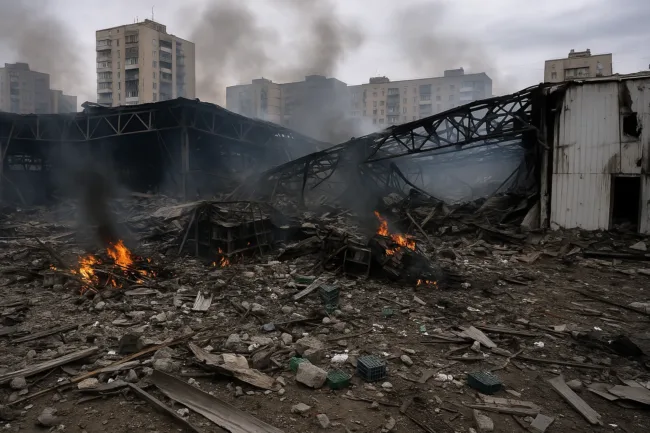
Sources familiar with internal Pentagon assessments have told several United States news organisations that the real cost is significantly higher when accounting for damage to American military infrastructure across West Asia. One assessment places the figure between $40 billion and $50 billion when costs of rebuilding United States military installations and replacing destroyed assets are included. Iranian strikes during the opening 48 hours of the war damaged at least nine United States military sites across Bahrain, Kuwait, Iraq, the United Arab Emirates and Qatar. Several critical United States radar systems were also destroyed or disabled during early Iranian retaliation, including a radar component associated with a Terminal High Altitude Area Defense battery deployed in Jordan.
Pete Hegseth declined during the hearing to confirm whether the $25 billion figure included the cost of repairing damage to United States bases. Jules Hurst III had earlier told reporters during budget briefings that the Department of Defense does not yet have a final number for damage to overseas installations, noting that the cost would depend on which facilities the Department chooses to rebuild. The Department of Defense has acknowledged that base reconstruction expenses are not reflected in its $1.5 trillion budget request for fiscal year 2027.
The contrast between the $25 billion estimate and earlier figures supplied to Congress is also drawing attention. In early March 2026, Pentagon officials informed lawmakers in a closed-door briefing that the cost of war with Iran in the first six days alone was more than $11.3 billion. A report by the American Enterprise Institute, a Washington-based think tank, has estimated the total war cost at between $25 billion and $35 billion, indicating the Pentagon’s official disclosure sits at the lower end of independent assessments.
What do the latest casualty figures and supplemental funding plans reveal about the scale of Operation Epic Fury?
According to Department of Defense data presented during the hearing, 13 United States service members have been killed in Operation Epic Fury and around 400 others have been wounded. Representative Adam Smith placed those casualty figures at the top of his list of war costs during his opening statement, alongside the financial and strategic burden of the conflict.
Jules Hurst III confirmed that the Department of Defense intends to formulate a supplemental funding request through the White House once a complete cost assessment of the conflict is available. Representative Adam Smith responded that he was glad to receive the cost figure, noting that lawmakers had been asking for the number for an extended period without reply. Representative Maggie Goodlander, a New Hampshire Democrat, secured a separate commitment from Jules Hurst III to provide a detailed breakdown of how the $25 billion has been spent.
The Department of Defense had previously requested White House approval for a Congressional supplemental of more than $200 billion in additional military funding, an indication that the Department anticipates substantially larger expenditure requirements than the $25 billion publicly cited. The acting comptroller’s testimony also confirmed that the United States military has used large quantities of high-value munitions during the campaign, including Tomahawk cruise missiles and Patriot interceptor missiles, severely depleting Pentagon reserves.
How is the United States naval blockade of Iran reshaping global oil markets and the Strait of Hormuz crisis?
The Pentagon’s cost disclosure has come at a moment of acute pressure on global energy markets. Gasoline prices have surged across the United States and around the world due to the prolonged disruption of the Strait of Hormuz, the maritime corridor through which roughly 20 per cent of the world’s oil trade and a substantial share of liquefied natural gas exports normally pass. Retail gasoline prices in parts of the United States, including California, have risen above $8 per gallon, according to reporting from West Coast outlets.
President Donald Trump and senior administration officials met with energy industry executives on Tuesday, April 28, 2026, to discuss the administration’s continuing blockade of Iranian ports and options for reducing the inflationary impact on American consumers. Donald Trump warned on Truth Social on Wednesday that Iran needed to act quickly, signalling that talks between Washington and Tehran remain stalled after eight weeks of fighting and a fragile ceasefire arrangement.
The Strait of Hormuz dispute remains the central economic flashpoint of the conflict. Iranian Foreign Minister Abbas Araghchi declared the strait open to commercial vessels on April 17, 2026, in a bid to ease ceasefire conditions, but the United States has continued to enforce a naval blockade of Iranian ports and Iranian-flagged shipping. United States Navy operations in the strait include intercepting sanctioned tankers and conducting mine clearance operations, with the Department of Defense previously informing Congress that fully clearing mines placed by Iranian forces could take up to six months. The Islamic Revolutionary Guard Corps Navy seized the Liberian-registered Epaminondas and the Panama-flagged MSC Francesca on April 22, 2026, accusing the vessels of attempting to leave the strait covertly and transferring them to Iranian waters for inspection.
Insurance underwriters and major shipping operators continue to maintain risk postures consistent with active conflict conditions, even with intermittent ceasefire announcements in place. Major container shipping companies including A.P. Moller-Maersk, CMA CGM and Hapag-Lloyd have suspended transits through the Strait of Hormuz and adjacent routes including the Red Sea since the early days of the war.
What broader strategic and economic consequences are emerging from the United States-Iran war for West Asia and global markets?
The strategic consequences of Operation Epic Fury extend well beyond the bilateral confrontation between Washington and Tehran. The closure of the Strait of Hormuz disrupted approximately 20 per cent of global seaborne oil supplies and significant volumes of liquefied natural gas in the early weeks of the conflict. Energy analysts have warned that crude prices could approach $100 per barrel if disruptions persist, potentially adding around 0.8 per cent to global inflation.
Asia bears the heaviest exposure. China, India, Japan and South Korea collectively account for the largest share of crude oil and liquefied natural gas exports passing through the Strait of Hormuz, with around 75 per cent of oil and 59 per cent of liquefied natural gas typically destined for Asian markets. Pakistan and Bangladesh are particularly price-sensitive, and Bangladesh is now projected to face recession-like conditions due to fuel-driven inflationary pressure. Qatar Energy, the Qatari state-owned hydrocarbons producer, declared force majeure on its contracts on March 3, 2026, signalling supply contract failures across global liquefied natural gas markets.
European exposure is considerable, given that 12 to 14 per cent of Europe’s liquefied natural gas imports originate from Qatar via the Strait of Hormuz. The food security dimension is also pronounced. Over 30 per cent of global urea, used in fertiliser production, is exported from Gulf countries through the strait, raising concerns about agricultural input costs from East Africa to South Asia. The British think tank The Food Policy Institute has warned of long-term food price increases linked to fertiliser and fuel market disruptions.
Domestically, gasoline prices in the United States have risen by approximately $1.16 per gallon since the start of the war, with jet fuel costs up roughly 95 per cent. Major United States logistics companies including the United States Postal Service, Amazon and FedEx have implemented fuel surcharges. The combined fiscal, military, and economic consequences of the war are now likely to dominate Congressional debate as the Department of Defense submits its supplemental funding request and as the fiscal year 2027 budget process advances.
Representative Adam Smith, in his opening statement at the April 29 hearing, characterised the war as the opposite of strategic realism, arguing that escalating military commitments in West Asia have produced costs that significantly exceed the benefits being claimed by the administration. Pete Hegseth and the Department of Defense leadership have continued to defend the operation as essential to non-proliferation objectives. The political contest between those two positions, focused on cost, casualty levels, and strategic outcome, is now expected to define the Congressional response to the conflict in the months ahead.
What are the key takeaways from the Pentagon’s $25 billion cost estimate for Operation Epic Fury and the United States war against Iran?
- Acting Pentagon Comptroller Jules Hurst III told the United States House of Representatives Committee on Armed Services on April 29, 2026 that Operation Epic Fury has cost approximately $25 billion to date, with the bulk of expenditure devoted to munitions, operations, maintenance, and equipment replacement.
- Pentagon officials had previously informed Congress that the war cost more than $11.3 billion in just the first six days, while internal assessments cited by United States news organisations estimate the real cost at between $40 billion and $50 billion when base reconstruction is included.
- 13 United States service members have been killed and around 400 wounded during Operation Epic Fury, according to Department of Defense data presented at the April 29 hearing.
- Iranian strikes damaged at least nine United States military sites across Bahrain, Kuwait, Iraq, the United Arab Emirates and Qatar in the opening 48 hours of the war, including a radar system associated with a Terminal High Altitude Area Defense battery in Jordan.
- The Strait of Hormuz remains contested despite intermittent ceasefire announcements, with United States naval forces enforcing a blockade of Iranian ports, gasoline prices in parts of the United States exceeding $8 per gallon, and global liquefied natural gas and fertiliser supply chains under sustained strain.
Share this:
Discover more from Business-News-Today.com
Subscribe to get the latest posts sent to your email.