


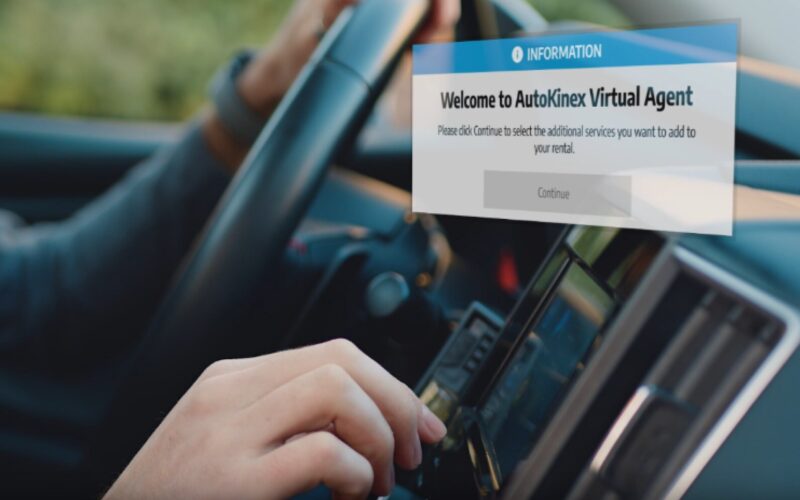
Verra Mobility Corporation (NASDAQ: VRRM) has launched AutoKinex Virtual Agent, a new in-vehicle workflow that lets rental car customers finalize parts of the checkout process and select ancillary services such as tolling, fuel, and insurance from the vehicle’s infotainment system rather than at the counter. The product matters because it targets one of the rental industry’s most obvious friction points: the mismatch between rising customer preference for counter-bypass pickup and the industry’s continued reliance on human agents to close ancillary sales. For Verra Mobility, the move extends AutoKinex from a connected-vehicle payments platform into a more explicit revenue-enablement layer for rental operators. It also arrives with VRRM shares at $14.98 on April 15, 2026, near the low end of their 52-week range of $13.84 to $25.83, suggesting the market is still asking whether new product launches can translate into durable growth rather than just tidy demos.
What changed is not merely that Verra Mobility launched another software feature. The more consequential shift is that the company is trying to capture ancillary service decisions at the point of use, inside the vehicle, after the renter has already skipped the desk. That matters because counter-bypass has become both a customer-experience win and a commercial headache for rental companies. The old counter model gave agents a narrow but important window to explain toll programs, prepaid fuel, and protection products. When customers walk straight to the car, that upsell moment often disappears, and so does part of the margin opportunity. Verra Mobility’s answer is to relocate that moment into the dashboard.
Why does Verra Mobility think the rental car dashboard is becoming the new checkout counter for ancillary sales?
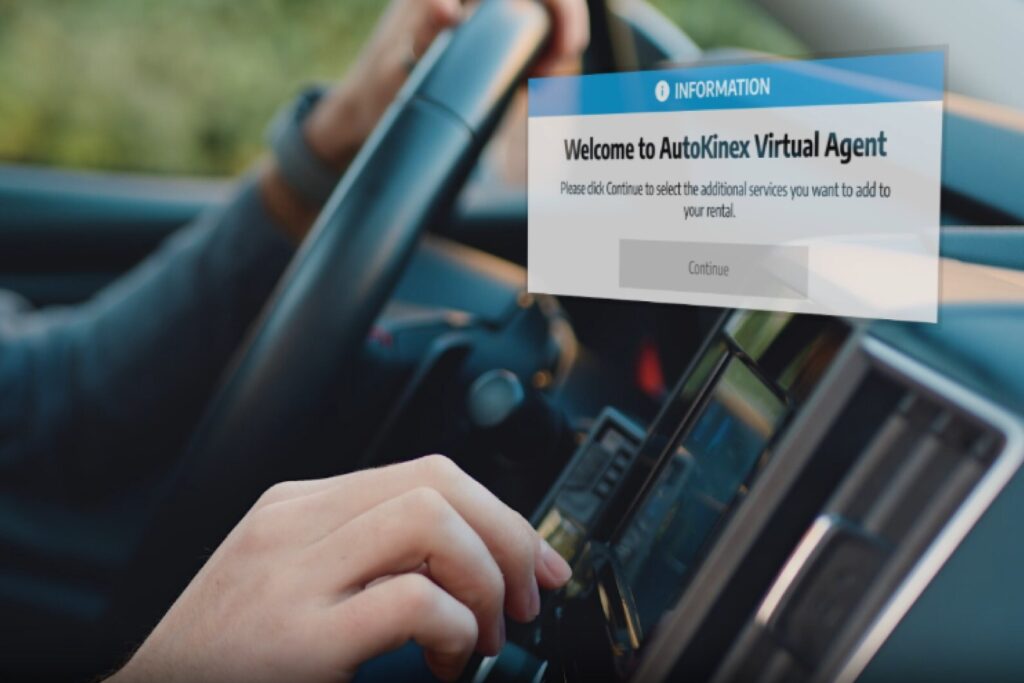
The logic behind the launch is straightforward. Rental companies want faster pickup, lower staffing pressure, and better digital completion rates, but they do not want to sacrifice attachment rates on ancillary products that can materially lift revenue per transaction. AutoKinex Virtual Agent tries to solve both sides of that equation by turning the infotainment system into a guided self-service channel. In practical terms, that means the renter can enter the vehicle, review rental details, opt into services, and receive prompts during the trip, such as a reminder to refuel before return. It is the kind of workflow that looks obvious only after somebody builds it, which is usually how enterprise software sneaks into budget lines.
This product also fits neatly into Verra Mobility’s broader commercial identity. The company already operates at the intersection of vehicles, payments, tolling, compliance, and mobility data. Its connected vehicle services business is built around making services like tolling and related transactions work at scale across fleets and mobility operators. AutoKinex Virtual Agent therefore is not a jump into a random adjacent market. It is a logical expansion of an existing platform into a more visible customer-facing workflow, one that could increase the value of Verra Mobility’s software relationship with rental car operators.
How strong is the business case for counter-bypass rental workflows in 2026?
The customer-experience case is better supported than the press release alone might suggest. J.D. Power’s 2025 North America Rental Car Satisfaction Study found that customers who bypass the rental counter posted higher overall satisfaction scores than those who stopped at the counter, with 704 versus 662 on a 1,000-point scale. The study also found higher satisfaction on pickup and drop-off, as well as on the ease and convenience of securing the rental. That gives Verra Mobility and its rental partners a useful data-backed argument: digital bypass is not just cheaper, it is better aligned with what travelers increasingly prefer.
The real commercial question, however, is whether digital in-vehicle prompts can recover enough ancillary revenue to justify rollout complexity. Rental car companies are not short of software pitches promising smoother operations. What they care about is conversion, compliance, and integration. Verra Mobility says the system integrates with existing rental systems and uses workflow automation to guide customers step by step. If that integration proves lightweight and scalable, the product becomes attractive because it addresses labor efficiency and revenue capture simultaneously. If integration is messy or customer interaction rates are weak, then it risks becoming one more dashboard layer that managers like in theory and drivers ignore in practice.
What does this launch reveal about Verra Mobility’s strategy beyond tolling and traffic enforcement?
Strategically, this launch suggests Verra Mobility is trying to push deeper into monetizable in-vehicle commerce rather than remain boxed into back-end tolling and enforcement categories. The November 2025 rollout of AutoKinex with Stellantis for automated tolling already signaled that Verra Mobility wants the vehicle itself to become a verified transaction endpoint for services such as tolling, parking, fueling, and EV charging. The rental-focused Virtual Agent extends that same concept into a high-turnover commercial environment where the company can potentially influence both operational workflow and customer spend. In other words, Verra Mobility is not just enabling payments. It is trying to become part of the operating system for mobility transactions.
That positioning could matter because embedded mobility software tends to benefit from sticky integration once deployed. Rental fleets, automakers, tolling ecosystems, and enterprise software stacks do not change overnight. A vendor that becomes part of how trips are activated, services are selected, and compliance is maintained can build a more defensible moat than a vendor selling a standalone app. Verra Mobility’s challenge is proving that it can scale these offerings across fleets and geographies without turning every deployment into a custom project. Software margins love repeatability. Enterprise customers love saying they want repeatability right before requesting exceptions.
How should investors read Verra Mobility stock after the AutoKinex Virtual Agent launch?
From a market perspective, this announcement is strategically sensible but unlikely on its own to reset the investment case overnight. Verra Mobility reported full-year 2025 revenue of $979.1 million and fourth-quarter adjusted EBITDA of $101.8 million, while also flagging higher costs tied to project implementations and readiness work for the New York City Department of Transportation program. That matters because investors will probably evaluate new launches like AutoKinex Virtual Agent through a practical lens: can they add revenue without dragging margin through another cycle of implementation-heavy spending?
The stock context is telling. VRRM closed at $14.98 on April 15, 2026. Based on available historical prices, the shares were around $14.50 five trading days earlier and $14.89 on March 16, 2026, implying a modest short-term gain over five trading days and little change over roughly one month, even as the stock remains far below its 52-week high of $25.83. That suggests investors are not dismissing the company, but they are also not paying up for optionality until they see stronger evidence that platform extensions like AutoKinex can accelerate growth or expand wallet share across existing customers.
What execution risks could limit adoption of Verra Mobility’s in-vehicle rental workflow platform?
The biggest risk is adoption friction. Rental operators use complex reservation, fleet, contract, and customer-service systems, and even a seemingly elegant digital workflow can break down if the data handoff is imperfect. A renter who gets conflicting information between the booking app, the counter record, and the in-car screen will not admire the architecture. They will simply get annoyed. Verra Mobility therefore needs consistency, compliance, and clear customer prompts to work almost invisibly.
A second risk is behavioral. Travelers like skipping counters because it feels faster and cleaner. That does not automatically mean they want to make insurance or fuel decisions on a screen after entering the car. Some will. Some will tap through impatiently. Some will assume anything appearing in the vehicle is mandatory. That creates a compliance design challenge as much as a user-experience opportunity. The company’s emphasis on guided workflows and clarity is therefore not decorative language. It is central to whether this product is embraced or resented.
Third, competitive imitation is plausible. The idea of moving rental service selection into digital touchpoints is not proprietary in concept. What may be defensible is Verra Mobility’s combination of connected vehicle payments experience, rental-specific workflow automation, and pre-existing relationships in tolling and mobility services. But if the economics prove attractive, rental software vendors, telematics providers, or even large rental brands themselves could pursue similar interfaces.
What could AutoKinex Virtual Agent mean for the broader rental car and mobility technology industry?
For the industry, this launch points toward a broader redesign of the rental transaction itself. The traditional rental counter has been losing strategic importance as mobile check-in, loyalty-led bypass, and connected vehicles reduce the need for paper-heavy handoffs. What remains valuable is the decision layer around services, compliance, payments, and customer messaging. Verra Mobility is effectively arguing that this layer should travel with the car and activate in context, not remain stuck at the desk.
If that view proves right, the implications extend beyond rental cars. Fleet operators, automakers, and mobility platforms may increasingly treat the infotainment system as a commercial workflow surface, not just a navigation or entertainment screen. That would make embedded prompts, transaction orchestration, and verified vehicle identity more important across tolling, fueling, EV charging, parking, and insurance-linked services. Verra Mobility is not alone in chasing that future, but this launch shows it is trying to claim a practical use case where return on investment can be measured in fewer lines, faster pickups, and higher ancillary capture. That is not glamorous. It is just how real enterprise software tends to make money.
Key takeaways on what Verra Mobility’s AutoKinex Virtual Agent means for the company, competitors, and the rental mobility industry
- Verra Mobility is moving AutoKinex from a payments utility into a customer-facing revenue platform for rental operators.
- The launch targets a real commercial gap created by counter-bypass pickup, where satisfaction rises but ancillary sales opportunities can fall.
- J.D. Power data supports the customer-experience thesis behind bypass workflows, giving rental partners a stronger adoption rationale.
- The product’s success will depend less on concept appeal and more on integration quality, conversion rates, and compliance design.
- For Verra Mobility, this is a strategic adjacency that deepens wallet share potential within existing mobility ecosystems rather than opening a wholly new market.
- The launch reinforces a broader thesis that the vehicle interface is becoming a transaction surface for mobility services.
- Investors are likely to view the product positively in strategic terms but wait for evidence of measurable revenue lift and scalable deployment economics.
- VRRM’s share price remaining near the lower end of its 52-week range indicates the market still wants proof of operating leverage and execution discipline.
- Competing rental software and mobility tech providers may respond if in-vehicle ancillary conversion proves commercially meaningful.
- The broader industry signal is clear: the rental counter is shrinking, but the monetization layer is not disappearing. It is migrating into the car itself.
Share this:
Discover more from Business-News-Today.com
Subscribe to get the latest posts sent to your email.