


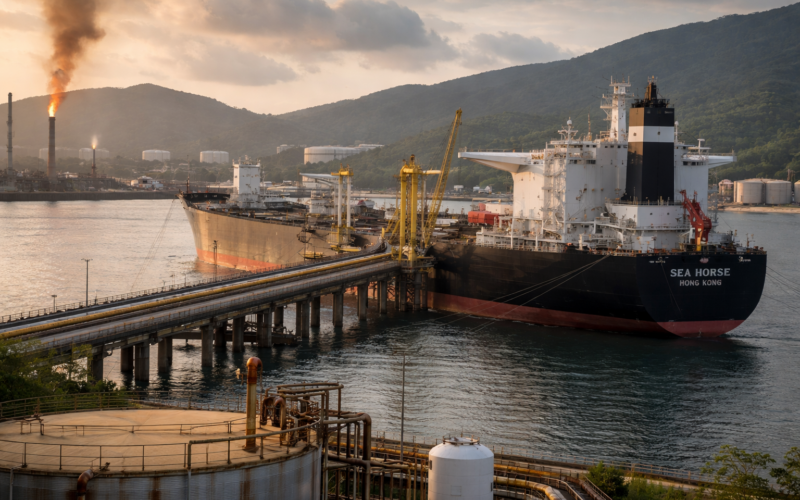
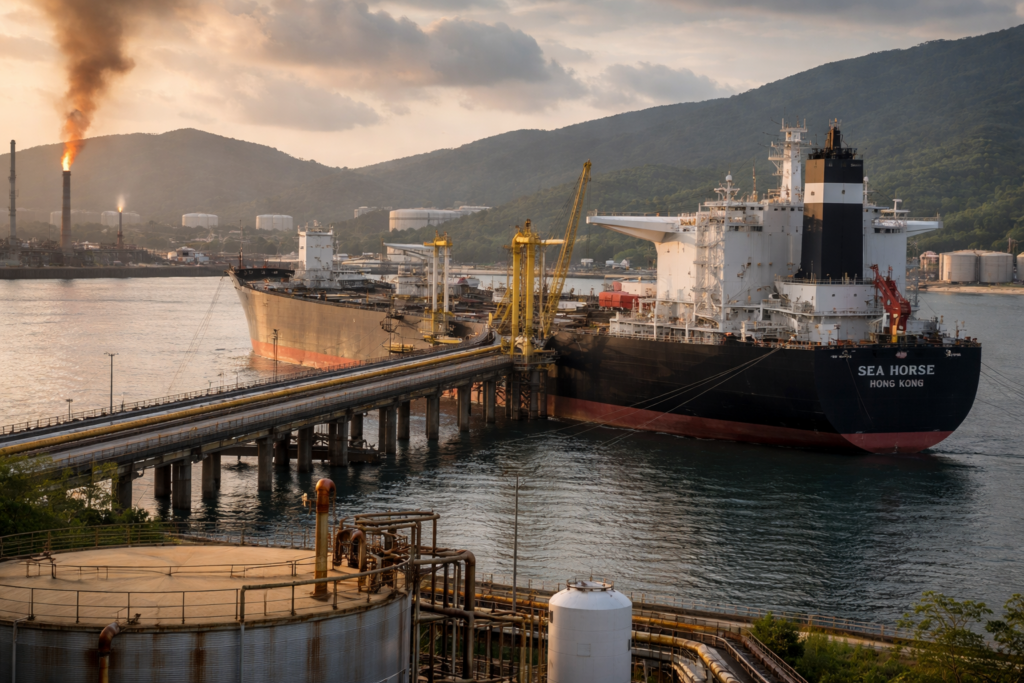
A fuel tanker carrying a Russia-origin cargo that was initially expected to reach Cuba has begun discharging instead at an independently owned terminal in Venezuela, according to vessel-monitoring data and a source cited by Reuters. The Hong Kong-flagged vessel Sea Horse had remained stranded for weeks in the Atlantic before rerouting last month, making its eventual discharge in Venezuela the latest sign of how quickly sanctions pressure and case-by-case waivers are reshaping Caribbean energy flows.
The development matters because the Sea Horse had become part of a wider test of the United States approach to fuel supplies reaching Cuba at a time when the island has been facing a severe energy crisis. Cuba had gone three months without an oil tanker delivery, according to President Miguel Díaz-Canel, worsening blackouts and tightening pressure on public transport, healthcare services, and agricultural production. While Washington allowed one sanctioned Russian crude shipment to enter Cuba for humanitarian reasons, it also said there had been no formal change in sanctions policy and that any further deliveries would be reviewed individually.
Why did the Sea Horse tanker reroute from Cuba and start discharging in Venezuela instead?
According to Reuters, Sea Horse had loaded a Russia-origin cargo originally bound for Cuba, but the vessel remained stuck in the Atlantic for weeks amid what Reuters described as the United States oil blockade against Cuba. The tanker then rerouted to Venezuela last month, and by April 2 had begun discharging at an independently owned Venezuelan terminal. The sequence suggests that even where cargoes are available, the ability to complete a delivery into Cuba still depends on a narrow and uncertain sanctions environment rather than on normal commercial routing.
The timing is important. In late March, as another tanker, the Russian-flagged Anatoly Kolodkin, approached Cuba’s Matanzas port with nearly 700,000 barrels of crude, Sea Horse had already become an example of the uncertainty surrounding non-routine fuel deliveries to the island. Reuters reported at the time that it was unclear whether Sea Horse or other tankers originally bound for Cuba would still try to discharge there after the White House softened what had previously looked like a blanket blockade. Sea Horse has now answered that question, at least for this cargo, by discharging in Venezuela instead.
How does the Sea Horse discharge fit into the wider Cuba fuel crisis and Matanzas supply story?
The reroute does not stand alone. Cuba’s energy shortage has been severe enough that Reuters described the island’s economy as grinding to a halt under a de facto oil blockade imposed by Washington. The lack of tanker arrivals for three months contributed to strict gasoline rationing and recurring blackouts across a population of roughly 10 million people. Cuba’s foreign ministry said the crude delivered by the Anatoly Kolodkin would take 25 to 35 days to process and distribute domestically, underlining that even when a shipment gets through, relief is not immediate.
The Matanzas delivery was significant because it marked Cuba’s first major oil cargo in about three months. Reuters reported that the sanctioned tanker was allowed to proceed for humanitarian reasons, with the United States saying it would assess future shipments case by case. Cuba planned to convert the Russian Urals crude into fuel oil, diesel, gasoline, and cooking gas, reflecting how central crude processing remains to the island’s wider fuel supply chain. In that context, Sea Horse’s absence from Cuba matters because it represents another cargo that did not immediately contribute to easing domestic shortages there.
The contrast between the two vessels is also revealing. Anatoly Kolodkin carried crude suited to Cuba’s aging refineries, while Sea Horse was identified as carrying Russian diesel originally meant for Cuba. One cargo reached Matanzas under a humanitarian waiver. The other drifted, rerouted, and ended up in Venezuela. That difference highlights how operational outcomes are being shaped less by a single announced policy than by shifting decisions around specific vessels, cargoes, and diplomatic risk.
What does the United States sanctions position now mean for Cuba, Venezuela, and Russian cargoes?
Washington’s public position has been that there has been no broad policy reversal on Cuba. White House press secretary Karoline Leavitt said on March 30 that allowing the Russian tanker into Cuba was not a formal change in sanctions policy and that such decisions would be handled individually. She also said the United States reserved the right to seize vessels headed toward Cuba if legally applicable under sanctions policy. That means the system governing deliveries remains narrow, discretionary, and hard for commercial operators to model with confidence.
At the same time, President Donald Trump had said he had no problem with countries sending oil to Cuba, including Russia, if it helped meet humanitarian needs. Reuters later reported that the White House insisted this did not amount to a broader policy change. For shipping markets and state energy planners, that kind of dual messaging creates an awkward middle ground. A cargo may be politically tolerated one week, held up the next, or rerouted entirely if risk becomes too high. Sea Horse’s voyage now looks like a case study in that uncertainty.
The United States had cut off Venezuelan oil exports to Cuba after the capture of Venezuelan President Nicolás Maduro on January 3, according to Reuters, and also threatened tariffs on other countries sending crude to the island. Mexico, another major supplier, halted shipments as well. Those moves dramatically narrowed Cuba’s supply options, increasing the importance of Russian cargoes and one-off waivers. Against that backdrop, Venezuela’s emergence as the final discharge point for Sea Horse shows that cargoes displaced by Cuba sanctions do not simply disappear. They can be redirected within the region, changing who gets supply and when.
Why does the Venezuela discharge matter for regional energy flows and diplomatic interpretation?
Sea Horse’s discharge in Venezuela matters not because it transforms global oil markets, but because it offers a precise snapshot of how Caribbean and Latin American energy logistics are being reordered by sanctions, shortages, and humanitarian carve-outs. Reuters reported that Venezuela and Mexico had been preparing cargoes when Washington tightened its oil blockade on Cuba, and that at least one fuel tanker remained loaded and waiting for directions. That means the region’s fuel map is still unsettled, with ships and suppliers responding to policy signals in real time rather than operating under stable, predictable commercial rules.
It also sharpens the difference between crude access and fuel access. Cuba still needs imports and domestic production of gasoline, jet fuel, and cooking gas in addition to crude for refining. The island once imported 100,000 barrels per day of crude and fuel to meet domestic demand, according to Reuters. Even with one Russian tanker reaching Matanzas and Russia reportedly preparing a second shipment, the loss or diversion of other cargoes such as Sea Horse means the supply picture remains fragile. A single vessel unloading somewhere else may not sound dramatic, but in a system already operating with blackouts and rationing, every cargo now carries outsized weight.
For Venezuela, the discharge illustrates another layer of regional flexibility. The Reuters report identified the receiving location only as an independently owned terminal in Venezuela. Even without broader detail on the consignee or commercial terms, the outcome shows that Venezuela can still function as an alternative destination for Russia-origin cargoes that become politically or operationally harder to land in Cuba. In practical terms, the ship went from being a symbol of Cuba’s fuel desperation to evidence of Venezuela’s continued role in the region’s adaptive oil logistics.
Key takeaways on what the Sea Horse reroute means for Cuba, Venezuela, and regional sanctions policy
- The Hong Kong-flagged Sea Horse, carrying a Russia-origin cargo originally bound for Cuba, began discharging on April 2 at an independently owned terminal in Venezuela after rerouting last month.
- Cuba’s fuel crisis remains severe, with Reuters reporting three months without an oil tanker before the arrival of the sanctioned Russian vessel Anatoly Kolodkin at Matanzas.
- The United States said its decision to allow one Russian tanker into Cuba for humanitarian reasons did not represent a formal change in sanctions policy and that future deliveries would be reviewed case by case.
- Sea Horse’s diversion suggests that sanctions ambiguity is still disrupting cargo routing, with some Cuba-linked shipments being redirected elsewhere in the region rather than completing their original voyage.
- The Venezuela discharge underlines how Caribbean fuel flows are being reshaped by a mix of United States restrictions, Russian supply, and emergency humanitarian exceptions.
Discover more from Business-News-Today.com
Subscribe to get the latest posts sent to your email.