




Physical oil and fuel cargo prices across Asia and Europe have surged to record levels, outpacing the already steep increases in benchmark futures markets, as refiners and traders scramble to secure barrels and plug an enormous supply gap created by the United States-Israeli war on Iran. The disruption, which began when the United States and Israel launched strikes on Iran on 28 February 2026, has produced what analysts describe as the largest-ever disruption to global energy supplies.
In the physical markets, where oil moves on ships, rail cars and in storage tanks, benchmark Brent crude hit a session high of 119 US dollars per barrel on Thursday before settling around 109 US dollars. The benchmark Middle East Dubai crude price reached a record 166.80 US dollars per barrel. Investment bank Goldman Sachs said on Thursday that if the current outages persist, Brent is likely to surpass its all-time high of 147.50 US dollars per barrel reached in 2008. Cargoes of European and African crude have climbed to 120 US dollars per barrel, while Russian crude barrels, previously sold at steep discounts due to sanctions, have recovered above 100 US dollars.
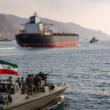
The supply gap is expected to persist following a barrage of attacks on oil and gas facilities across the Middle East. Iran has throttled traffic through the Strait of Hormuz, the critical waterway through which 20 percent of the world’s oil and gas normally transits, and has threatened to fire on ships that attempt to sail through the narrow strait. Flows of crude and condensate have dropped by approximately 12 million barrels per day, or around 12 percent of daily world demand, due to output cuts and export halts by Gulf producers, according to oil shipments tracker Petro-Logistics.
Dennis Kissler, senior vice president of trading at BOK Financial, stated that it would take longer than markets currently appreciate to bring supply back to the market even once the Strait of Hormuz is re-opened, because a significant logistics challenge would remain. David Jorbenaze, global oil market lead at commodities information provider ICIS, said that spot price differentials suggest a far tighter system beneath the headline price.
Prices for key transport fuels have risen even more sharply than physical crude. Jet fuel in northwest Europe reached a record of approximately 220 US dollars per barrel according to LSEG data, while European diesel breached 200 US dollars per barrel for the first time since 2022. In Asia, refinery profit margins for gasoil reached their highest level since June 2022 at over 60 US dollars per barrel, as Asian refiners cut processing rates.
Refiners have sought alternatives to Middle Eastern crude, which is typically medium-density and high in sulphur, known in the industry as sour crude. Norway’s medium sour crude Johan Sverdrup was bid at a record premium of 11.30 US dollars above Brent on Thursday, implying a cash price of approximately 124 US dollars per barrel. Russia’s Urals crude, a medium sour grade, was sold at a premium to Brent when delivered to India earlier in March, the first time such a premium had been recorded. United States crude grades also rallied, though the benchmark West Texas Intermediate settled around 96 US dollars per barrel on Thursday due to relative geographical isolation. The benchmark Mars Sour crude produced in the United States Gulf of Mexico reached 107.53 US dollars per barrel on 9 March 2026, its highest level since July 2008.

On 11 March 2026, the United States and other members of the International Energy Agency announced the release of 400 million barrels from strategic reserves. The United States subsequently issued waivers for the sale of Russian oil barrels.
Jorbenaze said those measures may not be sufficient, noting that the market ultimately runs on barrels moving rather than barrels being announced. The United States Energy Information Administration estimates world consumption of petroleum and other liquids will average 105.17 million barrels per day in 2026, meaning 400 million barrels would theoretically cover approximately four days of global consumption.
United States diesel prices reached 5.04 US dollars per gallon nationally, an increase of 34 percent compared with the cost of a gallon the day before the United States and Israel launched the initial airstrikes on Iran, according to the travel association AAA. This represents the highest diesel price since December 2022. Gasoline prices surged 27 percent to 3.79 US dollars per gallon on average since the war began. In Europe, diesel prices have risen by an average of 20 percent, with the weighted average reaching approximately 2 euros per litre. The largest increase in Europe was recorded in Spain at 27 percent, reaching 1.79 euros per litre, while the highest per-litre price was observed in Ireland at 2.30 euros per litre.
The Mediterranean crude market remained relatively calm until the start of the week beginning 17 March 2026, but prices there have also risen as hopes of a swift reopening of the Strait of Hormuz have diminished, according to a crude trader cited by Reuters. On 18 March 2026, Brent crude spiked more than 5 percent to almost 110 US dollars per barrel after Israel struck the South Pars gas field, which Iran shares with Qatar. Qatar uses its side of the field to supply approximately 20 percent of the world’s liquefied natural gas. QatarEnergy halted liquefied natural gas production on 2 March 2026 following an Iranian drone attack, and sources told Reuters that a return to normal production levels may take at least a month.
Iran responded to the South Pars strike by issuing a list of energy facilities it plans to target, including those in Saudi Arabia, the United Arab Emirates, and Qatar, naming specific facilities including Saudi Aramco’s Samref refinery and Jubail petrochemical complex, and the Al Hosn gas field in the United Arab Emirates. Qatar’s foreign ministry condemned the South Pars strikes as a dangerous and irresponsible step.
United States President Donald Trump stated on Friday that the United States Central Command had executed strikes targeting more than 90 Iranian military targets on Kharg Island. Trump said he had chosen not to destroy the oil infrastructure on the island but warned Washington could reconsider that position if Iran continues to disrupt shipping through the Strait of Hormuz. The United States Central Command confirmed the operation and stated that oil infrastructure on Kharg Island had been preserved.
What is the Strait of Hormuz and why does its closure matter for global oil markets?
The Strait of Hormuz is a narrow waterway situated between Iran to the north and Oman and the United Arab Emirates to the south, connecting the Persian Gulf to the Gulf of Oman and the broader Arabian Sea. Before the commencement of hostilities on 28 February 2026, approximately 20 million barrels of crude oil, oil products, and condensate passed through the strait daily, representing roughly 20 percent of global oil supply. The strait also carried approximately one-fifth of global liquefied natural gas trade, much of it sourced from Qatar and the United Arab Emirates. It is the world’s most critical energy chokepoint and has no comparable alternative maritime route for Gulf producers.
Iran’s strategy of throttling traffic through the Strait of Hormuz is not without historical precedent. During the so-called Tanker War of the 1980s, Iran and Iraq attacked commercial shipping in the Persian Gulf, prompting the United States to escort Kuwaiti tankers under American flags in Operation Earnest Will. However, analysts note that the current disruption is substantially more severe than any previous Hormuz crisis, constituting the largest-ever disruption to global energy supplies. Unlike the 1980s episode, the current conflict involves coordinated attacks on oil and gas production infrastructure across multiple countries, not merely commercial vessels in transit.
How has the US-Israeli war on Iran disrupted Gulf oil and gas production across the Middle East region?
The supply disruption extends well beyond the Strait of Hormuz. Iranian attacks on energy infrastructure across the Gulf region have forced oilfields and refineries to shut in operations. Amir Zaman, head of the Americas commercial team at Rystad Energy, noted that even if the conflict were to end immediately, it could take days, weeks, or months to restore oil field production to pre-war levels, depending on the types of fields affected, the age of those fields, and the manner in which production was shut in. Some fields, particularly older or more complex reservoirs, may require extensive inspection and restart procedures before returning to normal output.
Qatar declared force majeure on its gas exports on 5 March 2026 following Iranian drone attacks on QatarEnergy facilities. Qatar accounted for approximately 20 percent of global liquefied natural gas output before the conflict. The suspension of Qatari liquefied natural gas production has significantly tightened European gas markets, with the Dutch TTF benchmark rising by 57 percent since 27 February 2026, closing at 50 euros per megawatt-hour. Europe relies heavily on Qatari liquefied natural gas as part of its diversification strategy from Russian pipeline gas adopted since 2022. The simultaneous disruption to Middle Eastern crude oil flows and Qatari liquefied natural gas has created a dual energy shock affecting both oil-dependent and gas-dependent economies.
Why are physical crude cargo prices rising faster than benchmark futures in the global oil market?
Benchmark futures prices such as Brent crude and West Texas Intermediate are financial contracts that track expected future oil prices based on aggregate market sentiment. Physical cargo markets, by contrast, reflect the immediate cost of actual barrels that must be loaded on ships, moved through pipelines, or drawn from storage tanks. When a genuine physical supply shortage occurs, physical prices can diverge significantly and rapidly from futures benchmarks, because buyers must secure actual barrels rather than paper positions.
The divergence between the Middle East Dubai benchmark at 166.80 US dollars per barrel and Brent crude settling around 109 US dollars per barrel on 19 March 2026 reflects precisely this dynamic. Dubai crude is a physical benchmark used specifically for Middle Eastern sour crude sold into Asia, while Brent is a broader financial benchmark for global oil sentiment. The extraordinary premium of Dubai crude over Brent indicates that Asian refiners, who depend on Middle Eastern sour crude as their primary feedstock, are being forced to pay a historically unprecedented premium to secure barrels from alternative sources including Norwegian Johan Sverdrup crude and Russian Urals. The supertanker rates for vessels transporting crude to China have reportedly reached approximately 400,000 US dollars per day, compounding the effective cost of alternative supply.
How are Asian and European economies responding to the oil and fuel price shock from the Iran war?
The impact of the energy price shock has been felt differently across major import-dependent economies. China has large strategic and commercial oil reserves that have cushioned short-term disruption, but China’s already modest growth outlook for 2026 is under intensifying pressure. Chinese officials from the National Development and Reform Commission have verbally urged refiners to temporarily suspend shipments of refined products. Higher energy costs feed directly into production costs for steel, chemicals, and electronics, threatening export competitiveness at a moment of intense trade friction. India, with thinner strategic reserves and a heavy reliance on Middle Eastern crude, faces more acute vulnerability. Higher energy prices are feeding into inflation in India, weakening the rupee and threatening growth projections.
Several governments have taken emergency measures to manage fuel consumption and consumer costs. Pakistan has introduced a four-day workweek for government employees, with 50 percent of staff working from home on rotation. The Philippines and Thailand have implemented similar government workweek measures. Myanmar has imposed alternate-day driving restrictions on private vehicles. Sri Lanka has introduced a digital registration system requiring vehicle owners to register online to purchase petrol or diesel using a QR code at the pump. South Korea has announced pump price caps for the first time in nearly three decades. In France, TotalEnergies announced price caps on petrol and diesel until the end of March 2026, and European Commission President Ursula von der Leyen stated the Commission was exploring subsidies or gas price caps and had urged member states to lower electricity taxes.
The aviation sector has also been severely affected. Jet fuel prices, which were between 85 and 90 US dollars per barrel before the attacks began, have soared to between 150 and 200 US dollars per barrel. Airlines including Lufthansa and Ryanair have oil hedging arrangements that partially insulate them from spot price increases, but multiple carriers including Qantas Airways, SAS, Air New Zealand, IndiGo, and Air India have announced airfare increases, citing the abrupt spike in fuel costs. Flights from Asia and Australia to Europe and North America have been rerouted to avoid Gulf airspace, adding distance and time to journeys and further inflating operating costs. European airlines are particularly exposed, as they are already excluded from Russian airspace following the 2022 conflict in Ukraine, making any further route extension to Asia more costly.
What are the global economic implications of the Iran war energy disruption beyond the oil price increase?
The energy disruption triggered by the United States-Israeli war on Iran has begun to reshape global commodity markets, food systems, industrial supply chains, financial conditions, and geopolitical alignments in ways that extend well beyond the headline oil price. Wheat prices have moved higher alongside oil, and analysts have warned that less-wealthy, food-importing nations that are also fuel-dependent could face acute economic stress if the conflict continues. The World Economic Forum has assessed that the war is imposing a global surcharge through shipping costs and insurance even on cargo that is still moving.
Economists from multiple institutions have projected that inflation will peak at over 4 percent year on year in the eurozone, at 3 percent year on year in the United States, and at 2.5 percent year on year in Japan as a result of the energy shock. These projections have led to expectations that the European Central Bank will raise interest rates and that the Bank of Japan will tighten monetary policy, reversing directions that had been anticipated before the conflict began. Central banks in countries as geographically distant as Chile and Poland have scaled back expectations for rate cuts as oil prices rise and uncertainty deepens. Commodities analyst Rory Johnston noted that the longer the Strait of Hormuz remains closed, the more Asia’s supply shortage becomes a global supply shortage, as Asian refiners sourcing barrels from further afield place pressure on supply chains that serve Europe and North America as well.
The International Energy Agency’s release of 400 million barrels from emergency strategic reserves, while intended to calm markets, has been assessed by analysts as insufficient to address the structural supply gap created by the Strait of Hormuz closure. The United States Strategic Petroleum Reserve held 415.4 million barrels as of 18 February 2026, with a maximum drawdown capacity of 4.4 million barrels per day and a lead time of approximately 13 days from a presidential release order to market delivery. Against a daily flow through the strait of 20 million barrels before the conflict, the strategic reserve release represents approximately 20 days of normal Hormuz traffic. Analysts including those cited by Al Jazeera have stated that the release may soften the shock temporarily but will remain limited as long as the fundamental problem of tanker movement through the Strait of Hormuz remains unresolved.
Key takeaways on what the oil and fuel price surge means for global energy markets, economies, and the Iran conflict
- Physical cargo prices for oil and fuel have surged to record highs, with the Middle East Dubai crude benchmark reaching 166.80 US dollars per barrel and jet fuel in northwest Europe hitting approximately 220 US dollars per barrel, significantly outpacing futures benchmarks including Brent crude, which settled around 109 US dollars per barrel on 19 March 2026.
- Crude and condensate flows have dropped by approximately 12 million barrels per day, or 12 percent of global daily demand, due to output cuts and export halts by Gulf producers following the United States-Israeli strikes on Iran beginning 28 February 2026 and Iran’s throttling of traffic through the Strait of Hormuz.
- Qatar’s declaration of force majeure on liquefied natural gas exports, combined with the disruption to Strait of Hormuz shipping, has created a dual energy shock affecting both oil-dependent and gas-dependent economies globally, with Dutch TTF gas prices rising 57 percent since 27 February 2026.
- The International Energy Agency’s release of 400 million barrels from strategic reserves has been assessed as insufficient to address the underlying supply gap, with analysts noting that the structural problem of tanker movement through the Strait of Hormuz must be resolved before supply can normalise.
- Multiple governments across Asia and Europe have introduced emergency fuel conservation and price intervention measures, while economists project inflation peaks of over 4 percent in the eurozone and 3 percent in the United States, complicating central bank policy trajectories globally.
Discover more from Business-News-Today.com
Subscribe to get the latest posts sent to your email.

