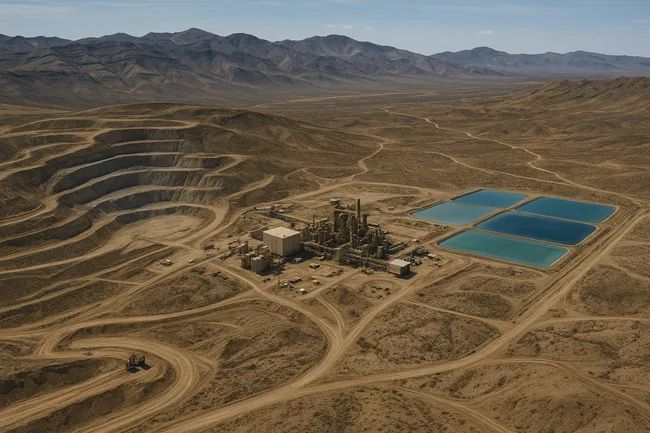
Saturn Metals Limited (ASX: STN) has released a second batch of high-grade reverse circulation drilling results from the newly discovered Titan Zone within its 100%-owned Apollo Hill Gold Project located near Leonora in Western Australia, reinforcing the structural thesis that higher-grade mineralisation can repeat across multiple lodes along the Iris Trend footwall system. The standout intercepts from this round include 15 metres at 5.53 grams per tonne gold from 10 metres depth and a narrower but sharply elevated 2 metres at 17.71 grams per tonne gold from 178 metres, figures that sit well above the deposit’s 0.51 grams per tonne average resource grade and carry meaningful implications for both the upcoming Mineral Resource update and the Definitive Feasibility Study currently in progress. Saturn Metals shares were trading around A$0.47 as of 16 March 2026, having gained more than 113% over the prior twelve months, though recent sessions showed a pullback of approximately 6% in a single day, suggesting the market is absorbing both the positive drill news and broader sector volatility. The timing of these results matters because Saturn Metals is racing to complete a resource upgrade in the second quarter of 2026 and finalise its Definitive Feasibility Study by the end of the year, with A$58.6 million in cash providing the runway to do both.
What does the Titan Zone discovery mean for the Apollo Hill resource base and its 2.24Moz estimate?
The Titan Zone sits within the Iris Footwall structural corridor, a geological setting that already hosts multiple named lodes including Iris, Ra, Tefnut, Wadget, and now Titan. What makes the current results strategically significant is not simply the grade headline but the geological interpretation underpinning them. Saturn Metals’ geologists note that mineralisation at Titan exhibits the same Archean lode gold characteristics that have governed gold concentration at Apollo Hill more broadly. Archean lode systems in Western Australia’s goldfields are known for their structural predictability once the host architecture is understood, and the presence of consistent quartz veining with carbonate-pyrite alteration along the lode trend suggests the Titan Zone is not an isolated anomaly. The most important word in the company’s characterisation is that the mineralisation remains open both down-plunge and along strike. That means the current drill results represent a partial view of a potentially larger body, and the infill programme now underway at 30-metre and 15-metre spacing is designed to convert the discovery into a resource block that can be formally modelled.
The existing Apollo Hill Mineral Resource stands at 137.1 million tonnes at 0.51 grams per tonne gold for 2.24 million ounces, with 82% classified in the higher-confidence Measured and Indicated categories. The Ore Reserve from the December 2025 Pre-Feasibility Study sits at 104.6 million tonnes at 0.47 grams per tonne for 1.59 million ounces. The Titan Zone results being fed into a mid-2026 resource update carry the potential to add higher-grade material that, even in modest volumes, could improve average grade across the pit shell and positively influence the economics in the Definitive Feasibility Study. A shift of even 0.02 to 0.03 grams per tonne in average recovered grade across a resource of this scale would have a material effect on net present value and internal rate of return at any assumed gold price. That context is what gives the Titan Zone discovery its financial relevance beyond the exploration headline.
How does the Iris Trend footwall geology create conditions for repeating higher-grade gold zones?
The Apollo Hill deposit’s Southern Corridor is structurally defined by the Iris Trend, a northeast-dipping contact zone between a schist unit to the west and mafic volcanic and intrusive rocks to the east. This contact architecture acts as a hydraulic conduit during gold mineralising events, and Archean lode systems in analogous settings across the Leonora-Wiluna Belt have repeatedly demonstrated the capacity to produce multiple stacked or parallel high-grade shoots along a single structural corridor. The Titan Zone appears to occupy a footwall position relative to the established Iris lode, a geometry that is classically prospective in these systems because footwall structures often focus higher fluid flux during late-stage mineralising pulses.
The 2-metre intercept at 17.71 grams per tonne gold including 1 metre at 33.90 grams per tonne, returned from hole AHRC1552, is worth examining in isolation for what it signals structurally. High-grade bonanza shoots in Archean lode systems are typically structurally controlled, correlating with dilation zones, fold hinges, or intersection points between subparallel structures. Their presence in early-stage drilling, before detailed structural geology has been mapped at tight spacing, is an exploration signal that warrants escalated follow-up. Saturn Metals has recognised this, with an additional approximately 2,000 metres of drilling planned before the end of March 2026 in the immediate vicinity of these discovery holes. The question for investors and observers is whether the Titan Zone represents a grade-additive shoot within an existing structural package or the first expression of a genuinely new structural corridor. The long section published with today’s announcement suggests the former is more likely, but the geology remains open.
What is the strategic significance of shallow high-grade intercepts for the Apollo Hill heap leach design?
Apollo Hill has been consistently characterised as a large-tonnage, low-strip, heap leach operation, and the Pre-Feasibility Study from December 2025 confirmed that commercial framing with a base case net present value of A$973 million at an A$4,300 per ounce gold price and an internal rate of return of 51%. That study is predicated on bulk mining economics, where grade is averaged across enormous volumes of mineralised material rather than selectively mined from narrow high-grade pods. The relevance of high-grade zones in that context is therefore not about selective mining for premium margin but about grade blending within the overall mine plan.
Shallow high-grade intercepts such as the 15 metres at 5.53 grams per tonne gold from just 10 metres depth are particularly useful in a heap leach context because they reduce the stripping burden in the early years of the mine plan, when capital is being repaid and project economics are most sensitive. Early-year ore that grades significantly above the resource average can effectively pull the payback period shorter, and Saturn Metals’ Pre-Feasibility Study already indicated a rapid payback within 2.3 years on the base case. A mine plan that incorporates a higher-grade near-surface zone like Titan would be expected to improve this figure further, assuming the grades hold through infill drilling and the zone achieves sufficient confidence for inclusion in the ore reserve.
How does the Apollo Hill DFS timeline and A$58.6M cash position change the risk profile for STN shareholders?
Saturn Metals completed a A$45 million institutional placement in late 2025 at A$0.58 per share, ending the year with a cash position of A$58.6 million. The company has stated this is sufficient to complete the Definitive Feasibility Study, which is targeted for the second half of 2026, while maintaining active exploration programmes including the current Titan Zone drilling. The implication for shareholders is that Saturn Metals is not a near-term funding story. Unlike many small-cap gold explorers in a similar development phase, the company does not need to return to equity markets for survival capital, which removes the dilution risk that has historically discounted comparable stocks.
The trajectory from DFS completion toward a final investment decision and project financing will be the next major value-realisation event. At that point, the size and grade of the Mineral Resource and Ore Reserve will directly influence the terms Saturn Metals can attract from lenders and project financiers. Higher-grade ore reserves command better debt-to-equity ratios and lower cost of capital in project finance, meaning each additional ounce of well-classified, higher-grade material discovered before the DFS is finalised has a compounding effect on project economics. The mid-2026 resource update incorporating the Titan Zone results will be a critical data point in this chain.
How does Saturn Metals’ Apollo Hill compare with nearby Leonora-belt gold projects advancing toward production?
The Leonora-Wiluna Belt hosts some of the most active gold development projects in Australia, with Northern Star Resources, Gold Fields, Genesis Minerals, and Vault Minerals all operating significant assets within the same regional belt. The belt’s 44-million-ounce gold endowment provides both context and competition for Saturn Metals’ development ambitions. Apollo Hill’s positioning as a heap leach project rather than an underground or conventional milling operation distinguishes it within this peer group. Heap leach processing is capital-efficient and suited to the shallow, bulk-tonnage, simple-metallurgy character of the Apollo Hill mineralisation, but it carries lower gold recovery rates than conventional processing, which is partly why the Pre-Feasibility Study used a conservative base case gold price to stress-test returns.
The discovery of high-grade pods such as the Titan Zone raises a longer-term strategic question that the Definitive Feasibility Study will need to address: whether a hybrid mine design, incorporating selective treatment of higher-grade zones through a supplementary processing route, could materially improve project economics without undermining the bulk-mining thesis. Companies operating larger neighbouring operations with existing processing infrastructure could also become relevant as potential acquirers or processing partners if Apollo Hill’s resource grows sufficiently. Saturn Metals has not publicly discussed partnership or acquisition scenarios, but a DFS demonstrating a nine-figure net present value and a resource approaching or exceeding 2.5 million ounces would make those conversations increasingly realistic.
What are the execution risks between current drilling and a funded mine development decision at Apollo Hill?
Several material execution risks sit between today’s drill results and a funded mine at Apollo Hill. The first is resource classification risk. The Titan Zone results currently cover 60-metre drill spacing, and infill drilling to 30 and 15 metres is underway. There is no guarantee that tight-spaced drilling will replicate the grades and widths returned at wider spacing. High-grade intercepts are notoriously sensitive to structural orientation, and early results in steeply dipping Archean systems can sometimes reflect preferred intersection angles rather than true continuity. The company’s decision to report down-hole widths with an estimated true-width conversion factor of approximately 60% is standard practice, but it introduces grade and thickness uncertainty that will only be resolved with additional data.
The second risk cluster relates to the Definitive Feasibility Study itself. Engineering consultant selection was scheduled for the first quarter of 2026, and DFS completion is targeted for the second half of the year. That is an ambitious timeline if resource drilling is ongoing simultaneously, because DFS mine planning typically requires a finalised and classified ore reserve as its foundation. Saturn Metals appears to be running exploration and feasibility work in parallel rather than sequentially, which accelerates the overall programme but introduces integration risk if late drill results require meaningful changes to the resource model after engineering work has commenced. The market will watch the Q2 2026 resource update closely as a leading indicator of whether the DFS timeline remains achievable. A resource update that substantially grows the high-confidence Indicated and Measured categories would validate the parallel-track approach; a result that materially expands the Inferred category instead would suggest more drilling is needed before the DFS can be finalised with adequate confidence.
STN market and trading context: stock performance against gold sector as DFS nears completion
Saturn Metals shares were indicated around A$0.47 as of 16 March 2026, having declined approximately 6% in the prior session and roughly 12% over the prior week, with a one-month change of around positive 4%. The 52-week performance tells a more constructive story, with the stock having risen more than 113% over the period, substantially outperforming both the broader ASX All Ordinaries Index and the Australian Metals and Mining sector. The twelve-month outperformance is attributable to the sequential de-risking events of 2025 and early 2026: the July 2025 resource upgrade to 2.24 million ounces, the A$45 million placement in late 2025, the December 2025 Pre-Feasibility Study release, and now a second round of high-grade Titan Zone results.
At A$0.47, Saturn Metals carries a market capitalisation of approximately A$298 million against a Pre-Feasibility Study net present value of A$973 million, implying a substantial discount to the base-case project value even before factoring in any Titan Zone resource addition. That discount is entirely normal for a company at this stage of the development cycle and reflects the execution risks described above: DFS completion, permitting, financing, and construction. However, the magnitude of the discount also suggests that positive DFS outcomes and successful resource growth between now and year-end could be meaningful catalysts. Analyst coverage of Saturn Metals remains limited for a company of its size and development stage, which can itself be a source of re-rating potential as institutional attention increases closer to a final investment decision. Investors should note that the stock’s beta of approximately 1.75 indicates amplified sensitivity to both gold price movements and broader market conditions, a characteristic typical of single-asset development-stage miners.
Key takeaways: what Saturn Metals’ Titan Zone results mean for the company, the project, and ASX gold investors
- The Titan Zone discovery at Apollo Hill represents a second round of confirmation that higher-grade gold mineralisation can concentrate structurally within the Iris Footwall Trend, with grade profiles materially above the 0.51 grams per tonne deposit average.
- Key intercepts of 15 metres at 5.53 grams per tonne from 10 metres and 2 metres at 17.71 grams per tonne from 178 metres are shallow, thick, and structurally coherent, meeting the criteria that typically translate to resource classification at infill spacing.
- Mineralisation remains open down-plunge and along strike, and 92 holes covering 15,849 metres have assays pending, meaning today’s announcement is a partial release from an active programme rather than a final summary.
- The Titan Zone results feed directly into the Q2 2026 Mineral Resource update, which will be the critical input for the Definitive Feasibility Study targeted for second-half 2026. Any uplift in average grade within the pit shell has an amplified effect on project NPV given Apollo Hill’s scale.
- Saturn Metals’ A$58.6 million cash position removes near-term dilution risk and provides full runway through DFS completion, a meaningful differentiation from peers at a comparable development stage.
- The Apollo Hill Pre-Feasibility Study confirmed a net present value of A$973 million and an IRR of 51% at a A$4,300 per ounce gold price, with payback within 2.3 years. Higher-grade resource additions from Titan have the potential to improve all three figures.
- At approximately A$0.47, Saturn Metals trades at a substantial discount to its Pre-Feasibility Study net present value, which is normal at this stage but also signals that DFS delivery and resource growth remain the primary catalysts for re-rating.
- Execution risk centres on whether infill drilling replicates early discovery intercept grades at tight spacing, and whether the DFS timeline holds while exploration activity continues in parallel.
- Apollo Hill’s position within the 44-million-ounce Leonora-Wiluna Belt means that as the resource grows toward and beyond 2.5 million ounces with improving grade, it enters a scale tier that attracts attention from larger gold producers with regional infrastructure and appetite for development assets.
- The broader strategic signal from repeated high-grade Titan Zone results is that Apollo Hill is not fully delineated. Continued drilling along the Iris Trend through 2026 should be monitored as a live indicator of how much further the resource can grow before the DFS closes out the exploration optionality.
Discover more from Business-News-Today.com
Subscribe to get the latest posts sent to your email.