


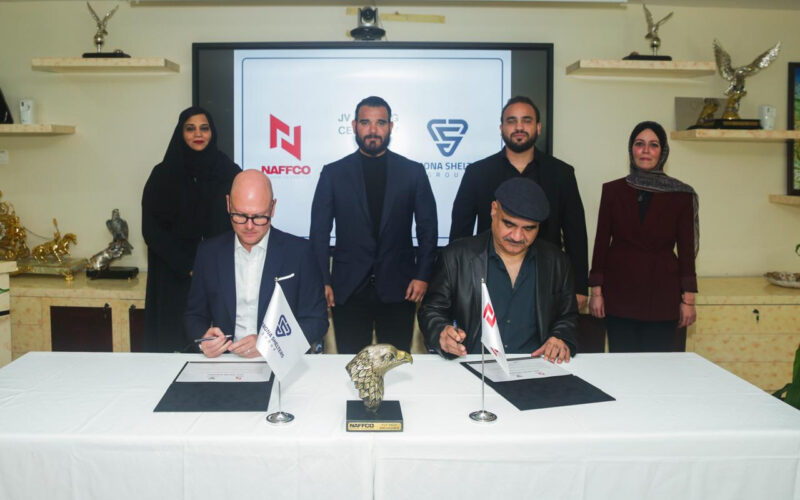
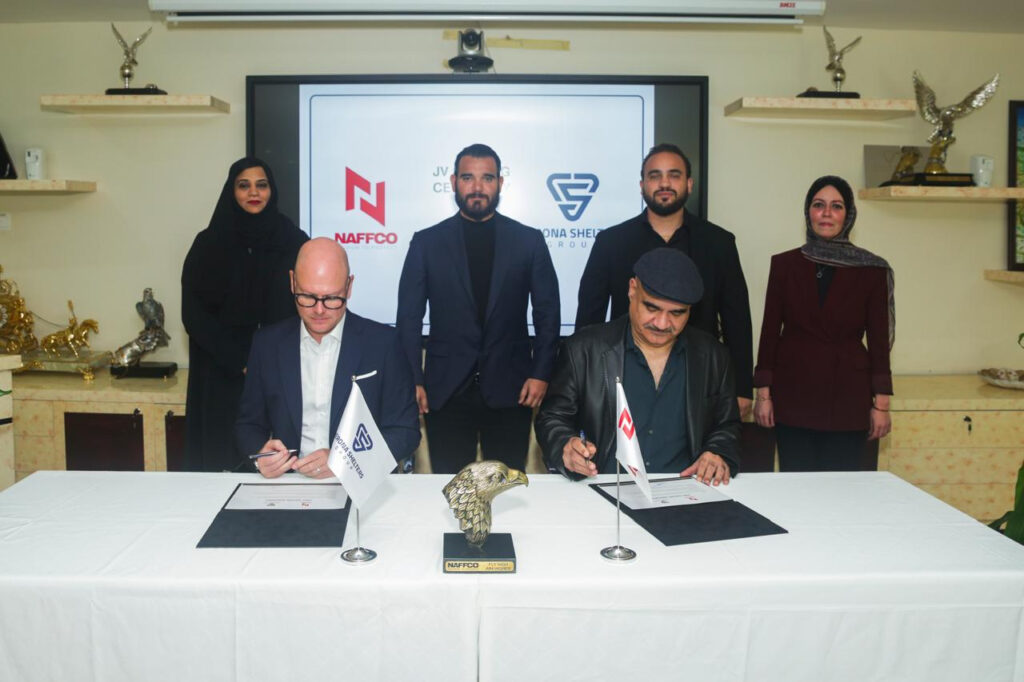
NAFFCO Group and Verona Shelters have formed a joint venture in the United Arab Emirates aimed at scaling the production of advanced civil defense and military shelter systems for global markets. The partnership combines NAFFCO Group’s large-scale safety engineering and industrial manufacturing footprint with Verona Shelters’ specialized protective shelter technologies developed over decades of deployment across more than 60 countries. Executives from both companies say the collaboration will significantly expand manufacturing capacity at a time when governments, infrastructure operators, and defense agencies are reassessing civil preparedness and protective infrastructure needs. The new venture is designed to supply shelter systems to markets across the Middle East, Europe, and North Africa while positioning the United Arab Emirates as a manufacturing hub for protective infrastructure.
The announcement reflects a broader shift in how governments and critical industries are thinking about resilience. Protective infrastructure that once existed primarily as Cold War-era civil defense planning is re-emerging as a policy priority in many regions, driven by geopolitical instability, urban vulnerability, and the rising frequency of climate-related emergencies. By building production capacity in the Gulf region, NAFFCO Group and Verona Shelters are attempting to position themselves at the center of that demand cycle.
Why are governments around the world suddenly prioritizing civil protection infrastructure again after decades of relative neglect?
Civil defense shelters have historically been associated with wartime preparedness, but the modern revival of shelter infrastructure is driven by a broader set of risk scenarios. Governments are increasingly considering shelters as part of national resilience planning that spans military conflict, terrorism, natural disasters, and infrastructure disruption. Urbanization has amplified vulnerability, with many major cities housing dense populations alongside energy facilities, transport hubs, and digital infrastructure that require protection.
Recent geopolitical tensions have also accelerated policy discussions around civilian protection. European governments in particular have revived interest in civil defense infrastructure following heightened regional security concerns. Countries in Northern and Eastern Europe have reassessed shelter capacity, evacuation planning, and urban resilience measures. The Middle East has similarly prioritized protective infrastructure in response to regional instability and evolving security dynamics.
In this environment, shelter systems are being reimagined as multi-purpose infrastructure rather than purely wartime installations. Modern designs increasingly incorporate ventilation systems, filtration technology, communication networks, and modular components that allow shelters to support both emergency response and peacetime disaster preparedness.
Verona Shelters’ leadership has emphasized that civil protection infrastructure is becoming a strategic investment area for governments. According to the company’s chief executive Marko Nokka, the partnership with NAFFCO Group allows shelter technologies that have already been deployed in multiple international markets to scale into regions where preparedness planning is becoming more urgent.
How does the NAFFCO Group and Verona Shelters partnership change the global manufacturing landscape for protective shelter systems?
The joint venture represents a manufacturing expansion strategy designed to combine industrial scale with specialized engineering expertise. NAFFCO Group has built a global reputation for producing fire protection equipment, emergency response vehicles, and safety systems. Its manufacturing operations in the United Arab Emirates support large volumes of equipment that are exported across multiple regions.
Verona Shelters, by contrast, has focused on specialized shelter technology since the late 1960s. The company has installed more than 300,000 shelter units worldwide, including hardened facilities designed to protect civilians and critical infrastructure during emergencies. Its solutions often integrate structural engineering, environmental control systems, and long-term lifecycle maintenance programs.
By combining these capabilities, the joint venture is attempting to create a vertically integrated manufacturing platform capable of producing shelter systems at industrial scale. NAFFCO Group provides the production capacity and regional manufacturing ecosystem, while Verona Shelters contributes specialized design knowledge and technology developed through decades of projects.
This model mirrors broader trends in the defense and resilience industries, where companies increasingly form partnerships to merge manufacturing scale with niche technological expertise. Such collaborations allow companies to address growing demand while maintaining technical specialization.
Why is the United Arab Emirates becoming an increasingly important hub for defense and resilience manufacturing?
Locating the manufacturing venture in the United Arab Emirates is not accidental. The country has spent the past decade positioning itself as a regional center for advanced manufacturing, defense technology, and industrial innovation. Government initiatives have encouraged companies to establish production facilities that serve both regional and international markets.
The Gulf region also provides geographic proximity to many of the markets that are currently investing in civil defense infrastructure. Governments across the Middle East and North Africa are upgrading emergency response capabilities and investing in protective systems for critical infrastructure, energy facilities, and urban centers.
From a logistical perspective, the United Arab Emirates offers access to global shipping routes, advanced industrial zones, and a growing defense manufacturing ecosystem. This combination allows companies like NAFFCO Group to supply international markets efficiently while maintaining production close to emerging demand centers.
The joint venture therefore reflects both industrial strategy and geopolitical positioning. By producing shelters in the Gulf region, the companies can respond more quickly to regional procurement cycles and large infrastructure projects.
How could rising geopolitical uncertainty reshape the global market for protective shelters and civil defense systems?
Demand for protective shelters historically fluctuates in response to geopolitical events. Periods of relative stability tend to reduce interest in civil defense infrastructure, while moments of heightened tension revive investment.
Recent global developments suggest that the market may be entering a sustained growth phase. Governments are increasingly recognizing that civilian protection infrastructure must adapt to new risk environments that include cyber disruption, energy infrastructure vulnerabilities, and urban emergency scenarios.
The growth of smart infrastructure also introduces new requirements. Modern shelter systems increasingly integrate monitoring technology, automated ventilation systems, and communication interfaces that allow them to connect with broader emergency management networks.
These technological upgrades transform shelters from static infrastructure into active components of emergency response systems. As a result, governments may treat shelter investments as part of broader resilience planning rather than standalone civil defense assets.
For companies involved in the sector, this shift opens opportunities beyond traditional military applications. Critical industries such as energy, transportation, and data infrastructure may also require protective facilities designed to ensure operational continuity during crises.
What strategic advantages does each partner bring to the joint venture and how could that shape its long-term growth trajectory?
The success of the partnership will depend on how effectively each company contributes its core strengths. NAFFCO Group brings manufacturing scale, established industrial facilities, and deep relationships with safety and emergency response sectors. Its experience in producing firefighting vehicles, emergency equipment, and safety systems positions it well to handle large production volumes.
Verona Shelters contributes specialized shelter engineering expertise that has been refined through decades of global deployments. The company’s experience in designing systems that meet international protection standards gives the partnership credibility in markets where regulatory compliance and reliability are critical.
The combination of these capabilities creates the potential for a manufacturing platform that can deliver both customized shelter designs and standardized high-volume production. That flexibility could prove important as governments seek tailored solutions that fit specific infrastructure environments.
Executives involved in the partnership have suggested that demand across the Gulf Cooperation Council region could grow significantly in the coming years. According to Verona Shelters’ Middle East leadership, regional developments are likely to drive increased investment in protective infrastructure.
Could the expansion of shelter manufacturing signal a broader shift toward resilience-focused infrastructure investment?
The joint venture highlights a broader trend in infrastructure planning. Governments are increasingly prioritizing resilience alongside economic development. Protective infrastructure, once considered niche or specialized, is becoming integrated into urban planning, defense strategy, and disaster preparedness frameworks.
This shift is likely to reshape procurement patterns. Rather than treating shelters as isolated assets, governments may integrate them into large infrastructure projects that include transportation systems, energy facilities, and urban development initiatives.
Such integration could expand the total addressable market for companies involved in shelter engineering and protective infrastructure. Projects that once focused purely on buildings or transportation systems may incorporate resilience features designed to protect populations and critical operations during emergencies.
For the NAFFCO Group and Verona Shelters partnership, this trend represents both opportunity and risk. Rapid demand growth could create new markets, but it will also attract competitors from construction, defense, and infrastructure engineering sectors.
Key takeaways on what the NAFFCO Group and Verona Shelters partnership signals for the global civil defense infrastructure market
- The joint venture reflects a renewed global focus on civil protection infrastructure as governments reassess preparedness strategies.
- Demand for modern shelter systems is expanding beyond military applications to include disaster preparedness and critical infrastructure protection.
- The United Arab Emirates is strengthening its role as a regional manufacturing hub for safety, defense, and resilience technologies.
- Combining NAFFCO Group’s industrial manufacturing capacity with Verona Shelters’ specialized engineering expertise creates a vertically integrated production platform.
- Growing geopolitical uncertainty is likely to sustain investment in protective infrastructure across Europe, the Middle East, and North Africa.
- Modern shelter systems increasingly integrate technology such as environmental control systems and communication networks, transforming them into active resilience infrastructure.
- The market for civil defense shelters could expand as urban resilience planning becomes a core government priority.
- Partnerships between industrial manufacturers and specialized technology providers are becoming a common model for scaling protective infrastructure solutions.
- Competition may intensify as construction firms, defense contractors, and engineering companies move into the resilience infrastructure sector.
- The joint venture positions both companies to capture demand from governments seeking large-scale deployment of modern shelter systems.
Discover more from Business-News-Today.com
Subscribe to get the latest posts sent to your email.