




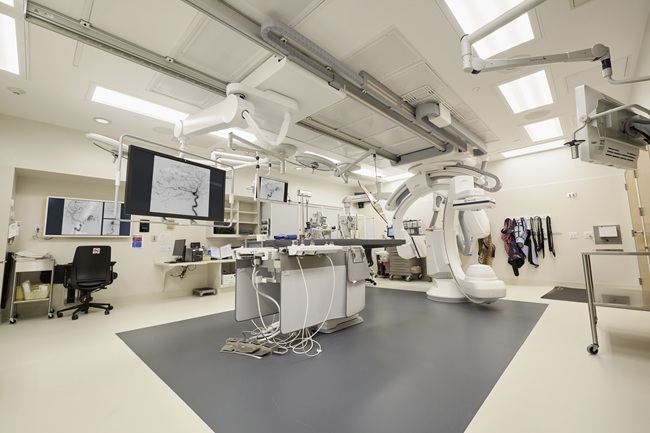
Children’s Minnesota has unveiled a new $2.5 million pediatric neurointerventional angiography suite in Minneapolis, introducing the region’s first facility dedicated specifically to minimally invasive neurovascular procedures for children. The investment expands the hospital system’s cerebrovascular and stroke treatment capabilities and positions the organization as a referral hub for complex pediatric neurological cases across the Upper Midwest. Hospital leadership says the technology will allow physicians to diagnose and treat pediatric stroke, vascular malformations, aneurysms, and certain brain tumors with far greater precision than traditional imaging tools. The move reflects a broader trend among leading pediatric health systems to invest in advanced imaging and minimally invasive treatment infrastructure as neurological disorders among children receive increasing clinical attention.
Why are pediatric hospitals investing heavily in specialized neuroangiography suites for stroke treatment?
The decision by Children’s Minnesota to establish a dedicated pediatric neuroangiography suite highlights an emerging shift in pediatric healthcare strategy. Historically, complex neurovascular procedures for children were often performed in facilities designed primarily for adults. While such centers could technically treat pediatric patients, they frequently lacked equipment calibrated for smaller anatomical structures and the unique physiological characteristics of children.
By contrast, the new biplane neuroangiography suite at Children’s Minnesota is designed specifically for pediatric neurointerventional procedures. The system generates high-resolution three-dimensional images of blood vessels in and around the brain, enabling physicians to visualize abnormalities such as aneurysms, arteriovenous malformations, blood clots, and vascular blockages with significantly improved detail.
This type of imaging precision is crucial because pediatric strokes often present differently from adult strokes. Symptoms can be subtle or easily misinterpreted, delaying diagnosis and treatment. A dedicated imaging environment allows physicians to rapidly identify cerebrovascular abnormalities and determine whether minimally invasive interventions such as catheter-based clot removal or vascular embolization are appropriate.
Healthcare systems increasingly view these investments not only as clinical improvements but also as strategic positioning. Specialized pediatric neurovascular capabilities can elevate a hospital into a regional referral center, drawing complex cases from a wide geographic area and strengthening its reputation among referring physicians.
How does biplane neuroangiography improve diagnosis and minimally invasive treatment of pediatric cerebrovascular disease?
Biplane neuroangiography systems differ from conventional imaging technologies by capturing simultaneous X-ray images from two angles. This dual-plane imaging capability provides physicians with more accurate spatial awareness during procedures involving delicate blood vessels inside the brain.
In the pediatric context, this precision becomes even more important. Children’s blood vessels are smaller and more fragile than those of adults, increasing the complexity of interventional procedures. The advanced imaging system allows neurointerventional surgeons to navigate microcatheters through these vessels while continuously visualizing their path in real time.
The suite’s imaging technology produces highly detailed vascular maps, which help physicians diagnose multiple conditions including stroke, aneurysms, arteriovenous malformations, and certain intracranial tumors. These insights allow clinicians to develop targeted treatment plans that can minimize surgical trauma and reduce recovery time.
Minimally invasive neurointerventional procedures are also associated with shorter hospital stays and fewer complications compared with open neurosurgery. For pediatric patients and their families, these benefits can significantly reduce both medical risk and emotional stress during treatment.
How is Children’s Minnesota positioning itself as a regional referral hub for pediatric cerebrovascular care?
Hospital leaders have made it clear that the new neuroangiography suite is not merely an equipment upgrade but part of a broader strategic initiative to expand Children’s Minnesota’s role in complex pediatric neurological care.
According to neurosurgical leadership at the organization, the goal is to ensure that children across the region can access advanced treatment without needing to travel long distances to major national institutions. By building specialized capabilities locally, the hospital system aims to attract referrals from community hospitals and regional pediatric centers that lack advanced neurointerventional infrastructure.
The move also reflects the increasing importance of multidisciplinary care in modern stroke treatment. Pediatric stroke programs typically involve neurologists, neurosurgeons, interventional radiologists, anesthesiologists, and rehabilitation specialists working in coordinated teams. A dedicated angiography suite functions as the technological backbone that enables these teams to perform complex procedures efficiently.
Children’s Minnesota already operates one of the largest pediatric health systems in the United States, serving patients from birth through young adulthood. Expanding its neurovascular program strengthens its position within the competitive landscape of pediatric specialty hospitals.
What role does advanced imaging play in the evolving field of pediatric neurointervention?
Pediatric neurointervention remains a relatively young medical subspecialty compared with adult neurovascular treatment. Historically, most clinical research and technological innovation focused on adult stroke and aneurysm care because these conditions were more common in older populations.
However, growing awareness of pediatric stroke and congenital vascular disorders has driven new research initiatives. International collaborations such as the International Pediatric Stroke Study are helping clinicians develop more standardized treatment protocols and improve long-term outcomes.
Advanced imaging technologies like the biplane angiography system installed at Children’s Minnesota are central to this evolution. These systems allow physicians to observe the brain’s vascular architecture in unprecedented detail, enabling earlier detection of abnormalities and more accurate risk assessment.
For pediatric patients with rare cerebrovascular conditions, such technological advances can be life-saving. Early diagnosis and intervention can prevent severe neurological damage and significantly improve long-term quality of life.
How does this investment build on Children’s Minnesota’s broader neurosurgery and imaging strategy?
The new neuroangiography suite builds on a series of technology investments made by Children’s Minnesota in recent years to strengthen its neurosurgical capabilities. In 2023, the health system introduced a pediatric hybrid intraoperative MRI neurosurgery suite that combines both moving-scanner and moving-patient imaging technologies within the same surgical environment.
That earlier installation allowed surgeons to obtain real-time MRI images during brain surgery without relocating patients to separate imaging rooms. When combined with the new angiography suite, the hospital now possesses an unusually comprehensive set of imaging tools for pediatric neurological procedures.
This integrated imaging infrastructure supports a more holistic approach to neurological care. Physicians can now evaluate vascular abnormalities, tumors, and other intracranial conditions using multiple complementary imaging modalities, improving diagnostic accuracy and treatment planning.
From a strategic perspective, such infrastructure investments also strengthen the hospital’s ability to participate in national research initiatives and clinical trials. Advanced imaging capabilities often serve as prerequisites for joining collaborative research networks studying rare neurological disorders.
Why are pediatric stroke programs becoming a growing priority for children’s hospitals in the United States?
Pediatric stroke remains far less common than adult stroke, but medical awareness of the condition has grown significantly over the past decade. Research indicates that thousands of children in the United States experience strokes each year, often linked to congenital heart defects, blood disorders, infections, or traumatic injuries.
Despite these risks, pediatric stroke has historically been underdiagnosed. Many symptoms mimic other neurological conditions or are mistaken for migraines, seizures, or developmental issues. Delays in diagnosis can worsen outcomes because timely treatment is critical to preserving brain function.
As a result, children’s hospitals across the country have begun developing dedicated stroke programs similar to those long established in adult medicine. These programs emphasize rapid diagnosis, specialized imaging, and minimally invasive interventions performed by trained neurointerventional teams.
The new angiography suite at Children’s Minnesota fits directly within this broader national movement. Hospitals are increasingly investing in infrastructure that allows them to treat pediatric cerebrovascular emergencies with the same level of technological sophistication available for adult patients.
What could this technology mean for future innovation in pediatric neurological care?
Looking ahead, the introduction of dedicated pediatric neuroangiography suites may help accelerate innovation across several areas of neurological medicine.
First, improved imaging capabilities can support earlier detection of rare vascular conditions in children, potentially enabling preventative treatments before life-threatening complications occur.
Second, minimally invasive neurointerventional techniques are likely to expand as imaging precision improves. Procedures that once required open surgery may increasingly be performed through catheter-based approaches guided by high-resolution imaging systems.
Finally, advanced imaging environments create opportunities for new clinical research. Physicians can study pediatric cerebrovascular diseases more closely, generating data that may lead to improved treatment protocols and long-term patient outcomes.
For Children’s Minnesota, the new suite signals both a clinical commitment and a strategic bet on the future of pediatric neurovascular care.
What are the key takeaways from Children’s Minnesota’s pediatric neuroangiography suite launch?
- Children’s Minnesota has launched a $2.5 million pediatric biplane neuroangiography suite, the first facility of its kind in the Upper Midwest dedicated to children’s neurovascular procedures.
- The suite enables high-resolution three-dimensional imaging of brain blood vessels, improving diagnosis and treatment of pediatric stroke, aneurysms, and vascular malformations.
- Minimally invasive neurointerventional procedures guided by this imaging technology can reduce surgical risk and shorten recovery times for pediatric patients.
- The investment strengthens Children’s Minnesota’s cerebrovascular and stroke program and positions the hospital as a regional referral center for complex pediatric neurological cases.
- Dedicated pediatric neuroangiography facilities remain rare in the United States, highlighting the strategic significance of this infrastructure investment.
- The technology complements the hospital’s earlier hybrid intraoperative MRI neurosurgery suite installed in 2023.
- Advanced imaging capabilities allow multidisciplinary teams to diagnose vascular abnormalities more precisely and plan targeted treatments.
- Pediatric stroke awareness is increasing nationwide, driving hospitals to build specialized programs similar to adult stroke centers.
- Participation in international research collaborations may expand as the hospital’s imaging infrastructure grows.
- The project signals a broader trend toward high-technology, minimally invasive approaches in pediatric neurological care.
Discover more from Business-News-Today.com
Subscribe to get the latest posts sent to your email.


