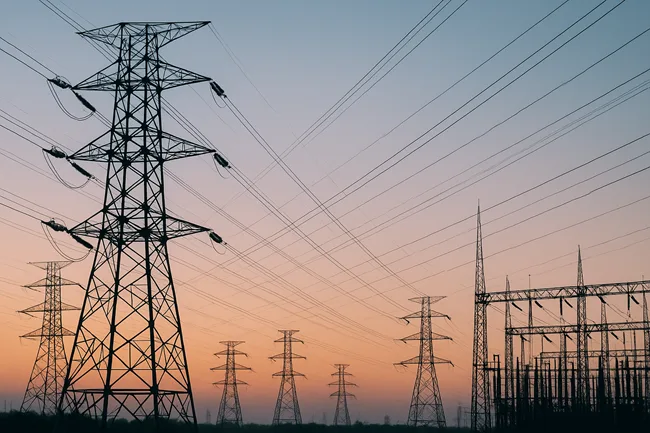
American Electric Power Company Inc. (NASDAQ: AEP) and FirstEnergy Corp. (NYSE: FE), through their transmission development platforms, have secured approval from PJM Interconnection for a major new high-voltage transmission project in central Ohio. The project, awarded through PJM’s 2025 Regional Transmission Expansion Plan process, involves roughly 300 miles of new 765 kilovolt lines and associated substation upgrades to support rapidly rising electricity demand in the greater Columbus region. Strategically, the approval signals a decisive pivot toward large-scale backbone grid investment as data centers, advanced manufacturing, and electrification strain existing infrastructure.
Why PJM Interconnection’s approval matters for grid capacity planning in fast-growing central Ohio
PJM Interconnection’s decision is less about a single project and more about a broader recalibration of how regional grid operators are responding to structural load growth. Central Ohio has emerged as one of the fastest-growing electricity demand pockets in the PJM footprint, driven by hyperscale data centers, semiconductor-adjacent manufacturing, logistics hubs, and electric vehicle adoption. Traditional incremental upgrades are no longer sufficient when load growth is measured in gigawatts rather than megawatts.
By selecting a 765 kilovolt solution, PJM is effectively endorsing a high-capacity, long-life approach to grid expansion rather than a patchwork of lower-voltage reinforcements. Extra-high-voltage lines allow large amounts of power to be moved efficiently across long distances, reducing congestion and lowering the risk of localized reliability failures. In planning terms, this is PJM acknowledging that Ohio’s growth trajectory is not cyclical but structural.
How the Transource Energy and FirstEnergy Transmission joint model changes execution dynamics
The project will be developed through Grid Growth Ventures LLC, a newly formed joint venture bringing together Transource Energy and FirstEnergy Transmission. Transource Energy itself is majority-owned by American Electric Power Company, with Evergy Inc. as a minority partner, while FirstEnergy Transmission is owned by FirstEnergy Corp and Brookfield Super-Core Infrastructure Partners.
This structure matters because competitive transmission projects increasingly demand scale, balance-sheet strength, and execution experience. By pooling development expertise and capital access, the partners reduce single-entity risk while improving their ability to deliver complex, multi-year infrastructure. From PJM’s perspective, awarding the project to a collaborative vehicle rather than a standalone developer increases confidence around timelines, cost discipline, and stakeholder coordination.
What 765 kilovolt transmission signals about long-term U.S. grid architecture
The return of large-scale 765 kilovolt builds is notable in itself. Over the past two decades, U.S. grid expansion has often favored incremental upgrades, reconductoring, or lower-voltage additions due to permitting complexity and public resistance. However, the economics are shifting. One 765 kilovolt line can move power equivalent to multiple lower-voltage corridors while using significantly less land overall, an increasingly important factor in densely developed regions.
For policymakers and planners, this project reinforces a growing consensus that meeting electrification and digital economy goals requires fewer but more powerful transmission corridors. It also aligns with federal guidance encouraging regional, cost-effective solutions rather than siloed utility builds that externalize congestion costs.
Why central Ohio has become a focal point for transmission investment decisions
Columbus and its surrounding counties sit at the intersection of affordable land, favorable tax policy, and proximity to major population centers. That combination has attracted cloud service providers, advanced manufacturers, and logistics operators at a pace that existing grid assets were never designed to handle. Electricity demand from a single hyperscale data center campus can rival that of a mid-sized city.
For utilities like American Electric Power Company and FirstEnergy Corp, central Ohio represents both opportunity and risk. The opportunity lies in rate-base growth and long-duration regulated returns. The risk is that insufficient grid capacity could stall economic development, invite regulatory scrutiny, or force costly emergency measures. PJM’s approval effectively de-risks that trajectory by putting a long-term solution in motion.
How this project fits into American Electric Power Company’s capital allocation strategy
American Electric Power Company has already telegraphed an aggressive capital investment plan, with expectations of deploying tens of billions of dollars across transmission and distribution over the second half of the decade. Securing a PJM-approved competitive transmission project reinforces the company’s positioning as a backbone grid builder rather than just a local utility operator.
From a financial standpoint, transmission assets typically offer stable, regulated returns with lower volumetric risk than generation. For American Electric Power Company, expanding its extra-high-voltage footprint supports earnings visibility while aligning with federal and regional policy priorities around grid resilience and electrification.
What FirstEnergy Corp gains from expanding its transmission platform beyond legacy territories
FirstEnergy Corp has spent years repositioning itself toward a more transmission-centric business model. Participation in this Ohio project strengthens that pivot by embedding the company deeper into regional grid expansion efforts rather than confining growth to legacy service areas.
Transmission investments also carry reputational implications. Successfully delivering a high-profile PJM project enhances FirstEnergy Corp’s credibility with regulators and institutional investors after a period in which governance and strategic focus were closely scrutinized by the market. Execution, however, will be closely watched.
How investors are positioning around regulated transmission assets amid rising U.S. grid capital spending
Investor response to large transmission approvals is typically muted in the short term, but constructive over the long arc. Both American Electric Power Company and FirstEnergy Corp trade largely on regulated earnings stability, capital expenditure visibility, and balance-sheet discipline rather than project-specific upside.
For American Electric Power Company, transmission expansion reinforces its premium relative to peers with heavier merchant exposure. For FirstEnergy Corp, continued progress on regulated infrastructure is central to maintaining investor confidence in its strategic reset. The key sentiment driver will not be the announcement itself, but subsequent clarity on cost recovery, timelines, and regulatory alignment.
What execution risks could still disrupt large regulated transmission projects despite policy support
Despite favorable regulatory signals, execution risk remains material. Large transmission projects face permitting delays, community opposition, supply chain constraints, and potential cost overruns. While 765 kilovolt lines reduce land use overall, their scale can amplify local resistance during siting processes.
Coordination among multiple partners also introduces governance complexity. Grid Growth Ventures will need to demonstrate clear decision-making frameworks and accountability to avoid delays that erode project economics. For PJM and regulators, timely delivery will be as important as technical specifications.
What this approval reveals about the future of regional transmission planning in the United States
Beyond Ohio, the project offers a template for how regional transmission planning may evolve nationally. PJM’s willingness to approve a large, competitive, extra-high-voltage build suggests growing acceptance that the energy transition and digital economy require proactive, not reactive, grid investment.
As other regions confront similar load growth from data centers and electrification, the central Ohio model could be replicated, accelerating a new wave of transmission superhighways across the country.
Key takeaways: What the PJM-approved Ohio transmission project means for utilities, investors, and the U.S. grid
- PJM Interconnection’s approval reflects a strategic shift toward large-scale solutions for structural load growth rather than incremental upgrades.
- The 765 kilovolt design signals renewed confidence in extra-high-voltage transmission as a long-term backbone for electrification and digital demand.
- American Electric Power Company strengthens its position as a national transmission builder with regulated earnings visibility.
- FirstEnergy Corp advances its transmission-centric strategy and deepens regional relevance beyond legacy footprints.
- Central Ohio’s data center and manufacturing boom is now formally embedded in PJM’s long-term planning assumptions.
- Joint venture execution through Grid Growth Ventures reduces single-entity risk but adds coordination complexity.
- Investor sentiment will hinge on cost recovery clarity and permitting progress rather than headline announcements.
- The project sets a precedent for future regional transmission approvals across the United States.
Discover more from Business-News-Today.com
Subscribe to get the latest posts sent to your email.