RTX Corporation (NYSE: RTX) announced that its subsidiary RTX BBN Technologies has secured a contract from the U.S. Department of War, in partnership with the National Spectrum Consortium, to lead a multi-team Advanced Spectrum Coexistence Demonstration program. The effort aims to build a real-time, secure spectrum management prototype that allows critical national security radars and commercial 5G networks to share the 3.1 to 3.45 GHz band without degrading performance. The strategic relevance is immediate: as Washington moves to unlock mid-band spectrum for commercial growth, the Pentagon must ensure that radar readiness and public safety are not compromised.
The contract places RTX Corporation at the center of one of the most politically sensitive technology transitions in U.S. telecom and defense policy: how to monetize valuable mid-band spectrum without blinding the very radars that underpin maritime safety, missile defense, and weather tracking.
Why does the 3.1 to 3.45 GHz spectrum decision force the Pentagon and telecom operators into real-time coexistence?
The 3.1 to 3.45 GHz band sits squarely in the mid-band sweet spot that mobile operators crave. It offers the balance of coverage and capacity needed for high-performance 5G networks. At the same time, this band is heavily used by defense radar systems that monitor airspace, coastlines, and weather patterns.
Historically, spectrum sharing has often meant static allocation or blunt-force exclusion zones. Commercial networks would be switched off near sensitive installations. Radars would operate in protected silos. That model is increasingly unsustainable as data demand surges and policymakers look to extract economic value from underutilized federal spectrum.
Current coexistence tools, as described in the program outline, can take tens of minutes to detect interference, negotiate new allocations, and reconfigure systems. In spectrum terms, that is an eternity. A radar missing a target for even seconds can pose safety risks. A 5G network losing capacity for minutes can degrade service across urban corridors.
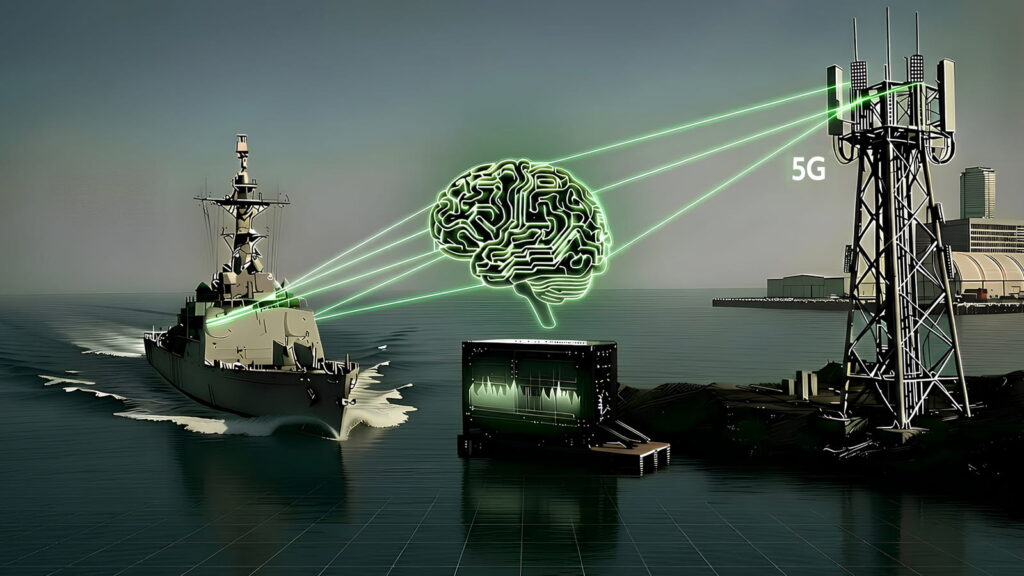
RTX BBN Technologies’ mandate is to compress that response cycle from minutes to seconds through a smart spectrum manager capable of detecting radar activity, predicting interference risk, and automatically shifting 5G traffic away from conflict zones.
This is not merely a technical upgrade. It represents a shift from reactive coordination to predictive, automated spectrum governance.
How does RTX BBN Technologies plan to deliver real-time, automated spectrum sharing at scale?
The program is structured in phases. In phase one, the RTX BBN Technologies-led team will build a foundational smart spectrum manager. This initial model will detect when a radar is active and assess whether a nearby 5G signal is likely to interfere. If risk thresholds are breached, the system will automatically redirect or reshape 5G traffic within seconds.
Phase two escalates ambition. The prototype will integrate advanced signal processing, machine learning models, and dynamic spectrum management tools to create a self-managing platform operating under preset policy rules. The goal is minimal human intervention and continuous optimization.
The team composition signals seriousness. Raytheon Advanced Technology will supply real radar signals and test environments, anchoring the program in operational realism. Ericsson Federal Technologies Group will ensure 5G network adjustments remain commercially viable. Federated Wireless brings dynamic spectrum access expertise, while Purdue University and Novowi contribute machine learning and real-time sensing models. Signal Processing Technologies adds interference cancellation and localization capabilities.
RTX BBN Technologies will integrate these elements and embed a risk management function designed to balance commercial capacity gains with incumbent radar protection.
The technical performance targets are aggressive. The team aims for a 50 percent increase in usable commercial 5G capacity in the shared band, a 20 decibel reduction in unwanted interference to radars, and a 1,000-fold improvement in 5G link quality when both systems operate simultaneously.
If even partially achieved, these metrics would redefine expectations for federal-commercial spectrum coexistence.
What does this contract signal about RTX Corporation’s broader defense and digital infrastructure strategy?
For RTX Corporation, this award reinforces a strategic pivot toward software-defined defense capabilities layered on top of hardware dominance.
RTX BBN Technologies has a legacy of foundational digital innovation, from early internet research to advanced cryptographic networks. By leading a spectrum coexistence initiative, RTX Corporation is positioning itself not just as a radar manufacturer but as an architect of the invisible policy and control layers that will govern contested electromagnetic environments.
This matters because spectrum is becoming a contested operational domain. As commercial networks proliferate and adversaries invest in electronic warfare, the ability to dynamically sense, predict, and mitigate interference will be core to national resilience.
In practical terms, this initiative may also protect and enhance the long-term value of RTX Corporation’s radar portfolio. If policymakers become convinced that advanced coexistence systems can safeguard mission-critical assets, pressure to restrict commercial access to federal bands may ease. That would reduce regulatory friction and political risk for both defense contractors and telecom operators.
The delivery of a cloud or edge-based sandbox version of the spectrum access system further hints at exportable, modular software platforms that could be deployed across allied nations facing similar spectrum pressures.
How could real-time spectrum coexistence reshape U.S. telecom capacity and national security risk models?
The long-running policy debate around mid-band spectrum has often been framed as a zero-sum contest between economic growth and defense readiness. Opening the 3.1 to 3.45 GHz band to commercial operators promised billions in economic value but raised alarms about degraded radar performance.
A working, validated coexistence platform would fundamentally change that calculus. Instead of carving out static buffers, regulators could permit dynamic sharing with quantifiable, monitored risk.
For telecom operators, a 50 percent increase in usable 5G capacity in a congested mid-band segment would materially improve network economics, particularly in dense urban markets. That could defer capital expenditure on new spectrum acquisitions or densification.
For defense planners, a 20 decibel reduction in unwanted interference and near-instantaneous mitigation would reduce the probability of missed detections or degraded tracking during peak civilian usage.
The second-order effect is institutional. If real-time coexistence becomes technically credible, future spectrum auctions may increasingly assume that federal and commercial users can share bands rather than operate in isolation.
That shifts bargaining power and budget assumptions across agencies.
What are the execution risks and policy hurdles facing RTX BBN Technologies and its consortium partners?
Ambition in electromagnetic engineering often collides with real-world complexity. Laboratory performance does not always translate to field reliability, especially across diverse radar platforms and commercial network configurations.
Integration risk is non-trivial. Aligning defense-grade radar systems with commercial 5G infrastructure involves hardware constraints, legacy software stacks, and security protocols that were never designed for tight interoperability.
Machine learning models trained on limited datasets may struggle in edge cases, particularly under adversarial conditions. There is also the cybersecurity dimension. A self-managing spectrum platform must be hardened against manipulation, spoofing, or denial-of-service attacks that could create artificial interference signals.
Policy risk remains as well. Congressional oversight, interagency rivalry, and lobbying from telecom carriers and defense stakeholders can all shape deployment timelines. Even a technically successful prototype may face a prolonged validation and certification pathway before operational rollout.
For RTX Corporation, reputational risk is manageable but real. Failure to deliver promised interference reductions could intensify scrutiny over broader spectrum liberalization efforts.
How are investors likely to interpret RTX Corporation’s spectrum coexistence contract?
RTX Corporation is a publicly traded defense and aerospace company whose valuation is driven primarily by large-scale weapons systems, avionics, and long-cycle defense contracts. A research-driven spectrum coexistence award is unlikely to materially shift near-term earnings expectations.
However, the contract reinforces a narrative that RTX Corporation is investing in high-value, software-centric capabilities aligned with future defense doctrines. Markets tend to reward contractors that demonstrate relevance in emerging domains such as cyber, electronic warfare, and networked systems.
The initiative also intersects with commercial telecommunications growth, potentially positioning RTX Corporation at a nexus of federal and private-sector infrastructure modernization.
Investors will likely monitor whether this demonstration evolves into a scalable procurement program. If the Advanced Spectrum Coexistence Demonstration transitions into multi-year deployment across operational radars and commercial networks, revenue visibility could expand.
In the meantime, the award supports the thesis that spectrum governance is becoming a core defense competency rather than a peripheral regulatory issue.
What are the key takeaways on what this development means for RTX Corporation, telecom operators, and U.S. spectrum policy?
- RTX Corporation is positioning itself as a central integrator of real-time spectrum management systems at a critical moment in U.S. mid-band policy.
- The 3.1 to 3.45 GHz band decision forces defense and telecom sectors into deeper technical coordination rather than static separation.
- Achieving seconds-level interference mitigation would materially improve both radar safety and 5G network economics.
- The multi-partner consortium model reduces single-point technical risk but increases integration complexity.
- A 50 percent increase in usable 5G capacity could alter capital expenditure assumptions for commercial operators.
- A 20 decibel interference reduction target sets a measurable benchmark for policymakers evaluating spectrum liberalization.
- Success would strengthen arguments for dynamic federal-commercial sharing in future spectrum allocations.
- Failure would likely reinforce conservative, exclusion-based spectrum protection models.
- For investors, the near-term financial impact is modest, but the strategic positioning in spectrum governance could compound over time.
- The broader industry signal is clear: spectrum is no longer just a regulatory asset class but an operational domain requiring real-time intelligence and automation.
Discover more from Business-News-Today.com
Subscribe to get the latest posts sent to your email.