




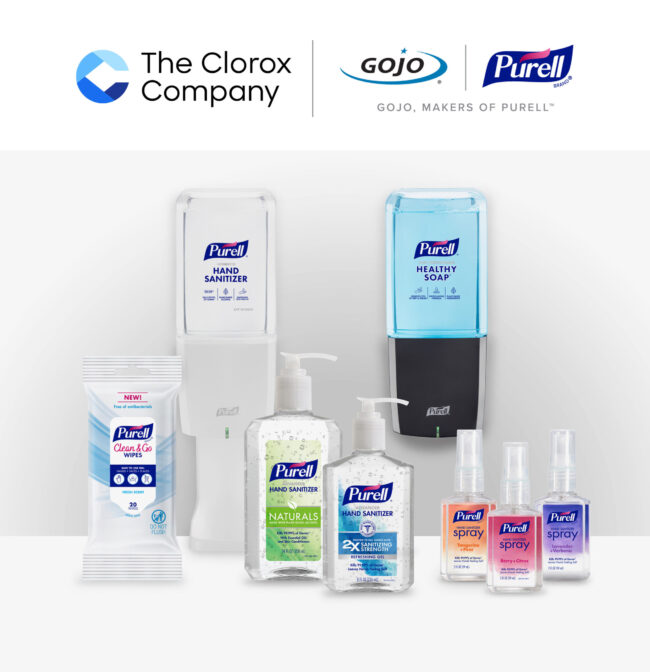
The Clorox Company (NYSE: CLX) announced a definitive agreement to acquire GOJO Industries, the privately held maker of Purell-branded skin hygiene products, in a $2.25 billion cash deal. The acquisition brings Clorox a category-leading B2B and retail hygiene brand, enhancing its Health and Wellness portfolio and reinforcing its IGNITE long-term strategy for profitable growth.
Clorox will pay $2.25 billion for GOJO Industries, which includes anticipated tax benefits valued at $330 million, yielding a net purchase price of $1.92 billion. GOJO Industries, headquartered in Akron, Ohio, has nearly $800 million in annual revenue and a longstanding B2B-centric distribution model that Clorox sees as both accretive and strategically adjacent to its consumer health business.
Why does Clorox believe acquiring GOJO and the Purell brand strengthens its long-term strategic advantage?
The acquisition marks a structural deepening of Clorox’s presence in health and hygiene, adding a robust skin care vertical to its legacy cleaning portfolio. The company sees Purell not just as a strong standalone brand but as a platform for adjacent category innovation, particularly in skin antiseptics and B2B infection control.
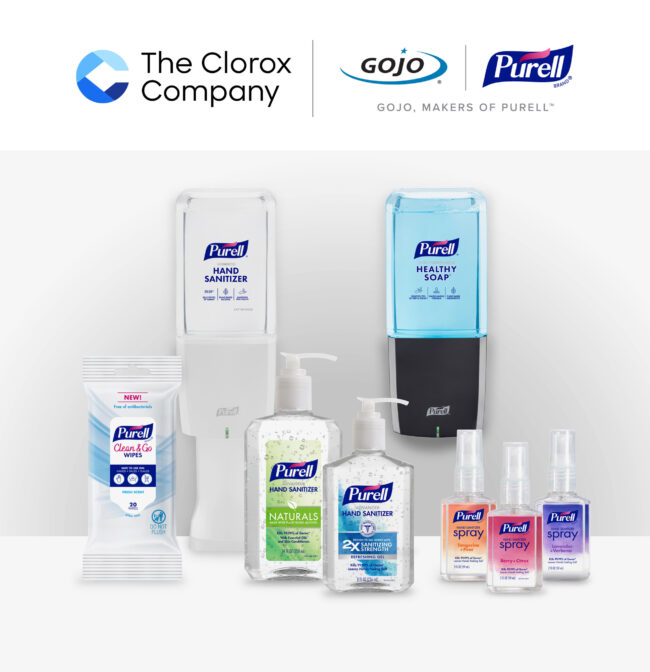
Clorox executives emphasized that the GOJO acquisition is meant to scale its fastest-growing segment—Health and Wellness—while reinforcing brand trust in high-margin institutional verticals like healthcare, education, and food service. With Purell holding the number-one share in hand sanitizers across both B2B and consumer markets, the asset offers dual-channel defensibility and immediate margin contribution.
By anchoring GOJO’s B2B operations under its Health and Wellness umbrella, Clorox gains a pathway to stable, recurring revenues supported by approximately 20 million installed soap and sanitizer dispensers across commercial settings. This embedded footprint enables Clorox to pursue downstream margin optimization through dispenser refills, product innovation, and customer retention strategies that mirror a razor-and-blade model.
How does GOJO’s B2B distribution model align with Clorox’s portfolio evolution and channel strategy?
More than 80 percent of GOJO’s revenue is derived from B2B channels, giving Clorox a rare opportunity to materially rebalance its revenue mix toward commercial, institutional, and healthcare-driven demand profiles. GOJO’s customer base is sticky, not only due to high product usage in regulated environments but also because of the physical lock-in of its proprietary dispensing systems.
Clorox, which has traditionally leaned on mass retail for growth, has been seeking ways to diversify channel exposure and de-risk category volatility. In this context, GOJO’s B2B backbone offers a countercyclical ballast that could smooth revenue seasonality and increase visibility in forecasting and working capital planning.
GOJO also brings advanced R&D and regulatory capabilities that are highly relevant in healthcare and food-handling sectors—areas where compliance, efficacy, and formulation transparency are key purchasing drivers. This complements Clorox’s own clinical-facing assets and positions it to deepen relationships with hospital systems and institutional procurement teams.
What retail growth opportunities does Clorox see for Purell under its platform?
While GOJO built its reputation on institutional relationships, the Purell brand has also achieved broad consumer recognition and commands strong brand equity in retail. Clorox executives believe they can unlock underleveraged upside in the retail channel by applying the company’s expertise in consumer segmentation, trade promotion, and omnichannel marketing to scale Purell’s presence in supermarkets, pharmacies, and e-commerce.
Retail margin improvement could be driven by innovation in form factors, cross-branding with other Clorox assets (such as Glad or Burt’s Bees), and by leveraging shelf-space relationships that GOJO previously lacked. Clorox also anticipates cost synergies from integrated distribution and sourcing optimization that will reduce friction in retail fulfillment.
The acquisition is expected to generate at least $50 million in run-rate cost synergies, a figure that could expand over time with SKU harmonization and backend systems integration. Clorox projects the deal will be accretive to EBITDA margins once synergies are realized, with neutral EPS impact in year one and accretion from year two onward.
How does this transaction fit into Clorox’s broader capital allocation and balance sheet strategy?
Clorox intends to finance the GOJO acquisition primarily through debt, raising questions about leverage tolerance and interest expense in a still-volatile rate environment. The company did not disclose specific financing instruments but reaffirmed that it expects the transaction to be completed before the end of Fiscal Year 2026, pending regulatory approval.
The effective adjusted EBITDA multiple, net of tax benefits and expected synergies, is 9.1x—a valuation Clorox believes is justified given the recurring revenue base and high category trust of the Purell brand. For institutional investors, that signals both capital discipline and an intent to deploy balance sheet strength into synergistic M&A rather than speculative category entry.
Clorox reaffirmed its Fiscal Year 2026 outlook, originally issued in November 2025, and confirmed that the GOJO acquisition will not alter its guidance for net sales or earnings per share. This indicates management sees limited near-term disruption from integration activities and expects the transaction to be operationally neutral in its first year.
What does the GOJO deal signal about Clorox’s strategic direction and competitive positioning?
The acquisition reinforces Clorox’s pivot away from saturated household staples toward higher-margin health categories that straddle both consumer and institutional demand. This shift echoes similar moves by peers in the consumer packaged goods sector, including Procter & Gamble’s increased focus on wellness and Unilever’s rationalization of its household and beauty portfolios.
By absorbing GOJO, Clorox not only strengthens its defensible positions in skin hygiene but also gains a moat around procurement relationships and embedded dispenser infrastructure that competitors would find difficult to replicate quickly.
Moreover, the cultural alignment between GOJO and Clorox appears to have been a key factor in sealing the deal. GOJO will remain headquartered in Ohio, and its leadership, including CEO Carey Jaros, emphasized continuity and shared values during the announcement. That may help de-risk early integration and protect morale across legacy GOJO teams.
What are the execution and regulatory risks Clorox must navigate post-acquisition?
From an integration standpoint, Clorox must harmonize two different commercial cultures—one rooted in fast-moving consumer retail and the other in relationship-heavy institutional B2B. Balancing product standardization with tailored B2B solutions could present early friction.
On the regulatory front, while the transaction is not expected to trigger significant antitrust hurdles due to its category adjacency, Clorox must still demonstrate to regulators that the deal will not reduce competition in key procurement-heavy verticals such as healthcare and public sector cleaning services.
The company will also need to maintain Purell’s brand equity and efficacy perception—particularly in a post-pandemic landscape where consumers and institutions alike remain sensitive to claims about safety, formulation, and scientific backing.
What does Clorox’s acquisition of GOJO Industries mean for the health and hygiene sector in 2026?
- Clorox is acquiring GOJO Industries for $2.25 billion, adding the Purell brand to its Health and Wellness portfolio.
- The deal is net-valued at $1.92 billion after tax benefits and is expected to close before the end of Fiscal Year 2026.
- GOJO brings a stable, $800 million revenue base primarily from recurring B2B sales and installed dispenser infrastructure.
- Clorox aims to accelerate Purell’s retail growth using its consumer brand-building and distribution capabilities.
- The acquisition is expected to generate at least $50 million in run-rate cost synergies.
- The transaction is margin-accretive after synergies and will contribute positively to adjusted EPS in year two.
- Clorox is using debt to fund the acquisition, reflecting a confident capital allocation stance despite rate volatility.
- The deal signals a strategic pivot toward high-margin, health-centric categories that straddle consumer and institutional markets.
- GOJO’s Ohio base will remain operational, with integration focused on preserving culture and execution continuity.
- Investor sentiment is likely to be cautiously optimistic, given the deal’s earnings neutrality in year one and brand stability.
Discover more from Business-News-Today.com
Subscribe to get the latest posts sent to your email.
