





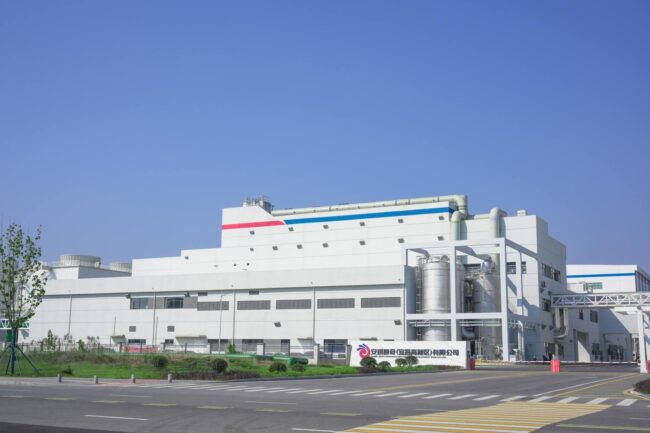
Angel Yeast Co., Ltd. (SH600298), the Chinese multinational known for its leadership in yeast and fermentation solutions, has officially begun trial production at its new specialty yeast manufacturing facility in the Baiyang Biotechnology Park, located in the Yichang High-tech Zone. With an annual designed capacity of 8,500 tons, the site marks a significant scaling-up of Angel Yeast’s specialty yeast footprint and solidifies its ambition to become a key player in the global precision fermentation and biomanufacturing sectors.
The launch completes Angel Yeast’s full-chain development model, spanning laboratory research, pilot-scale validation, and mass production. Alongside the facility, the company has also unveiled a new Brewing Functional Microorganism Pilot Test Platform, a state-of-the-art environment tailored for bridging microbial R&D with industrial application. The twin rollouts mark a milestone in Angel Yeast’s transition from conventional ingredient production to high-value bioprocess innovation, targeting sectors such as craft brewing, wine and spirits, fuel ethanol, and biomass energy.
What are the strategic capabilities of Angel Yeast’s new specialty yeast production facility in Yichang?
The newly commissioned plant in Yichang has been designed to meet some of the most stringent microbiological standards in the industry. According to Angel Yeast, the facility operates at a ten-thousand-level air cleanliness rating, a threshold that denotes highly sterile conditions and minimal particulate contamination. This level of control is critical in specialty yeast production, where minor variations in microbial purity can dramatically affect downstream fermentation behavior and final product quality.
The production architecture features complete automation across core operations, including material feeding, fermentation, downstream separation, packaging, and storage. Pressurized feeding tanks are used to maintain nutrient stability, preventing contamination of essential components such as nitrogen, phosphorus, and potassium. This infrastructure enables Angel Yeast to deliver consistent, scalable batches of high-purity specialty yeast while reducing operational variability and improving reproducibility, which are two attributes that are crucial in advanced brewing and bioenergy applications.
Qin Benguo, who serves as Assistant Director of Specialty Yeast Production at Angel Yeast’s Yichang-based subsidiary, emphasized the role of sterile nutrient storage and automated handling systems in ensuring high-quality output. The combination of real-time monitoring, environmental controls, and production automation is expected to yield higher fermentation efficiency and better yield-to-cost ratios for customers in high-precision sectors.
How is Angel Yeast addressing brewing innovation through its pilot-scale fermentation platform?
In parallel with the new production line, Angel Yeast has launched its Brewing Functional Microorganism Pilot Test Platform. This platform simulates end-use fermentation environments and serves as an advanced testbed for industrial clients seeking to shorten development cycles and validate fermentation innovations under controlled, factory-like conditions. The pilot platform replicates the complexities of actual brewery operations while eliminating inconsistencies commonly associated with on-site trials, such as operator variability, ambient contamination, and scheduling delays.
Luo Xinjie, Director of Brewing Technical Support at Angel Yeast’s Food and Fermentation Business Unit, noted that the platform is equipped with integrated real-time monitoring capabilities that track microbial dynamics and flavor compound evolution throughout the fermentation process. This level of visibility allows researchers and product developers to adjust strain formulations, optimize nutrient combinations, and fine-tune fermentation kinetics with a degree of precision that was previously only achievable in tightly controlled laboratory settings.
By offering scalable, reproducible fermentation simulations, the pilot platform enables Angel Yeast and its partners to accelerate product iteration cycles, reduce technical risk, and bring new formulations to market faster. This is particularly critical in categories like craft beer, baijiu, and specialty wines, where even minor deviations in fermentation can result in substantial changes to flavor, aroma, and product stability.
Why is Angel Yeast targeting the biomanufacturing and clean energy sectors with this infrastructure?
Beyond traditional beverage fermentation, Angel Yeast’s upgraded capabilities are aimed squarely at emerging applications in the bioeconomy. With the new specialty yeast capacity, the company plans to serve clients in the biomass energy, bioethanol, and bioprocessing industries, where demand is growing for stable, performance-optimized microbial inputs. Specialty yeasts play a critical role in these sectors, enhancing ethanol yield, minimizing batch-to-batch variability, and enabling fermentation under harsher operating conditions such as high gravity or variable pH.
The biomanufacturing space is undergoing a rapid transformation as industrial producers shift away from fossil-derived chemical synthesis and toward microbial-based pathways. Angel Yeast’s infrastructure investments are designed to meet this shift, offering clients both high-volume production of specialty strains and a pilot-scale environment to validate performance under real-world constraints.
In the baijiu market, which is China’s largest distilled spirit segment, Angel Yeast’s solutions have already demonstrated measurable performance improvements. Yield gains, fermentation stability, and flavor reproducibility have all been enhanced by tailored yeast strains developed through this new integrated pipeline. The company expects similar outcomes in fuel ethanol production, where fermentation uptime, conversion rates, and downstream separation efficiency are all influenced by yeast quality.
How does this expansion position Angel Yeast in the global fermentation value chain?
Angel Yeast’s expansion in Yichang is not simply a capacity upgrade—it represents a fundamental repositioning of the company within the global fermentation and microbial ingredient landscape. By integrating advanced R&D simulation with automated manufacturing, Angel Yeast is creating a seamless loop from strain discovery to market delivery. This integrated approach is increasingly favored by multinational beverage brands, contract brewers, and bioindustrial customers who seek consistent, validated solutions at scale.
Analysts tracking the fermentation ingredient market note that this model aligns with the broader Industry 4.0 transition in food and bioprocess manufacturing, where data-driven, modular, and closed-loop systems are replacing traditional batch processing. Angel Yeast’s dual-platform structure, a sterile, high-capacity factory paired with a digitally instrumented pilot lab, mirrors successful models seen in pharmaceutical and synthetic biology sectors.
As global demand rises for fermentation-derived inputs in food, feed, fuel, and functional ingredients, Angel Yeast is positioning itself as both a supplier and an enabler of product innovation. The facility in Yichang will not only serve Chinese clients but also cater to export markets in Asia-Pacific, Europe, and Africa, where bioeconomy roadmaps are gaining traction. This infrastructure may also allow Angel Yeast to deepen co-development partnerships with multinational beverage companies and biofuel operators seeking turnkey fermentation support.
What could investors and partners expect next from Angel Yeast’s expansion strategy?
Angel Yeast’s current moves signal a long-term pivot toward integrated biomanufacturing leadership. With the core yeast platform now extended into specialty applications, the next logical steps include diversification into adjacent fermentation products such as microbial proteins, functional polysaccharides, enzymes, and postbiotics. The pilot test platform also opens the door to co-innovation initiatives, where clients can test new strains, optimize brewing protocols, and tailor flavor profiles without the risks or costs of full-scale industrial runs.
Given the company’s publicly traded status on the Shanghai Stock Exchange under ticker SH600298, investors will likely watch for commercial updates related to facility utilization, export orders, and technical partnerships enabled by the pilot test platform. Should the new infrastructure prove successful in generating high-margin, functional products with reduced time-to-market, analysts may upgrade revenue expectations tied to Angel Yeast’s specialty segment, which is seen as a strategic growth driver beyond its core baker’s yeast business.
What are the key takeaways from Angel Yeast’s new facility and pilot platform launch?
Angel Yeast has launched an 8,500-ton specialty yeast facility in Yichang with full automation and high-sterility protocols to serve craft brewing, wine, and bioenergy markets.
The company has also commissioned a pilot-scale Brewing Functional Microorganism Platform to simulate real-world fermentation conditions and accelerate product development.
The facility completes Angel Yeast’s full-chain fermentation infrastructure—from R&D to industrial production—positioning it as a global partner for biomanufacturing and beverage clients.
In sectors like baijiu and fuel ethanol, early results show improvements in flavor precision, fermentation yield, and technical reproducibility.
This rollout reflects broader trends in sustainable biomanufacturing, with Angel Yeast aiming to lead in precision fermentation and translational R&D.
Industry analysts expect Angel Yeast to expand this model to other high-value microbial ingredients and global fermentation hubs.
Share this:
Discover more from Business-News-Today.com
Subscribe to get the latest posts sent to your email.
