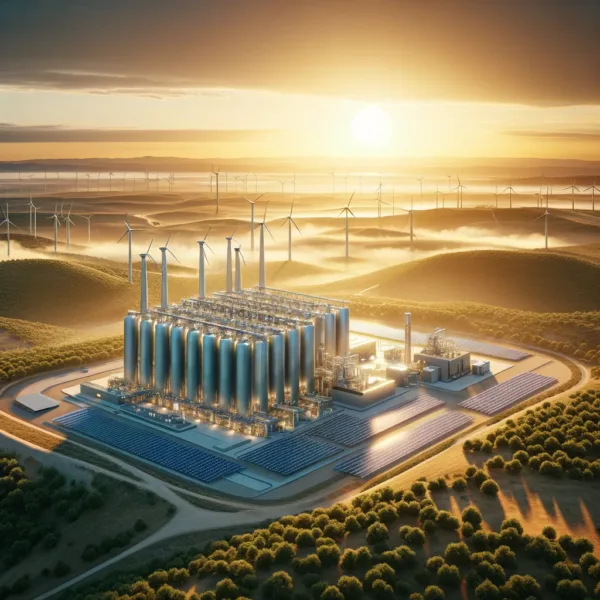




How a 700 MWp solar + 780 MWhr storage project, a Bhutan joint venture, and a Supreme Court ruling are reshaping Reliance Infrastructure’s future in clean energy and utilities
Reliance Infrastructure Limited (NSE: RELINFRA, BSE: 500390) has secured a major win in India’s renewable energy transition by bagging a Letter of Award from NHPC, one of the country’s top Navratna public sector enterprises. The mandate covers an interstate transmission system (ISTS)-connected project that will combine 700 MWp of solar DC capacity with 780 MWhr of battery energy storage.
The tariff discovered at ₹3.13 per kilowatt-hour places the project among the most cost-efficient renewable-plus-storage offerings in the country. For Reliance Infrastructure, the development represents more than just another EPC contract — it signals a structural pivot towards becoming India’s largest integrated solar and storage player, with a pipeline now exceeding 3 GWp of solar DC and 3.5 GWhr of storage capacity.
Why does this NHPC award mark a turning point for Reliance Infrastructure’s clean energy ambitions?
The NHPC tender drew bids from 15 entities, with 14 qualifying for the e-reverse auction. Oversubscription by nearly four times shows just how competitive the dispatchable renewables market has become. Despite intense bidding pressure, Reliance Infrastructure emerged as the winner, consolidating its position as a front-runner in India’s energy transition.
The significance goes beyond numbers. Solar projects coupled with large-scale batteries are fast becoming the cornerstone of India’s push to deliver round-the-clock renewable power. Unlike standalone solar, which peaks during daylight hours, solar-plus-BESS ensures grid stability, smooths variability, and enables dispatchability at scale.
Reliance Power, another listed group entity, already runs nearly 2.5 GWp of solar and 2.5 GWhr of battery capacity. With the NHPC win folded in, the Reliance Group now controls the country’s largest integrated portfolio in this segment.
How does Reliance Infrastructure stack up against competitors like Adani Green and Tata Power Renewable?
India’s renewable energy sector is dominated by a handful of aggressive players — Adani Green Energy Limited, ReNew Power, Tata Power Renewable, and NTPC Green Energy. Each has staked ground in solar, wind, and hybrid projects, with storage capacity increasingly layered into bids.
Where Reliance Infrastructure stands apart is in its integrated approach. Unlike NTPC or Tata Power, which balance renewables with large legacy coal plants, or Adani Green, which has focused on solar and wind scale, Reliance Infra’s pivot is about storage-backed projects designed for dispatchable supply. The ₹3.13/kWh tariff also puts it in the most competitive bracket, suggesting the company is willing to compress margins upfront for long-term market positioning.
Institutional investors interpret this as a deliberate play: by demonstrating cost competitiveness early, Reliance Infrastructure signals credibility as an operator in India’s most technically challenging renewable niche.
How does the Bhutan JV add a cross-border dimension to Reliance Infrastructure’s strategy?
On August 18, the company disclosed the incorporation of GDL-Reliance Solar Pte Ltd in Bhutan’s Gelephu Mindfulness City Special Administrative Region. The joint venture, structured as a 50:50 partnership between Bhutan’s state-owned Green Digital Private Limited and Reliance Enterprises Private Limited (an associate of Reliance Infrastructure), is designed to channel investment into regional renewable projects.
Reliance Power indirectly holds a 25 percent stake, giving the group a firm foothold in South Asia’s cross-border energy corridor. Bhutan is already known for exporting surplus hydropower to India, and the addition of solar projects backed by global investors is seen as a strategic diversification. For Reliance, it also opens a platform for green electricity trade beyond India’s borders.
Energy experts suggest this move aligns with India’s long-term goal of creating a South Asian electricity grid, where Bhutan’s hydropower, Nepal’s solar, and India’s scale can interlink. If executed well, Reliance Infra could position itself as a transnational clean energy integrator.
What role does the Supreme Court’s regulatory asset ruling play in funding this transition?
On August 8, Reliance Infrastructure’s distribution arm, BSES, a joint venture with the Government of Delhi, won a Supreme Court judgment that allows recovery of ₹28,483 crore in regulatory assets by March 31, 2028.
This ruling is critical for two reasons. First, it ensures steady cash flow for BSES Yamuna and BSES Rajdhani over four years, easing a long-standing financial overhang. Second, it stabilizes the parent company’s balance sheet at a time when it is committing capital to capital-intensive renewables and storage projects.
The court’s directive laid out a structured roadmap, mandating cost-reflective tariffs and timely liquidation of regulatory assets. By resolving a decade-long litigation, the judgment removes uncertainty for institutional investors who had been wary of regulatory liabilities dragging down returns.
Market watchers see the timing as fortuitous: regulatory clarity arrives just as Reliance Infrastructure ramps up its clean energy bets.
How are institutional investors reacting to Reliance Infrastructure’s repositioning?
Investor sentiment has shifted markedly in recent weeks. Reliance Infrastructure’s stock has seen increased trading activity on both the NSE and BSE. Analysts point to a convergence of factors — competitive project wins, regional expansion, and regulatory relief — as creating a platform for re-rating.
Foreign institutional investors (FIIs) have been steadily increasing exposure to India’s renewable developers, with a preference for companies demonstrating both scale and regulatory certainty. Domestic institutional investors (DIIs), meanwhile, are weighing execution risks but acknowledge that Reliance Infrastructure now has a clearer growth story than in past years, when debt overhang and legal disputes clouded visibility.
Traders note that volatility remains high, with short-term corrections likely, but longer-horizon investors are starting to categorize the stock as a turnaround play anchored in energy transition.
What risks and challenges could slow Reliance Infrastructure’s clean energy momentum?
Despite optimism, execution risks remain real. Large-scale solar-plus-storage projects in India face challenges ranging from land acquisition delays to technology risk around battery chemistries. Lithium-ion remains the default, but global supply chain constraints and fluctuating cell prices could impact cost economics.
Transmission readiness is another concern. ISTS-connected projects must align with grid upgrade timelines, and bottlenecks can delay commissioning. Moreover, the aggressive tariff of ₹3.13/kWh leaves little margin for error. Reliance Infrastructure will need tight project management to avoid cost overruns eating into returns.
The Bhutan JV, while promising, also introduces geopolitical and regulatory complexities. Aligning with Bhutanese energy policy, navigating cross-border power trade regulations, and scaling operations in a relatively small but strategically important market will require careful diplomacy and execution.
Can Reliance Infrastructure transform from a legacy infra player into a clean energy leader?
For decades, Reliance Infrastructure has been known for metro projects, roads, and power distribution. Its pivot to solar-plus-storage, cross-border ventures, and legal clarity on distribution assets collectively suggest a new phase of growth.
If the NHPC project is commissioned on schedule, the Bhutan JV delivers regional diversification, and regulatory asset recoveries flow as planned, Reliance Infrastructure could successfully reposition itself as a new-age clean energy leader. This would not only enhance shareholder value but also embed the group more deeply into India’s decarbonization journey.
The road ahead will require balancing financial discipline with aggressive project execution. But for now, Reliance Infrastructure appears to have secured the three things that matter most in the energy transition: competitive projects, regulatory clarity, and cross-border growth platforms.
Discover more from Business-News-Today.com
Subscribe to get the latest posts sent to your email.