
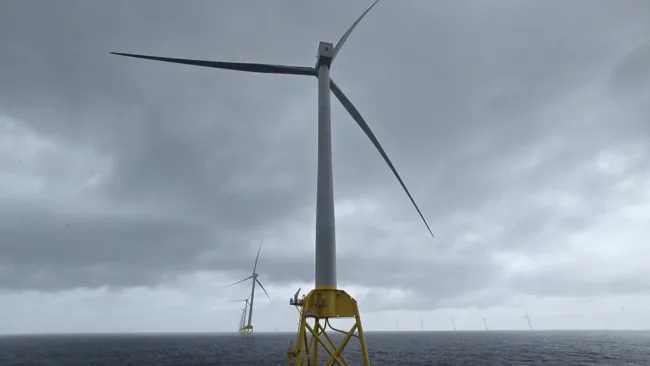
Ørsted has achieved first power from the 920 MW Greater Changhua 2b and 4 offshore wind farms in Taiwan, marking a pivotal milestone for both the Danish renewable energy developer and the island’s ambitious clean energy roadmap. The first turbine, which has now been connected to the grid, highlights Ørsted’s ability to execute large-scale projects under tight timelines, while also cementing Taiwan’s position as Asia-Pacific’s most advanced offshore wind market.
The project is particularly notable because it is the world’s first offshore wind farm to supply renewable electricity directly to Taiwan Semiconductor Manufacturing Company Limited (TSMC) under a corporate power purchase agreement (PPA). Once fully operational, all 920 MW will flow to TSMC, setting a precedent for industrial renewable procurement across the region. Located 35 to 60 kilometres off Changhua County, the wind farms use 66 Siemens Gamesa SG 14-236 turbines, each rated at 14 MW.
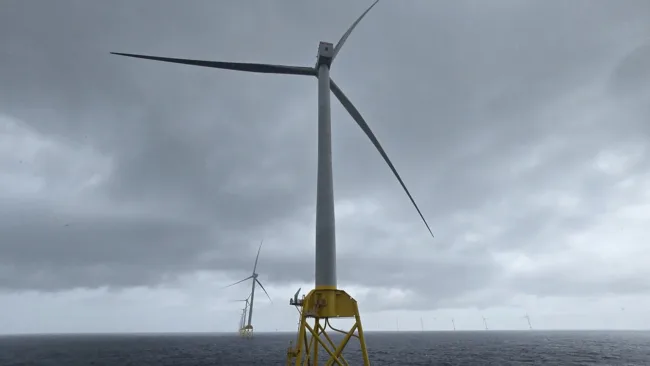
Since making its final investment decision in March 2023, Ørsted has installed all 66 suction bucket jacket foundations and energised two onshore substations and one offshore substation. Thirty-two turbines are already operational as part of early commissioning. Once completed in 2026, Ørsted’s total installed capacity in Taiwan will rise to 1.82 GW, including the operational 900 MW Greater Changhua 1 and 2a farms. Together, these projects will supply renewable electricity to about two million Taiwanese households annually and avoid an estimated 3.5 million tons of carbon dioxide emissions, positioning Ørsted as Taiwan’s largest offshore wind developer to date.
How significant is this milestone for Ørsted’s Asia-Pacific strategy compared to its challenged European portfolio and what are investors looking for next?
Institutional sentiment toward Ørsted’s Asia-Pacific strategy has been cautiously optimistic. While the company has faced investor pressure in Europe and the United States due to rising turbine costs, high interest rates, and delayed timelines, Taiwan offers a relatively stable regulatory and financing environment. Corporate PPAs, such as the one signed with TSMC, are providing predictable cash flows at a time when spot power prices in Western markets are volatile.
Delivering first power just three months after installing the first foundation in April has been viewed by institutional investors as evidence of operational excellence. Ørsted’s NT$90 billion (USD 3.08 billion) project financing package, secured in 2023 with backing from banks and export credit agencies, further underscores Taiwan’s bankability as a renewable energy market. However, analysts are closely monitoring execution risks. Taiwan’s typhoon-prone waters, supply-chain constraints for large 14 MW turbines, and potential grid congestion are all factors that could impact profitability if not managed effectively.
Some investors are also questioning whether Ørsted can replicate this execution pace in future tenders or whether this success reflects a unique alignment of strong regulatory support and early-stage incentives. Institutional confidence will depend on Ørsted’s ability to maintain cost discipline and deliver on time across multiple projects in Asia-Pacific.
Why is TSMC’s 20-year corporate PPA with Ørsted considered a strategic turning point for corporate renewable procurement in Asia?
TSMC’s 20-year PPA with Ørsted is widely regarded as a benchmark for corporate renewable procurement in Asia. The semiconductor manufacturer, one of the world’s largest energy consumers in its sector, has committed to sourcing all of Greater Changhua 2b and 4’s renewable output. Institutional investors see this as a sign that large industrial offtakers are now willing to commit to long-term PPAs to meet sustainability targets.
Analysts suggest that the scale and duration of this PPA could encourage other corporates in South Korea and Japan to explore similar agreements, particularly as multinational firms face increasing pressure from investors and customers to decarbonize their supply chains. The PPA also provides Ørsted with long-term revenue stability, reducing exposure to volatile wholesale electricity markets.
However, expectations are high. TSMC will demand uninterrupted supply, and Ørsted will need to ensure maintenance schedules and grid integration are optimized to avoid contractual penalties. The success of this PPA could shape the trajectory of corporate renewable procurement in Asia for the next decade.
How does Ørsted’s use of suction bucket jacket foundations strengthen its environmental credentials and differentiate it from competitors?
Greater Changhua 2b and 4 is Taiwan’s first offshore wind project to employ piling-free suction bucket jacket foundations, a technology that aligns with global ESG priorities. Unlike traditional pile-driven foundations, suction buckets produce minimal underwater noise during installation and can be fully removed at decommissioning, reducing long-term marine ecosystem disruption.
Analysts view this move as a calculated strategy to differentiate Ørsted from competitors such as Copenhagen Infrastructure Partners and Northland Power, which continue to rely heavily on conventional monopile and jacket installations. As environmental permitting becomes more stringent in Asia, particularly in markets like Japan where biodiversity concerns are high, Ørsted’s proactive adoption of low-impact technologies could provide a competitive edge in future tenders.
Institutional investors are also watching closely, as ESG compliance increasingly drives capital allocation in renewable energy. Ørsted’s ability to scale this technology effectively in Taiwan’s challenging seabed conditions could strengthen its case for additional funding from sustainability-focused investors.
How does Greater Changhua 2b and 4 compare with other Asia-Pacific offshore wind projects in terms of scale, financing, and execution risks?
In terms of scale, Greater Changhua 2b and 4 is among the largest offshore wind projects in the Asia-Pacific region, outpacing RWE’s 600 MW Changhua development and dwarfing Northland Power’s 376 MW Hai Long project. Its rapid execution contrasts with delays reported at other APAC sites, where developers have struggled with equipment shortages and financing challenges.
Yet, execution risks remain. Taiwan’s offshore environment is notorious for its complex seabed and extreme weather, and analysts caution that the long-term performance of suction bucket foundations in such conditions is still unproven at full commercial scale. Grid stability is another concern. With Taiwan aiming for 20 GW of offshore wind capacity by 2035, transmission infrastructure upgrades will be essential to prevent curtailment, a factor institutional investors are monitoring closely.
Compared to South Korea and Japan, Taiwan still leads in regulatory maturity and corporate PPA adoption, but competition is intensifying. Developers like RWE and Copenhagen Infrastructure Partners are seeking to expand their presence, potentially putting pressure on Ørsted to maintain its cost advantage while bidding for future capacity allocations.
What is the outlook for Taiwan’s offshore wind expansion and how critical is Ørsted’s role in achieving the island’s net-zero ambitions?
Taiwan’s government has set a 20 GW offshore wind target by 2035, positioning the sector as a central pillar of its net-zero strategy. Greater Changhua 2b and 4 is expected to play a major role in this expansion, not only by adding capacity but also by demonstrating that privately financed, large-scale projects can achieve commercial milestones on time.
Ørsted’s role is likely to remain central in the medium term. Its proven operational track record and early investment in Taiwan give it a first-mover advantage, making it a likely contender in upcoming tender rounds. Analysts anticipate that Ørsted may consider partial equity divestments or joint ventures after commercial operation begins in 2026, freeing capital for additional APAC projects while retaining operational control.
Institutional investors view Taiwan as a testing ground for offshore wind scalability in Asia. If Ørsted successfully manages grid integration and long-term turbine performance, it could enhance investor confidence not only in Taiwan but across other emerging offshore wind markets in the region.
Discover more from Business-News-Today.com
Subscribe to get the latest posts sent to your email.