





How is Wave Function’s new investment reshaping the future of AI-powered third-party logistics for e-commerce brands?
Wave Function™, a strategic investment firm based in New Bedford, Massachusetts, has announced a significant investment in Packsmith.ai, a Los Angeles-headquartered artificial intelligence-powered third-party logistics (3PL) provider. The move, revealed in July 2025, signals a deepening commitment to logistics automation, demand forecasting, and supply chain transformation in the $6.3 trillion global e-commerce industry.
The early-stage funding empowers Packsmith.ai to accelerate its deployment of intelligent fulfillment technologies, delivering faster, more transparent logistics services for digital-first brands. Institutional observers view this investment as a vote of confidence in predictive analytics-driven logistics, positioning Packsmith as a competitive disruptor among legacy fulfillment providers.
Packsmith.ai’s platform automates key logistical touchpoints, offering real-time inventory management, order routing, and proactive demand forecasting—all under a single, transparent pricing model. The platform promises 30%–70% faster deliveries compared to conventional warehouse-driven 3PLs and eliminates the inefficiencies of fragmented supply chain tools.
What are the core technologies behind Packsmith.ai’s promise of faster delivery and lower logistics costs?
Packsmith.ai has positioned itself as a logistics operating system built for e-commerce scale. Its AI stack handles everything from SKU-level inventory visibility to dynamic order routing based on supply chain constraints. Unlike traditional 3PLs that operate on batch processing and delayed updates, Packsmith’s platform operates in real time, feeding on customer behavior, sales velocity, and shipping constraints to optimize fulfillment workflows.
The platform’s standout features include predictive demand modeling that helps brands avoid stockouts or oversupply, intelligent carrier selection to reduce delivery times, and operational transparency that brands can use to inform customer service and marketing decisions. The AI backbone of Packsmith.ai continuously learns from shipping data, helping reduce waste and streamline packaging, shipment bundling, and delivery planning.
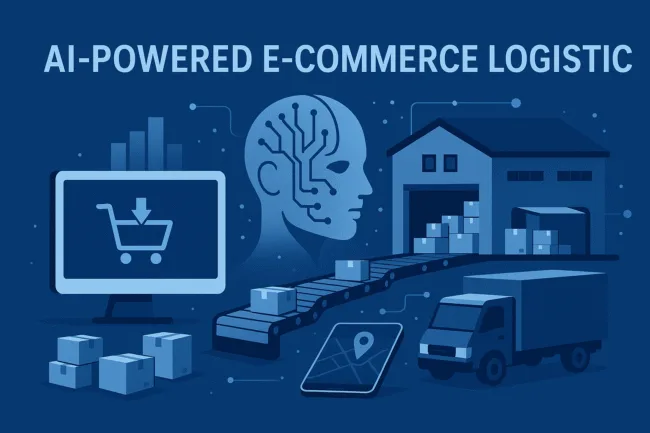
Institutional sentiment around Packsmith’s capabilities is largely positive, with market analysts noting that modern brands increasingly demand tech-forward logistics partners. Packsmith’s end-to-end software platform, unlike plug-in warehouse tools or outsourced shipping providers, delivers a seamless user experience backed by data science.
Why are institutional investors bullish on logistics platforms that integrate AI for e-commerce scale?
Institutional interest in AI-led logistics platforms is surging due to a confluence of rising e-commerce volumes, last-mile delivery challenges, and mounting pressure on brands to offer Amazon-like fulfillment at a lower cost. Analysts widely agree that legacy 3PLs—typically reliant on fixed warehouse networks and manual routing processes—struggle to keep pace with real-time consumer expectations.
In contrast, Packsmith.ai’s technology removes infrastructure bottlenecks by functioning as a lightweight digital layer atop warehousing and delivery partners. This model aligns with asset-light investment theses, allowing higher scalability without owning physical logistics real estate.
The investment from Wave Function™, known for backing purpose-driven tech ventures, further validates this trend. According to the firm’s founder Al Peters, Packsmith.ai is “setting a new standard for e-commerce logistics,” aligning with Wave Function’s strategy of catalyzing transformation in sectors like healthcare, manufacturing, and energy alongside technology.
What strategic advantages does Packsmith.ai offer emerging brands over traditional logistics providers?
One of the core differentiators Packsmith.ai offers is its “no lock-in” pricing structure. Traditional logistics providers often bind clients to long-term contracts with rigid pricing tiers, opaque service level agreements, and hard-to-modify workflows. Packsmith instead offers modular services with transparent pricing, giving small and mid-market brands flexibility to scale fulfillment without fear of overcommitting operationally or financially.
Additionally, Packsmith’s intelligent systems remove logistical complexity from the equation for founders. According to co-founder and CEO Ben Wunderman, the platform’s mission is to help brands “reach all customers better” by providing fast and affordable fulfillment as a default, not a premium service. CTO Simon Robb emphasized that their AI tooling frees up creative founders to focus on innovation rather than navigating shipping logistics.
These strategic benefits are already resonating with digital-native brands, many of whom seek to avoid the inflexible infrastructures of traditional fulfillment providers. Institutional observers see Packsmith’s traction as part of a broader trend of “founder-friendly logistics,” where automation replaces administrative overhead.
How does the Wave Function investment reflect broader institutional sentiment about logistics innovation in 2025?
The Wave Function–Packsmith.ai partnership mirrors a growing consensus among institutional investors that logistics will be a defining battleground for competitive advantage in e-commerce. In a saturated direct-to-consumer market, fulfillment speed, inventory agility, and predictive supply chain modeling are emerging as non-negotiables rather than differentiators.
Wave Function’s founder, Al Peters, characterized the partnership as part of their strategy to support “founders who reimagine their industries.” Analysts interpret this statement as a bet on vertical AI—niche platforms that address very specific operational pain points, such as last-mile delivery, through domain-specific machine learning.
Packsmith.ai’s strategy sits at the intersection of predictive logistics and data-driven customer experience. With supply chain unpredictability increasing due to climate impacts and geopolitical disruption, institutional sentiment favors logistics models that prioritize resilience, visibility, and autonomy—qualities that AI enhances.
What’s next for Packsmith.ai following this strategic investment, and how might it reshape e-commerce logistics?
Following the Wave Function funding, Packsmith.ai is expected to expand its technology team, deepen integrations with e-commerce platforms, and scale its warehouse partnerships across North America. While financial details of the investment were not disclosed, the structure indicates a strategic backing rather than passive equity participation, which implies continued collaboration on growth strategy.
Market observers expect Packsmith.ai to begin targeting vertical-specific logistics solutions, such as cold-chain e-commerce or high-SKU beauty fulfillment—categories with complex storage and delivery requirements. Analysts believe the platform’s AI core makes it adaptable to these specialized segments.
As demand for AI-powered, user-friendly logistics continues to grow, institutional investors expect more consolidation in the 3PL-tech space. Packsmith.ai’s positioning as both a software platform and fulfillment orchestrator makes it a strong candidate for ecosystem partnerships or downstream acquisitions by larger logistics software companies.
How is AI rewriting the rules of brand fulfillment and e-commerce scaling?
In an industry often defined by slow innovation and high friction, Packsmith.ai stands out as a symbol of what’s possible when logistics infrastructure is rebuilt from the ground up with AI. Wave Function’s endorsement and funding suggest a high degree of institutional conviction in this approach, with broad implications for how modern e-commerce brands manage fulfillment.
By replacing static warehouses and opaque contracts with predictive algorithms and transparent pricing, Packsmith.ai delivers not just faster shipping—but operational leverage. For founders building in the ultra-competitive direct-to-consumer landscape, that edge could be the difference between scale and stagnation.
As logistics becomes increasingly strategic in 2025, AI-native 3PL providers like Packsmith.ai are well-positioned to lead the next wave of fulfillment innovation.
Discover more from Business-News-Today.com
Subscribe to get the latest posts sent to your email.