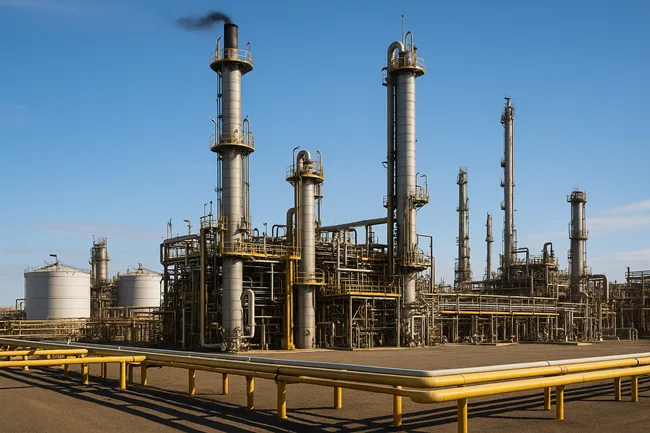
Zhejiang Petroleum & Chemical Co., Ltd. has selected Lummus Technology to license CATOFIN propane dehydrogenation technology for a new 1.2 million metric tonne per year unit in Zhejiang Province, China. Lummus describes the development as the world’s largest licensed PDH unit, with the plant designed to convert propane into propylene for downstream petrochemical derivatives. ZPC will use additional propane feedstock emerging from ongoing refinery expansions, linking the project closely to the economics of its broader integrated refining and chemicals complex.
The award is also strategically notable because ZPC has worked with Lummus across several other technologies but previously used a different process for propane dehydrogenation. The latest decision therefore represents more than another license order. ZPC is changing its PDH technology choice precisely as it moves to unprecedented single-unit scale.
What does 1.2 million tonnes of annual propylene capacity mean in daily operating terms?
A 1.2 million-tonne annual design rate corresponds to approximately 3,288 tonnes of propylene per calendar day if the plant were to operate continuously at full nameplate capacity for 365 days. Actual output will be lower or higher during different periods depending on maintenance, utilization and whether the facility eventually operates above its original design rate.
That scale can create meaningful unit-cost advantages because larger plants spread control systems, utilities, staffing and some fixed infrastructure across more product. ZPC also benefits from locating the unit inside an integrated refinery and petrochemical environment where feedstock and downstream customers can sit relatively close together.
Scale also raises operational concentration risk. A shutdown at one 1.2-million-tonne unit removes a much larger amount of output than downtime at a smaller facility, increasing the importance of catalyst performance, maintenance planning and equipment reliability.
Lummus is emphasizing CATOFIN’s history of meeting or exceeding design capacity for precisely that reason. At this scale, even relatively small differences in availability or propylene yield can translate into substantial commercial value.
Why is ZPC producing propylene directly from propane instead of relying only on refinery and cracker output?
Propylene is traditionally produced as a co-product from steam crackers and refinery fluid catalytic cracking operations. Those sources do not always expand at the same pace as propylene demand because their economics are driven partly by ethylene, fuels and other products.
Propane dehydrogenation creates an on-purpose propylene route. The operator feeds propane into a dedicated process whose main commercial objective is propylene production, allowing capacity to be added specifically where downstream polypropylene and other derivative demand justifies it.
For an integrated company such as ZPC, that can improve feedstock optimization. The company says ongoing upstream refinery expansion will provide additional propane, giving the new PDH facility a natural internal source of feedstock.
The resulting propylene can then flow into higher-value derivatives rather than being sold only as commodity feedstock. That vertical integration can protect margins when one part of the petrochemical chain weakens, although profitability still depends heavily on the spread between propane cost and propylene value.
Why does switching to CATOFIN matter when ZPC already operates other PDH technology?
Technology selection determines catalyst systems, energy consumption, maintenance cycles, conversion rates and ultimately the cost of producing each tonne of propylene. A change in process provider at very large scale therefore represents a material technical choice rather than a branding exercise.
Lummus developed CATOFIN with catalyst partner Clariant and says the technology combines its process design with advanced catalysts to deliver high propylene yields, reliability and cost efficiency. ZPC’s existing relationship with Lummus includes CDAlky, ISOCRACKING, DPC and butadiene extraction technology, but this is the first ZPC PDH unit to use CATOFIN.
The switch could reflect confidence developed through those existing projects, competitive licensing economics or technical performance expectations at larger scale. Lummus has not disclosed contract value, preventing an assessment of what the licensing award means financially for the private technology company.
ZPC’s decision becomes stronger validation only after startup. A 1.2-million-tonne unit consistently operating near or above design capacity would provide more powerful evidence for CATOFIN than the licensing selection itself.
Can bigger PDH plants automatically produce better economics?
Not necessarily. PDH margins are heavily influenced by the propane-to-propylene spread. A technically efficient plant can still produce weak returns when propane feedstock is expensive and propylene prices are depressed.
China has invested aggressively in petrochemical capacity, increasing competition across several derivative chains. New supply can reduce margins even when domestic demand continues growing, meaning economies of scale cannot eliminate commodity-cycle risk.
ZPC has one structural advantage through integration. Its refinery expansion provides propane while its petrochemical system can consume propylene downstream, giving the company more options than a standalone merchant PDH operator purchasing feedstock and selling all output into the open market.
The project should therefore be evaluated through the value of the full chain rather than the standalone PDH unit alone. If ZPC converts propane into propylene and then into higher-value derivatives with efficient internal logistics, the economic contribution can extend well beyond the PDH plant’s direct margin.
Why could the ZPC award matter beyond one Chinese petrochemical complex?
Lummus says CATOFIN has recently won a majority of PDH technology awards and that several large units have started up at or above their performance guarantees. ZPC’s selection adds another reference plant at unprecedented licensed scale.
Technology licensors benefit when one flagship project reduces perceived risk for the next customer. A successful 1.2-million-tonne unit could encourage other operators to build larger trains rather than divide capacity across multiple smaller reactors.
That creates potential recurring value for Lummus through future licensing, engineering, catalysts and lifecycle services even though the company has not disclosed the economics of the ZPC award.
The project also shows how refining companies are changing their capital allocation. Instead of simply maximizing transport-fuel production, integrated complexes are increasingly channeling hydrocarbon feedstocks into petrochemicals where long-term demand can be more resilient.
What are the most important next milestones for ZPC’s new PDH unit?
Detailed engineering and construction timing are the first missing pieces. Lummus has announced the technology award but has not provided project capex, startup date or construction schedule.
Feedstock integration will also be important. The investment case assumes propane from refinery expansion can reliably feed the new unit, making upstream commissioning and PDH construction interdependent.
The final proof arrives after startup through utilization, propylene yield and reliability. A plant carrying the title of the world’s largest licensed PDH unit creates an impressive headline, but petrochemical economics are created by operating performance over years rather than design capacity on paper.
ZPC has now chosen the technology architecture. The next challenge is turning 1.2 million tonnes of nameplate capacity into a cost-competitive propylene stream that strengthens the economics of its entire integrated petrochemical chain.
Key takeaways on ZPC’s 1.2 million-tonne PDH project
- Zhejiang Petroleum & Chemical has selected Lummus Technology’s CATOFIN process.
- The new PDH unit will be located in Zhejiang Province.
- Nameplate capacity is 1.2 million metric tonnes of propylene annually.
- Lummus describes it as the world’s largest licensed PDH unit.
- Full-year nameplate capacity equates to roughly 3,288 tonnes per calendar day.
- ZPC previously used a different PDH process.
- The company already uses several other Lummus technologies.
- Additional propane will come from ongoing upstream refinery expansion.
- Propylene will feed higher-value petrochemical derivatives.
- Contract value, plant capex and startup timing were not disclosed.
Discover more from Business-News-Today.com
Subscribe to get the latest posts sent to your email.