



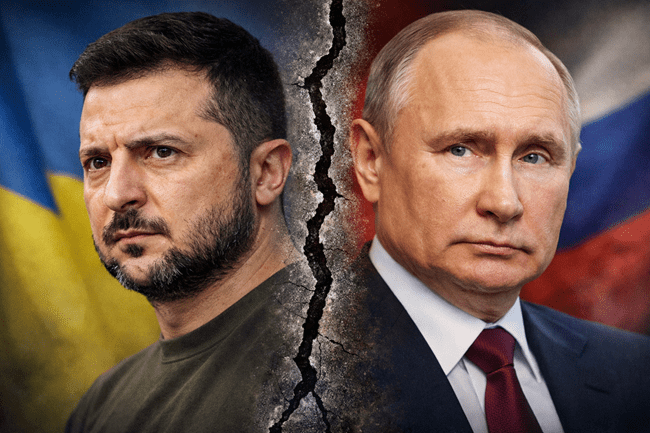
Russia has accused Ukraine of launching a long-range drone strike against one of President Vladimir Putin’s residences in the Novgorod region, prompting a sharp escalation in rhetoric from top Kremlin officials. The December 29 claim, which was swiftly denied by the Ukrainian government, has triggered renewed fears that Moscow may use the alleged attack to justify an intensified military response or walk away from ongoing diplomatic talks.
Foreign Minister Sergei Lavrov alleged that a swarm of 91 Ukrainian drones targeted a government site linked to President Vladimir Putin, though Russian air defense forces reportedly intercepted all incoming aerial threats. Lavrov warned that this incident, if confirmed, would trigger what he called “unavoidable consequences” and suggested it may alter Moscow’s stance in peace negotiations. The Russian Ministry of Defence echoed this assertion, stating that the alleged drone attack was aimed at disrupting internal security and intimidating the Russian leadership.
Ukrainian President Volodymyr Zelenskyy’s administration, however, immediately dismissed the accusation as a politically motivated fabrication. Officials in Kyiv claimed the Kremlin had manufactured the drone narrative to distract from battlefield setbacks and to pre-empt growing international support for Ukraine’s peace proposals. According to government spokespersons, there was no operational planning or launch of drones targeting the Novgorod area and no evidence has been provided by Moscow to validate its claims.
Did Ukraine really target President Vladimir Putin’s residence, or is Moscow engineering a diplomatic smokescreen?
The drone attack narrative has come under growing scrutiny from both military analysts and international observers. While Russian state media claimed that air defenses neutralized the threat before it could cause damage, residents in the Novgorod region reportedly saw no signs of explosions or wreckage. This lack of corroborating local testimony has intensified skepticism that the incident was staged or exaggerated.
Ukrainian officials and intelligence analysts suggest that the Kremlin could be employing a classic strategic maneuver to paint Ukraine as the aggressor at a moment when diplomatic talks are gaining traction. In particular, the timing of the accusation—just days after Ukrainian President Volodymyr Zelenskyy met with United States President Donald Trump in Florida to revive a U.S.-backed peace framework—is being viewed with suspicion.
Some military observers argue that Russia’s statement may have been preemptively crafted to harden its negotiating position and lay the groundwork for further military escalations, including intensified missile strikes or cross-border incursions. Analysts believe this rhetorical escalation signals a broader strategy to delay or derail confidence-building measures proposed during recent European-led talks.
What does Russia gain by claiming a failed drone attack on President Vladimir Putin?
Foreign Minister Sergei Lavrov’s threat to reconsider Russia’s engagement in diplomatic discussions raises significant alarms. By portraying Ukraine as a rogue actor willing to attack Russian leadership residences, Moscow gains leverage in the court of international opinion and attempts to shift the blame for potential breakdowns in the negotiation process.
This playbook is not unfamiliar. Russian authorities have previously used alleged external provocations as a justification for crackdowns, military escalations, or abrupt changes in strategy. By placing President Vladimir Putin’s safety at the center of the narrative, Russian officials are crafting an emotive appeal aimed at galvanizing domestic public support while discouraging international sympathy for Ukraine’s position.
Observers believe the move may also be designed to test how far Western allies, particularly the European Union and the United States, are willing to pressure Kyiv for concessions in peace talks. If the Kremlin can successfully cast Ukraine as a threat to Russian internal sovereignty, it may attempt to pre-condition future negotiations on more favorable terms.
Could this derail the peace momentum between Ukraine and Russia in early 2026?
The drone accusation arrives at a sensitive juncture in the nearly four-year-long war. Recent peace discussions had shown signs of forward movement, with multiple backchannels reportedly opening between Ukrainian, Russian, and European stakeholders. President Volodymyr Zelenskyy’s recent meetings in Washington and Brussels were widely interpreted as efforts to galvanize multilateral support for a ceasefire framework and begin addressing war crime claims, reconstruction funding, and regional autonomy concerns.
By claiming that Ukraine attempted to assassinate or threaten President Vladimir Putin, the Russian leadership could be maneuvering to destabilize this fragile diplomatic momentum. The alleged drone strike allows Moscow to cast itself as a victim, thus demanding new preconditions or even walking away from talks altogether while blaming Kyiv.
Ukrainian leaders, however, remain adamant that this should not interrupt negotiations. Presidential aides have called on global institutions to independently verify Russia’s claims and to discourage any retaliatory military actions not backed by evidence. They argue that any attempts by Moscow to derail talks on the basis of unproven accusations should be treated as bad-faith behavior and called out accordingly.
What is the military and strategic fallout from the drone claim?
While no physical damage or casualties were reported in the alleged drone strike, the political impact has been immediate. The Russian Ministry of Defence reportedly placed multiple regions on elevated alert, and state media have begun revisiting nuclear deterrent scenarios, stoking fears of escalation among European defense planners.
Military experts have noted that if 91 long-range drones were indeed launched toward President Vladimir Putin’s residence, it would mark a significant expansion in Ukrainian capabilities—particularly given the range, coordination, and presumed stealth required. However, no credible intelligence agencies or satellite reconnaissance platforms have confirmed such a strike.
This disconnect between the scale of the Russian claim and the absence of third-party validation has prompted several governments to seek clarification through diplomatic channels. Western defense officials are also concerned that Russia may now accelerate strikes on Ukraine’s government buildings or communications infrastructure under the pretext of reprisal.
Could this incident set a precedent for fabricated justifications in future conflicts?
Beyond the immediate implications, the drone narrative raises longer-term questions about the use of alleged attacks on heads of state to justify policy shifts or military escalations. While sovereign nations do have the right to defend their leadership and territory, the absence of verifiable data, the timing relative to diplomatic milestones, and the aggressive rhetoric emerging from Moscow all point to a pattern that may echo past geopolitical maneuvers used to legitimize armed action.
If not called out with transparency and independent investigation, such claims may become more common tools in hybrid conflict strategies, especially where information warfare and narrative control play outsized roles. For Ukraine, the latest episode highlights the importance of maintaining international trust and working with allies to document and debunk disinformation campaigns.
For Russia, it offers a window to reassert control over the narrative, tighten internal unity, and recalibrate its military posture while keeping diplomatic options flexible. Whether this will escalate into a larger confrontation or recede into another round of rhetorical brinkmanship remains to be seen. What is clear, however, is that the claim has added a dangerous layer of complexity to already fragile diplomacy.
Key takeaways: Why this incident could reshape the 2026 peace outlook
- Russia’s claim of a Ukrainian drone strike on President Vladimir Putin’s residence has injected uncertainty into fragile negotiations and intensified regional tensions.
- Ukrainian authorities flatly deny the accusations, warning that the Kremlin is using fabricated threats to justify future escalation.
- No independent confirmation of the drone attack has emerged, raising questions about Moscow’s intentions and the credibility of the narrative.
- Foreign Minister Sergei Lavrov has warned of retaliation and hinted that Russia may now harden its stance in peace talks, which had shown recent progress.
- Analysts fear that the allegation could derail confidence-building efforts, giving Moscow an excuse to demand new preconditions or abandon talks.
- Western governments and international monitors are calling for transparency, verification, and restraint from both sides to avoid further escalation.
- The event also signals how allegations involving state leaders are increasingly being weaponized in modern hybrid conflicts.
Discover more from Business-News-Today.com
Subscribe to get the latest posts sent to your email.