




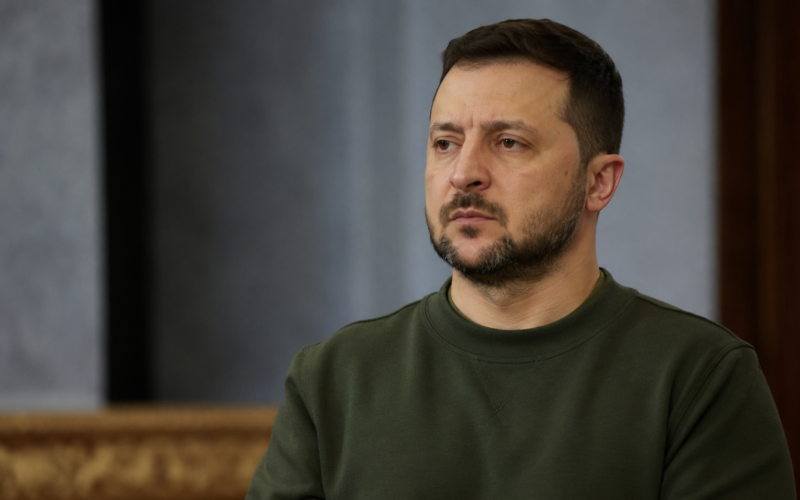
Ukrainian President Volodymyr Zelenskiy has launched a new regional cooperation framework called the Carpathian Eight, bringing Ukraine together with Poland, Romania, Slovakia, Hungary, the Czech Republic, Austria and Serbia around security, energy, transport and cross-border economic cooperation. The founding summit opened in Ukraine’s Carpathian region on September 18 and is scheduled to continue through September 20, with European Union institutions and business representatives participating alongside the eight states. Zelenskiy described the initiative as a new framework designed to integrate communities and economies across a region whose trade and transport importance has increased dramatically since Russia’s 2022 invasion.
Polish Prime Minister Donald Tusk, Serbian President Aleksandar Vučić and Romanian President Nicușor Dan were among the leaders attending the inaugural meeting, while roughly 550 business representatives were expected at the accompanying forum. Zelenskiy said investment and trade agreements valued at about €1 billion were expected during the summit, while the official investment platform lists 90 projects seeking approximately $10.7 billion across sectors including energy, transport, manufacturing and infrastructure.
Which countries are actually part of the Carpathian Eight?
The eight-country format comprises Ukraine and seven regional partners: Poland, Romania, Slovakia, Hungary, the Czech Republic, Austria and Serbia. European Union institutions participate in the framework, but the EU itself should not be confused with one of the eight sovereign states reflected in the C8 name. Ukraine’s presidential office describes the initiative as bringing together the Carpathian states, their regions and their local communities.
The membership is politically interesting because it contains governments with very different positions toward Russia and the Ukraine war. Poland and the Czech Republic have been among Kyiv’s strongest supporters, while Hungary and Slovakia have repeatedly disputed aspects of European Union policy toward Ukraine and Russia. Serbia maintains substantial ties with Moscow while simultaneously pursuing European integration, making consensus within C8 potentially harder but also more meaningful when it occurs.
Why is Ukraine creating another regional grouping while already seeking European Union membership?
Zelenskiy is presenting C8 as complementary to the European Union rather than an alternative to it. The emphasis is on practical problems that are inherently regional, including border infrastructure, electricity connections, transport corridors, investment and security across the Carpathian area. Many of those projects can progress among neighbouring governments even before broader EU-level decisions are completed.
The war has made those connections significantly more important. When Russia disrupted Ukrainian ports and trade routes, road and railway links through Poland, Romania, Slovakia and other neighbours became critical for exports, humanitarian aid and military supplies. Zelenskiy explicitly thanked neighbouring countries for keeping transport and commercial connections functioning after the invasion, indicating that C8 partly institutionalises cooperation that emerged from wartime necessity.
How much investment is attached to the first Carpathian Eight summit?
The official summit platform says 90 projects are seeking around $10.7 billion from C8 partners and investors. Energy accounts for the largest share, with 33 listed projects seeking more than $7.2 billion, while transport and logistics projects seek roughly $1.05 billion and industrial and manufacturing proposals account for about $782 million. Infrastructure, agrifood, healthcare, construction materials and technology projects make up the remainder.
Those figures represent projects seeking investment rather than money already committed, so they should not be reported as $10.7 billion of signed deals. Separately, Zelenskiy said approximately €1 billion in investment and trade agreements were expected to be signed during the summit. The distinction between an investment pipeline and completed agreements will be important as the three-day event produces announcements.
Why is security part of a grouping that also focuses heavily on trade and infrastructure?
The Carpathian region contains critical routes connecting Ukraine with the rest of Europe, meaning roads, railways, power lines and border crossings have acquired security importance during the war. Zelenskiy said security would remain a priority not only during current hostilities but for years afterwards, suggesting C8 could coordinate resilience against military, cyber and infrastructure threats.
The initiative arrives amid continuing European concern about Russian drone incursions, sabotage allegations, cyberattacks and attacks on energy infrastructure. Participating governments do not necessarily agree on the severity of every Russian threat or on how Europe should respond, which could limit deeper defence integration. C8’s initial security value may therefore lie more in infrastructure resilience and coordination than in creating anything resembling a new military alliance.
Could the Carpathian Eight compete with existing Central European groups such as the Visegrád Four?
There is significant geographic overlap because Poland, Hungary, Slovakia and the Czech Republic already form the Visegrád Group. C8 is broader, however, because it adds Ukraine, Romania, Austria and Serbia while centring cooperation around the Carpathian geography rather than a narrower Central European political identity. Its early agenda also appears unusually project-oriented, combining security with investment, border logistics and local-government participation.
The grouping could become complementary if it concentrates on infrastructure that crosses national borders. It could also struggle if members attempt to use it for divisive geopolitical issues on which existing European groups already disagree. The first summit is consequently less important as proof of a new geopolitical bloc than as a test of whether countries with differing politics can still build projects around shared geography.
What are the key takeaways from the launch of C8?
The Carpathian Eight is a newly launched framework rather than a treaty alliance, customs union or formal European Union institution. Its first summit is focused on connecting regional security, energy, logistics and economic development while attracting private capital into cross-border projects. The presence of eight states with substantially different relationships with Russia gives the format both greater diplomatic reach and greater internal complexity.
The most tangible early measures will be the agreements actually signed during the September 18-20 gathering. If C8 produces railway upgrades, electricity links, border infrastructure and investable projects, it could develop into a durable regional mechanism. If cooperation remains primarily at the level of summit declarations, the crowded landscape of Central European institutions could make it considerably harder for C8 to establish a distinctive role.
Why could the Carpathian Eight matter after the Ukraine war eventually ends?
Ukraine will eventually require enormous reconstruction investment and more efficient connections into European markets, regardless of when or how the war concludes. The countries around the Carpathians are geographically positioned to provide transport routes, energy links, manufacturing partnerships and construction capacity. Creating those relationships during wartime could therefore shape the infrastructure through which Ukrainian reconstruction later occurs.
The initiative may also strengthen Ukraine’s European integration from the bottom up. Instead of waiting exclusively for Brussels-level accession decisions, Ukrainian regions, companies and communities can build functioning economic networks with neighbouring EU and candidate countries. Whether that becomes strategically important will depend on implementation, but C8 gives Kyiv another platform through which wartime logistics can evolve into longer-term regional economic integration.
Discover more from Business-News-Today.com
Subscribe to get the latest posts sent to your email.



