



Woodside Energy Group Ltd (ASX: WDS) (NYSE: WDS) reported FY2025 net profit after tax of US$2.7 billion, a 24 percent decline from the prior year, even as it delivered record production volumes, sustained dividend payouts, and advanced some of the largest liquefied natural gas developments in its history. The results reflect a deliberate transition year in which Woodside is shifting from peak-cycle cash harvesting toward a capital-intensive LNG growth phase designed to anchor earnings beyond the current commodity cycle.
Rather than signalling operational weakness, the FY2025 outcome highlights a strategic inflection point. Woodside is choosing to protect balance-sheet strength and shareholder income while committing capital to projects that will not materially contribute to earnings until the latter part of the decade.
Why the FY2025 profit decline matters less than Woodside Energy Group Ltd’s underlying cash resilience
At first glance, the year-on-year decline in statutory profit may appear concerning. However, Woodside Energy Group Ltd’s FY2025 earnings contraction must be viewed in the context of an exceptionally strong comparative period and a normalisation in realised commodity pricing.
Underlying net profit after tax remained robust at approximately US$2.6 billion, while earnings before income tax, depreciation and amortisation excluding impairment were broadly flat at around US$9.3 billion. More importantly, free cash flow rebounded sharply to US$1.9 billion after a negative outcome in FY2024, reflecting stronger operating cash inflows and a moderation in capital outlays during the year.
This cash performance matters more than headline earnings. It confirms that Woodside’s asset base continues to generate substantial operating liquidity even as capital intensity increases. For institutional investors, FY2025 reinforces the view that Woodside’s earnings volatility is cyclical rather than structural.
How record production volumes reinforce Woodside Energy Group Ltd’s operational credibility
Woodside Energy Group Ltd delivered record full-year production of 198.8 million barrels of oil equivalent in FY2025, supported by operated LNG reliability approaching 98 percent and standout performance from the Sangomar project offshore Senegal.
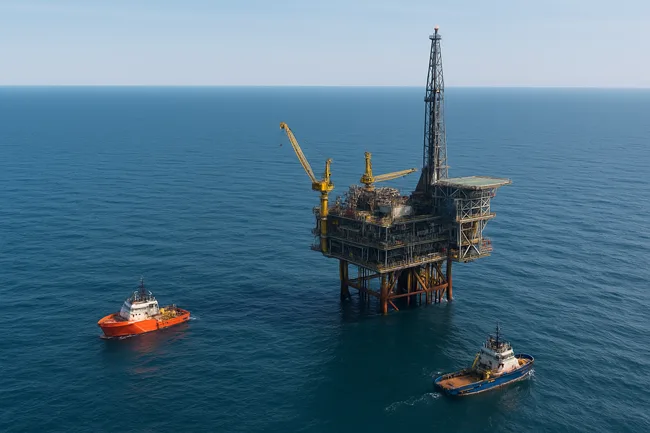
Sangomar emerged as a critical value driver, contributing approximately US$1.9 billion in revenue on a Woodside equity basis. The project operated near nameplate capacity for much of the year, validating Woodside’s offshore execution capabilities and reservoir management discipline.
At the same time, unit production costs declined to US$7.8 per barrel of oil equivalent, underscoring Woodside’s ability to scale production while maintaining cost control. This combination of volume growth, reliability, and cost efficiency strengthens Woodside’s positioning as a low-cost operator rather than a volume-dependent producer.
What Woodside Energy Group Ltd’s FY2025 dividend decision reveals about capital discipline
Woodside Energy Group Ltd declared a full-year dividend of 112 US cents per share, including a final dividend of 59 US cents per share. This payout sits at the upper end of the company’s stated policy range of 50 to 80 percent of underlying net profit after tax.
The dividend decision is strategically significant. It signals management’s confidence in near-term cash generation even as capital expenditure commitments rise sharply. At the same time, the absence of share buybacks or special dividends reflects a deliberate prioritisation of balance-sheet resilience over opportunistic capital returns.
In effect, Woodside is anchoring its equity story around income stability rather than capital return acceleration. This positioning is likely to resonate with long-term investors seeking predictable yield through the energy transition.
Why Woodside Energy Group Ltd’s balance sheet strength underpins its LNG expansion strategy
Woodside Energy Group Ltd ended FY2025 with gearing of 18.2 percent, comfortably within its targeted range of 10 to 20 percent, and liquidity of approximately US$9.3 billion. During the year, the company issued US$3.5 billion in senior unsecured bonds across multiple maturities, reinforcing access to global debt markets at investment-grade pricing.
This balance-sheet flexibility is central to Woodside’s investment thesis. It allows the company to fund large-scale LNG developments without compromising dividend commitments or being forced into asset sales during adverse commodity cycles.
As Woodside enters a period of elevated capital expenditure, financial resilience rather than earnings growth becomes the primary risk mitigant. FY2025 confirms that Woodside has built sufficient capacity to absorb execution risk.
How Scarborough and Louisiana LNG redefine Woodside Energy Group Ltd’s long-term earnings profile
The Scarborough Energy Project reached approximately 94 percent completion by the end of FY2025 and remains on track for first LNG cargo in the fourth quarter of 2026. Scarborough represents the next major step-change in Woodside’s LNG cash flow and will materially increase production capacity once operational.
Louisiana LNG, sanctioned in April 2025, represents an even more transformative strategic shift. Targeting first LNG in 2029, the project positions Woodside as a dual-basin LNG supplier with exposure to both Atlantic and Pacific markets. This geographic diversification reduces reliance on any single demand centre and enhances contractual optionality.
Together, Scarborough and Louisiana LNG signal Woodside’s intention to remain a globally relevant LNG supplier well into the 2030s, at a time when energy security considerations are increasingly driving long-term gas demand.
What Beaumont New Ammonia says about Woodside Energy Group Ltd’s approach to the energy transition
Woodside Energy Group Ltd achieved first production at its Beaumont New Ammonia facility in December 2025, with lower-carbon ammonia output targeted for the second half of 2026. While modest in scale relative to LNG, the project plays a strategic rather than financial role.
Beaumont New Ammonia provides Woodside with exposure to emerging low-carbon markets while limiting capital risk. It also strengthens regulatory and stakeholder credibility at a time when energy companies are under pressure to demonstrate tangible progress on emissions reduction.
This approach reflects Woodside’s broader transition strategy. Rather than pursuing transformational pivots, the company is layering optionality onto its existing portfolio while maintaining focus on cash-generative core assets.
How FY2025 emissions performance fits into Woodside Energy Group Ltd’s long-term positioning
Woodside Energy Group Ltd achieved a 15 percent reduction in net equity Scope 1 and Scope 2 greenhouse gas emissions relative to its baseline, meeting its stated 2025 target. This outcome reinforces management’s narrative of disciplined and achievable decarbonisation rather than aspirational commitments disconnected from operational realities.
By linking emissions performance to asset optimisation and selective investment rather than wholesale portfolio transformation, Woodside is seeking to balance shareholder returns with transition credibility. This stance may not satisfy all stakeholders, but it reduces execution risk and capital strain.
How investor sentiment is likely to interpret Woodside Energy Group Ltd’s FY2025 performance
Investor sentiment toward Woodside Energy Group Ltd is likely to remain cautiously constructive. The FY2025 results do not offer near-term earnings acceleration, but they significantly reduce uncertainty around execution capability, balance-sheet resilience, and dividend sustainability.
Equity markets increasingly appear to value Woodside as an income-anchored energy infrastructure play rather than a high-beta commodity exposure. Over time, valuation multiples are likely to be driven less by oil price movements and more by delivery milestones at Scarborough and Louisiana LNG.
What happens next for Woodside Energy Group Ltd if execution holds or falters
If Woodside delivers Scarborough on schedule in 2026 and maintains cost discipline at Louisiana LNG, the company enters the second half of the decade with a materially stronger and more diversified LNG cash flow base. This would support sustained dividends and potentially renewed capital returns once peak investment passes.
If execution falters, the downside risk is asymmetric. Cost overruns or delays would pressure free cash flow at a time when dividend expectations are firmly embedded. However, Woodside’s balance sheet suggests it has greater tolerance for disruption than many global peers.
FY2025 therefore represents a credibility checkpoint rather than a performance peak. The strategic choices made this year will determine whether Woodside’s LNG ambitions translate into durable shareholder value.
What the FY2025 results ultimately reveal about Woodside Energy Group Ltd’s strategic direction
Woodside Energy Group Ltd’s FY2025 results confirm that the company is no longer optimising for peak earnings but for long-term relevance. Record production, stable dividends, disciplined leverage, and advancing LNG megaprojects collectively point to a business preparing for the next energy cycle rather than maximising the current one.
For investors, the story is shifting from commodity upside to execution certainty. The next phase of Woodside’s valuation will be written not by oil prices, but by project delivery.
What are the key takeaways from Woodside Energy Group Ltd’s FY2025 results for investors and the energy sector
- Woodside Energy Group Ltd’s FY2025 results mark a strategic transition year, with the company shifting focus from peak-cycle cash harvesting toward long-cycle liquefied natural gas reinvestment that reshapes earnings beyond 2026.
- The 24 percent decline in net profit after tax reflects commodity normalisation rather than operational weakness, as underlying cash generation and earnings before income tax, depreciation and amortisation remained resilient.
- Record production of 198.8 million barrels of oil equivalent and near-98 percent operated liquefied natural gas reliability reinforce Woodside Energy Group Ltd’s credibility as a low-cost, execution-focused operator.
- Sangomar’s strong early performance confirms Woodside Energy Group Ltd’s ability to deliver complex offshore projects and extract meaningful cash flow in the early years of production.
- The full-year dividend of 112 US cents per share signals management confidence in near-term cash generation, while the absence of buybacks highlights a deliberate prioritisation of balance-sheet strength.
- Gearing of 18.2 percent and strong liquidity position Woodside Energy Group Ltd to absorb elevated capital expenditure without compromising shareholder income or financial resilience.
- Scarborough and Louisiana LNG represent the core of Woodside Energy Group Ltd’s long-term strategy, shifting the company toward a more diversified, dual-basin liquefied natural gas supplier model.
- Beaumont New Ammonia and emissions reductions demonstrate a selective and credibility-driven approach to the energy transition, focused on optionality rather than disruptive capital bets.
- Investor sentiment is likely to frame Woodside Energy Group Ltd as an income-anchored energy infrastructure play, with valuation increasingly tied to project execution rather than short-term commodity prices.
- The next phase of Woodside Energy Group Ltd’s equity story will be defined by delivery discipline at Scarborough and Louisiana LNG, making execution risk the dominant variable for long-term investors.
Discover more from Business-News-Today.com
Subscribe to get the latest posts sent to your email.