





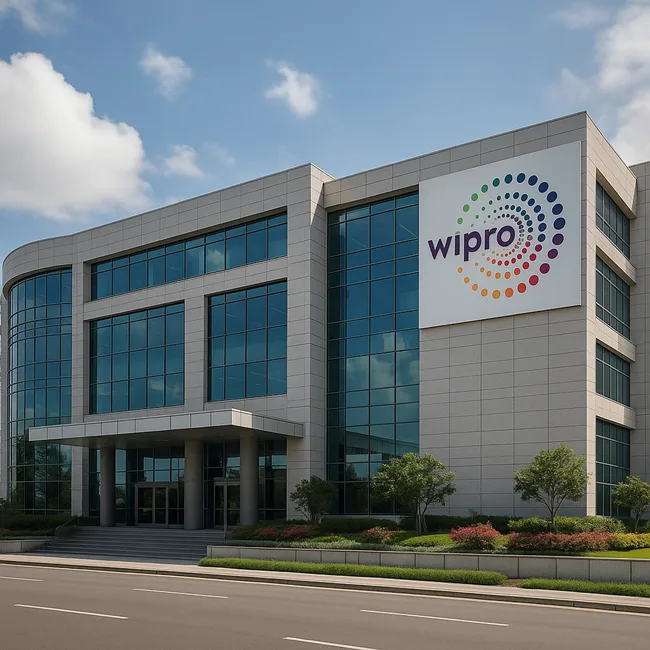
Wipro Limited (NYSE: WIT, BSE: 507685, NSE: WIPRO) has completed its acquisition of Olam Group’s IT and digital services business, Mindsprint, after receiving the required regulatory approvals. The transaction converts Mindsprint into a wholly owned subsidiary operating as “Mindsprint, a Wipro Company” and follows Wipro’s earlier announcement of an eight-year strategic transformation engagement with Olam Group. The broader engagement is expected to exceed US$1 billion in contract value, including a committed spend of US$800 million, making it one of Wipro Limited’s more important long-cycle enterprise deals. For investors, the acquisition adds domain-heavy capability at a time when Indian information technology services companies are under pressure to prove that artificial intelligence can translate into durable revenue rather than just attractive conference-slide vocabulary.
Why does Wipro’s completed Mindsprint acquisition matter for its long-term Olam Group transformation deal?
The completion of the Mindsprint acquisition matters because it turns Wipro Limited’s Olam Group relationship from a large services contract into a deeper industry platform play. Instead of merely providing transformation services to Olam Group from the outside, Wipro Limited now owns the specialist digital business that has already supported Olam Group’s technology evolution across food, agriculture, supply chain and trading workflows. That gives Wipro Limited a stronger operating base from which to deliver the eight-year engagement, while also creating a reusable capability set for other clients in food, agri-business, retail, manufacturing, healthcare and life sciences.
The strategic logic is fairly clear. Olam Group operates across a complex farm-to-fork value chain that includes farming, sourcing, forecasting, trading, logistics, supply chain management and customer engagement. These are not generic back-office functions. They involve volatile commodity prices, weather exposure, fragmented supplier networks, regulatory scrutiny, sustainability obligations and highly distributed operations. By absorbing Mindsprint, Wipro Limited gains not only staff capacity but also domain-specific intellectual property and institutional knowledge that would be difficult to build quickly through conventional hiring.
This is where the acquisition becomes more interesting than a routine captive services takeover. Mindsprint brings more than 3,200 professionals and productised platforms such as Farmsprint for plantation management, Procuresprint for procurement transformation, SprintAP for payables transformation, Salessprint for sales operations and Tradesprint for commodity trading and risk management. These assets give Wipro Limited a stronger proposition in sectors where clients increasingly want industry-specific transformation rather than broad digital consulting dressed in slightly different packaging for each vertical. The risk, of course, is integration. Specialist captive teams often carry deep client context, but converting that into scalable, external-facing revenue requires disciplined product management, sales alignment and delivery standardisation.
How could Mindsprint help Wipro expand beyond traditional IT services into farm-to-fork digital platforms?
Mindsprint gives Wipro Limited a more credible route into farm-to-fork digital transformation because it adds real operating knowledge in an industry where complexity sits far beyond enterprise resource planning upgrades. Food and agri-business companies increasingly need systems that can connect plantation management, procurement, demand forecasting, supply chain resilience, trading exposure and customer delivery. That is exactly the kind of fragmented operating environment where artificial intelligence, automation and analytics can be commercially meaningful, provided the vendor understands the workflows.
Wipro Limited’s Wipro Intelligence suite is central to how the company is positioning the deal. The company wants to apply its artificial intelligence-powered platforms and consulting-led delivery model across Olam Group’s operations while using Mindsprint’s domain expertise to sharpen industry relevance. In plain English, Wipro Limited is trying to avoid the classic artificial intelligence services trap, where the technology sounds impressive but the use cases remain too abstract. Mindsprint gives Wipro Limited a more grounded set of industry problems, including forecasting, procurement, trading, supply chain visibility and customer engagement.
The bigger prize is repeatability. If Wipro Limited can convert Mindsprint’s platforms and Olam Group experience into market-ready solutions, the acquisition could support growth across adjacent food, agriculture, commodities and supply chain-intensive sectors. That would improve Wipro Limited’s ability to compete not only against Indian peers such as Tata Consultancy Services Limited, Infosys Limited and HCL Technologies Limited, but also against global consulting and technology firms that are pursuing industry cloud, artificial intelligence and supply chain modernisation mandates. The challenge is that repeatability is never automatic. What works inside one large agri-business group may need heavy adaptation for different geographies, crops, trading models, regulatory environments and customer systems.
What does the Olam Group relationship signal about Wipro’s push for larger, industry-specific transformation contracts?
The Olam Group relationship signals that Wipro Limited is pursuing larger, stickier contracts anchored in business transformation rather than short-cycle discretionary technology work. That is important because the global information technology services industry has faced slower decision-making, pressure on discretionary spending and tighter client scrutiny over return on investment. Long-duration engagements with committed spending provide better revenue visibility, but they also raise execution expectations. A billion-dollar contract may look attractive at signing, but the real judgement arrives through delivery milestones, margin discipline and client outcomes.
For Wipro Limited, the deal also demonstrates a move toward vertical depth. Food and agri-business is not usually viewed as the flashiest segment in enterprise technology, but that is precisely why it may be strategically useful. The sector has enormous operational complexity, rising sustainability demands, volatile input costs and persistent supply chain fragility. If Wipro Limited can show measurable improvement across Olam Group’s operations, it could build a differentiated reference model in an underpenetrated transformation market.
There is also a capital allocation angle. Wipro Limited is not simply winning a contract. It is buying a capability base that comes attached to the client’s operating history. That can reduce ramp-up risk, preserve domain knowledge and support faster transformation execution. However, it also means Wipro Limited must manage the cultural and commercial shift of Mindsprint from an Olam Group-linked technology business into a Wipro-owned subsidiary serving both Olam Group and external customers. That transition will determine whether Mindsprint remains a strong acquired unit or becomes a broader growth platform.
Why are supply chain, procurement and commodity trading capabilities becoming more valuable for IT services companies?
Supply chain, procurement and commodity trading capabilities are becoming more valuable because enterprises no longer see them as purely operational functions. They are now strategic risk centres. The past few years have shown companies that disruption can come from geopolitics, shipping constraints, commodity volatility, regulatory changes, climate events and supplier concentration. Food and agri-business companies sit directly in the blast zone of all these risks, which makes digital visibility and decision automation more commercially relevant.
Mindsprint’s capabilities place Wipro Limited closer to these board-level concerns. Platforms focused on plantation management, procurement transformation, payables, sales operations and commodity trading risk management can help clients move beyond generic digitalisation into workflow-specific improvement. The value proposition is not merely faster processing. It is better forecasting, stronger resilience, tighter working capital control and more informed trading or procurement decisions. That is the type of business case technology buyers can defend more easily when budgets are tight.
This also fits the wider direction of enterprise artificial intelligence adoption. Clients are increasingly wary of broad artificial intelligence claims unless they are tied to measurable improvements. Procurement automation, risk management, demand forecasting and supply chain optimisation offer clearer use cases because they can be linked to cycle time, margin protection, inventory control and decision quality. Wipro Limited’s ability to package these capabilities around real industry workflows could make the Mindsprint acquisition more valuable than its headcount alone suggests.
How should investors read Wipro stock sentiment after the Mindsprint acquisition and Olam deal?
Wipro Limited’s stock context remains mixed despite the strategic logic of the Mindsprint acquisition. The company’s NSE-listed shares traded around ₹195.17 on May 19, 2026, leaving the stock much closer to its 52-week low of ₹186.50 than its 52-week high of ₹273.10. That tells investors something important. The market may recognise the value of large deal wins, but it is still likely waiting for clearer evidence that Wipro Limited can convert transformation demand into stronger growth, margin resilience and competitive momentum.
The near-term sentiment around Wipro Limited also has to be read against a tougher backdrop for Indian information technology services companies. Peer comparison matters because investors are evaluating whether Wipro Limited can narrow the performance gap with larger competitors such as Tata Consultancy Services Limited, Infosys Limited and HCL Technologies Limited. While the Olam Group contract and Mindsprint acquisition strengthen Wipro Limited’s industry-specific story, they do not immediately erase broader concerns around growth consistency, pricing, deal conversion and execution.
A neutral reading suggests that the Mindsprint acquisition improves Wipro Limited’s strategic positioning more than it changes the immediate earnings narrative. The deal gives the company an industry platform, a large anchor client, specialised talent and proprietary solutions. However, investors will likely want to see how quickly the acquisition contributes to revenue growth, whether margins hold up during integration, and whether Wipro Limited can sell Mindsprint’s capabilities beyond Olam Group. Until then, the stock may continue to trade more on broader IT sector sentiment than on the standalone promise of this transaction.
What execution risks could decide whether the Mindsprint acquisition becomes a platform or just another tuck-in deal?
The biggest execution risk is integration without dilution. Mindsprint’s value lies in its domain knowledge, client familiarity and specialised platforms. If Wipro Limited integrates the business too aggressively into standard delivery structures, it could weaken the very differentiation it acquired. If it keeps Mindsprint too separate, however, it may struggle to scale the unit across Wipro Limited’s global client base. The balance between autonomy and integration will be crucial.
The second risk is commercialisation. Mindsprint’s platforms have credibility because they were built around real food and agri-business use cases. But selling them to external clients requires sharper packaging, clearer pricing, sector-specific sales training and proof that the solutions can operate outside Olam Group’s environment. Wipro Limited will need to convert internal capability into external market traction, which is often harder than acquisition presentations suggest.
The third risk sits inside the larger Olam Group transformation engagement. Eight-year deals create stability, but they also create long accountability windows. Technology priorities can change, macro conditions can shift, and client restructuring plans can alter the scope or urgency of transformation programmes. Wipro Limited must deliver measurable value early enough to keep momentum intact across the life of the engagement. In long-cycle transformation, enthusiasm is front-loaded. Proof has to arrive before the steering committee starts asking awkward questions in month eighteen.
Could Wipro’s Mindsprint deal reshape competition in AI-led agri-business and commodity technology services?
The Mindsprint deal could reshape competition if Wipro Limited uses it to build a defensible vertical practice in food, agri-business and commodity-linked digital transformation. These sectors are large, operationally complex and increasingly exposed to sustainability, traceability, supply risk and margin volatility. That makes them fertile territory for technology services firms that can combine consulting, platforms, data engineering and artificial intelligence in practical ways.
For competitors, the deal raises the bar for domain specificity. Generic artificial intelligence transformation narratives are becoming less persuasive. Clients want vendors that understand their operating vocabulary, regulatory pressures and margin levers. Wipro Limited can now argue that it has not only technology capability but also embedded agri-business process expertise through Mindsprint. That could help the company compete for future deals where industry depth is a deciding factor.
However, the competitive impact will depend on proof points. If Wipro Limited demonstrates tangible outcomes across Olam Group’s value chain and converts Mindsprint’s solutions into repeatable offerings, the acquisition could become a meaningful differentiator. If the deal remains largely tied to the Olam Group engagement, it will still be strategically useful but less sector-shaping. The difference between those two outcomes will determine whether this acquisition becomes a growth platform or simply a smart way to secure delivery muscle for a major client contract.
Key takeaways on what Wipro’s Mindsprint acquisition means for the company, competitors and the IT services industry
- Wipro Limited has completed the Mindsprint acquisition ahead of the earlier quarter-end expectation, giving it direct ownership of a specialist digital business tied to Olam Group’s transformation journey.
- The deal strengthens Wipro Limited’s eight-year Olam Group engagement, which is expected to exceed US$1 billion in contract value with US$800 million in committed spend.
- Mindsprint adds more than 3,200 professionals and domain-heavy platforms across plantation management, procurement, payables, sales operations and commodity trading risk management.
- The acquisition supports Wipro Limited’s push to make artificial intelligence services more industry-specific, especially across food, agriculture, supply chain and trading workflows.
- For Wipro Limited, the strategic upside lies in converting Mindsprint’s Olam Group experience into repeatable offerings for global clients in supply chain-intensive industries.
- The key execution challenge is integrating Mindsprint without weakening its specialist culture, client knowledge and product-led capabilities.
- Wipro Limited’s stock remains closer to its 52-week low than its 52-week high, suggesting investors still want clearer evidence of growth acceleration and margin resilience.
- The acquisition improves Wipro Limited’s competitive positioning against Tata Consultancy Services Limited, Infosys Limited and HCL Technologies Limited in industry-specific transformation deals.
- The broader IT services industry is moving toward verticalised artificial intelligence, where domain knowledge may matter as much as engineering scale.
- The Mindsprint deal will be judged less by the acquisition announcement and more by Wipro Limited’s ability to deliver measurable Olam Group outcomes and win similar mandates elsewhere.
Discover more from Business-News-Today.com
Subscribe to get the latest posts sent to your email.


