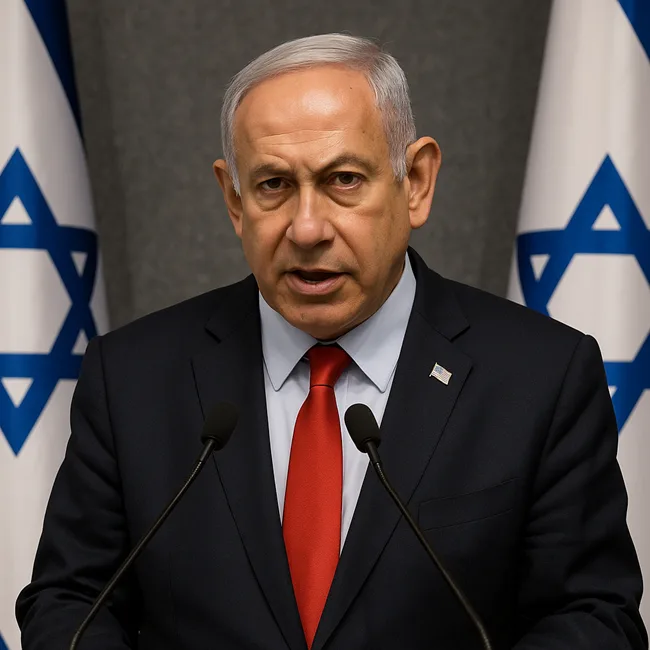





President Donald Trump on Saturday escalated trade tensions with two of America’s largest economic partners by announcing a 30% tariff on imports from the European Union and Mexico, with enforcement scheduled to begin August 1. The move, made public through official letters posted on Trump’s Truth Social account, follows weeks of unsuccessful negotiations aimed at reaching comprehensive trade deals with both regions.
The letters—addressed to European Commission President Ursula von der Leyen and Mexican President Claudia Sheinbaum—accused both trading partners of maintaining unfair barriers to U.S. goods and underscored the administration’s belief that steep tariffs were the only remaining lever to force structural concessions. The tariff threat, the most sweeping of Trump’s second term, covers a wide range of products and has already rattled markets and diplomatic corridors.
Why is Trump labeling imports from the EU and Mexico a national security risk and imposing steep tariffs starting August 1?
In the letters posted online, Trump argued that American industries and workers had long suffered under trade deficits with the EU and Mexico, stating that previous diplomatic efforts had failed to deliver equitable outcomes. Citing economic security concerns, Trump framed the 30% tariff as both lawful and necessary, invoking powers previously used under the Trade Expansion Act and the International Emergency Economic Powers Act.
The proposed tariffs—among the broadest since Trump returned to office—come after prior levies were introduced this year on imports from Canada, Brazil, and China. The administration has defended its moves as part of a broader push to realign global trade rules to better serve U.S. interests and manufacturing capacity.
How have EU and Mexican leaders responded to Trump’s 30% tariff threat and what diplomatic tensions are emerging?
European leaders have condemned the decision and signaled potential retaliation. European Commission President Ursula von der Leyen described the measure as unjustified and warned of economic harm to consumers and businesses on both sides of the Atlantic. Italian Prime Minister Giorgia Meloni echoed this sentiment, urging diplomatic engagement rather than escalation.
Officials in Brussels are reportedly finalizing a €21 billion countermeasure package targeting U.S. exports in sectors ranging from aircraft to agriculture. Behind the scenes, EU diplomats told Reuters that they view Trump’s announcement as a negotiating tactic rather than a final posture, but remain wary of the August 1 deadline.
In Mexico, President Claudia Sheinbaum emphasized her country’s commitment to “fair trade” and pointed to recent high-level meetings with U.S. officials as evidence of good-faith dialogue. Her administration is reportedly assessing legal and commercial responses, though Mexican authorities have yet to formally announce countermeasures.
What impact has this announcement already had on financial markets, currency valuations and commodity prices?
Markets quickly reacted to the prospect of renewed trade conflict. Dow Jones futures dropped nearly 300 points after the news, with the S&P 500 and Nasdaq also seeing declines. Investors voiced concern that the new round of tariffs could rekindle inflationary pressures and disrupt global supply chains.
In currency markets, the euro and Mexican peso lost ground against the dollar in early Asian and European trading sessions. U.S. copper futures surged to record highs following Trump’s related decision to impose duties on the metal—an indication of broader commodity volatility.
Equity analysts noted particular pressure on sectors with international exposure, including automobile manufacturers, aerospace suppliers, and semiconductor firms with EU or Mexican operations.
What historical tariff measures under Trump’s administration set the stage for this new 30% U.S. levy on EU and Mexico?
Trump’s trade stance in his second term has built upon strategies deployed during his first administration. Average U.S. tariff rates have spiked from approximately 2.5% to nearly 27% in 2025 alone, with new duties rolled out against a long list of countries including Brazil, Canada, and China.
Notably, this year saw the imposition of 35% tariffs on Canadian imports outside of USMCA terms, 50% on select Brazilian goods, and new frameworks targeting digital services taxes and rare earth materials. Trump has justified these moves on grounds ranging from national security to economic self-sufficiency, relying on executive authority under several longstanding trade statutes.
What legal challenges and court precedents might affect the 30% tariff on EU and Mexico?
Trump’s broad use of tariff authority has drawn judicial scrutiny. A May 2025 ruling by the U.S. Court of International Trade found that tariffs previously imposed under IEEPA—labeled “Liberation Day tariffs”—exceeded presidential authority. That ruling was stayed on appeal, and a final decision is expected on July 31.
If the court reaffirms its original judgment, it could limit Trump’s use of emergency powers for sweeping economic actions. However, the administration retains additional statutory tools—including Section 301 of the Trade Act and Section 232 of the Trade Expansion Act—which have been used in prior trade disputes.
Observers expect any legal decision to shape future trade enforcement mechanics but not necessarily the political posture behind the tariffs themselves.
What diplomatic and institutional pressures are shaping transatlantic and North American responses to the August 1 deadline?
EU and North American officials are engaged in back-channel diplomacy aimed at de-escalation. German Chancellor Friedrich Merz has reportedly initiated direct contact with Washington to gauge whether the tariffs could be suspended pending further negotiations.
EU trade officials have also confirmed that a detailed response plan is ready if no breakthrough is reached. In the U.S., the Chamber of Commerce and multiple trade associations have called on the administration to reconsider, warning of downstream effects on inflation and job growth.
Within Congress, Republican lawmakers have largely supported Trump’s approach as a firm defense of American economic sovereignty. In contrast, Democratic leaders have described the policy as inflationary, chaotic, and legally risky.
What broader economic strategy underpins Trump’s navigation of multiple trade fronts including the EU, Mexico, and others?
The White House’s 2025 trade doctrine appears designed around leverage-through-escalation. Analysts view the simultaneous targeting of the EU, Mexico, and other trade partners as a deliberate effort to force renegotiations under more favorable terms for U.S. interests. Earlier in the year, bilateral talks with China, India, and the United Kingdom yielded provisional trade understandings after similar tariff threats were issued.
Trump administration officials have characterized this strategy as a necessary correction to decades of one-sided trade frameworks, particularly in areas such as non-tariff barriers, digital services taxation, and agricultural subsidies.
What are the likely long-term implications if the August 1 tariffs are implemented without resolution?
If enforced, the 30% tariffs could reshape cross-border commerce between the U.S., EU, and Mexico. Industries with tightly integrated supply chains—such as automotive, aerospace, electronics, and agriculture—would likely experience immediate cost increases and logistical friction.
Retaliation from the EU and Mexico could lead to a cycle of tariff escalation, especially if WTO appeals or cross-border sanctions follow. Businesses may respond by altering sourcing strategies, delaying investments, or lobbying for carve-outs and waivers.
Meanwhile, legal outcomes from the pending appeals process could determine whether the president’s broad tariff authority survives intact or faces new judicial limits.
How are businesses and industry groups preparing for the enforcement of Trump’s tariff measures?
Trade associations and multinationals are urging regulatory clarity ahead of the August 1 deadline. The U.S. Chamber of Commerce and the National Association of Manufacturers have called on federal agencies to publish detailed implementation guidelines and, where possible, offer transition periods.
Automotive manufacturers with plants across North America are re-evaluating procurement strategies, while agricultural producers worry about retaliatory losses in key export markets. Commodity importers are already seeing signs of cost inflation, particularly in sectors tied to copper, steel, and industrial machinery.
Discover more from Business-News-Today.com
Subscribe to get the latest posts sent to your email.